
5 November 2024.
Every trip has a name or a theme. We have had the “Mountains, Lakes and Sea” trip of 2018 (See the trip plan Mountaintop to Sea Level ), “The Grand Tour” of 2017 (See Tourists Again), and the “We’re Back” trip of 2021 after missing 2020 due to a worldwide plague, to name a few. (See Hey Europe! We’re Back!.)
This year, in my mind, the theme was “Return to Roma” as it has been 8 years since we moved from Rome back to the US.

We loved our time this trip in the usual locations of Ortisei and Lauterbrunnen, and enjoyed the Italianness of Locarno even though it is in Switzerland. Wrapping up our eight weeks with a gastronomic tour of Rome, the subtitle might be “A Reacquaintance Tour: Eating our way through Rome.”
We often talked about missing Roman restaurants: Our neighborhood favorite, Taverna Rossini, the best pizza places we found and wrote about for our blog Our Weekly Pizza, the fish place we traveled an hour to-and-from it was so good, the authentic Sicilian food. These neighborhoods, walking routes, coffee bars, restaurants, and pizzerias called to us. It was time to return and eat our way through town while revisiting old haunts.
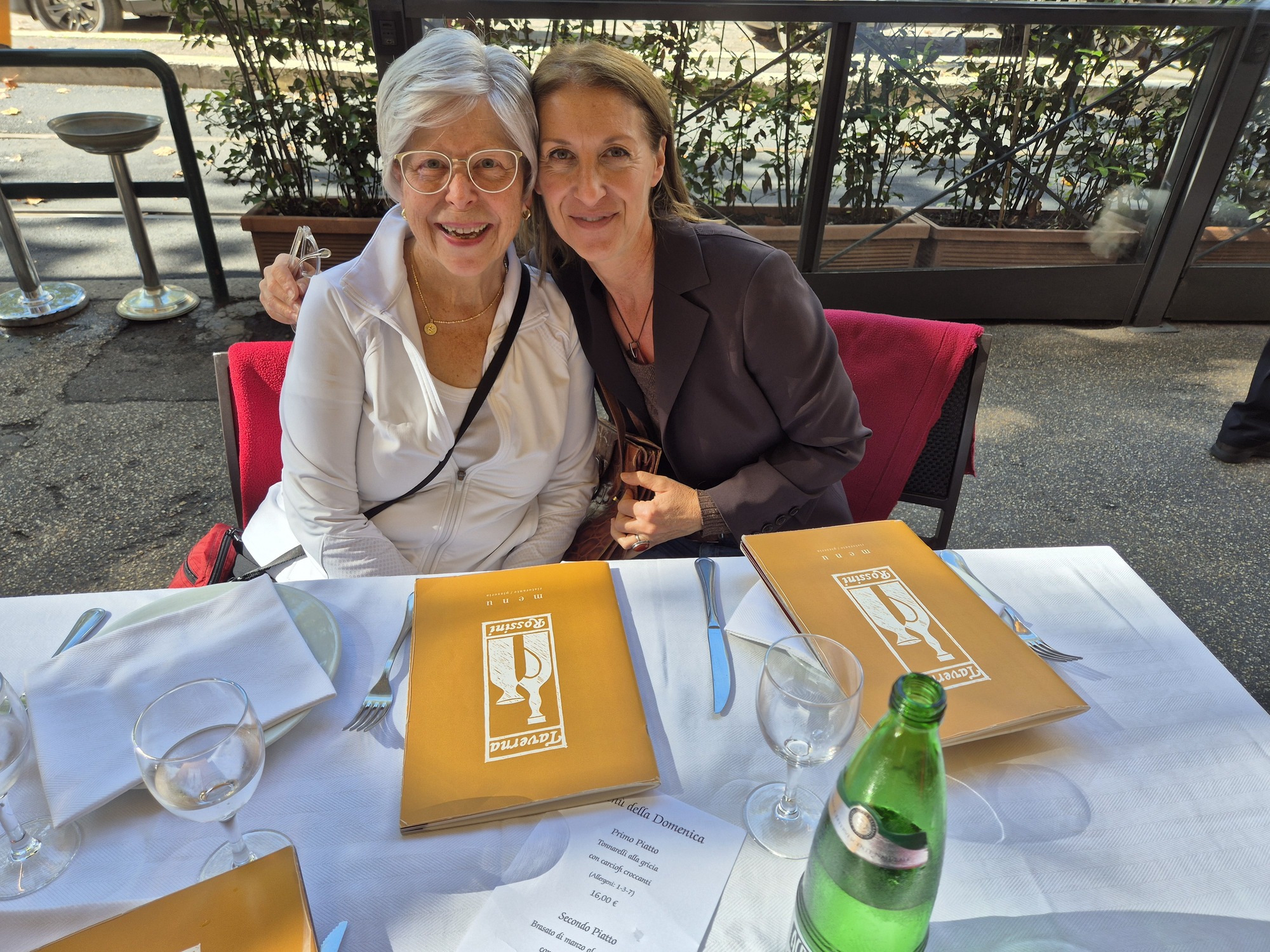

We had not been in town for 30 minutes when my love/hate feelings welled up. This crazy town continues to perplex and amaze. A fabulous double espresso in 30 seconds for €2.00! A taxi across town for €15! Ancient sites harboring a cat sanctuary and a wealth of art-free-for-the-viewing in vast basilicas and churches. People who weave back and forth on sidewalks and narrow streets. Tour groups coming at you like a tidal wave. The buses still ghost you and are uncomfortable at best, but the taxi drivers were, to a person, polite, efficient, and helpful. What’s up with that, Rome?
My hips and back took a beating on the sampietrini (aka cobblestones). Ric and I remembered we really liked to hold hands when walking in Rome and not only from affection but to keep each other stable and upright.
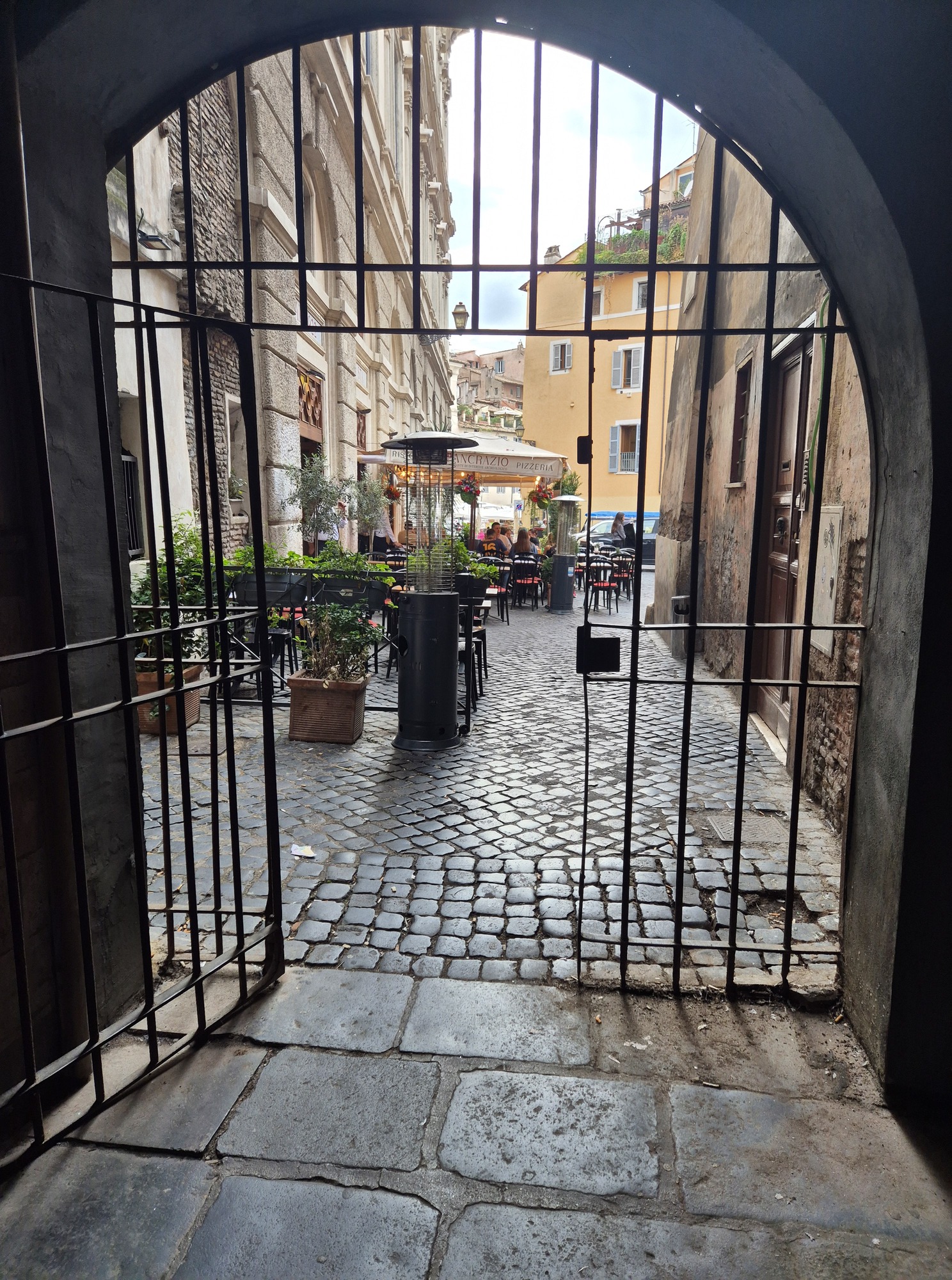
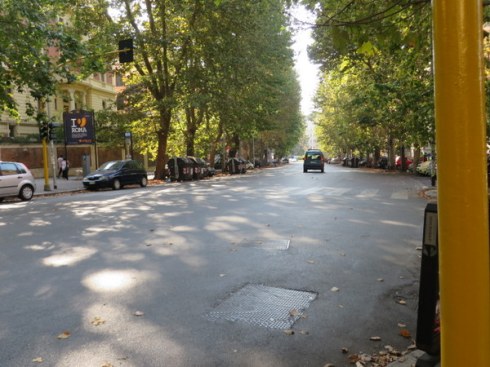
The old routes came back to us easily enough. The way through Villa Borghese we walked to-and-from work; the route we took from home to Piazza del Popolo to Campo de’ Fiori to go shopping every Saturday. Some of the vendors we used to buy from are still in the same stalls.
We dined at a couple of favorite pizzerias, La Pratolina and Da Remo. Still great: in fact they seem untouched by the intervening years. Even some of the servers are the same people we remember.
Our old standby, Antica Taverna, was not as good as we remember but it has suffered a change of ownership. It was nostalgic to sit there, on an obscure vicolo, and reminisce about our many dinners there including a Christmas Eve before I was blogging, Thanksgiving of 2012, and New Years of 2014. We ate there about once a month for over four years. Taverna Rossini, the neighborhood joint where we took all of our guests, was still so good we went there twice this trip!
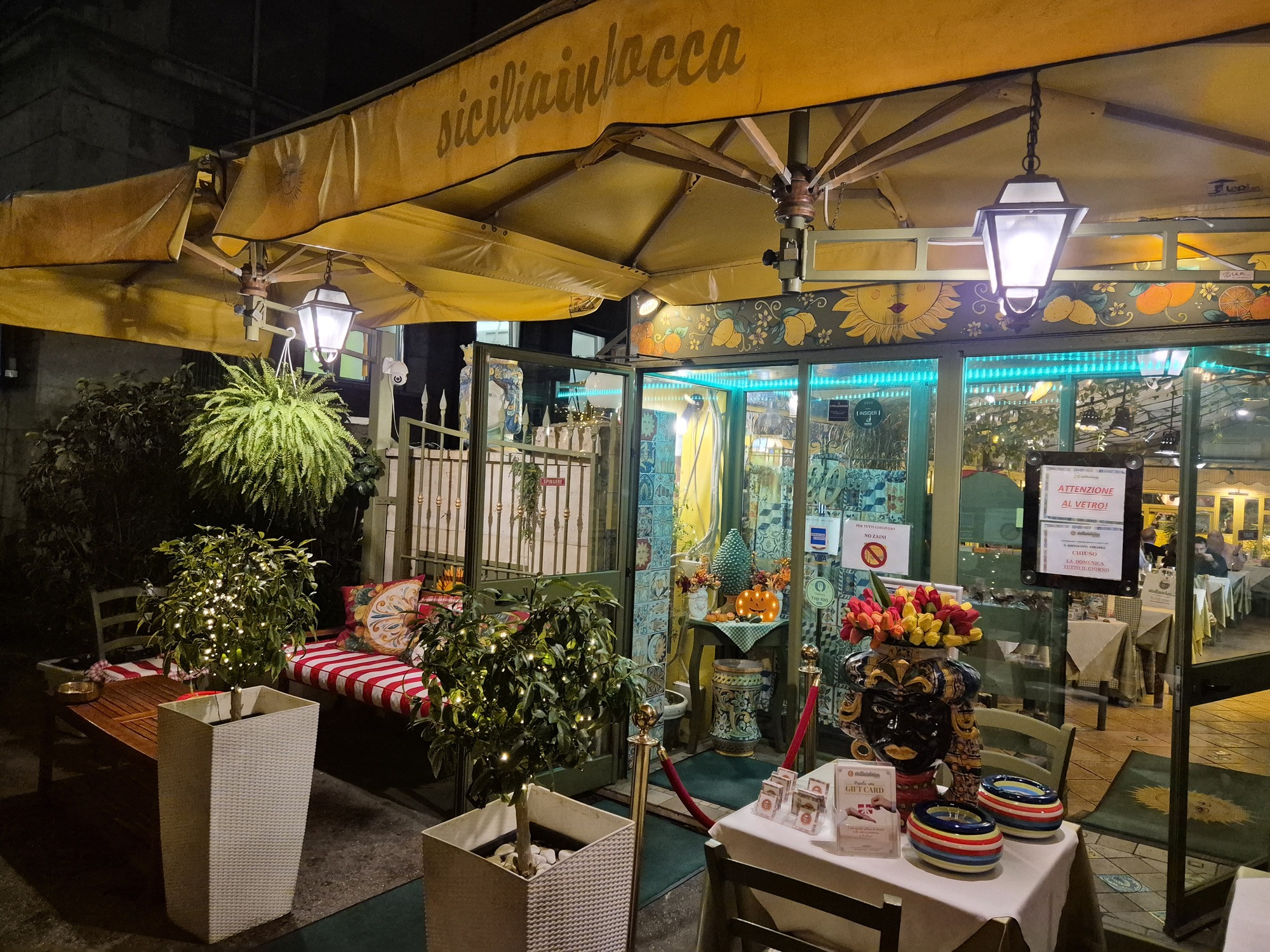
Finding good Sicilian food outside of Sicily is a challenge, but Siciliainbocca did not disappoint. We happened by on a Tuesday, which was couscous night. Couscous ala Pesce is my favorite memory of Sicilian food, and it was memorable. No wonder Elon Musk dines here! (The cabbie told us about Elon’s visit, but we went there anyway.) Donna Fugata wine, an octopus appetizer, grilled calamari for Ric. We left happy and walked back the 2 miles to our hotel as penance for all we consumed.
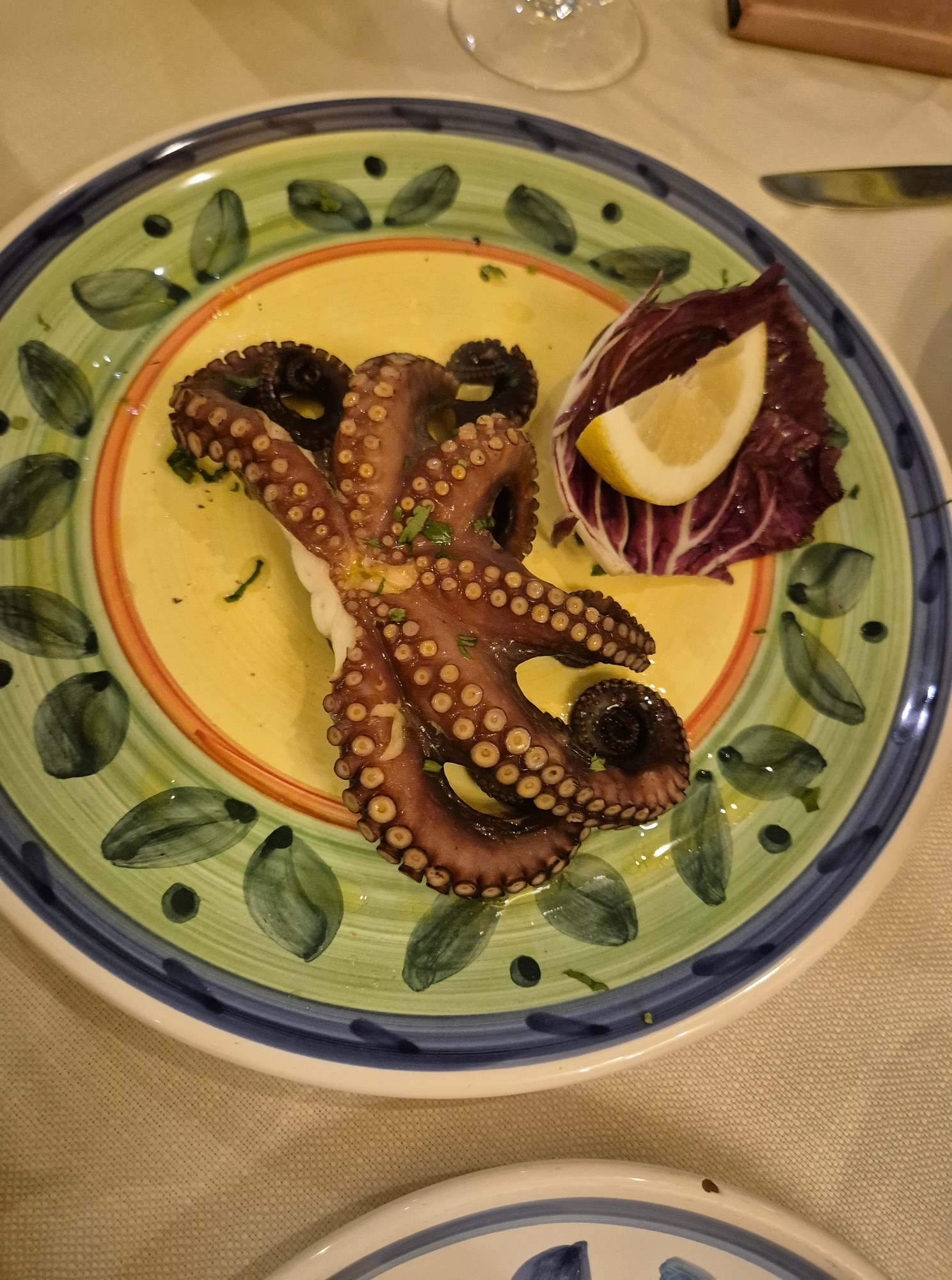

We found some fun, new places to eat as well. Lunch has always been hard for us in Italy because they like to offer big lunches of pasta and traditional main courses or pizza. We like salads and sandwiches. Two new eateries we recommend, Cabullo (3 locations) and Molly’s Garden, are a welcome change. Molly’s, in particular, appeals as they know what they are doing with eggs, and they make a delicious wrap. Osteria La Quercia was so good I forgot to take food photos. They only use fresh ingredients guaranteed by small breeders and farmers, organic companies, and seafood from the Lazio coast. (Click on any photo for a better view.)

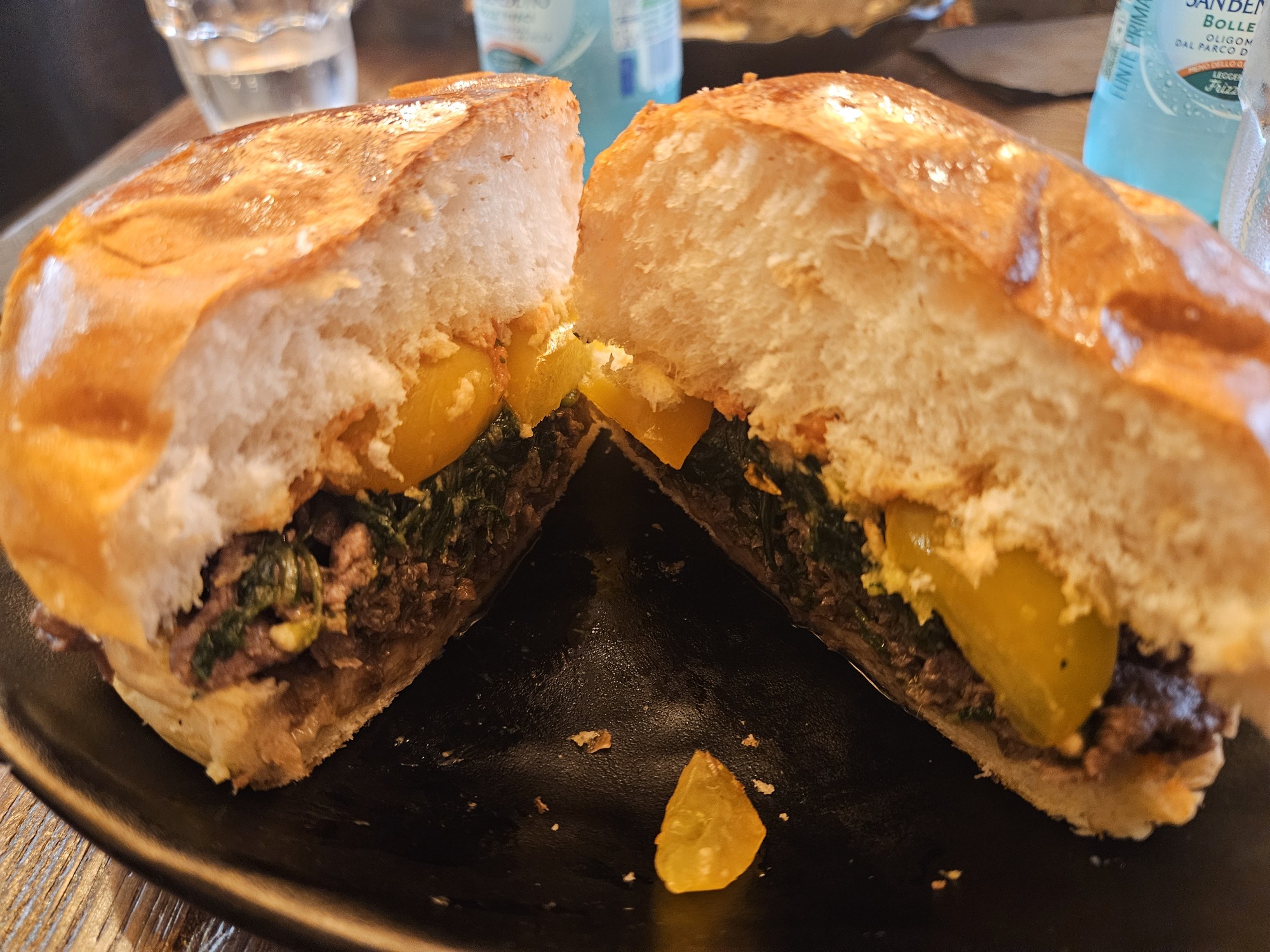


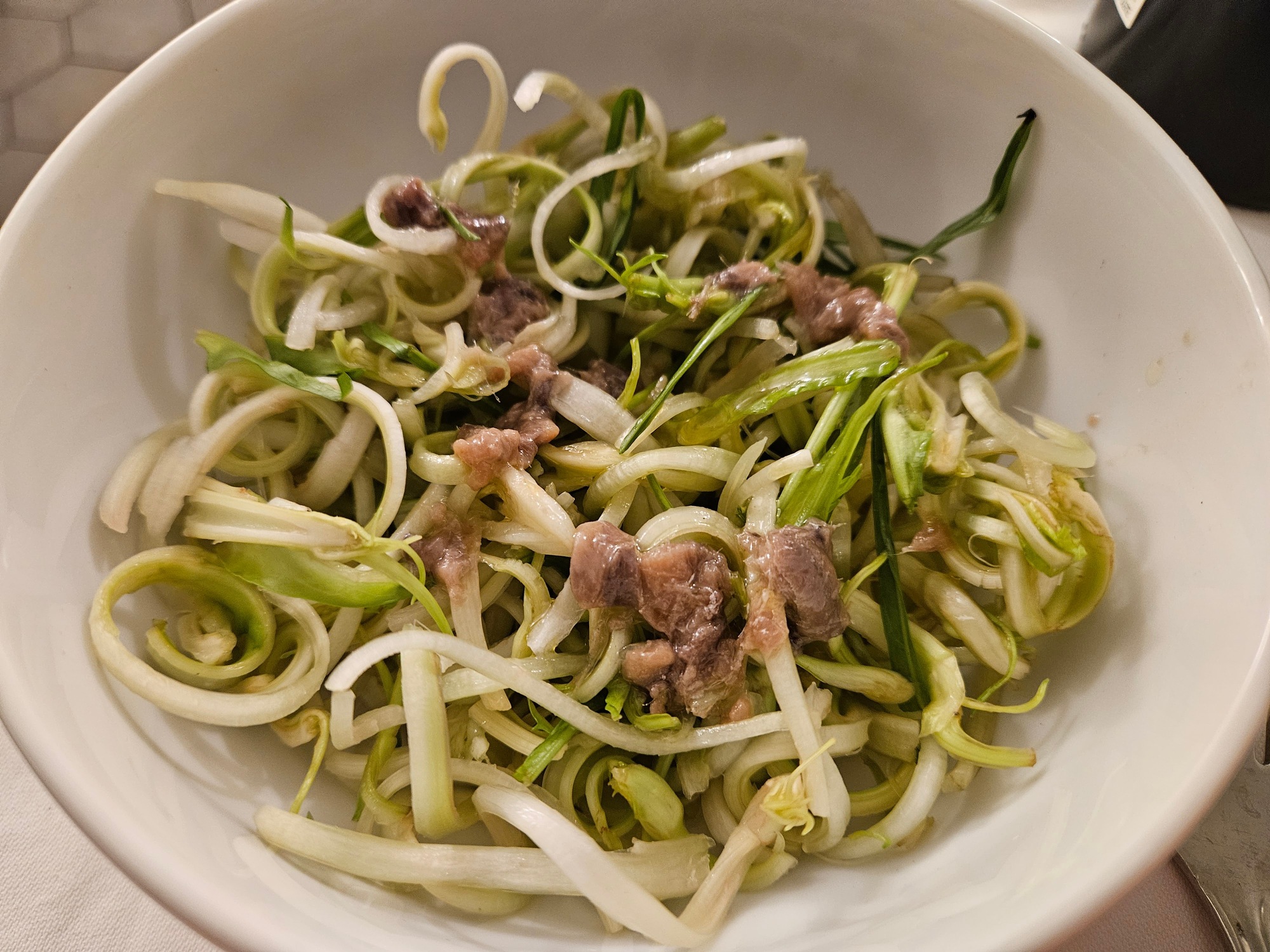
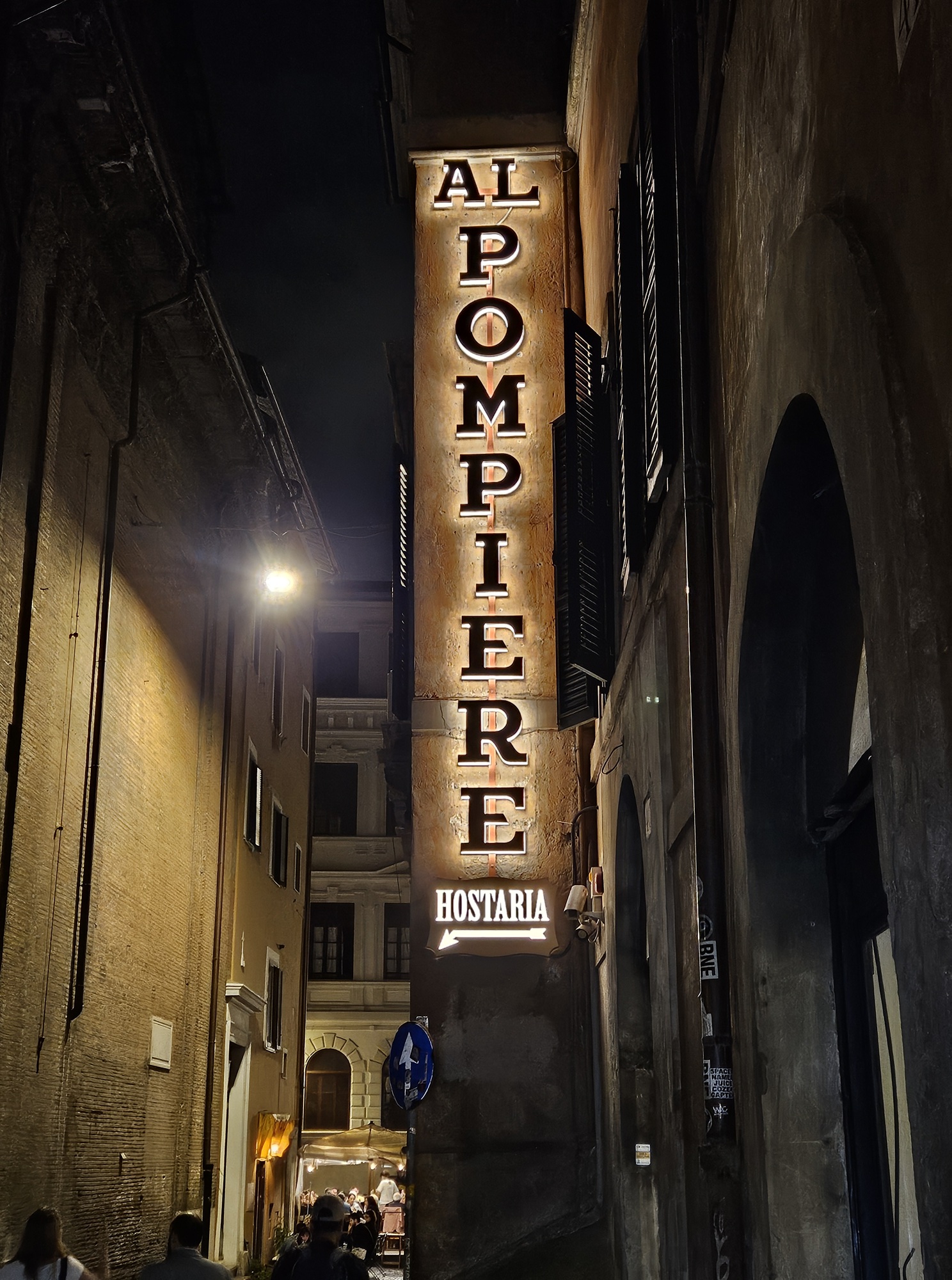
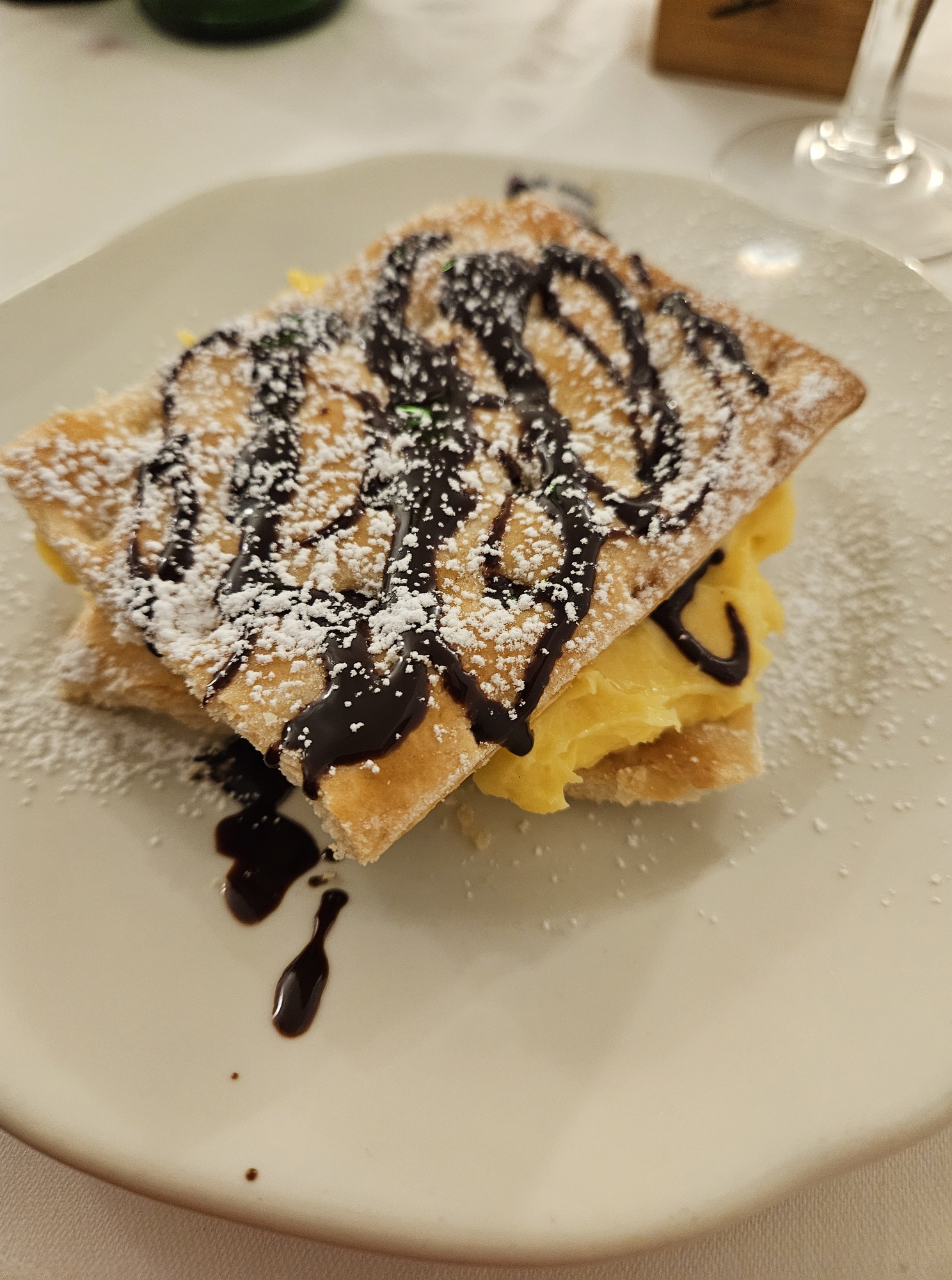
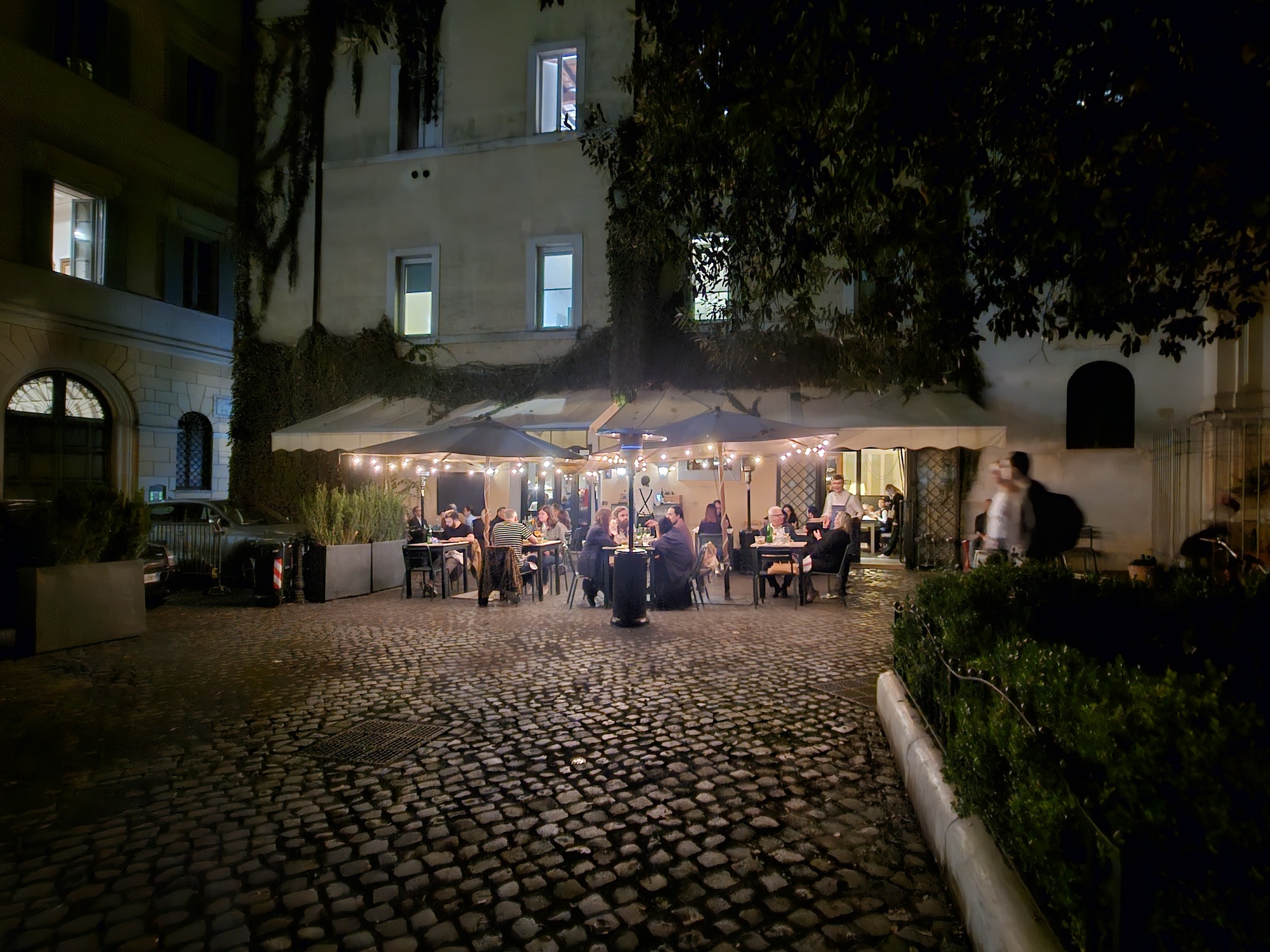
Our final dinner of the trip was at Al Pompiere, well known yet for all the years we lived in Rome we had not visited. It was our loss! Family owned and operated, the padrone waited on us in the tradition of old hosterie (osterias). Classic Roman food: puntarelle (a salad of chicory sprouts with anchovy vinaigrette), carciofi alla giudia (fried artichokes), fiori di zucca (fried zucchini flowers stuffed with cheese and anchovy, battered, and fried) and much much more.
Without fail, everywhere we dined at night we were glad we had reserved. Any place decent and not too touristy was full and tables do not turn like they do in the US.
We found our way to a leather shop we used to patronize in Trastevere. There are leather shops all over the historical center, and some of their products might actually be made in Italy, but Ciufetti is the real deal. We arrived at opening and told the owner we used to come here many years ago. He told me it has been in business since 1955, the year he was born. He and his wife now run it and are open 7 days a week! He loves it! They make all of their leather products in house and sometimes, when tourists discover them, they literally get their stock cleaned out because people recognize the value and the quality at a fraction of the prices in the tourist shops.


The city is getting ready for a Papal Jubilee year in 2025 and as a result there is construction and restoration everywhere. All the tram lines are down. The Metro Line C is still not complete and screened fencing blocks vast sections of the historic center limiting views. There is scaffolding everywhere and it seemed like every fountain was dry and being repaired. If this was my first visit to Rome I might be annoyed at how much is blocked but we saw it as a reminder that Rome has been changing for millennia and will continue to do so.

I planned to get transit passes for the week we are here, but they proved remarkably hard to find. Luckily, we did not invest because the buses have been impossible and after two buses did not materialize (ghosted) twice in our first afternoon, we had to find a taxi to take us back. At that point we decided to go a piedi (on foot) or take taxis. Period.
Speaking of feet, in Rome we far exceeded the mileage we had in Richmond early in the trip (see 61000 Steps). In 8 days in Rome, we walked over 56 miles and I had almost 162,000 steps on my pedometer, an average of >20,000 per day. it helps when you can’t get a bus. (Trip total on the pedometer was a respectable 950,000.)

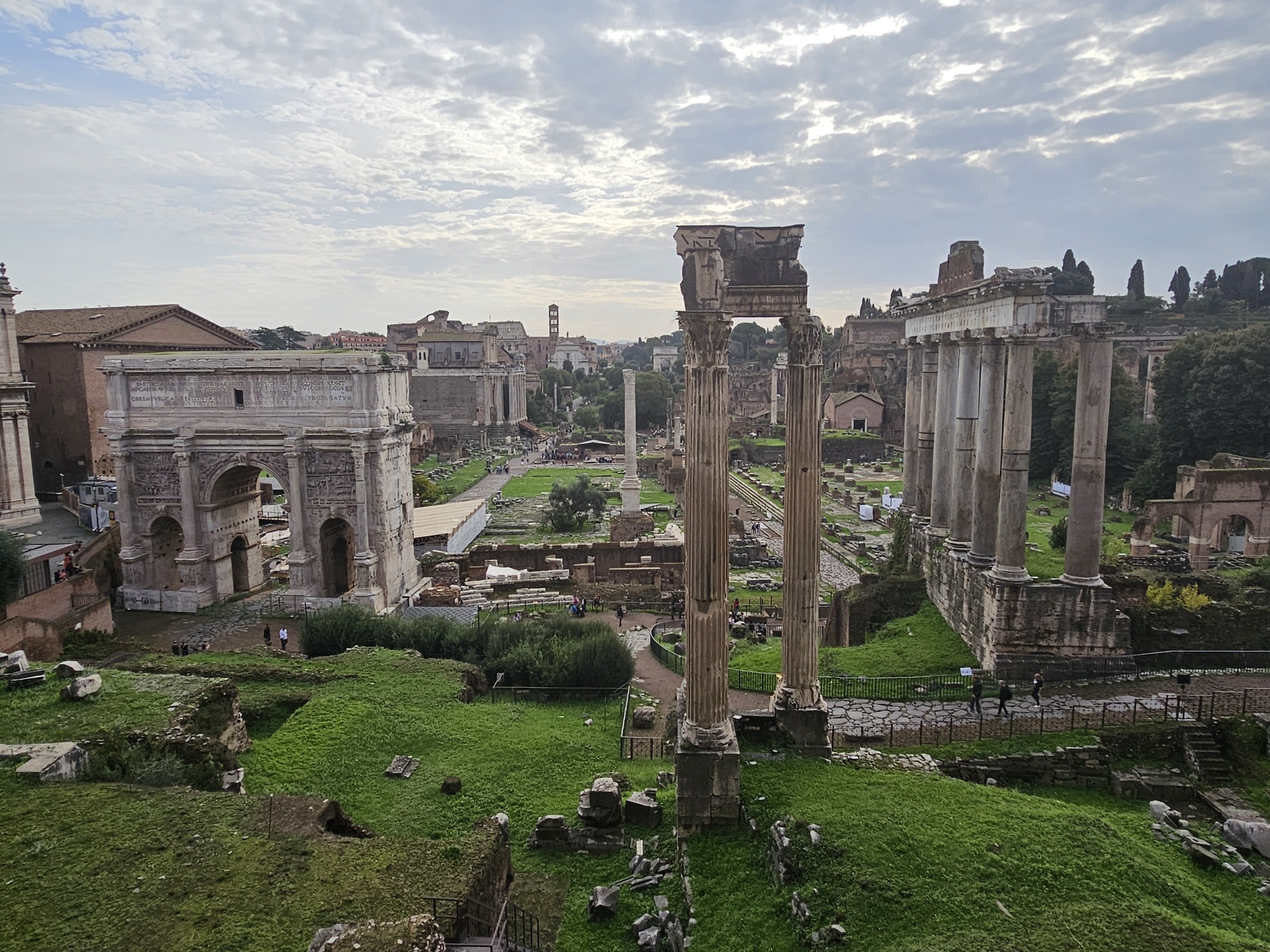



I should author a book called “Rome the Umpteenth Time” highlighting the places we visited that were new-to-us. Rome may seem static, but she is always undergoing change.
- We had, remarkably, never been to the Capitoline Museums. Underappreciated, vast, uncrowded, with amazing statuary and Renaissance art plus a drop-dead perfect view over the Roman Forum. We passed a quiet hour with few other patrons around and no massive tour groups.
- Palazzo Braschi, Museo di Roma, offers insight into how Rome has changed over the millennia, and startlingly over the past 100 years. We had visited once in 2012, but seeing these exhibits again made me realize my annoyance at the current state of pre-Jubilee clean up is a mere hiccup in this city’s progress. It would be nice if they were not renovating all the fountains at the same time.
- Largo Argentina, long known as a cat sanctuary, opened the sacred area in the past few years enabling one to descend to the area where the Roman senators murdered Julius Caesar. (You cannot walk in that site but still impressive!) And the cats are there too. Bonus.
- Forma Urbis, a new museum housing the surviving fragments of a stunning marble map of Rome carved early in the 3rd Century. An 18th Century grand map overlays the fragments showing the relationship to more modern locations. Hard to understand until you see it and the lights go on. A remarkable display.
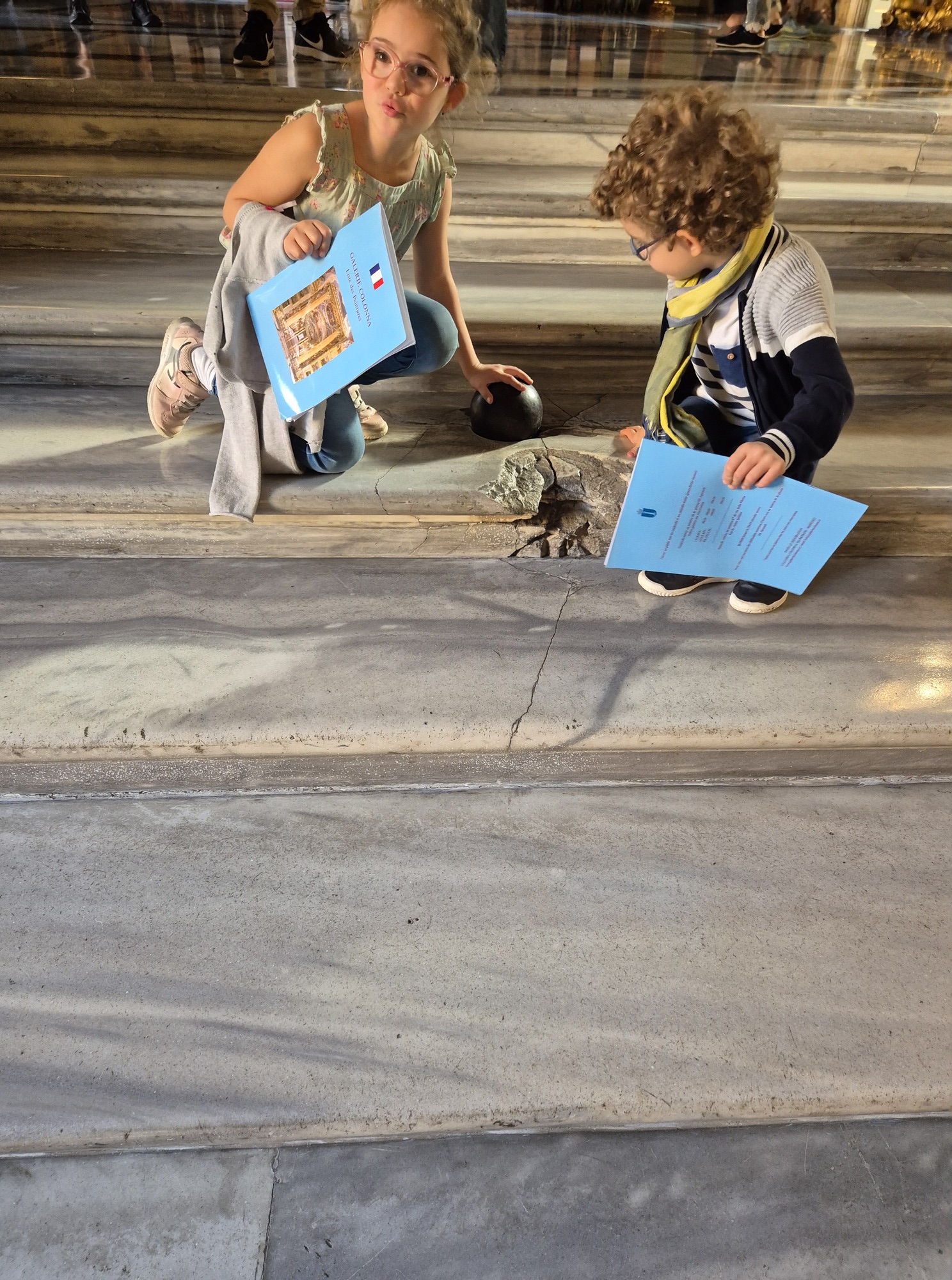
- Galleria Colonna was another repeat. We were there in 2013, as I wrote about in the blog Rain in Rome. This time, we had dry, lovely fall weather and were able to tour the fabulous gardens which are not open when it’s wet. The gardens alone were worth the price of admission. The Princess Isabella Apartments are an extra-cost add on that we popped for and were also worthwhile. Isabella was from a wealthy Lebanese family and married a Colonna prince. She used these fabulous apartment to entertain her guests. Interesting articles here (in Italian, so use Google Translate to enable your favorite language). Il Filo Rosso Tra Beirut e Roma della principessa Isabelle Helene Sursock and Isabelle Colonna l’ultima regina.
We had a lovely extended stay of 8 nights, with mild weather, great sites old and new, excellent meals at old favorites and two new-to-us restaurants that we were sorry we could not visit multiple times. The mileage on foot helped (we hope!) defray impact of the consumption of fine Roman cuisine.
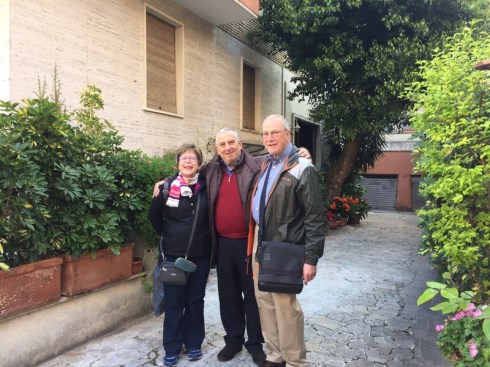
Holding hands is nice even after 40 years of doing so.







 Girovaga