Hidden Venice (and other miscellany)

3 Nov

3 November 2025.

Venice doesn’t call to me, she screams at me to come and visit. It’s been four years since we last cast eyes on La Serenissima. You’d think after 11 visits we’d have seen all there is to see. Since we were staying an hour down the train line (Ferrara) and the day was fall perfection, we hopped a Frecciarossa and made the count an even dozen.

The challenge was to find something unique away from the crowds at San Marco and Rialto. Thanks to the 2025 Architecture Biennale, I found a walking tour that took us to places we did not know you could access, in particular, the Arsenale, which used to be off-limits except for The Biennale exhibits held in the Arsenale South. Now the northern section is open on a limited basis and the route to get there is astounding.

A brief historic diversion is in order if you do not know what the Arsenale is. It dates to 1104 and was the shipbuilding center of the Venetian Republic and lasted until Napoleon ruined things in 1797. It was the largest industrial complex in Europe before the Industrial Revolution. Wikipedia has a fine synopsis if you want to know the details and see some renderings. https://en.wikipedia.org/wiki/Venetian_Arsenal. Click on any picture for a better view..

The Arsenale: The approach to Tesa 105; Art in Tesa 105; Inside along the tese (old workshops); Waterfront inside. Imagine Venetian ships being built here 1000 years ago. Notice NO CROWDS.

The walking tour is called “Castello, Naval Art and Traditions.” No, it is not a Rick Steves Triple Triangle Must See tour. That is the beauty of it. Instagrammers have not descended en masse. Monday to Friday from 8:00-17:00 you can visit through Tese 105, an exhibit space and bar on the north side.

How you get there is circuitous, and that is the fun of a Venice walk, zig-zagging down various calle, up and down countless bridges, discovering new-to-you sights, second-guessing your location and direction, taking more pictures than you can fathom. We saw very few people anywhere on our route and most of them seemed to be local residents. We especially enjoyed the elevated metal walkway along the Laguna Nord wall of the Arsenale. Perfect waterfront view and luckily not a windy day or it could be a mite unpleasant. Click on any picture for a better view.

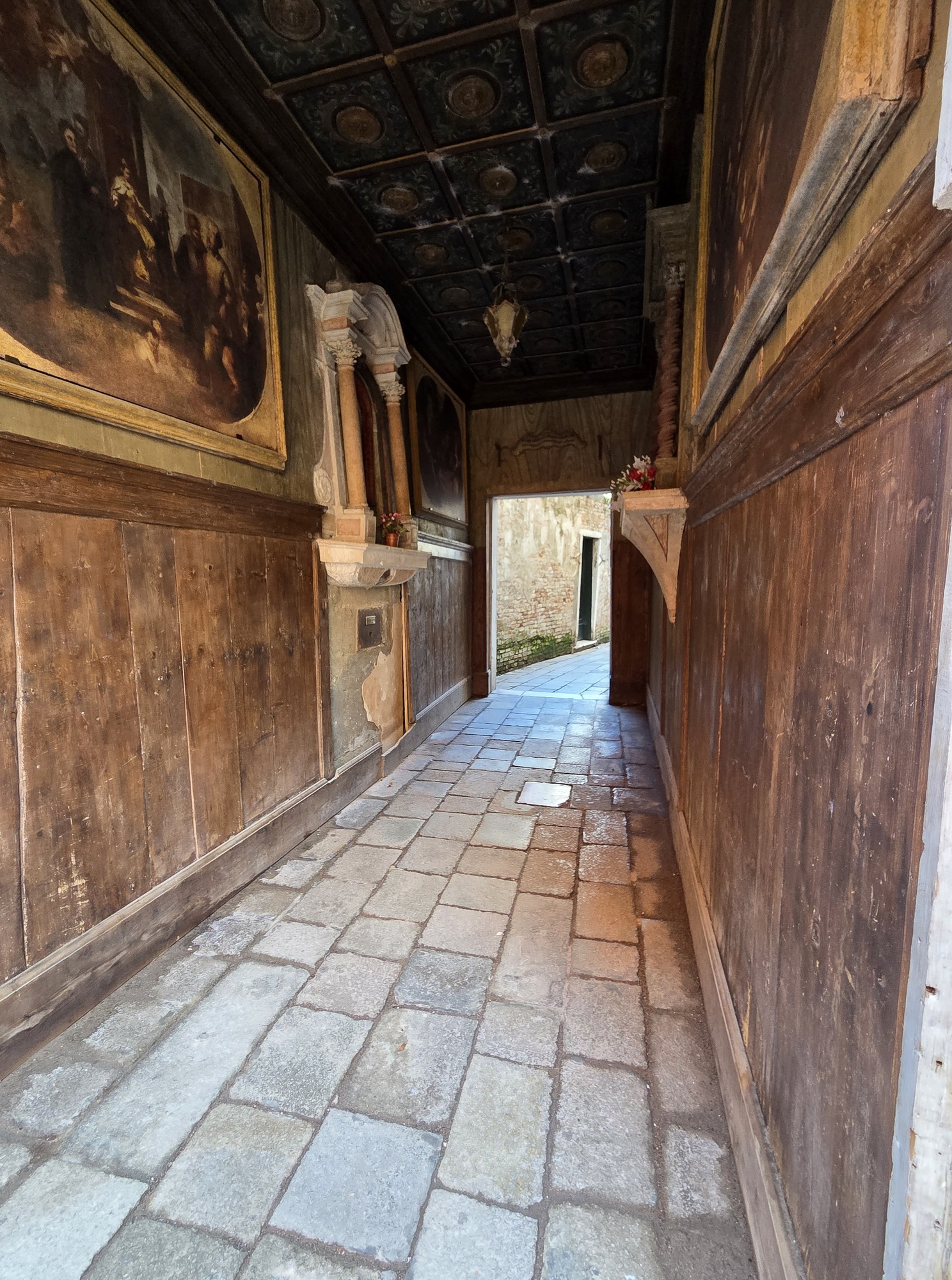
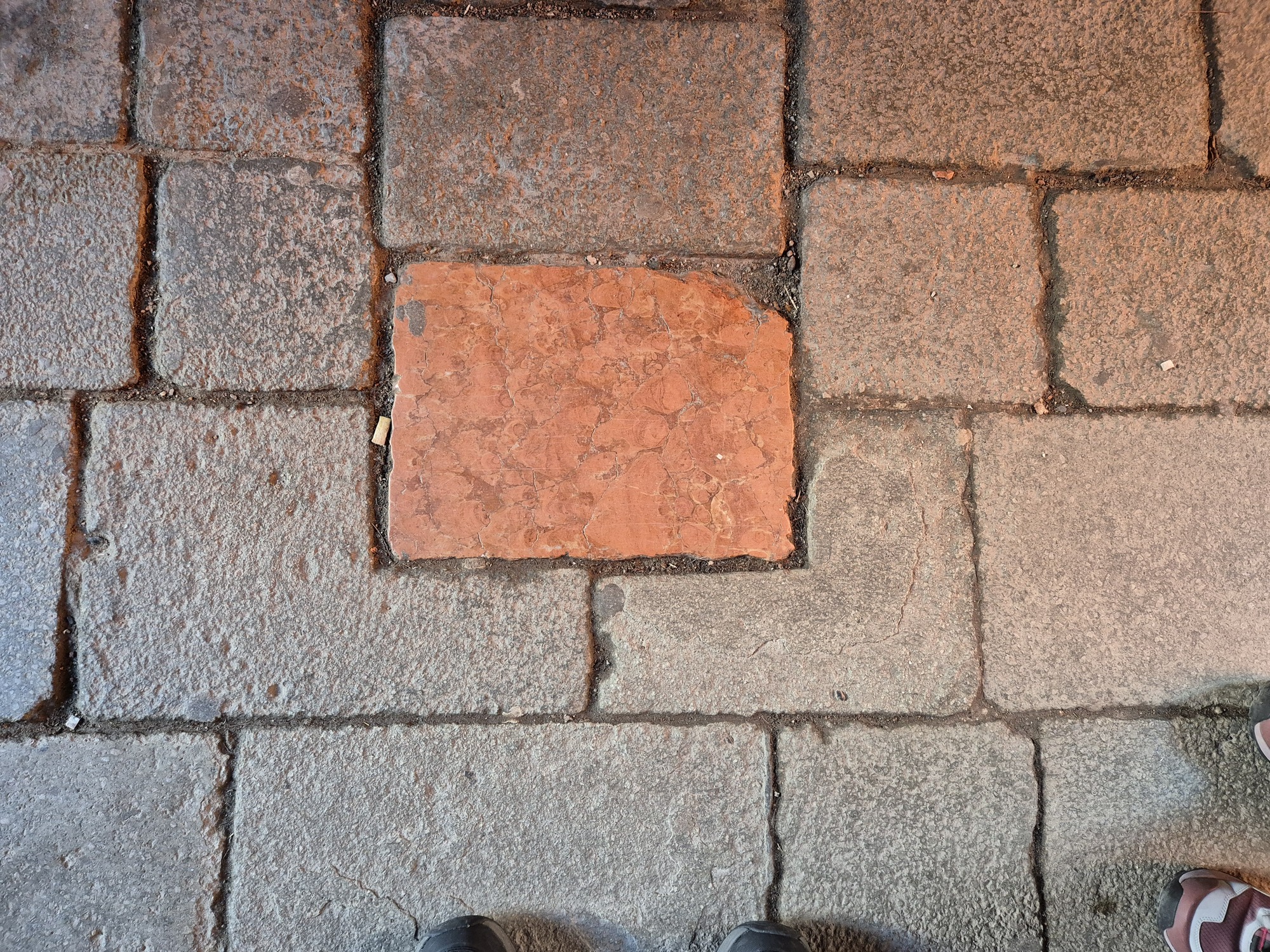
Top Row: Baroque Church in a narrow calle, far from the crowds of San Marco; A sotoportego (underpass) with a shrine dedicated to the Madonna for ending the plague in 1630; The Plague Stone is the only red stone in Venice and is said to bring bad luck if you step on it.

Bottom Row: The metal walkway along the imposing wall of the Arsenale; View of Murano from the walkway.

The tour is described in detail here https://events.veneziaunica.it/en/things-to-do-in-venice/itineraries/castello-naval-art-and-traditions. Full disclosure: we skipped steps 9 and 10 as we’ve toured the tail of the fish several times before. Click on any picture for a better view.
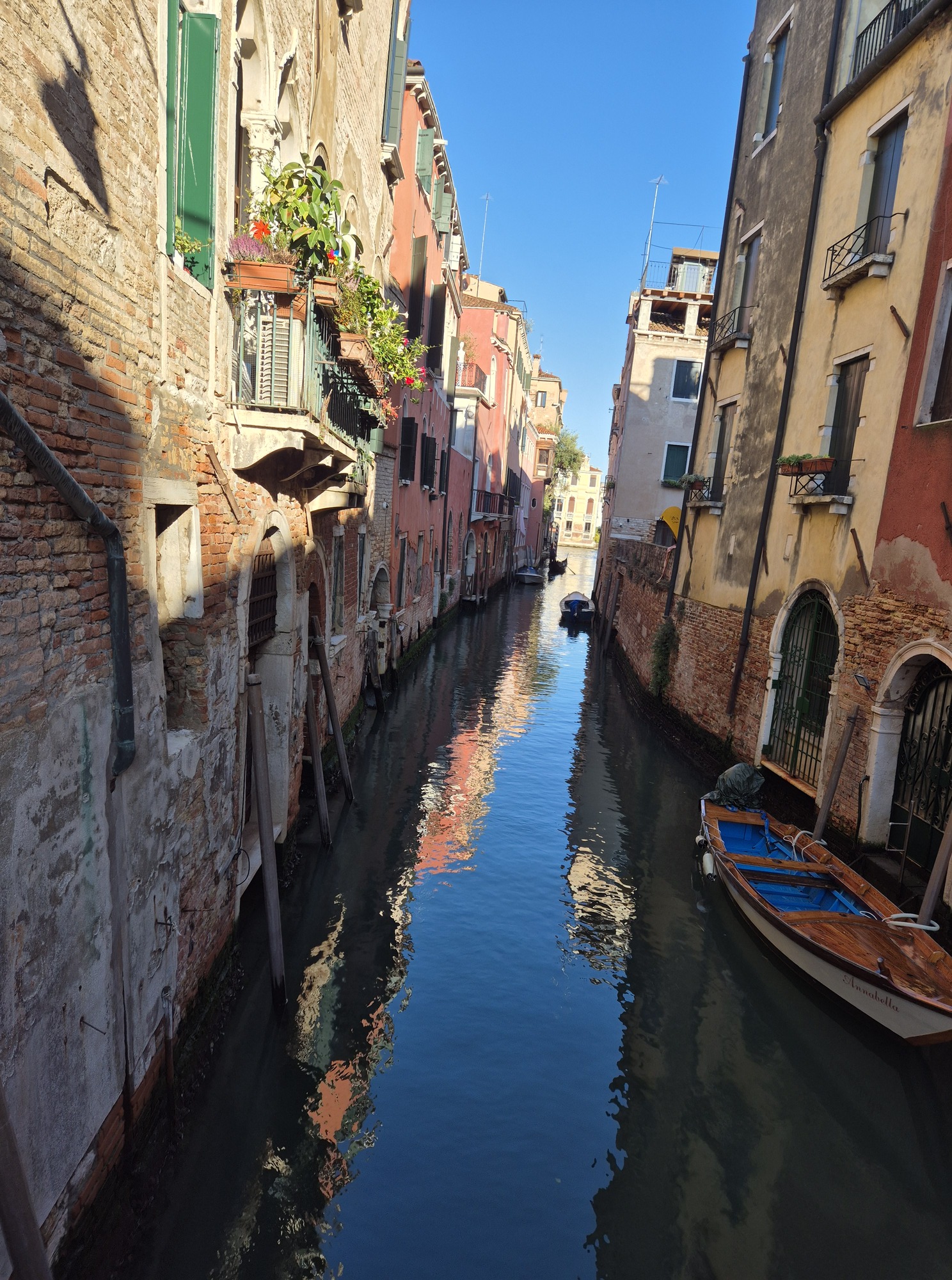
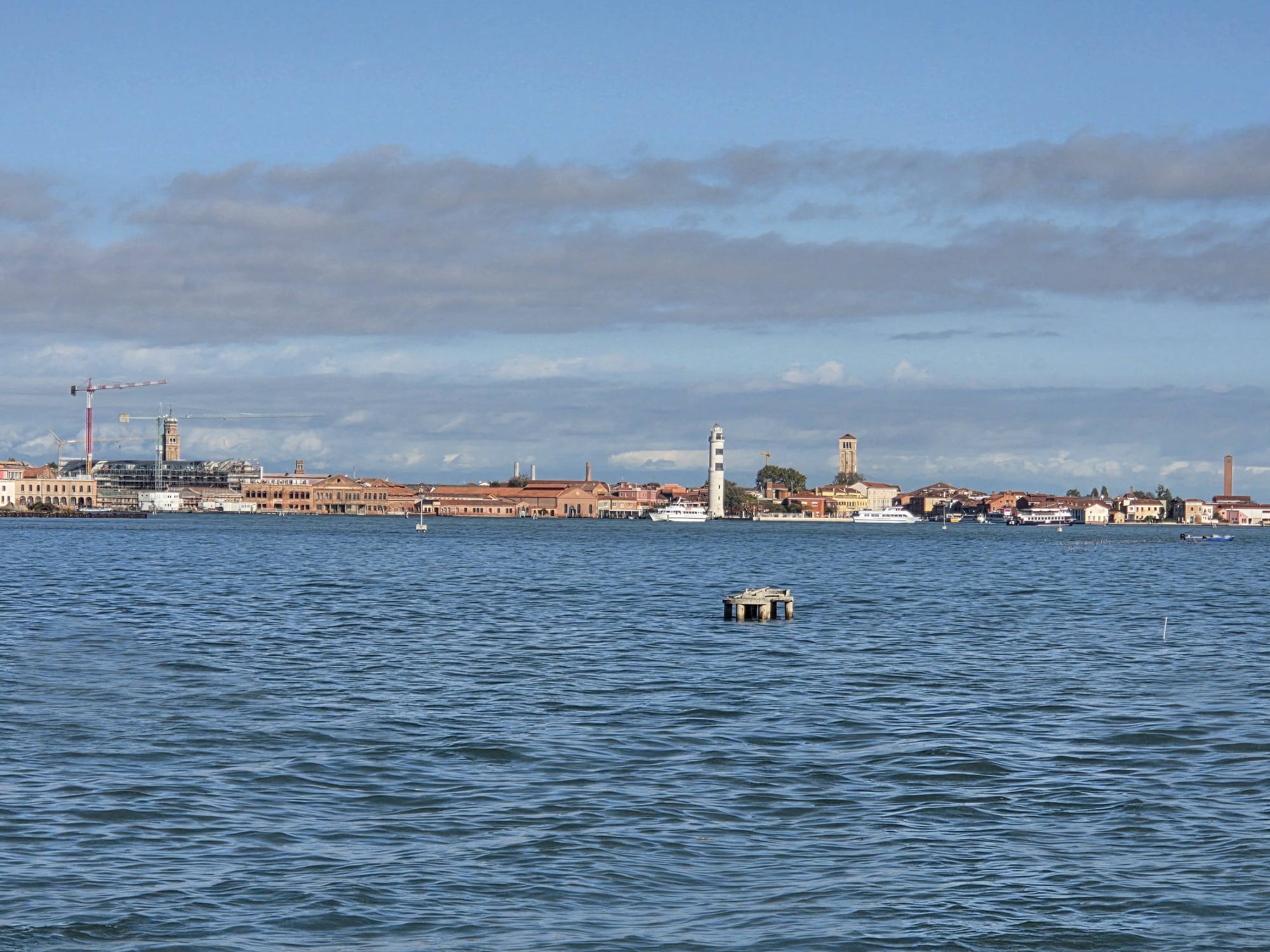
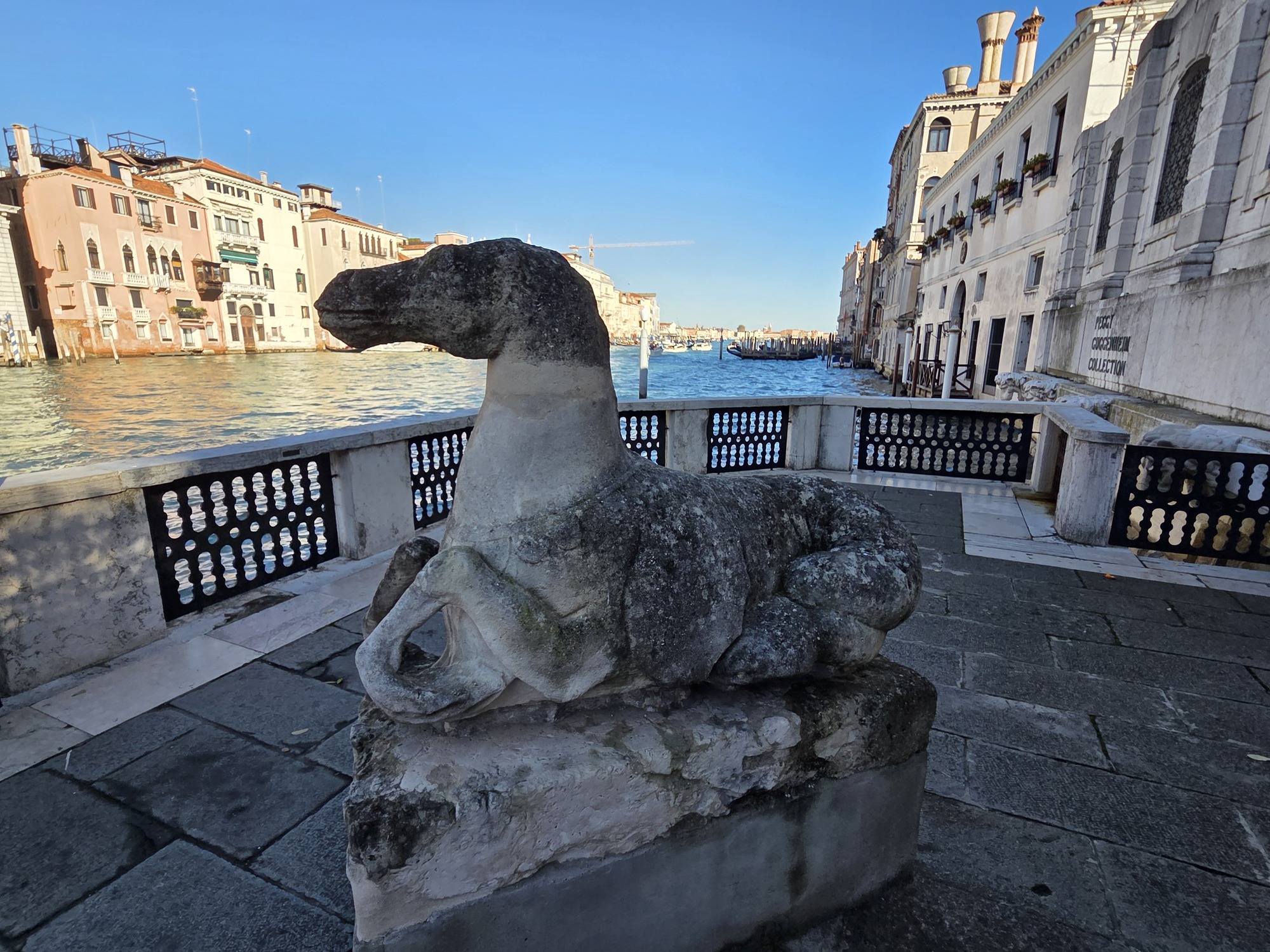
A few more Venice pics on a delightful October day with glorious light.

Top Row: Grand Canal view; Quiet canal; On the Guggenheim’s terrace. Middle: Selections from the Guggenheim Collection; Bottom: Peggy’s view of the Grand Canal.

This portion of our trip, two weeks in Ferrara, was day-trip centered. We dislike, in general, a lot of short stays of 2 and 3 nights, preferring a week, or more, as a base. In other words, SLOW TRAVEL This has served us well in hiking locations like Ortisei and Lauterbrunnen as well as in cities like Paris, London, Rome, and even Venice. In those places we’d head out on a hike or out to see a sight, returning as needed to our digs for meals or just to rest. Doing day trips from Ferrara, however, was challenging as we had several very long days door-ro-door with significant transit time. The good news is, that transit was by train. The downside is that a lot of the trains are regionale, meaning “local” trains that transport people to work and school and stop at many many places and ae often full of high school students.

Upside? We had a great apartment and delightful host. I got to speak Italian quite a bit as it is not a prime tourist destination. I don’t think I heard one native English-speaker until our last night in town, and she was married to an Italian raising bi-lingual children.

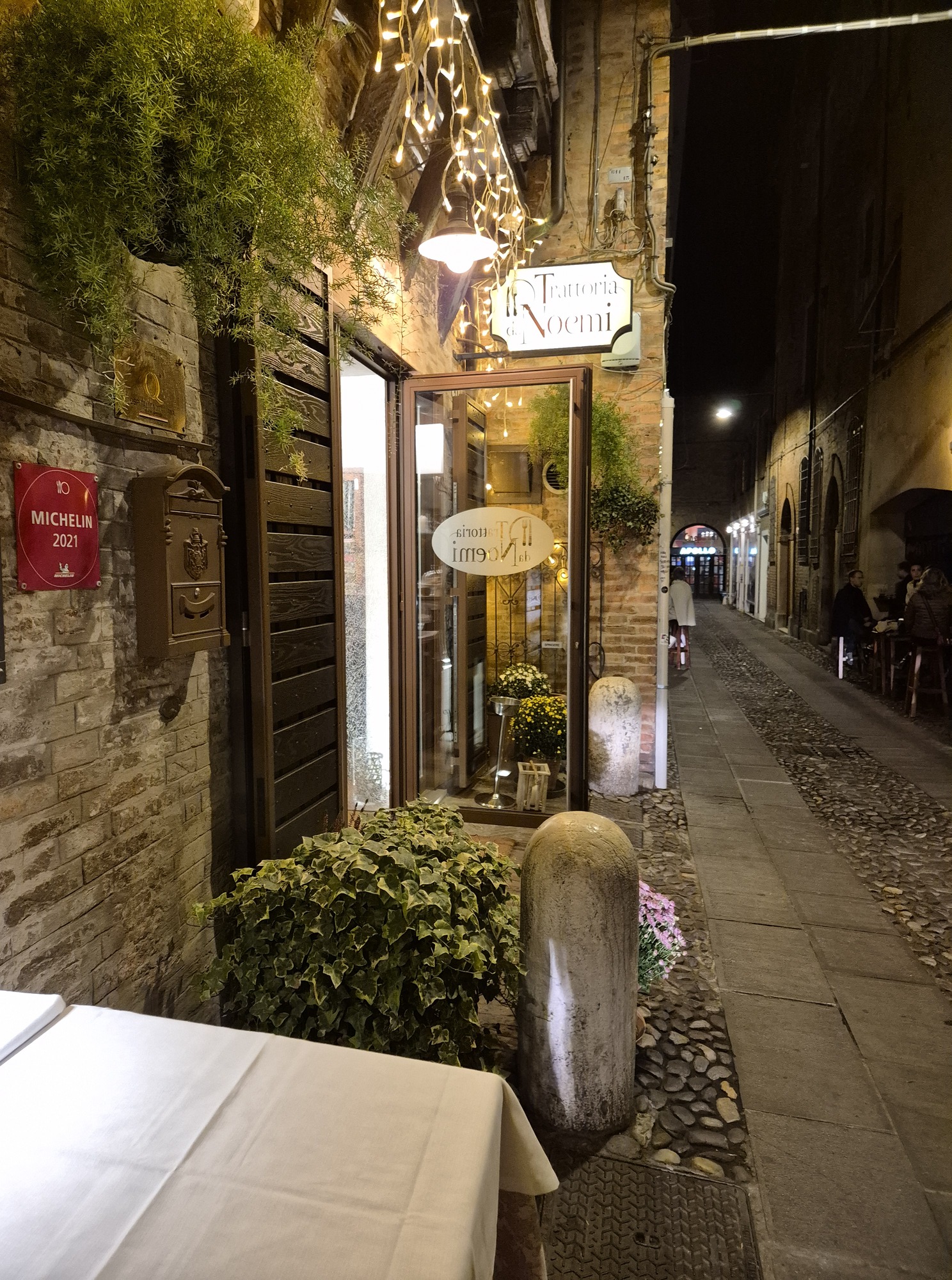
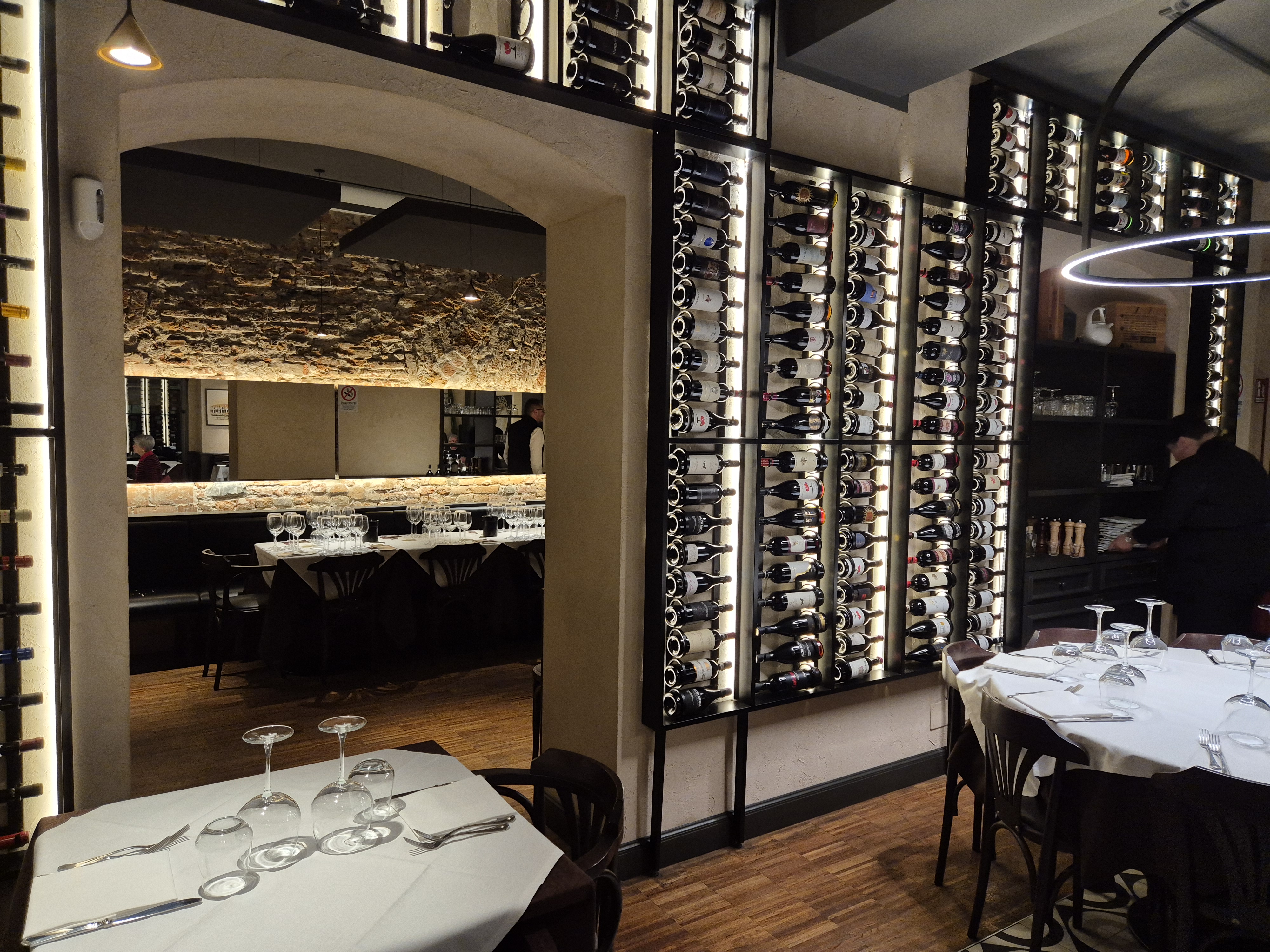
The food in Ferrara was excellent: cappelletti with pumpkin and ragu, pasticcio, and a tremendous pizza at Settantatrepercento, aka 73%, the percent hydration in their perfect crust.

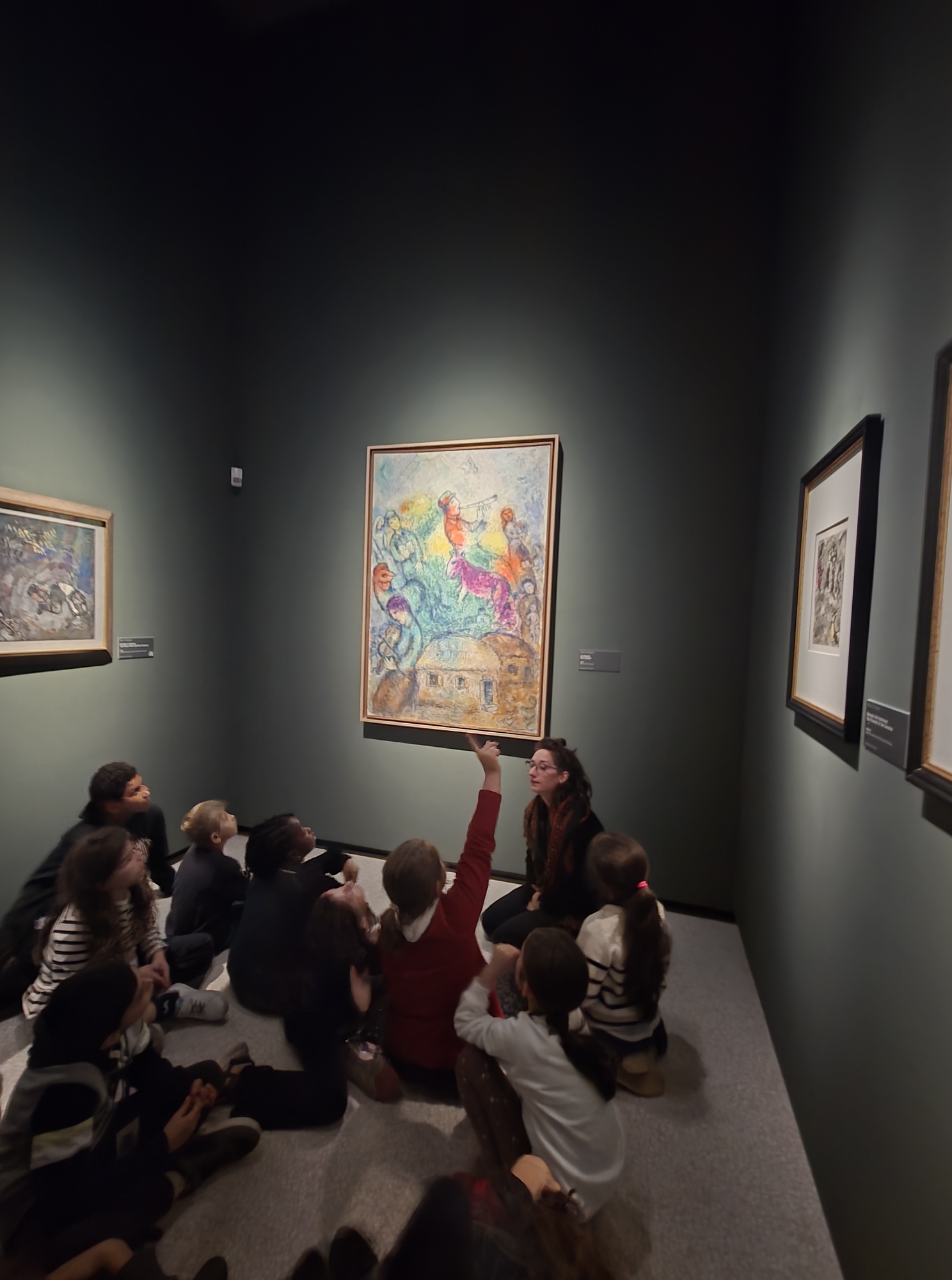
Ferrara is a very old city with an interesting history involving the Dukes of Este and the Papal governance after the duchy failed to produce an heir. We had great food and an insightful private walking tour. We walked the entire ancient perimeter wall (mostly intact) of about 6 miles, and saw an amazing Chagall exhibit that happened to be in town. We filled in with myriad day trips by train: Padova, Ravenna, Florence, Bologna, none of which had we visited in many years. Truly enjoyed seeing them again. Those mosaics in Ravenna! The Scrovegni Chapel in Padova! Florence was not as crazy with people as we feared it would be and we found a delightful trattoria where it seemed mostly locals were lunching. Venice still screams at me to come back and spend a few more nights. Click on any picture for a better view (unimpeded by captions).

Samedan, (see Graubunden Wrap-up) our first two-week leg, was excellent and probably our favorite. Lots of outdoor time, great Swiss trains, mostly good weather, well-equipped apartment and a lovely host. It’s a tiny town that does not draw tourists like its neighbors. They speak Italian as well as German, so that worked nicely.

Basel was interesting in itself, but harder to day-trip from as it turned out (see Basel Wrap-up). Everything in Switzerland was relatively easy to reach and there are cute towns and villages everywhere with ancient castles and charming streets. France was more challenging to reach due to poor transportation connections. We had hoped to spend more time in the Alsace but it was too difficult without a car. The best of the Black Forest in Germany is also a bit far removed from Basel to visit by train. To us, a decent day-trip should be within an hour by public transport. 90 minutes is OK, but two hours each way is a non-starter.

Ferrara tested our plan to try a base with regional day trips. We would not do it again and that is not to detract from Ferrara. Some of the rural places I counted on visiting by bus became impossible due to the schedules. Oh to have Swiss transportation everywhere!

We learned that we still do not want to drive. Thought about it twice, in Basel and in Ferrara, but rejected it as too stressful. In Basel, the cost of the rental was cost-prohibitive (about CHF 140.00 per day!) though the driving would have been more efficient and supported a wider range of options. In Italy, the cost to rent was not awful, but parking in Ferrara is at a premium and in some of the cities we visited by train, very hard to park as well, not to mention the dreaded ZTLs where you get fined if you enter.

We also learned that a first visit to an area should probably be in the 3-to-5 night range. Better to leave wanting more time than less. You can always go back. That does mean moving around more and less of what we see as SLOW TRAVEL. As we plan our trip for next fall, we are already thinking of visits to some of our favorites again, after a year off from Ortisei and Lauterbrunnen. But we’ll add in some new stops as well, as we continue to look for more places to call “favorite.”

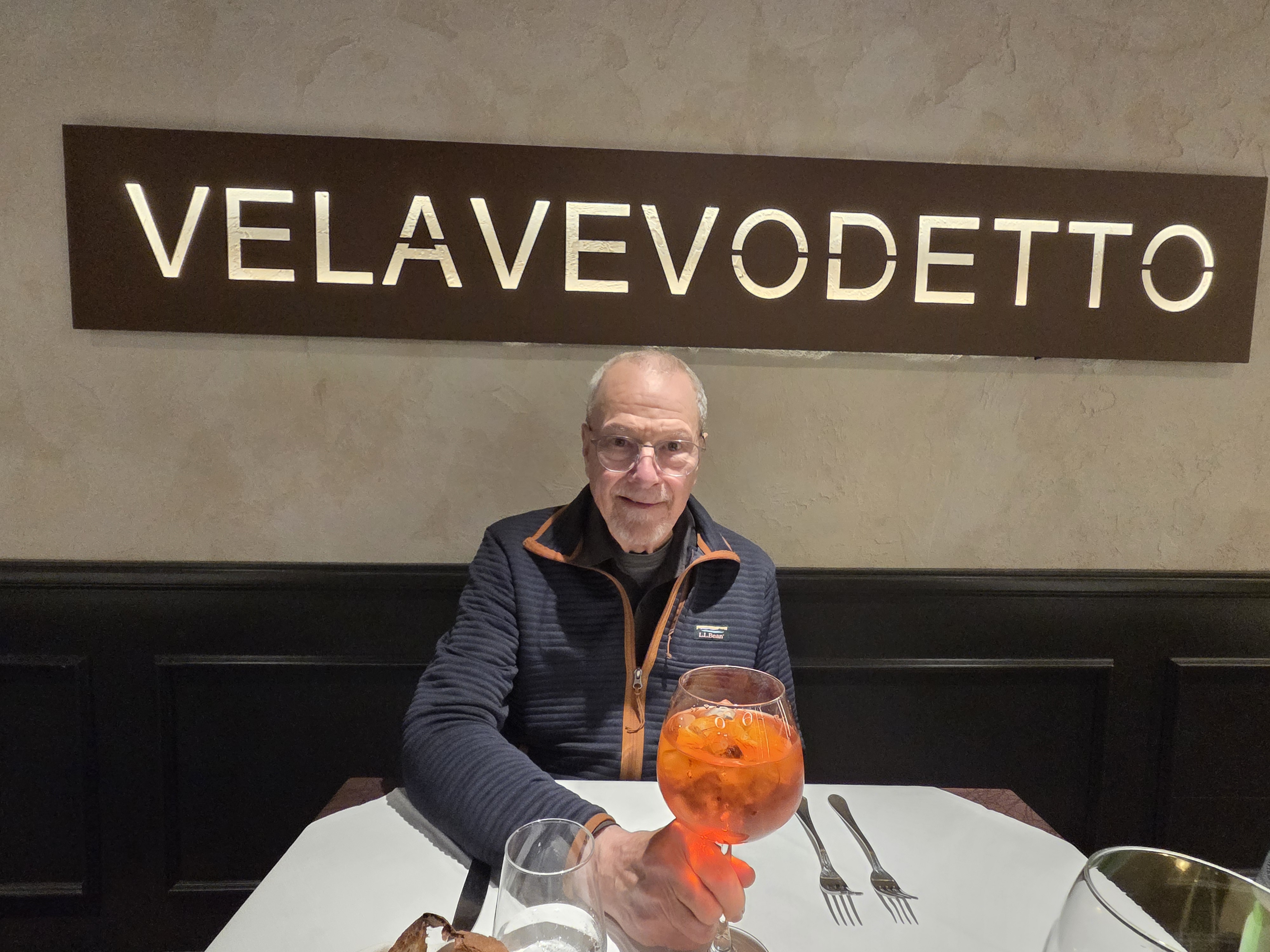
We wrapped up with a pre-flught stay in Milan, which is usually an annual stop for us. We have a favorite hotel and a restaurant we have dined at for over a decade, but this year we discovered a new-to-us restaurant called Velavevodetto. The original, Flavio Velavevodetto (Flavio, I told you so), is in Rome but we never managed to get there during our residence. We love Roman food so a tram trip across Milan on a pleasant October evening was appealing. It was terrific. Have to arrange a stop there again next fall.
Basel Wrap-up

15 Oct

15 October 2025.

Schweizerdeutsch and Italian mix with occasional Chinese and other tongues and reverberate off the buildings in our neighborhood. Children play outside and even adults glide by on scooters and bikes, laden with packages from the nearby Migros. Apartments blocks are six-stories high and and tightly packed, as with any high-density city. Parking is scarce. This normal, middle-class neighborhood in a vibrant city has been our home these past two weeks.


We chose Basel as a base for two reasons: (1) It is somewhere we have never spent any time and (2) its location in the tri-country region, the Dreiländereck (border triangle) of Switzerland, Germany and France, offered the opportunity to explore a small part of Germany, the French Alsace, and this pocket of Switzerland.

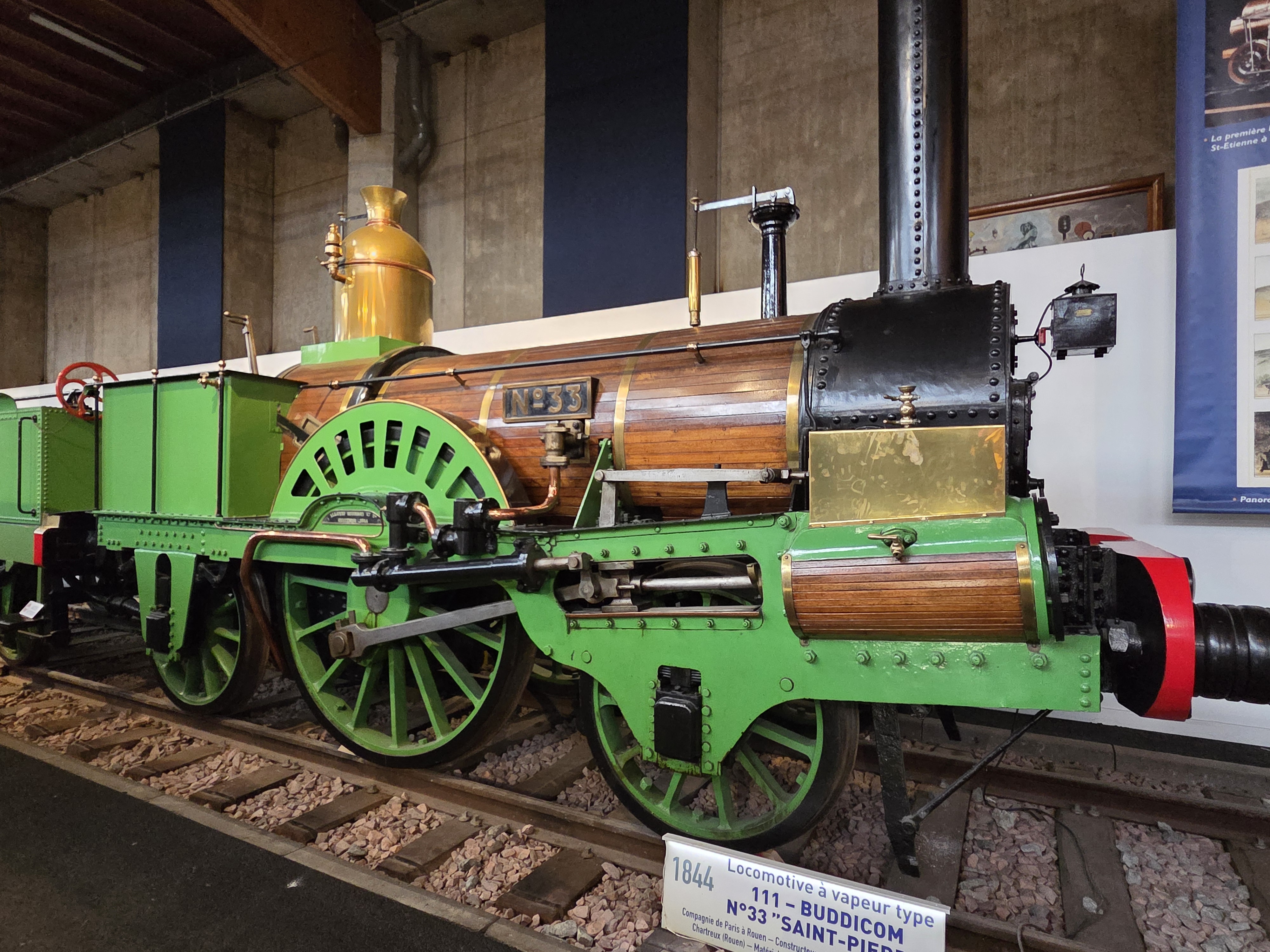
Ric at Cité du Train, the largest railway museum in Europe, with a vintage carriage; One of many vignettes staged in older railroad carriages, this one depicting an Italian family in 3rd class early 20th century. The oldest locomotive in the collection.


This year’s plan is to spend two weeks in each of three mostly new-to-us locations, establish a base, and explore the area. Samedan, our earlier stop, we had passing familiarity with as we had stayed in nearby Pontresina twice (see On the Road Again). Our familiarity with Basel extended to changing trains here several times over the years and grabbing a coffee in the station.

Our apartment is on the 3rd floor (4th American) of a late 20th century building: in other words, modern. Jennifer, our kind host, fully remodeled the unit a couple of years ago so it is quite comfortable and easy to live in. The windows have great soundproofing and automated shutters, critical as those charming neighborhood sounds become annoying when the gathering across the street, watching a match on Saturday night, cheering and jeering, are still doing so at bedtime. There are three grocery stores within easy hoofing distance, and the tram stop is the next block over.

Basel is a nice, medium-size city with a charming Alt Stadt (old city). People slip in-and-out of German, Swiss German, French, Italian, and English seamlessly. As a crossroads for centuries (the Mittlerebrücke is one of the oldest bridges on the Rhine and in the 14th  century became a significant crossing for international trade) the residents are accustomed to foreigners, although these days many visitors are here to take a Rhine River cruise, or to finish one.

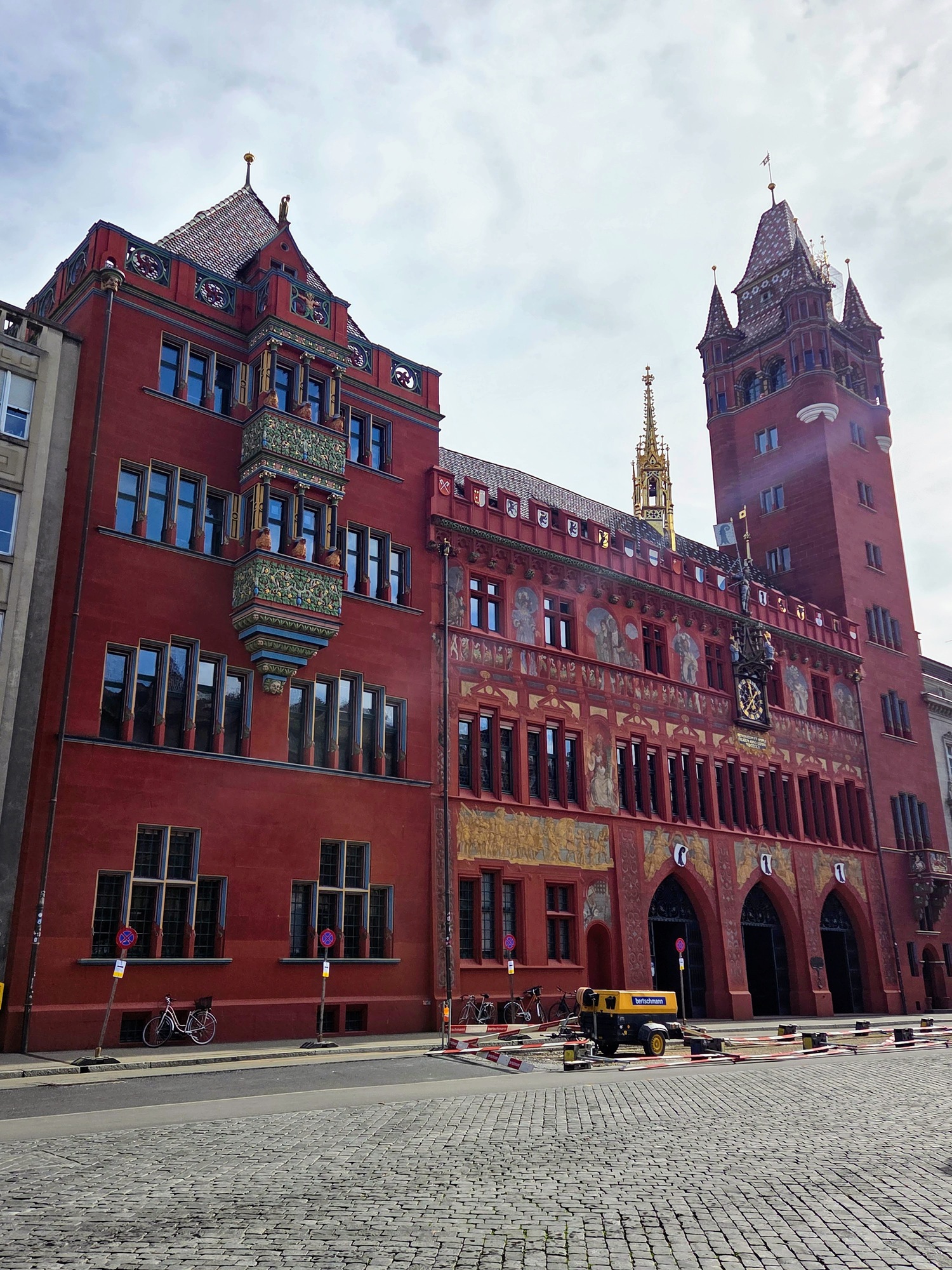
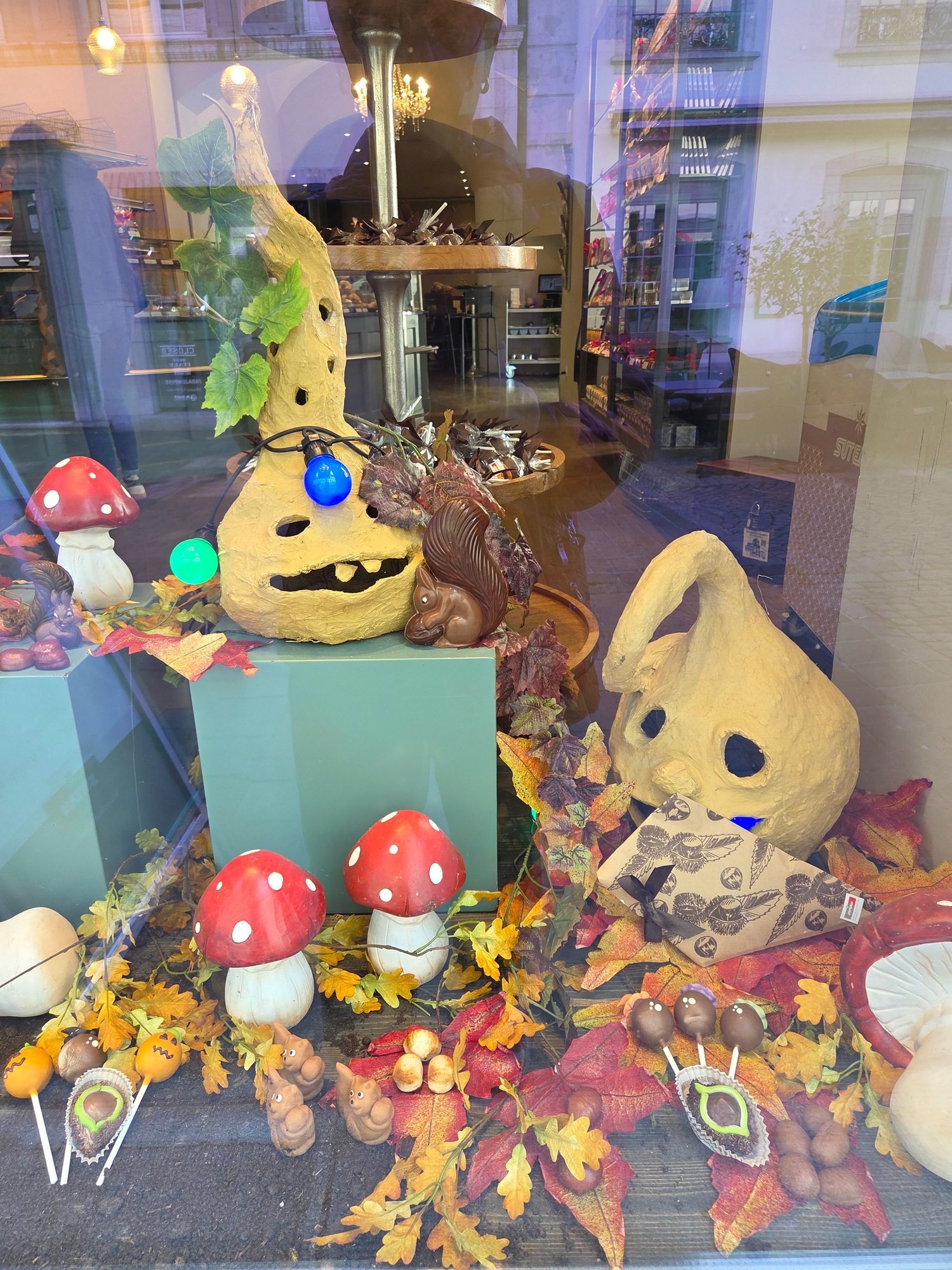
The Basel Rathaus, 500 years old. The Swiss pronounce it ROTE-haus which is a play on the color red; Halloween window decor; My delightful Pacific omelet at Sunday brunch

Exploring has been challenging without a car. I thought briefly about renting one for two or three days, but I find that stressful overseas. I do not even like driving at home so one of the benefits of our travel method is not having to drive AT ALL. The trains are, of course, amazing, but transit times can be frustrating. It takes 1.5 to more than 2 hours each way for some of the places I had scoped out to visit. That’s fine a couple of times a week, but not daily.

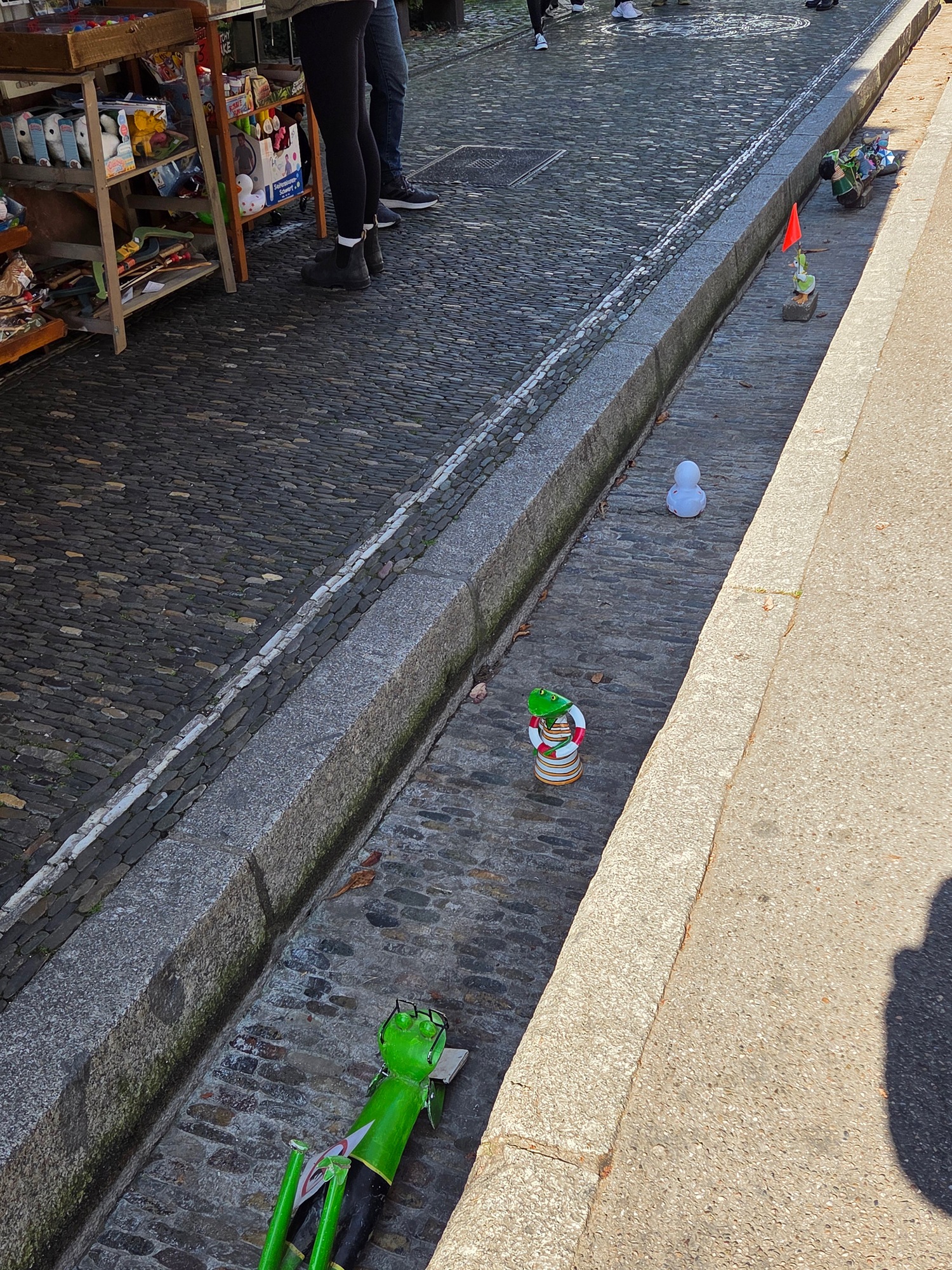
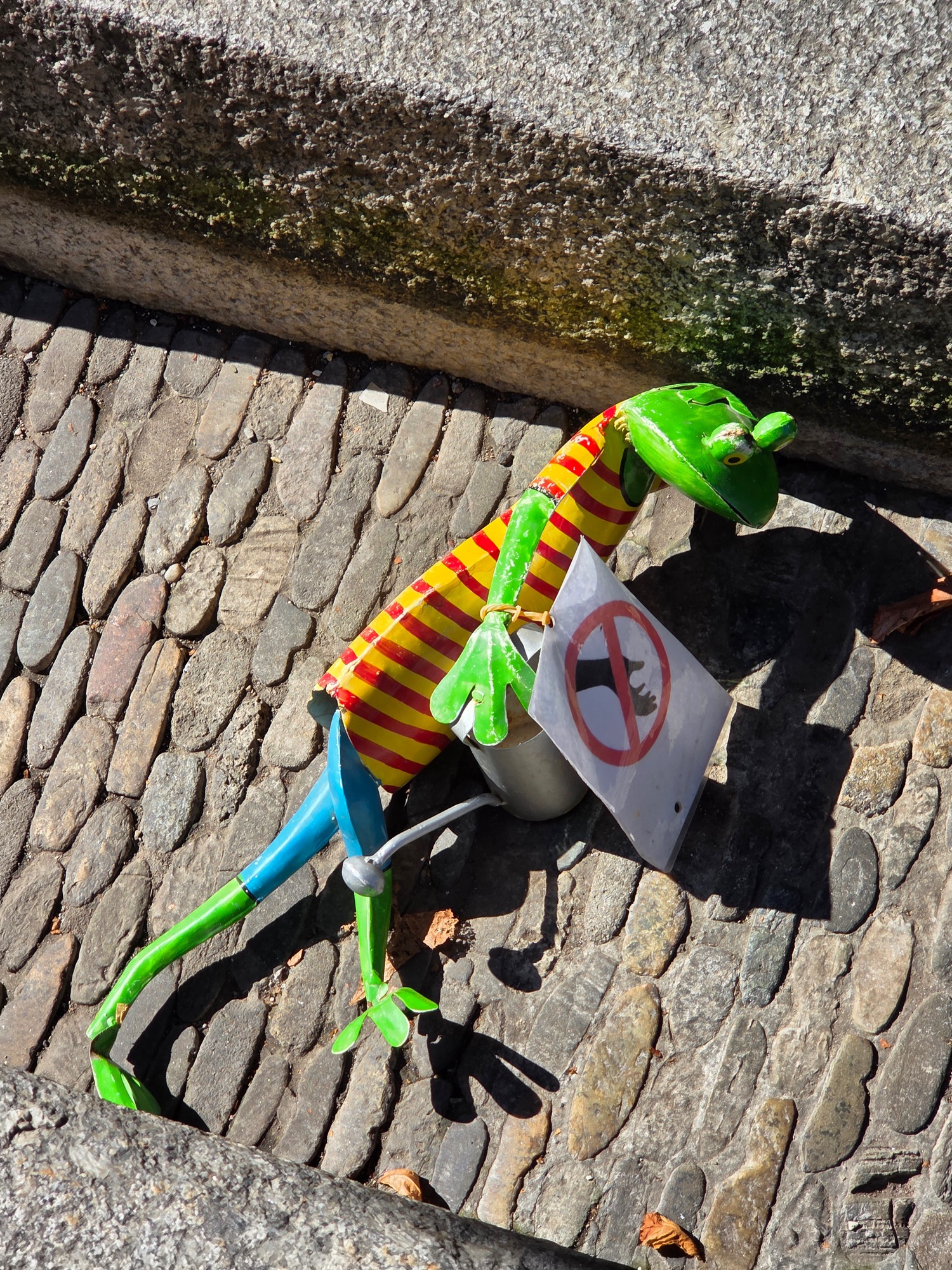
Scenes from Freiburg im Breisgau: The Munster from the top of the Schlossberg; The unique channels in the street to manage water accentuated with little figures in front of a toy store.

Still, we found things to do and visited some lovely and interesting places.

  • Our path to lunch “art” walk (Crossing Borders) was obscure but lovely and so very close to the city yet far away in atmosphere.
  • A circuit through vineyards above Turckheim and lunching on an Alsatian specialty, the Tarte Flambé.
  • Visiting the old towns of Solothurn, Freiburg im Briesgau, Neufchâtel, and Rheinfelden, each with its own character and few tourists.
  • The largest railway museum in Europe, the Cité du Train at Mulhouse (muh-LOOZ) France. Unbelievably well curated and interesting.
  • An informative and free city walking tour in Basel (tips appreciated and well worth it).
  • The Basel Zoo where we were introduced to species with which we were unfamiliar. Black-and-rufus Sengi, anyone?
  • A walk in an Alsatian wetland La Petite Camargue Alsacienne, just a quick train ride into France, near the airport, but a world apart.

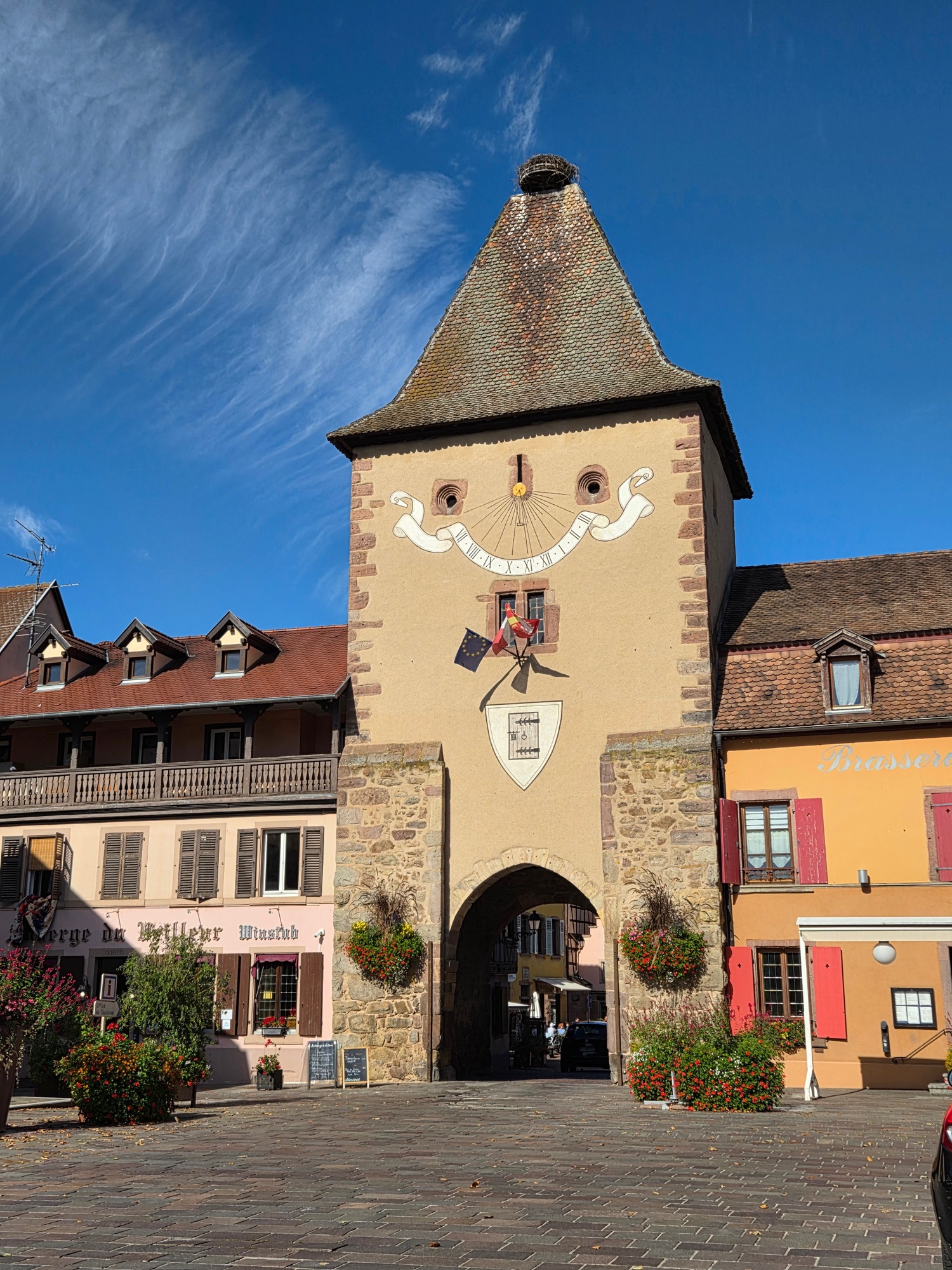
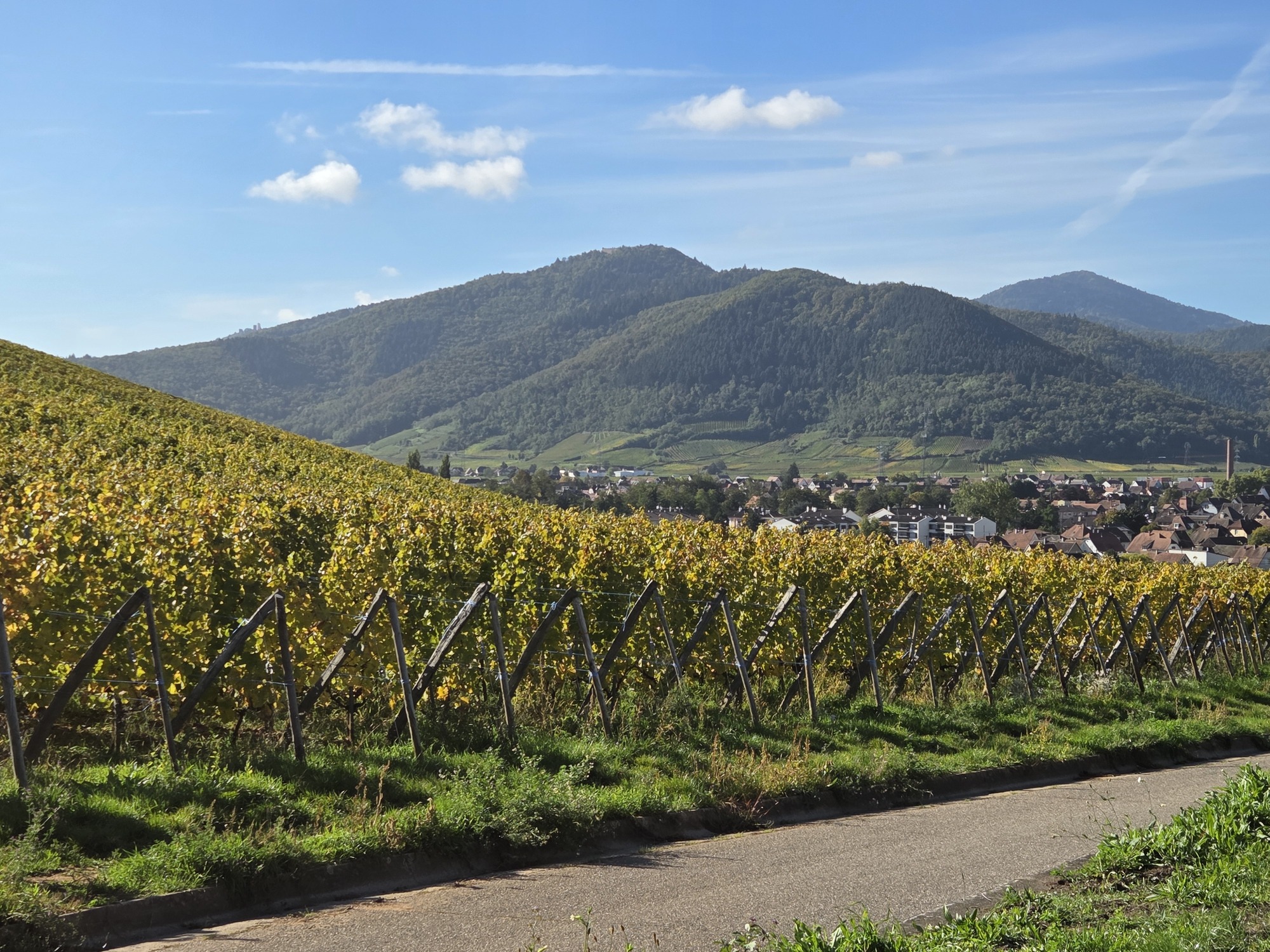
Cute little Turckheim top row: Gate, once imposing now welcoming; Main square with church; my Alsatian Pizza, aka Tarte Flambé. Bottom row: Vineyards surround Turckheim. We saw almost no one on our walk, just farmers in their fields. Last photo, the Collegiate Church at Neuchǎtel.

We are not museum people, as a rule. These days they are places to go when there is bad weather or there is a particular show or collection to view. (Although, I would go the the Orsay any day, if only for the Van Goghs.) The Tinguely Museum, with creations from the mind of an innovative mid-20th century artist, Jeannot Tinguely, was well worth our time. That said, there are abundant museums of interest and one could fill two or three days. But we had good weather so ventured out.

Tinguely Fountain, Basel

We missed several places I had hoped to go in the Alsace due to travel times. 2.5 hours each way to Ribeauville was not happening. Ditto the long ride to Strasbourg. The best parts of the Black Forest were just awkward and lengthy to get to from here without a car.

Should we have rented a car? It would have cut travel times but added expense. The train fares, even with a Swiss Half Fare Card, added up quickly. Nothing is cheap in Switzerland, although it was a pleasure to pay in Euros when we ate in France and Germany.

Would we come back? Not for such a long stay, but should an itinerary require a night or two in Basel, gladly.

A two-week stay gives you the chance to get to know a place in a way you cannot in short stay. Not every sight is a Rick Steves Triple Diamond must see, but then we are not fighting the hordes in Europes hot spots. There’s a lot of pleasure in that.

Now we are in Ferrara, Italy, another town that is not on the itinerary of most travelers. So happy to be back in Italy! More to come…

Cin Cin from the land of aperitivi!

Crossing Borders

8 Oct

8 October 2025.

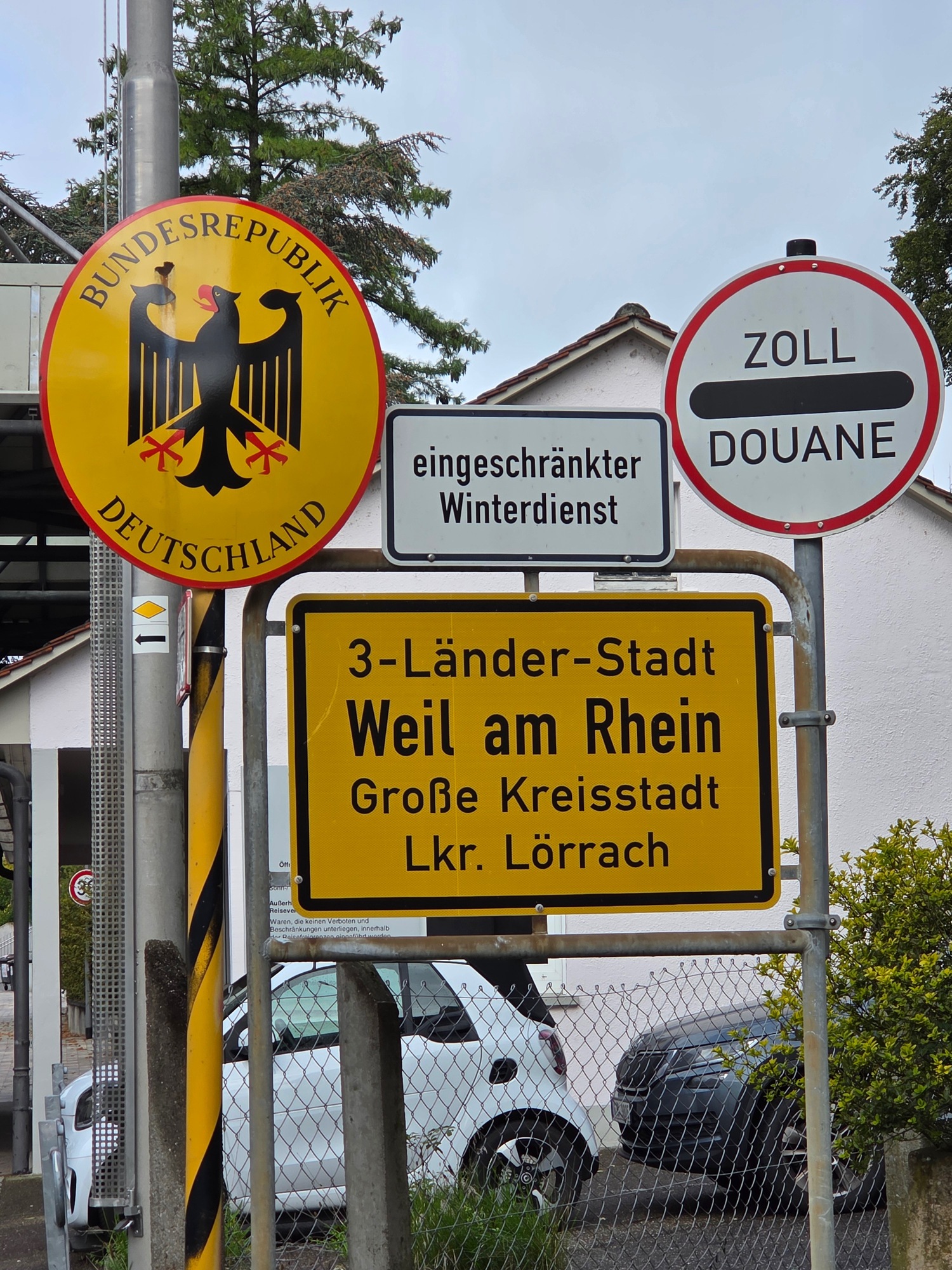
Monday we walked from Switzerland to Germany, passing closed border-control booths. Not in a high-mountain pass. A suburban street was our path, once again, to lunch.

Staying in Basel is part of our experiment this trip: two weeks in each of three new-to-us-places, exploring, finding places less-visited by our ilk, and “living local.” Basel is in a unique international position, a notch of Switzerland that juts into France and Germany and shares the Rhine River with both. This is a strategic shipping hub for Switzerland and the Dreiländereck, where the countries officially meet, is a mere half-hour’s walk from our apartment. Of course, since it is Switzerland, walking there is quite simple.

Our border crossing experience was not as straightforward. Ignoring spits of rain, we traveled by tram (so convenient!) to suburban Riehen to take the Rehberger-Weg, an artistically inspired walk between the Fondation Beyeler Museum and the Vitra Campus (a furniture company and design museum). Finding the start of the path was our first adventure as a construction project forced a detour. The track seemed obvious from there, but as we searched for the first piece of art we found we were off piste. Huh. Luckily, as paths cross-cross this country like plaid in a tartan, we were able to re-route ourselves with only a half mile walk for our trouble.

Top left and center, our inadvertent detour was at least well-trod and scenic; Top right, a vineyard; Bottom a distant view of Basel.

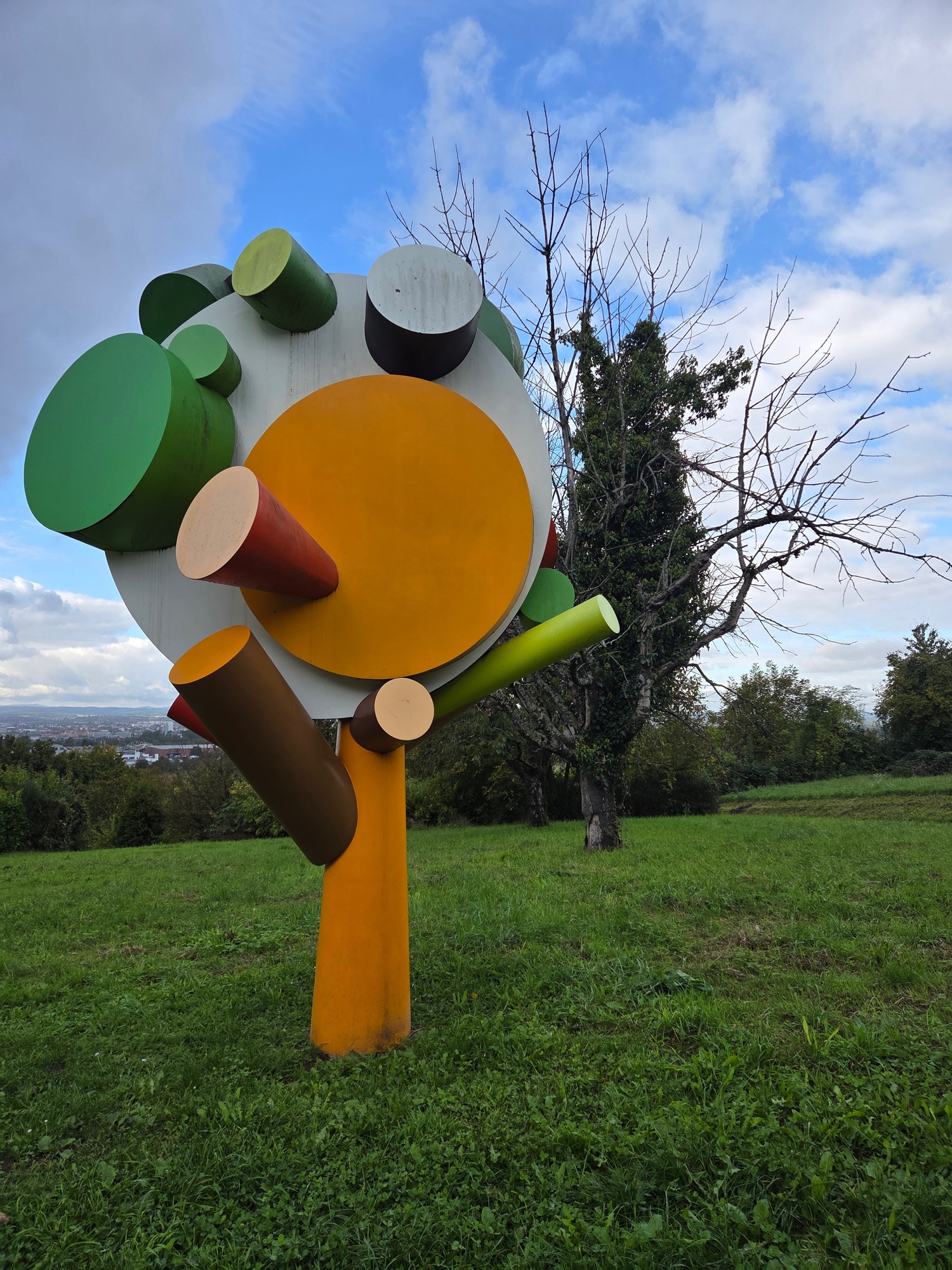
In my defense, I was guiding us with a very stylized map created by the artist. You can see it for yourself using the link above and clicking on Walking Map. Once I decoded what actually constituted art and which landmarks on the map corresponded, the going was simple enough and the views to Basel remarkable. We passed through small vineyards and past garden allotments, encountered little traffic and even fewer people. The art is, to me, obscure. They are (mostly) three-dimensional, brightly colored objects that allude to real things: a birdhouse, a streetlamp, a tree. We had fun making fun of them.


Top Row: Lookout, big enough for a human to climb into; Streetlamp; Signs. Bottom Row: Drinking Fountain (yes, it works!); Tree

The possibility of rain evaporated and we arrived at the Vitra Campus just in time for our Noon lunch reservation. Lunch in Germany, priced in Euros, was a treat both gastronomically and economically. A bus directly to our neighborhood left from Vitra every half-hour made our return uncomplicated.

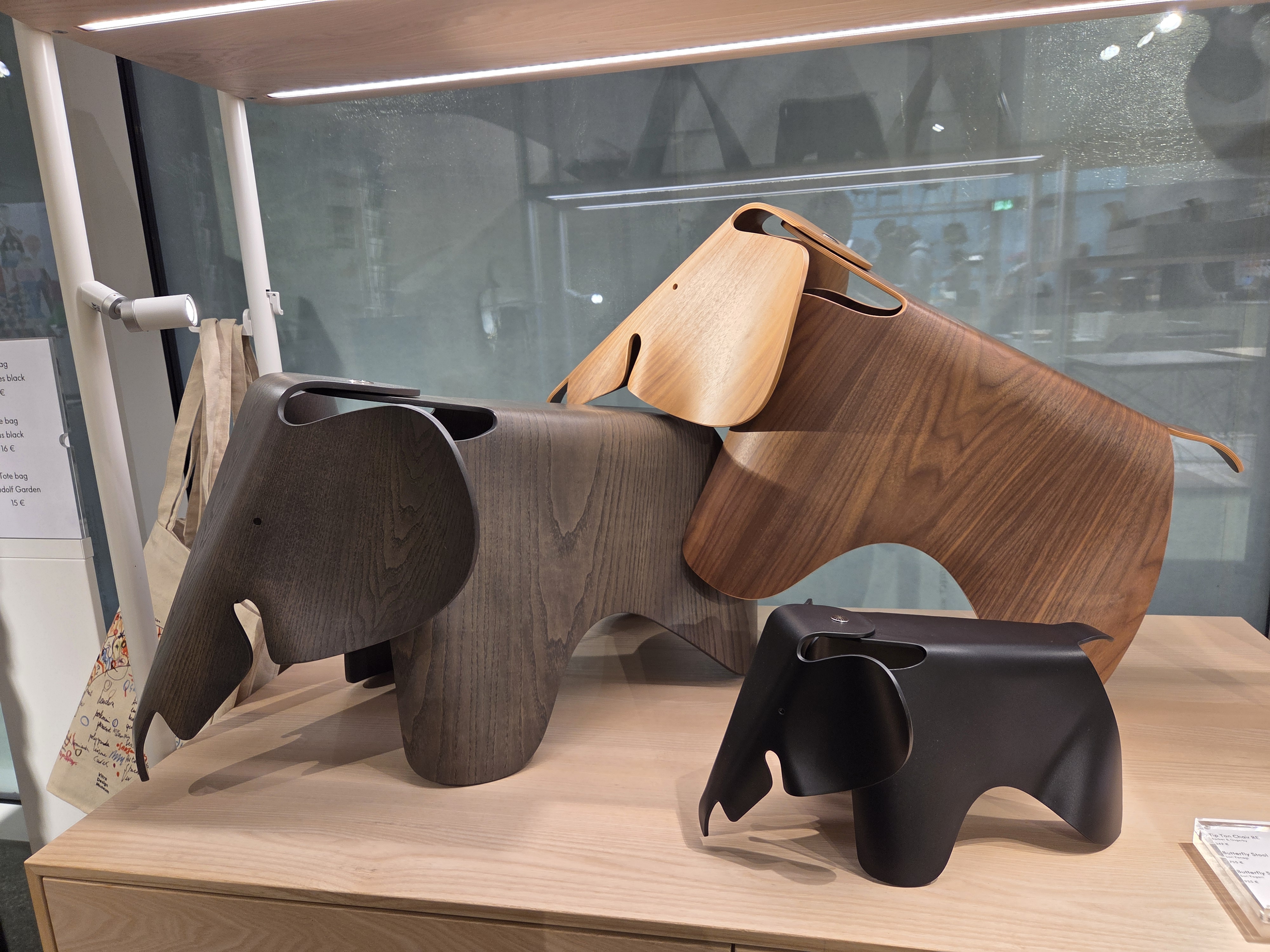
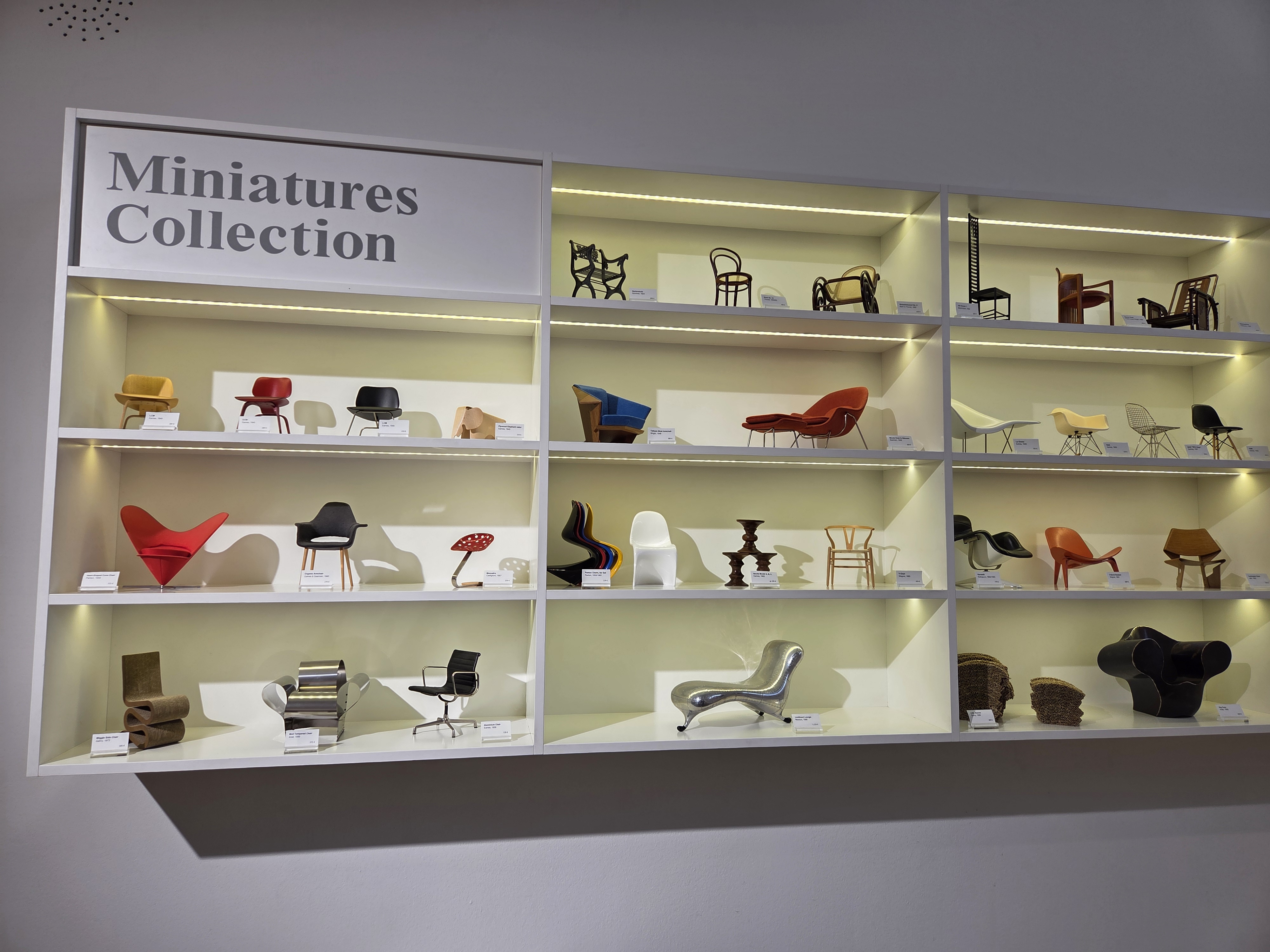
Top Row: Vegan quiche and organic salad at VitraHaus Cafe; A Vitra-designed chair for €429 which doesn’t seem bad until you realize it is a miniature like those in the case in the bottom row; A bit of elephant whimsy. They are for sale.

The path was envisioned as a 10-year project in 2015, and it officially ends this month. Presumably, the art along the route will go away…at least in time. We were lucky to have it as a guide.


Graubunden Wrap-up

30 Sep

30 September 2025.

From the heights of Graubünden to the lowlands of the Rhine River Valley, tonight we are sleeping 5000 feet lower than we have for two weeks. We are now in Basel with explorations in three countries planned for the next two weeks.

But first, a wrap-up on our time in Samedan.

Architecture

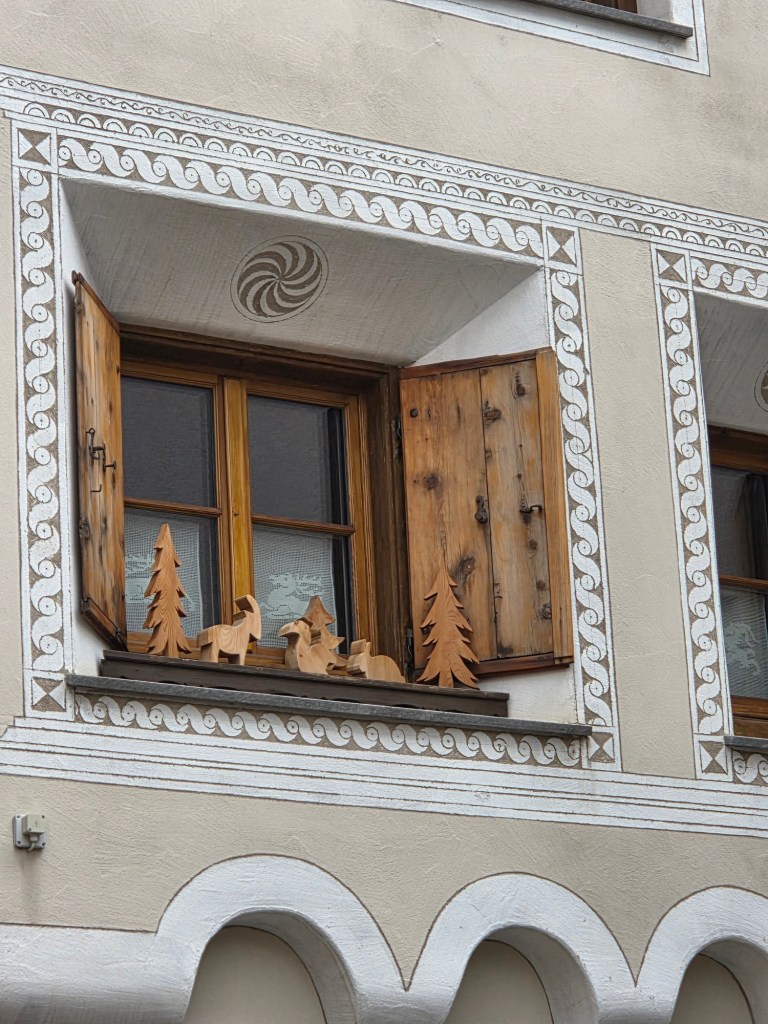
Graubünden sports distinctive architecture. The walls are very thick — up to two feet — in the traditional buildings to conserve heat in the winter, so the windows are often set in deep recesses. The houses are decorated, sometimes in the form of words, often geometric designs called sgraffito, and occasionally paintings. It seems like every building has a name: Chesa dals Tres Frers (House of Three Brothers) or Chesa Manzoni (Manzoni’s House). Chesa is pronounced CHESS-ah in Romansh, by the way. The town was first mentioned in writing in 1130 and some houses we saw date back to the 15th Century. Not only do the old buildings sport a date built, but the dates of renovation are on display. Click on any photo for a better look.

Top Row: Village church and house with sgraffitti; One of the older buildings; My favorite window in Samedan.

Bottom Row: Close up of dates of original construction and renovation; Heavily sgraffitted building; Very Deep-set window.

Language

Romansh is still used in this canton, more than elsewhere in Switzerland, but the canton’s official languages are Romansh, Italian, and German. I like to trot out my limited skills if only to be polite. Starting with German, I’ll say “Ich spreche nur ein bischen Deutsch. Sprechen Sie Englisch oder Italianisch?” About 50% of the time, Italian works but it is clear most people speak some, if not fluent, English especially in restaurants and ticket offices.

Samedan is not “touristy” in the sense that nearby St. Moritz and Pontresina are. It is far less touristed than our beloved Lauterbrunnen Valley and the Greater Jungfrau Region. But then it is more time consuming to get here. Winter is another story when the ski hoards descend on the area. A person in St. Moritz said it’s crazy with famous and wealthy people all winter long.

Pizza Venerdi Returns

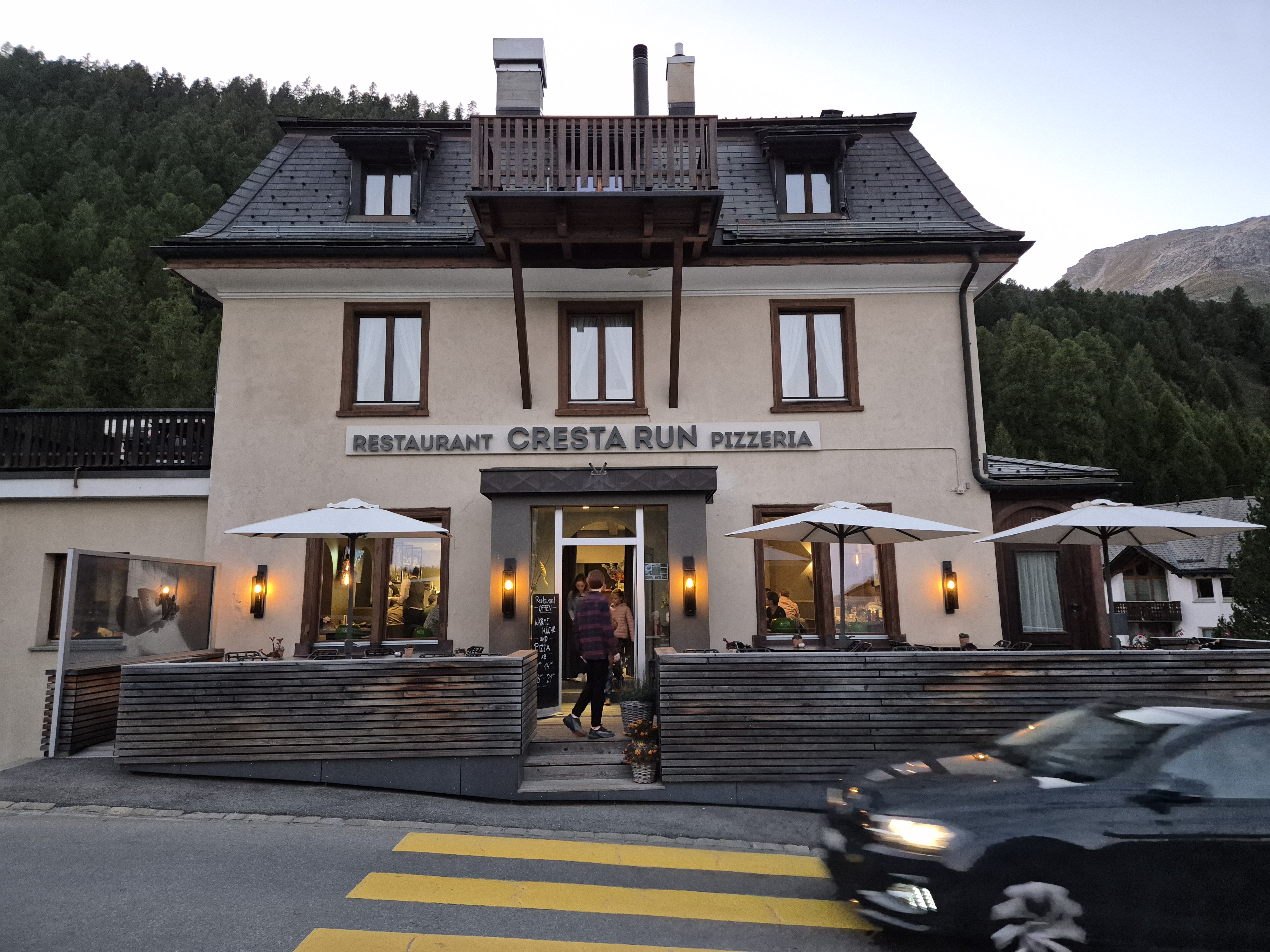
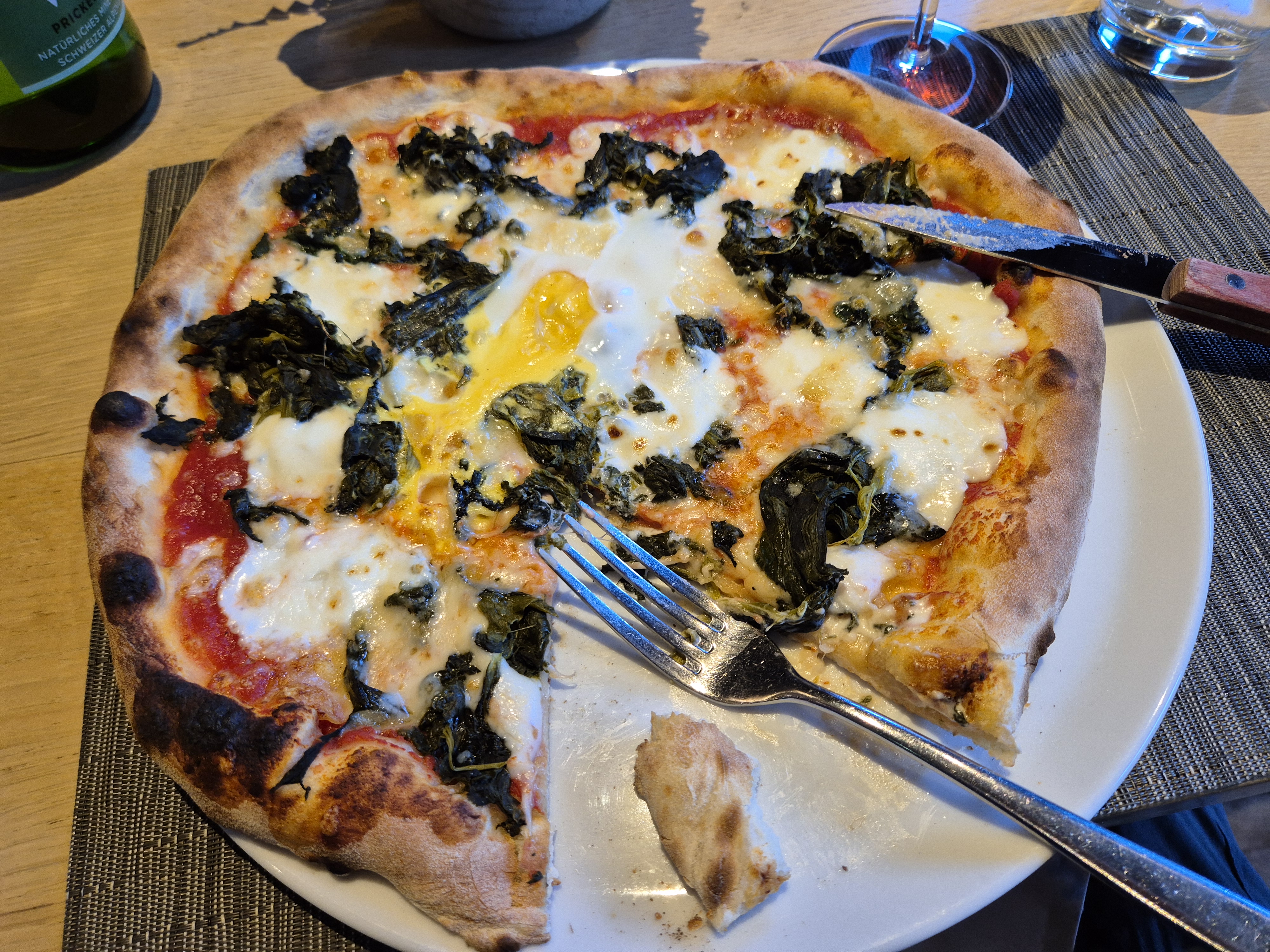
As is our habit when traveling, pizza every Friday (Venerdi in Italian). We have had marvelous pies in this Italy-adjacent canton. We journeyed from Samedan to neighboring Celerina for one Friday feast at Pizzeria Cresta Run and to Pontresina at Riccardo’s for the second.

One of my favorite things is taking a train to dinner and that was possible to both villages. The proximity of Italy and the Italian-ness of the Val Poschiavo in South Graubünden contribute to authenticity in the food.

From Top Left: Pizzeria Cresta Run at dusk; Ric’s Pizza Popeye with spinach, egg, and mascarpone at Cresta Run; At Riccardo’s, my pizza with prosciutto crude, cherry tomatoes, and basil; Ric’s with eggplant (it tasted like eggplant Parmesan; The pizzaiola at work.

Easy-Hiking and Sunday Lunch

Paths to Lunch and easy hiking have been the theme of our stay. We just don’t do the elevations that we used to do, and no tricky footing, please. (Downhill is evil according to my knees and hips.) Switzerland delivers and is, indeed, attuned to those of us who cannot climb the mountains or do not want to clamber up steep elevations. The Swiss Mobility website even features Obstacle-free routes in addition to routes as long and as challenging as you care to tackle. It took a few days for us to become accustomed to even small hills and the steep streets in Samedan, but we did manage some terrific view hikes

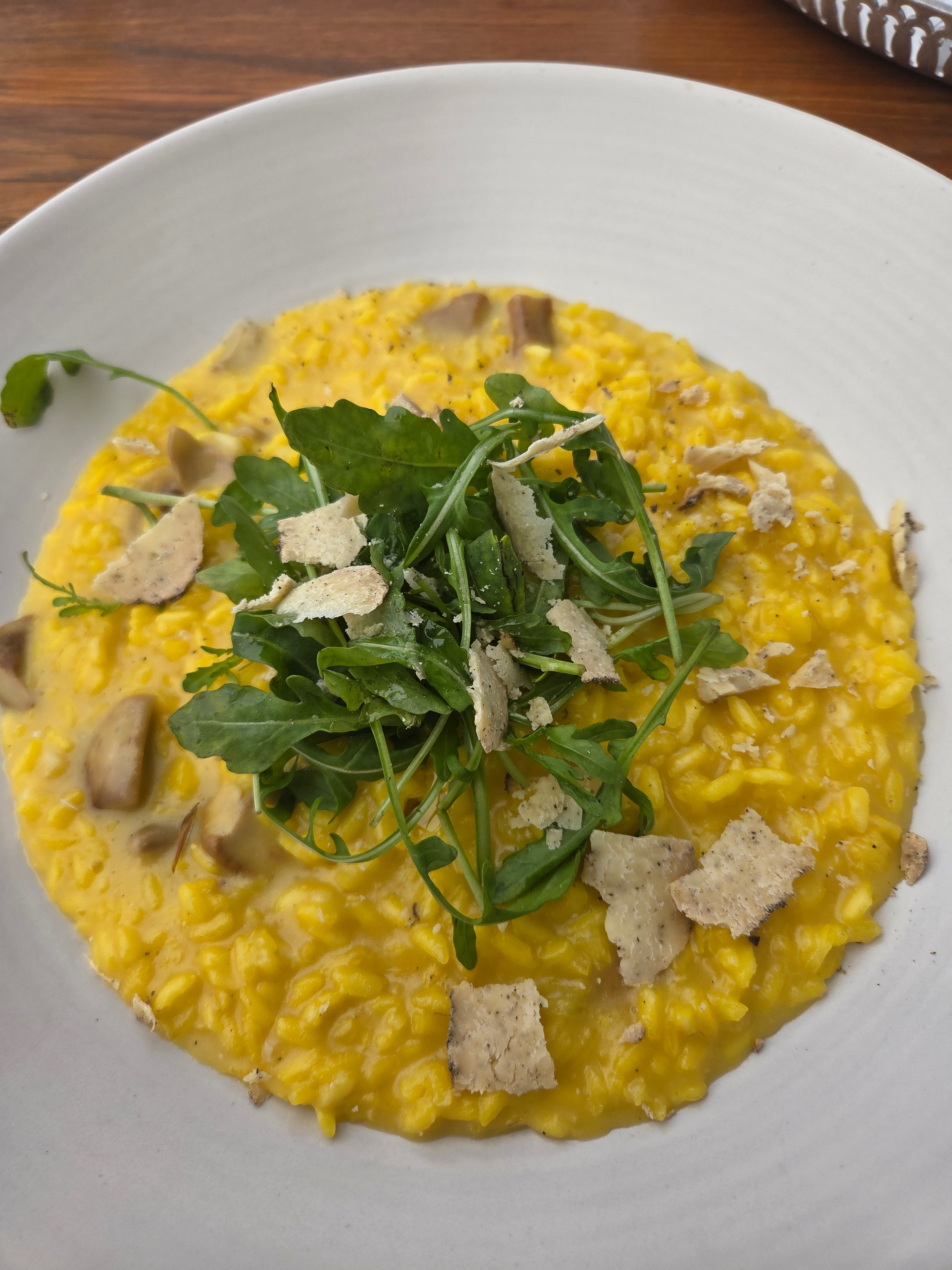
In addition to the outing a couple of weeks again (See A Path to Cappuccino and Lunch), we had a delightful Sunday lunch at Laj de Staz, where there is no vehicle access. Barely a 30-minute walk from upscale St. Moritz one finds rustic but gourmet cuisine in a charming rural environment between forest and lake. Our porcini (now in season!) risotto was outstanding. It almost made up for the fierce wind we had to endure while walking. Luckily, the restaurant was mostly sheltered.

Porcini Risotto; The view toward St. Moritz from the path; Restaurant Laj de Staz

Another delightful lunch outing sent us on a 2.5-mile undulating one-way trek past grazing cattle and sheep, through a forest above a quirky golf course with views to passing trains, nearby towns, and snow-dusted mountains. Lunch was at the golf course, Restorant Sur En, followed by a 2.5-mile return walk, this time flat and along the river. See the details here Golf Course Hike (the name is mine, for simplicity).

That was on Saturday, but Sunday demands a proper lunch outing when we are traveling and last Sunday we found the delightful Gravatscha-Innauen Route with Restaurant Piste 21 half-way through, to be a perfect combo. This was the first truly sunny day in a week, and we wanted to take advantage of it. Although it was only about 50 degrees Fahrenheit, it was a fabulous, sunny, wind free day. Lots of cyclists and a few walkers were taking advantage of a vast network of trails. The restaurant is a gem, blending into the landscape, rustic but elegant, serving beautiful, fresh food. To be repeated.

Lake Gravatscha; Interior of Piste 21; My capuns, a local specialty. I needed a statin after eating it.

Two weeks flew by for us. It was not go-go-go every day. We no longer travel that way. We like to settle in, get to know a place, do some exploring, and exercise enough to ward off weight gain.

We had a perfect apartment in Samedan, found through a local tourism site. Constructed in 1975 and recently modernized with a sleek kitchen, 1+1/2 baths, excellent WiFi, an elevator (we hate hauling luggage up stairs) and a shared washer in the basement. Very nicely curated with artwork, a cozy throw on the couch, beautiful duvets, chairs in the bedroom (I wish more places thought of that), and plenty of horizontal surfaces and electrical outlets, which we appreciate. There is a Nespresso for coffee, high on the list of accouterments I look for in self-catering accommodations. I highly recommend Anna’s cute place Crasta im Dorfkern. The host picked us up at the train station, too, a kindness we seldom encounter.

Now we are in Basel in another cute apartment, where we will spend two weeks enjoying the tri-country area. Looking forward to day trips to the Black Forest, the Alsace, the Cité du Train in Mulhouse, and finally getting to Strasbourg after missing it the last time we were nearby. If any readers have favorite things to do in the wider Basel area — especially if they are doable by train or bus — please let me know. Might rent a car for a few days. We will see how brave I am feeling.

Tschüss! Ciao! A revair!

A Path to Cappuccino…and Lunch

18 Sep

18 September 2025

A freshly made cappuccino in a ceramic cup in the middle of forested mountains, above a rushing river, at 5856 feet above sea level. What’s not to love?

Today is our third full day of a 6-week trip. First stop, Samedan, Switzerland, which will have many of you powering up Google Maps to figure out where-in-Hell are they now?

Jet lag is still present, but the fog is clearing by the day. Flatlander legs (Forest Grove is at 210 feet and flat as a crepe) are adjusting to hills and sea level lungs are slowly adapting to mile-plus-high altitude. We are sleeping at 5650 feet!

But first an aside: you are likely wondering where I have been since my April 27 post about a trip we were about to take. For reasons I will not go into, that trip never happened. Rest assured, all is well at Casa Barton. Last spring’s trip will be a 2026 event.

Our trips largely consist of meals strung together by long walks. We call them “Paths to Lunch.” Today it was a path to cappuccino with a lunch at trail’s end. Try to do that in the United States.

The hike yesterday, Day 2, was near the Swiss National Park or Parc Naziunal Svizzer in the local dialect of Rhaeto-Romansh. We are in the Engadine region of the Canton of Graubünden in the southeast part of the country. St. Moritz may ring a bell, the glitzy resort town known as the birthplace of alpine tourism and featured in some James Bond films as well as many others. Engadine or Engadin means “Valley of the En” and the “En” river is perhaps better known outside the region as the “Inn,” the very one that runs through Innsbruck, Austria.

This is not high season and Samedan is not a major tourist destination at least outside of ski season, so we are finding it peaceful and uncrowded. Mostly Swiss traveling about. Previously we spent 2 weeks in nearby Pontresina, which we enjoyed very much, but Pontresina is a hot bed of tourism versus Samedan. This is a more local experience.

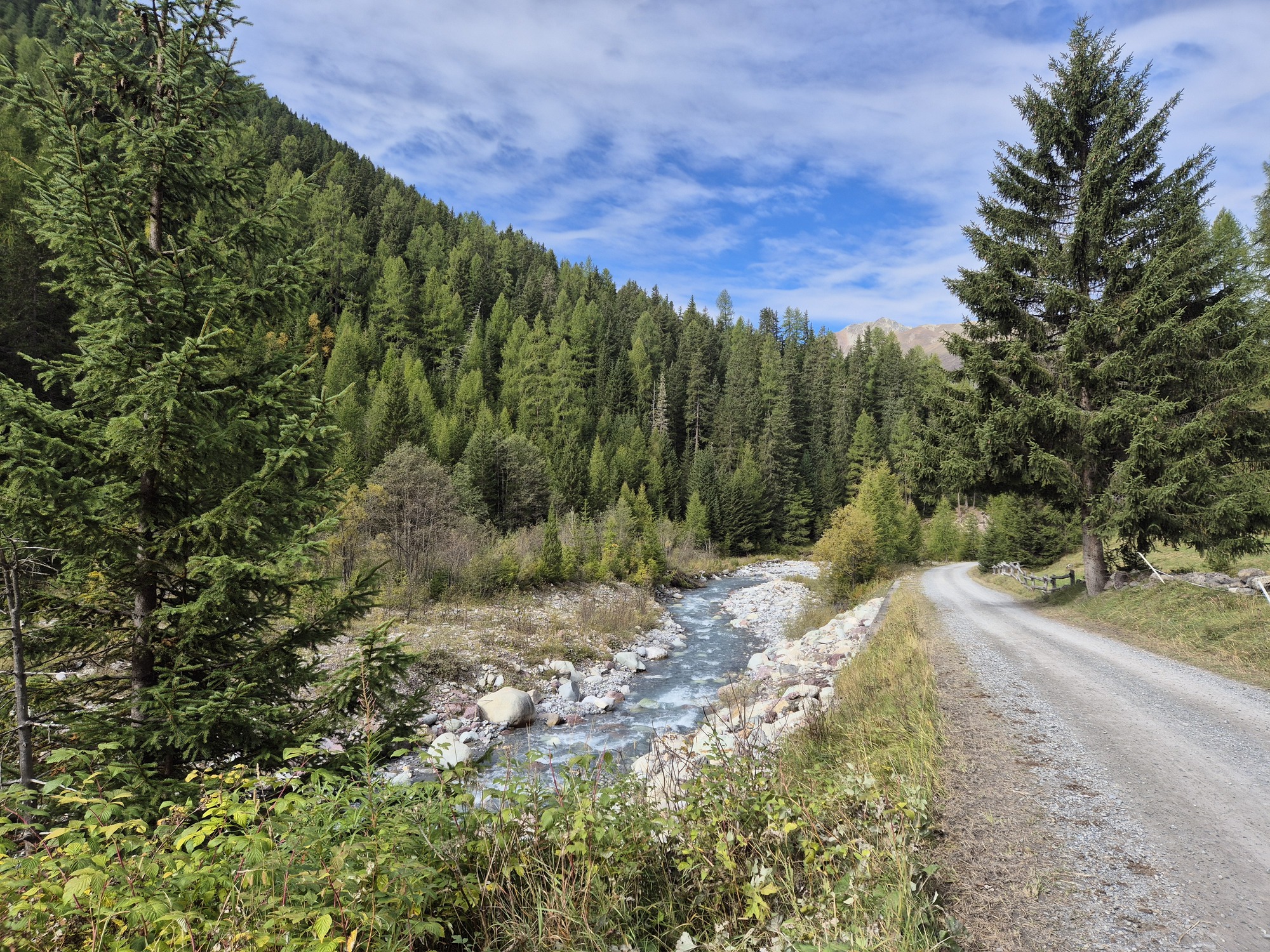
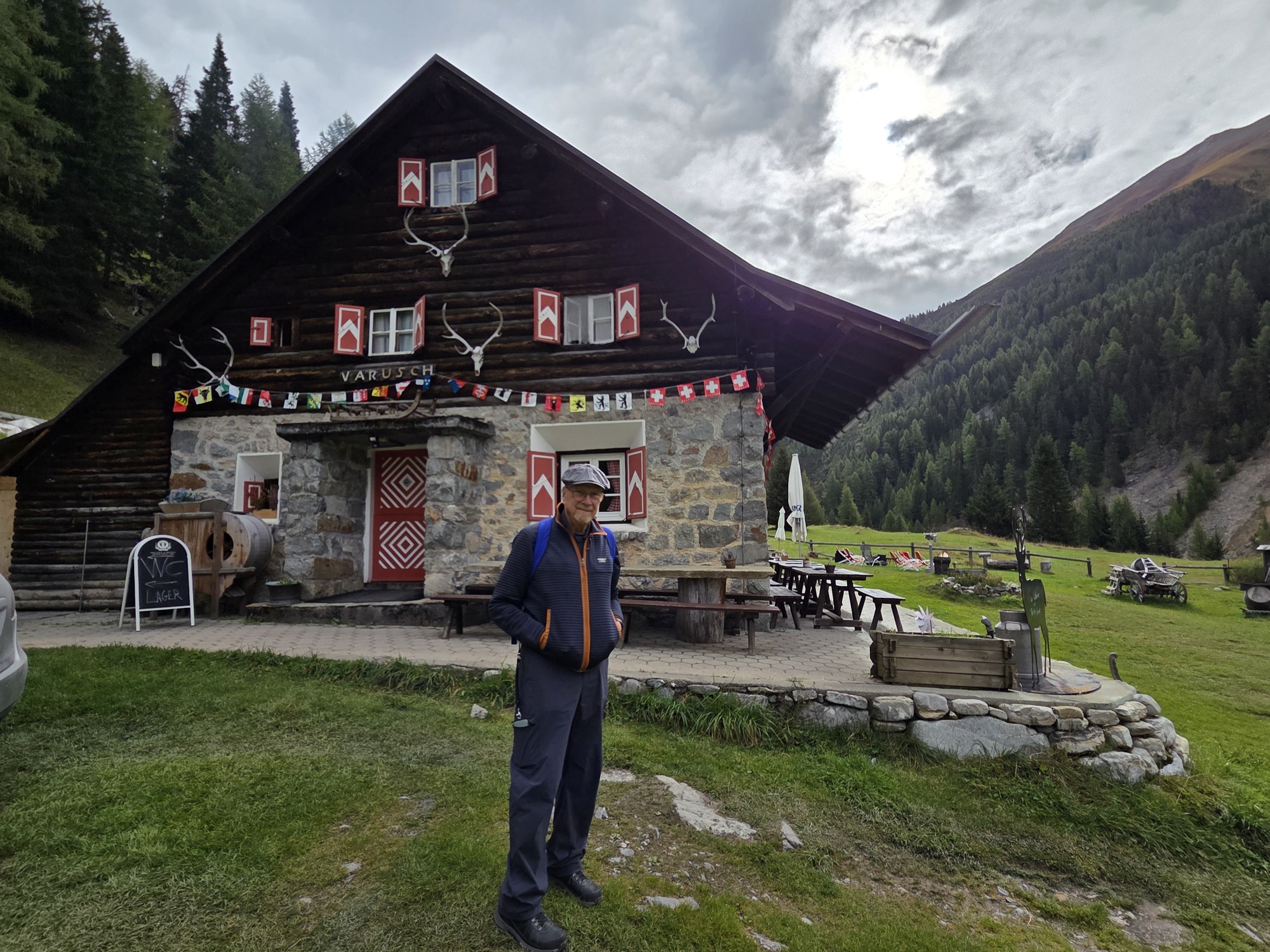
Our modest day 2 hike was started at the last bus stop whose route took us through tiny villages, past grazing sheep and cows, and into dense forest. There were no personal vehicles allowed past this point. To get to the National Park you traverse the area on foot at this location. Or take the “tourist shuttle.” We hoofed it through the forest above the rushing Ova da Varusch to the aptly named Parkhütte Varusch. Here we indulged in a late morning perfect cappuccino at the midway point of our 90-minute hike. Sheer bliss. We encountered very few people with our early start (on the trail by 9:15) and were the first customers at the hütte. The hike requires no special equipment save sturdy shoes as the first half of the trail has plenty of roots and rocks and wet places. The forest is pristine; there are no sounds of traffic unless a plane flies over. We didn’t even hear anyone talking. Just the rushing river which must be a sight to see during spring melt.

Laurel above the river in the forest; A perspective on the river with the easy-hiker road below; The easy road back; Ric at the coffee stop; The Tourist Shuttle.

Thus refreshed, we took the ultimate easy-hiker route down a road that the shuttle runs on. Many cyclists were using it to go up the valley and a fair number of walkers chose the groomed route as well.
Arriving back at the start, the 11:08 bus had left 5 minutes prior and the next one was not until 12:15. Time for an early lunch break! Does it get any better than a path to cappuccino and lunch?

Today, we hiked to a fabulous glacier view at Morteratsch. This was at >6300 feet. Color us tired!

Girovaga

Formerly GoodDayRome

Skip to content ↓