6 October 2026.
Ciao from Italy! After nearly two weeks in one happy place, the village of Wengen in the Berner Oberland, we made our way to Italy. Our time in Wengen was devoted to researching necessary book updates so we took to cable cars, mountain trains, and trails to check out what’s changed. In the two years since our last visit there is a new cable way to the Schilthorn, a major renovation of the famous Piz Gloria, and a super fast gondola at Grütschalp. All of this to move the ever-growing hoards of visitors more efficiently through the landscape.
I am pleased to report the trails are not as busy as the transportation options. It seems many travelers are here to jump off a train or a gondola, see the view, take some pictures, and move on to eat and shop. All one has to do to find some solitude is walk. Lauterbrunnen is chock-a-block with tourists, many of the day-tripping from Interlaken and other points outside the valley. This village, which we used to find serene, is so busy with large families and tour groups plus buses, unnecessary rental cars, and local commercial traffic, that we spent little time there. Instead, our home was in car-free Wengen where the loudest noise came from the church bells that still follow the tradition of chiming each hour.
It was still unseasonably warm. Morning jackets were not needed by midday and the evenings were mild enough that outdoor dining continued through the first of October. The crowds started to thin ever-so-slightly in our second week which made for some breathing room on the trains. And as we departed town October 3, there were signs of the seasonal shutdowns coming mid-October.
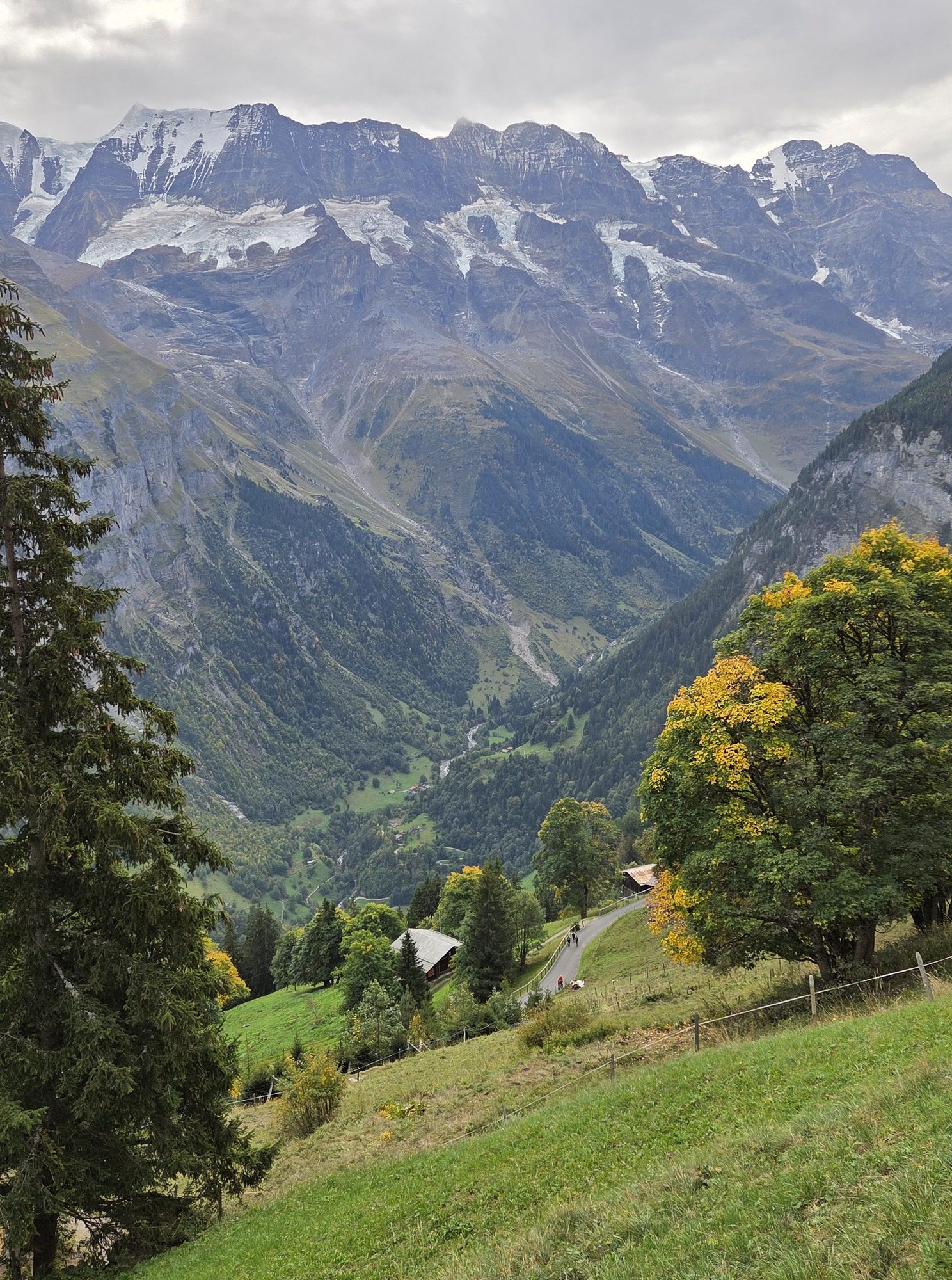
The improbable view into the valley from the Gimmelwald Trail. Easy walk, amazing views. We would shortly descend by gondola to the same level as the ribbon of river you see in the distance.
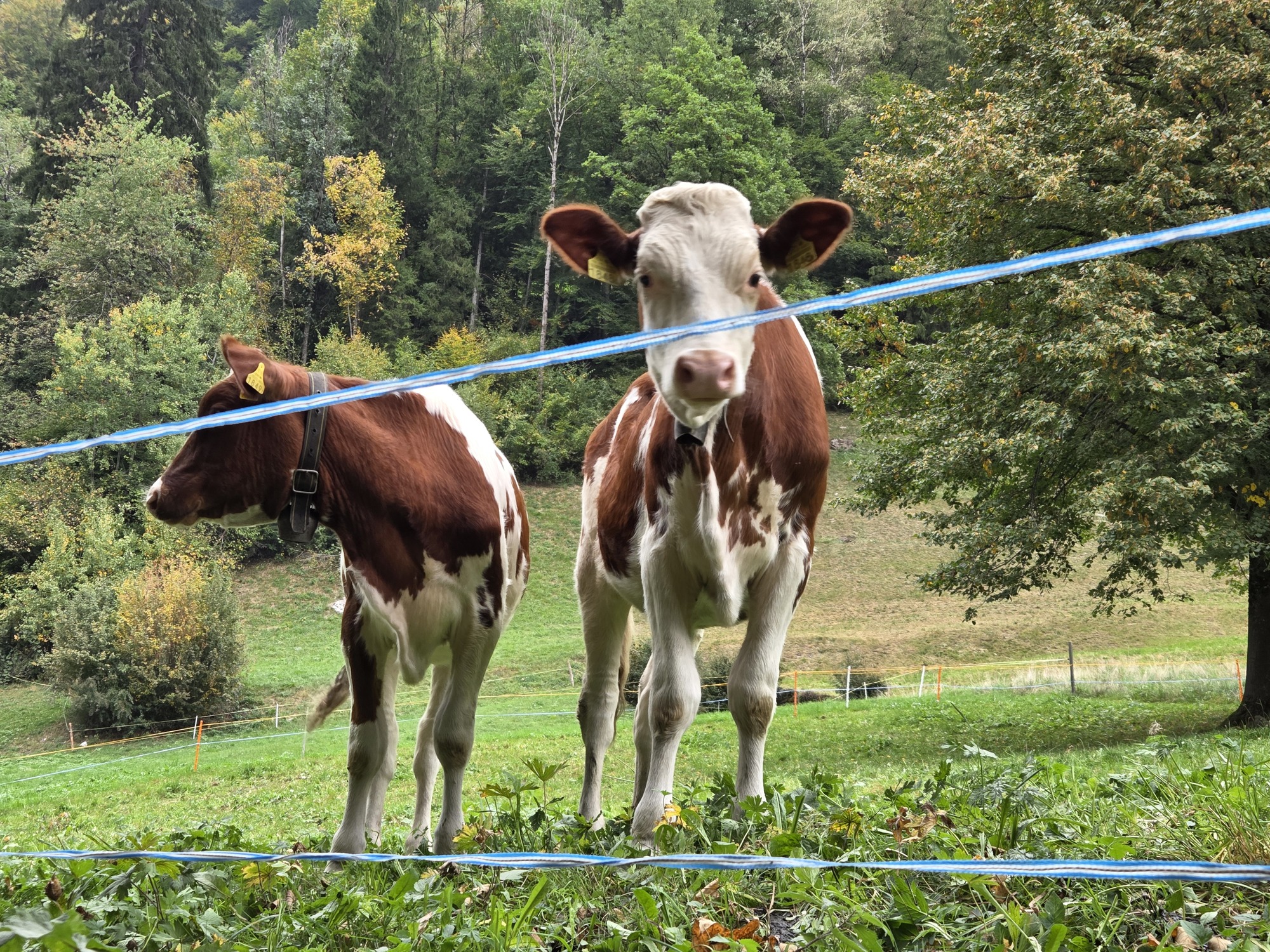
Walking a less-worn path along the Lütschine River, these curious calves came to say hello.
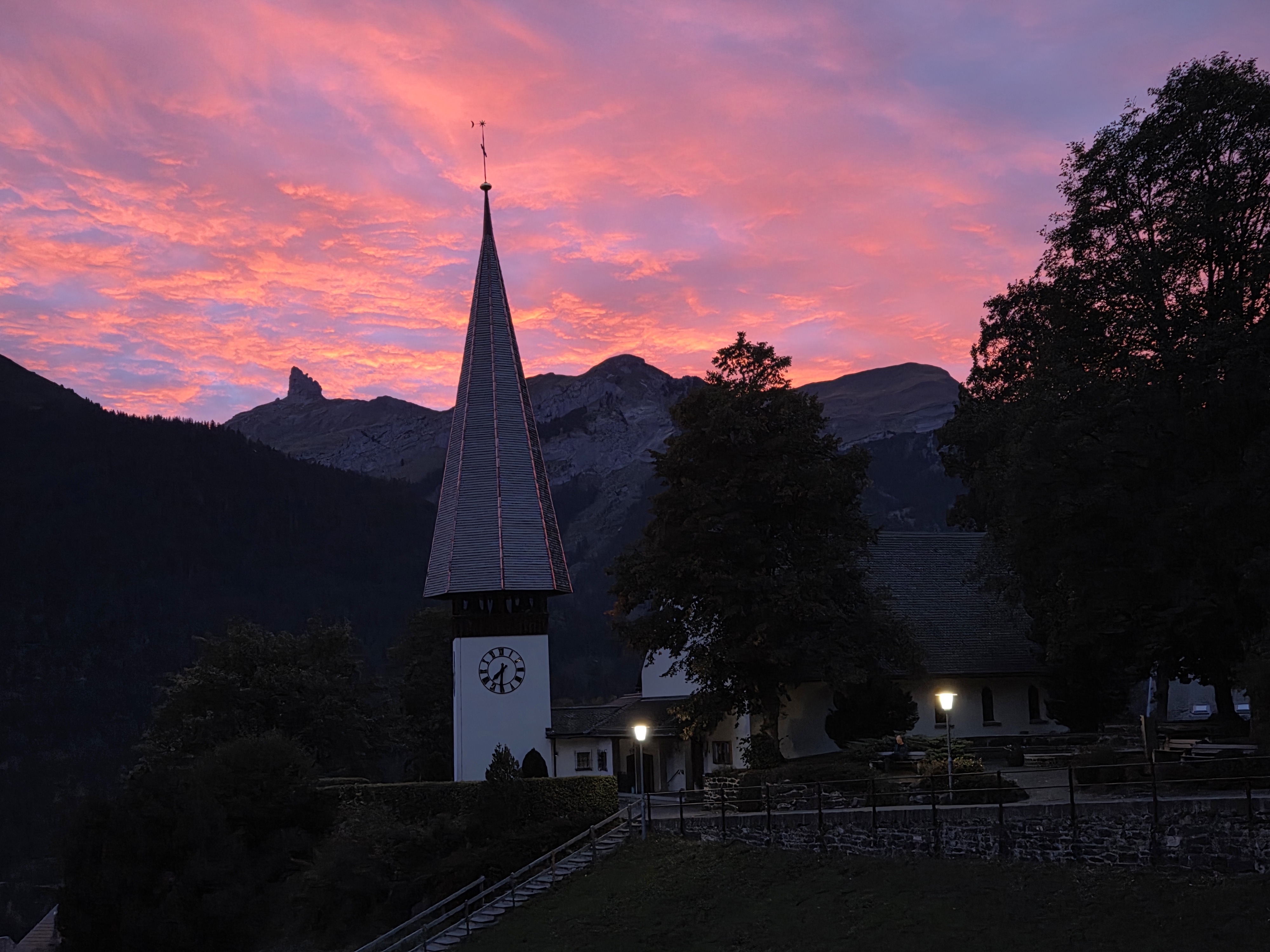
Sunset and Wengen church, view from our apartment
We moved on to the Dolomites where it is near the end of the season as well. On October 11 our favorite hotel, AlpenHotel Panorama, closes for the period before ski season starts in early December. There are about a dozen rooms occupied right now, so very quiet.
You’d think it would be an easy trip from Central Switzerland to Northern Italy — about 180 miles as the crow flies — but those darn alps make travel less than direct. It’s about 320 miles driving but by train, it took us 9 1/2 hours plus a 50 minute taxi ride to make the move. Beautiful routes, comfortable trains and the freedom to read, sleep, chat, poke at our screens, or simply enjoy the views. Beats driving.
We split the journey, spending a night in Zürich to break up the trip. That gave us a chance to stretch our legs and enjoy a summery night — crazily warm for October — dining outdoors in a fine Lebanese restaurant.
Coming to AlpenHotel Panorama is a such a pleasure after a long trip. This is our fifth stay here. We are drawn by the stunning beauty of the Alpe di Siusi, the incredible peace and quiet of this car-free place, the easy walking, and the timeless hospitality of the hotel. This is a half-pension property meaning our breakfast and dinner are included and the dinners are spectacular! Multiple courses with small portions, a simplified but elegant degustation menu. Such a pleasant respite after five weeks of travel. We don’t have to prepare a meal nor even think about where we are going to have dinner or what we might like to eat. Restaurant fatigue on a long trip is real so we like the surprise elements of a half-pension stay along with the thoughtful elegance. Such a far cry from my simply on-the-road meals which are often dinner-in-a-bowl.
Some pictures from our first evening and morning. More to come.
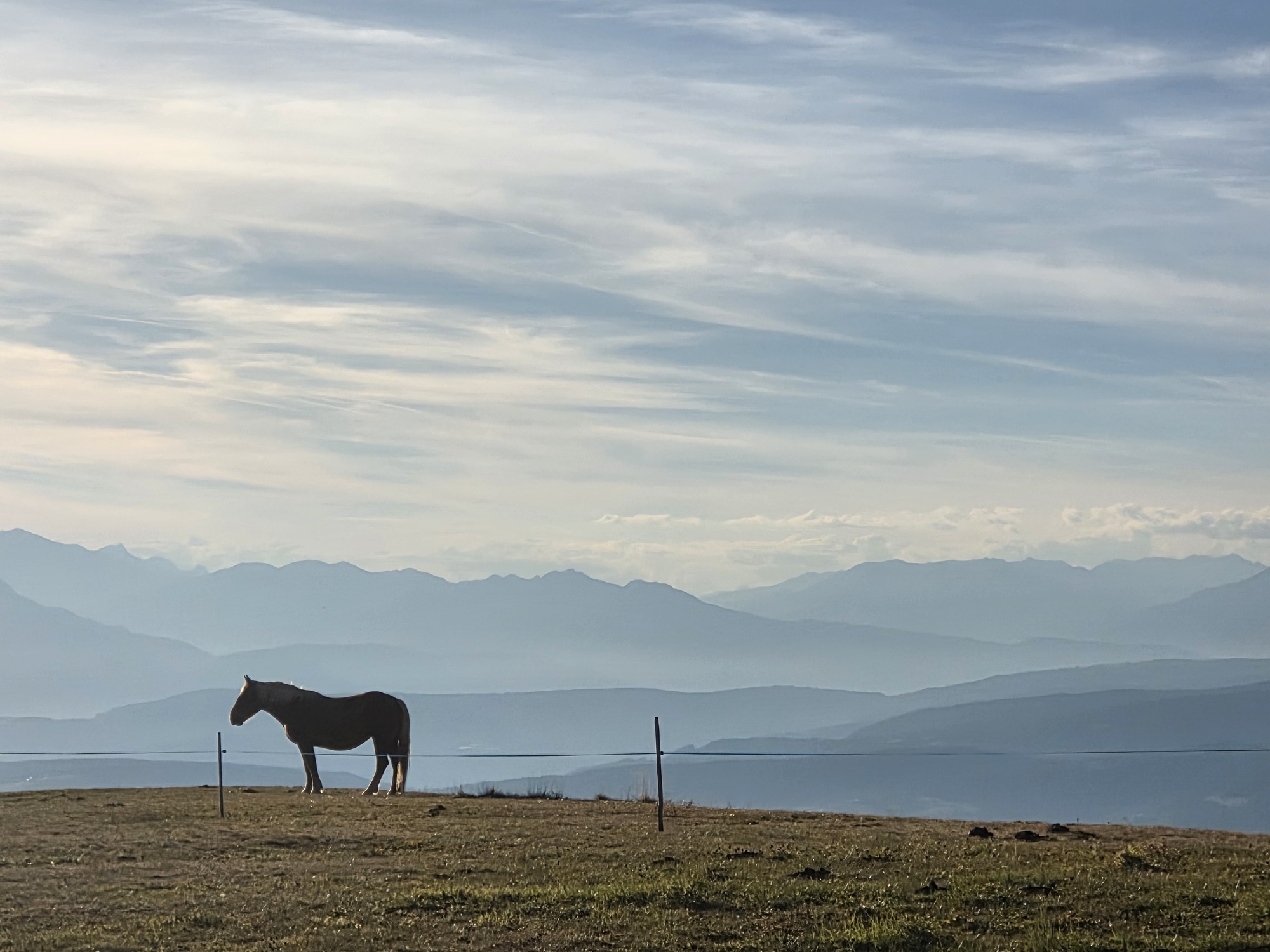
Distant mountains to our west in the fading light.
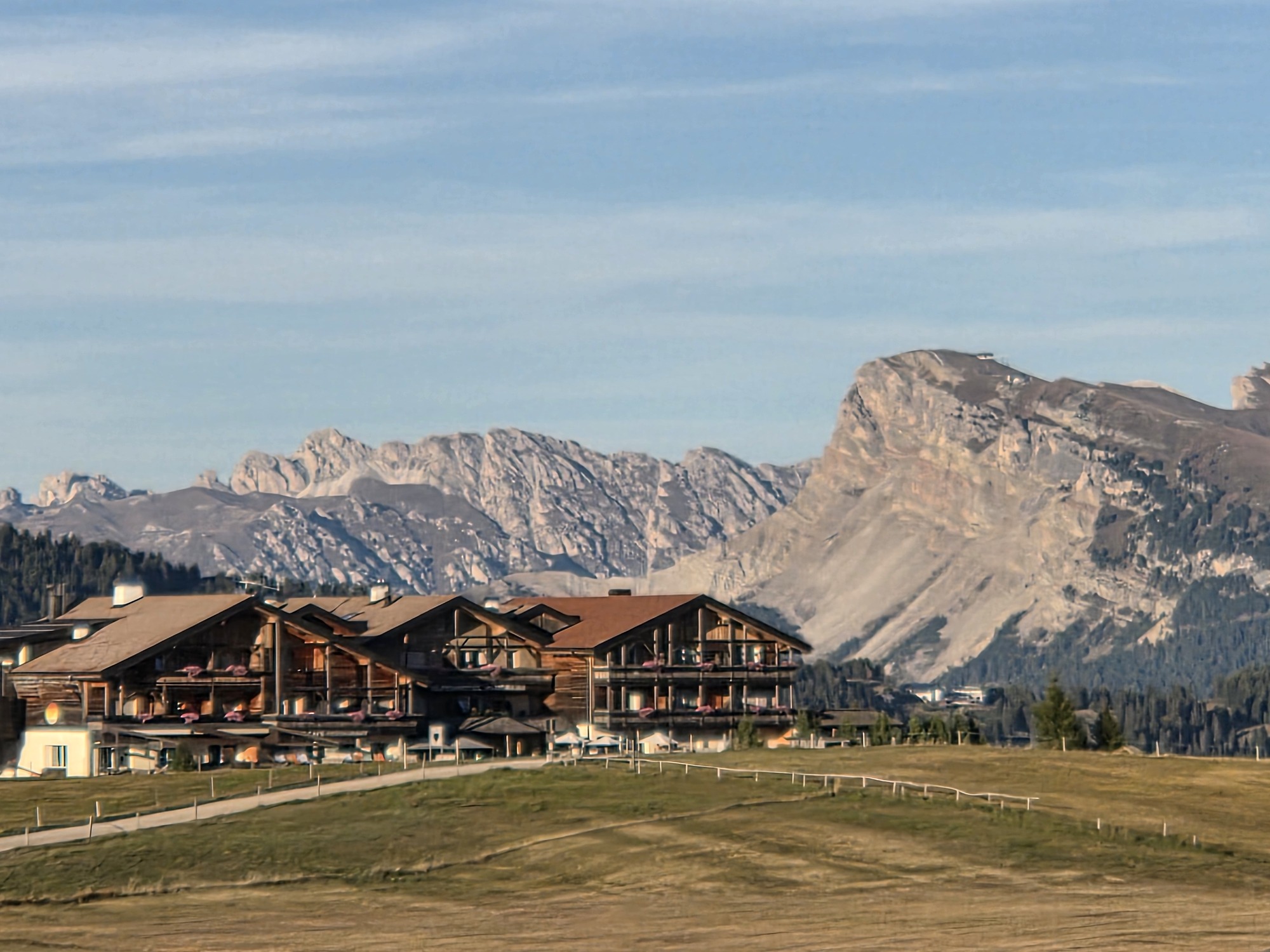
AlpenHotel Panorama, reachable by chairlift or vehicle with severe restrictions on when a private vehicle can arrive. Makes car-free Wengen look busy.
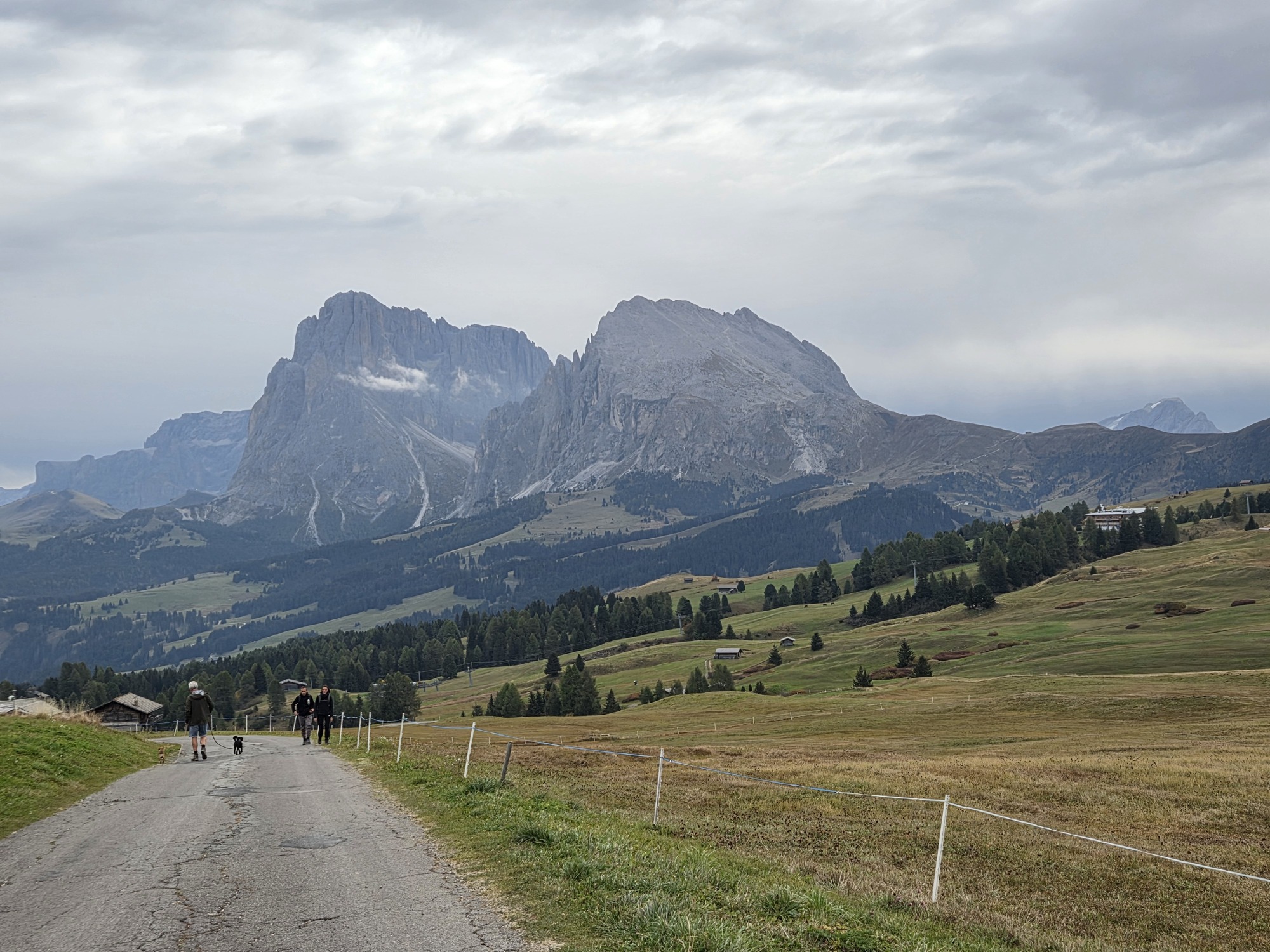
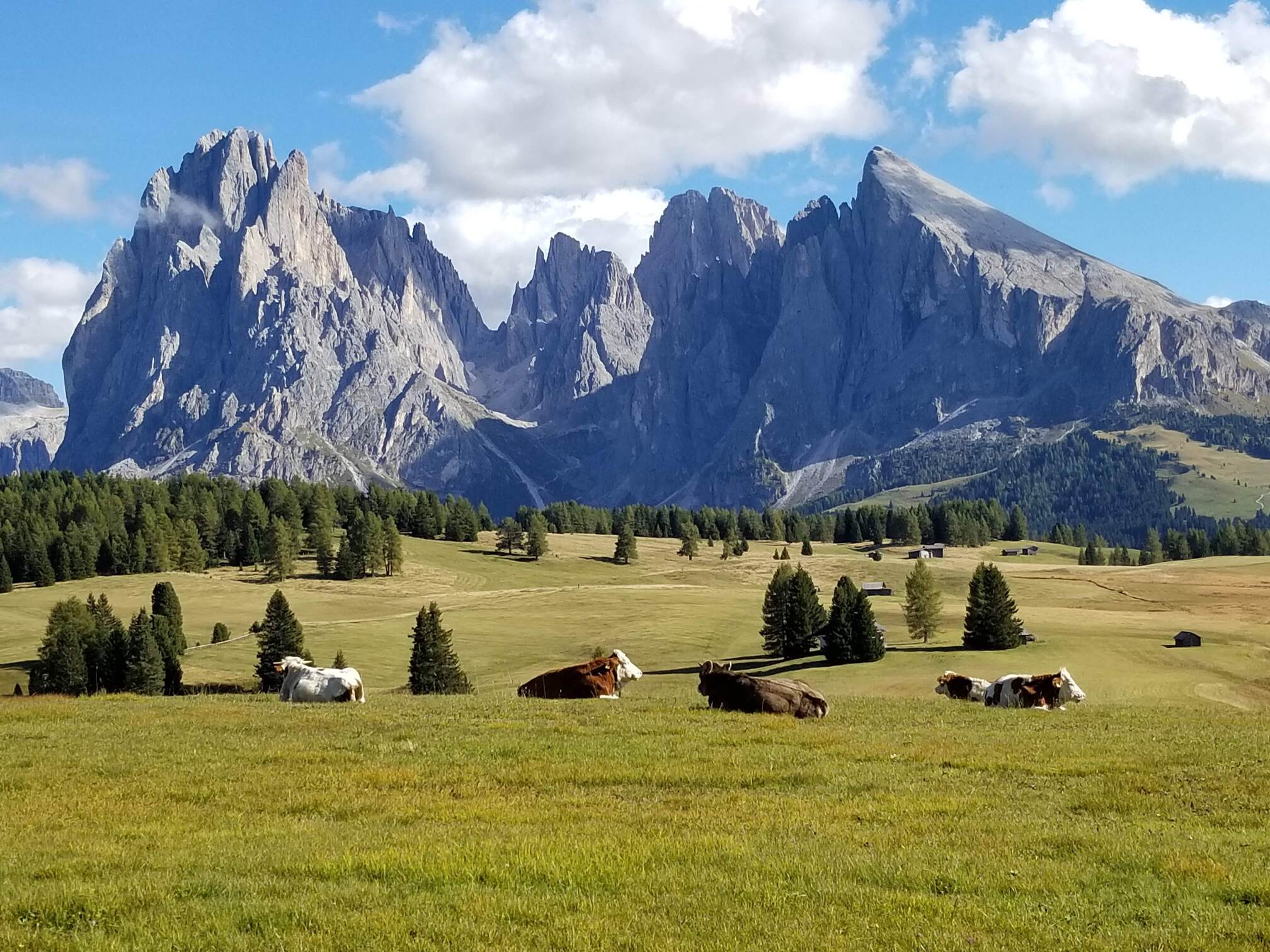
Moody morning view of the Sassolungo and Sassopiatto. Today, October 5, there was light rain during our walk for the first time in 5 weeks! The mountains are dry and the locals are praying for a good winter as skiing is a crucial part of the economy and lifestyle.