Archive | Great Britain RSS feed for this section

The week that was…in Whitby

7 May

7 May 2026.

The first sign that something was up in Whitby appeared when we changed trains in Middlesbrough, Yorkshire. Half-a-dozen young people dressed in black, Victorian-inspired attire looked out-of-place among the travelers in casual Saturday clothes, taking their dogs to walk the paths of the Esk River Valley. Of course, Whitby, with its abbey ruins, evocative atmosphere, and local stories, was Bram Stoker’s inspiration for his famous work, “Dracula” when he visited here in 1890.

Today, Whitby, a British seaside resort town on the edge of the North York Moors National Park, hosts twice-a-year Goth Weekends, and the faithful flock here dressed to kill. Arriving at the station we found hundreds of Goth-dressed observers here to honor the legend. 80-year-olds in expensive, custom apparel rub shoulders with families with young children in suitable garb and teenagers in thrift store castoffs and elaborate makeup. Luckily, the weather on Saturday was perfect for promenading through town and making the pilgrimage trek up the 199 steps to the abbey.
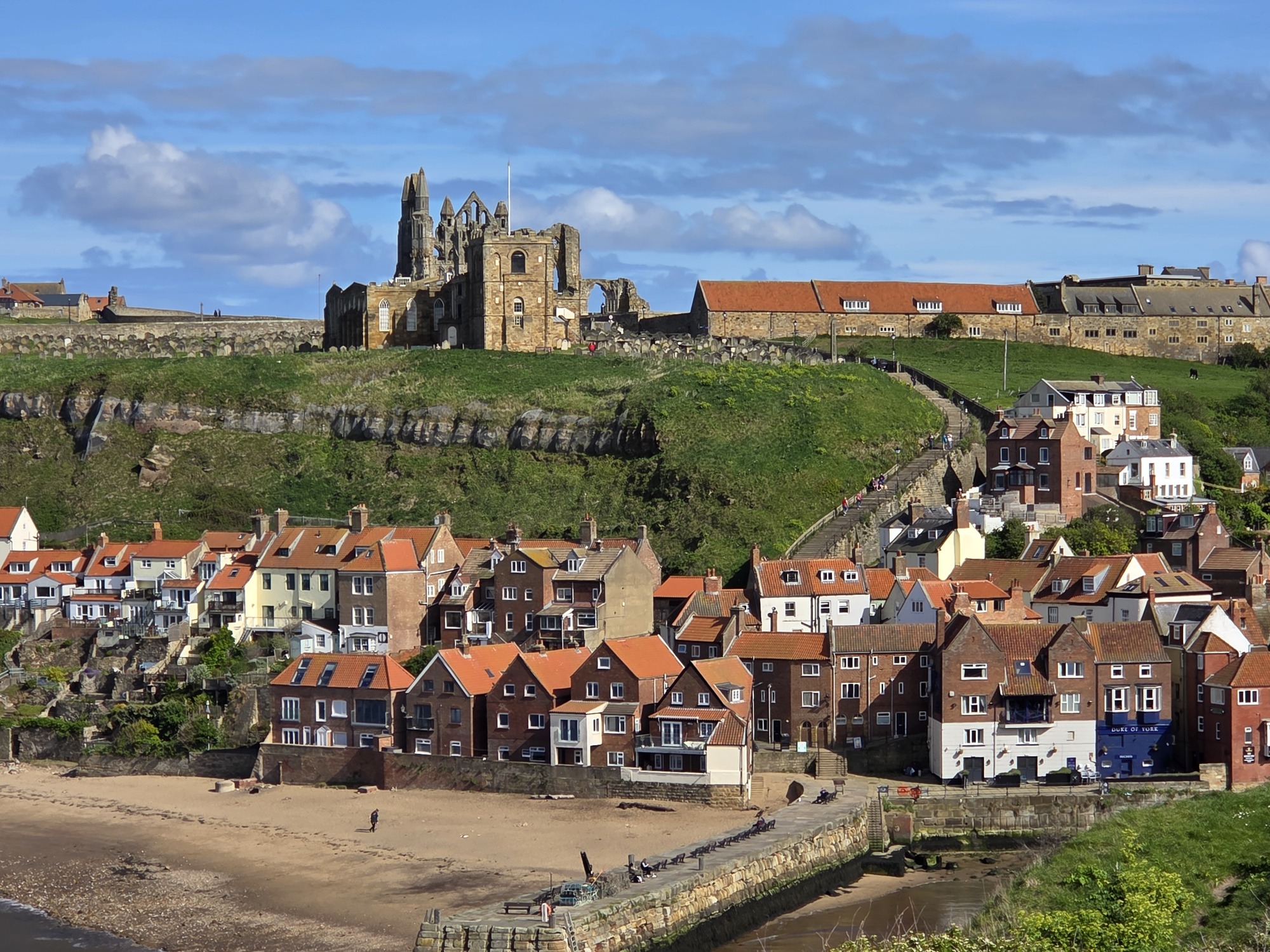
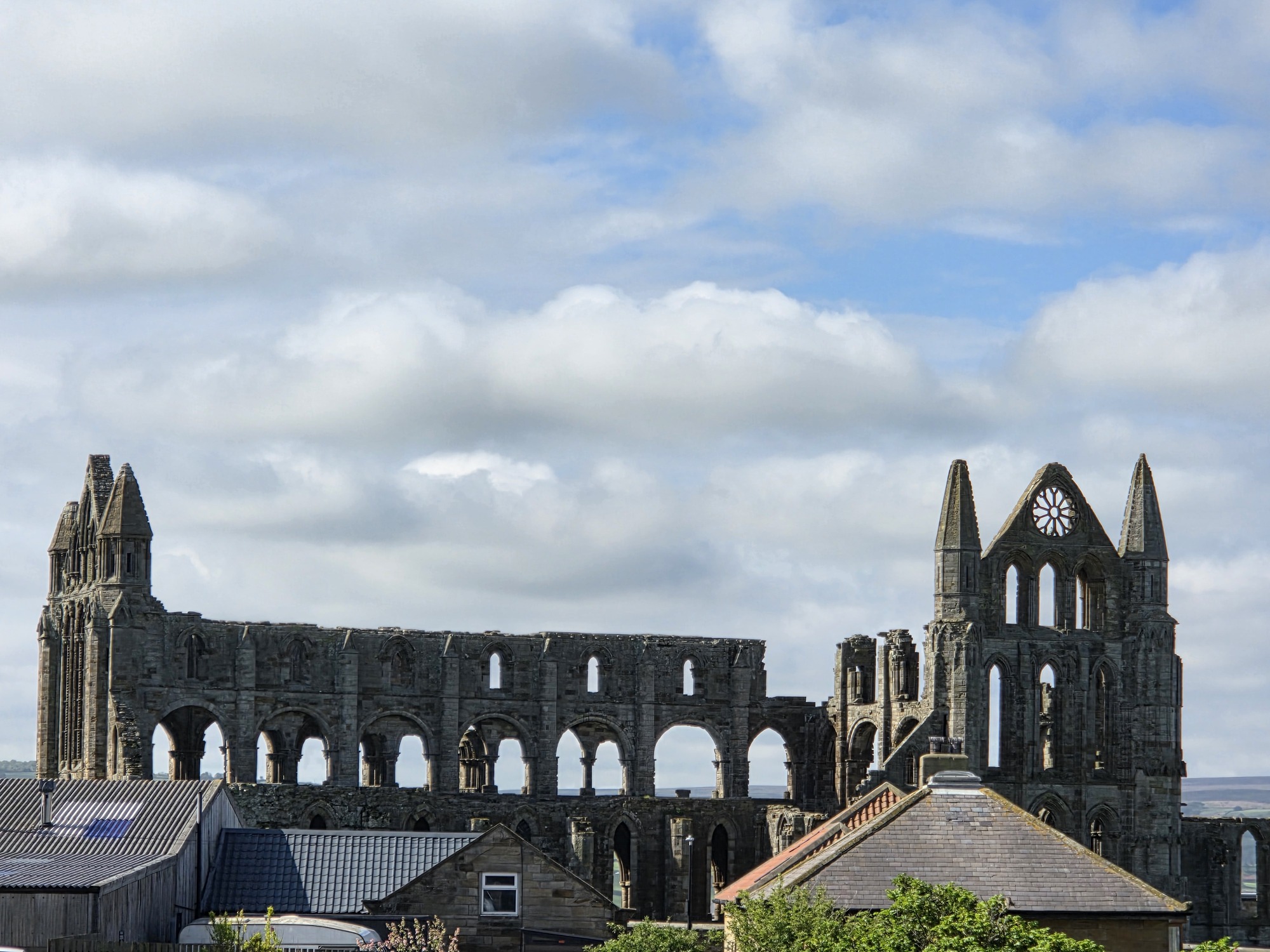
View of the Whitby Abbey ruins with brooding St. Mary’s Church in front. Note the long — 199 steps — staircase. Yup, we climbed it with our rubbery, flatlander live-in-a-house-without-stairs knees.

The steps would have to wait. We had only just arrived by the scenic train through the Esk River Valley. It was a long and eventful travel day: London to York by lovely first-class train with a stressful change to a bus from York to Middlesbrough. The train was late and the planned bus left five minutes before we arrived at the stop, which was a quarter mile trudge with luggage from the train station. Our connection in Middlesbrough threatened to become a four-hour delay but the train service LNER fortuitously added an extra bus as it was a heavy travel day in a Bank holiday weekend. All of England was on the move!

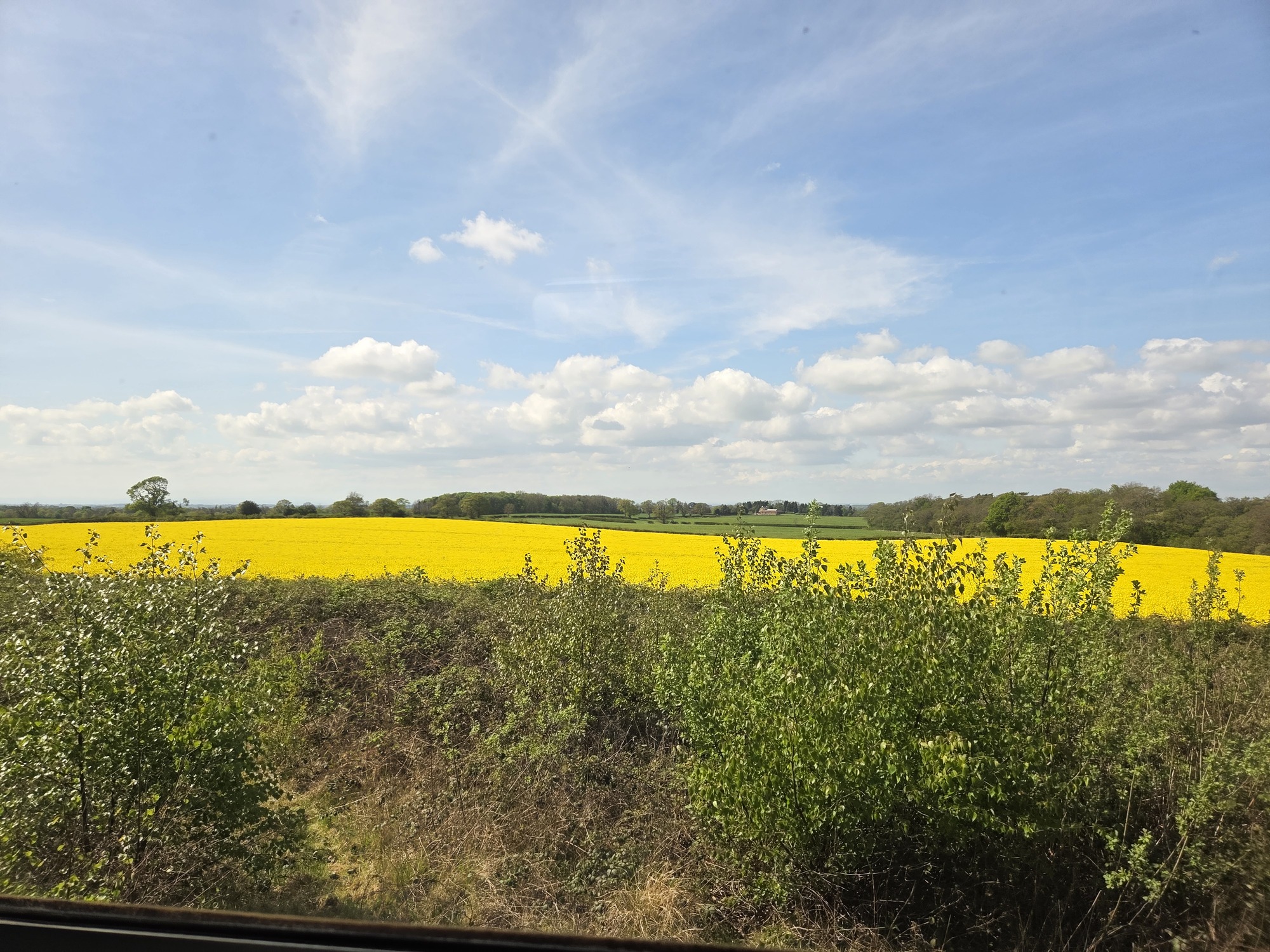
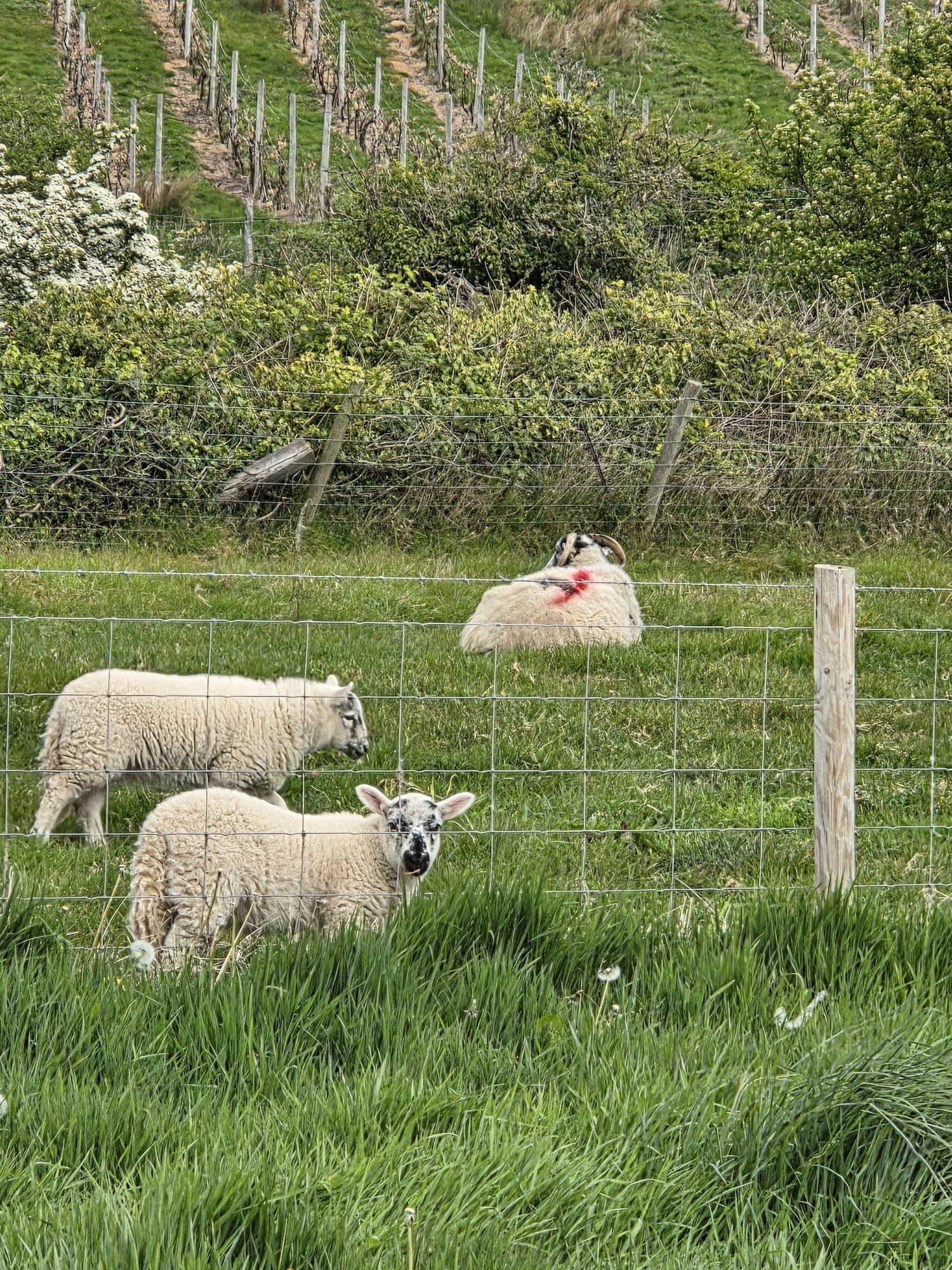
A two-plus hour bus ride is not a choice we make if it is possible to avoid. Work on the rail line to Whitby caused the routing. Availing ourselves of seats at the front of the bus and had a splendid view of little villages and quaint farms, and the unintelligible commentary of the driver. Overall, it was not bad. The subsequent train ride to Whitby was delightful! Bouncing new lambs in verdant fields; hedgerows and dry-stone walls criss-crossing the countryside; canary-yellow fields of rapeseed; walkers and their dogs enthusiastically boarding the train after their treks.
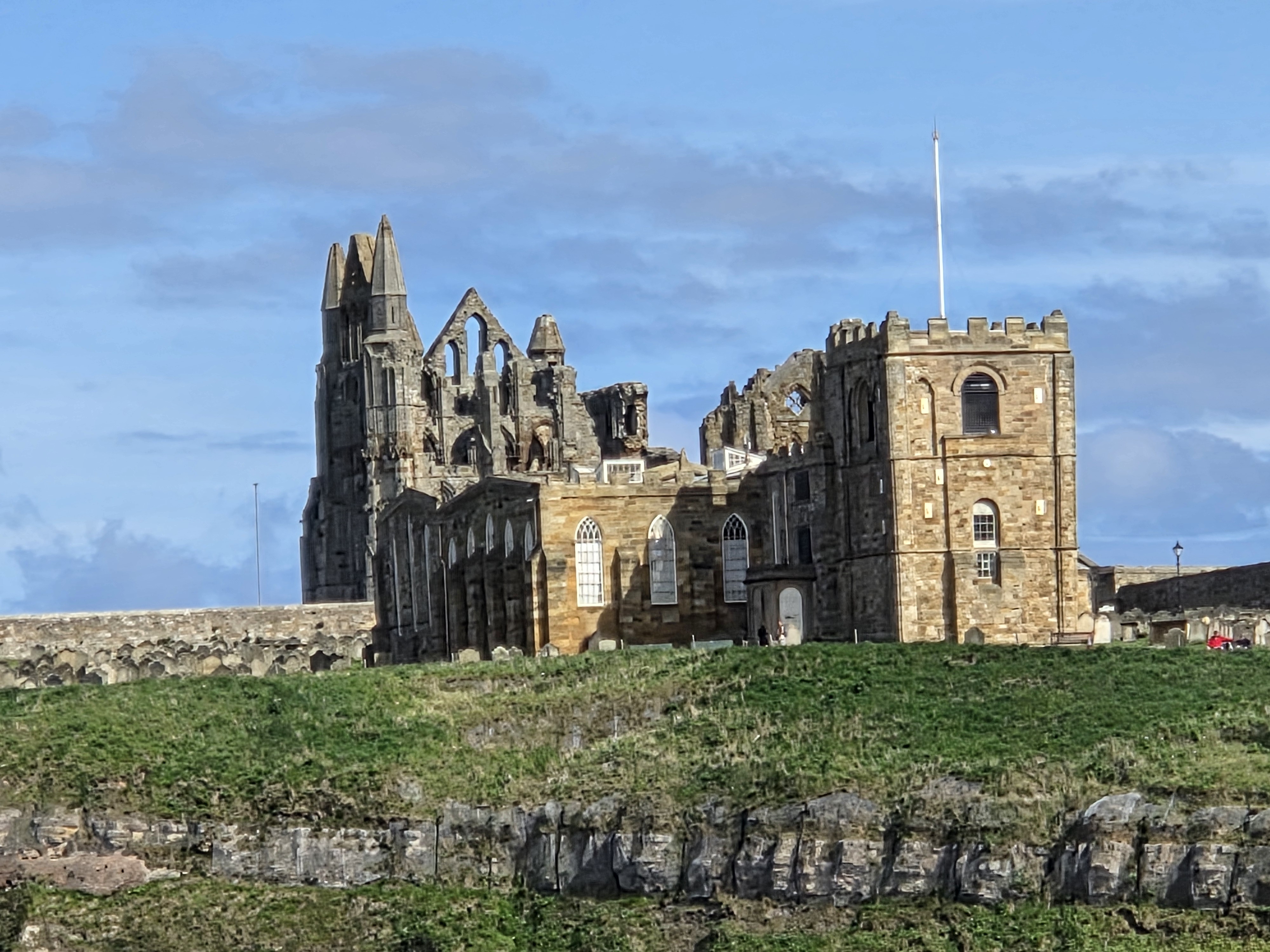
We are passing a week in Whitby. There is ancient history here: the original abbey was founded as a monastery in the 7th century. The Vikings destroyed it, but the Benedictines resurrected the site as an abbey in 1078, after the Norman Conquest. We can thank Henry VIII for destroying the abbey during his war on Catholicism creating picturesque ruins. Most infamously, the abbey was Bram Stoker’s vision for his novel.
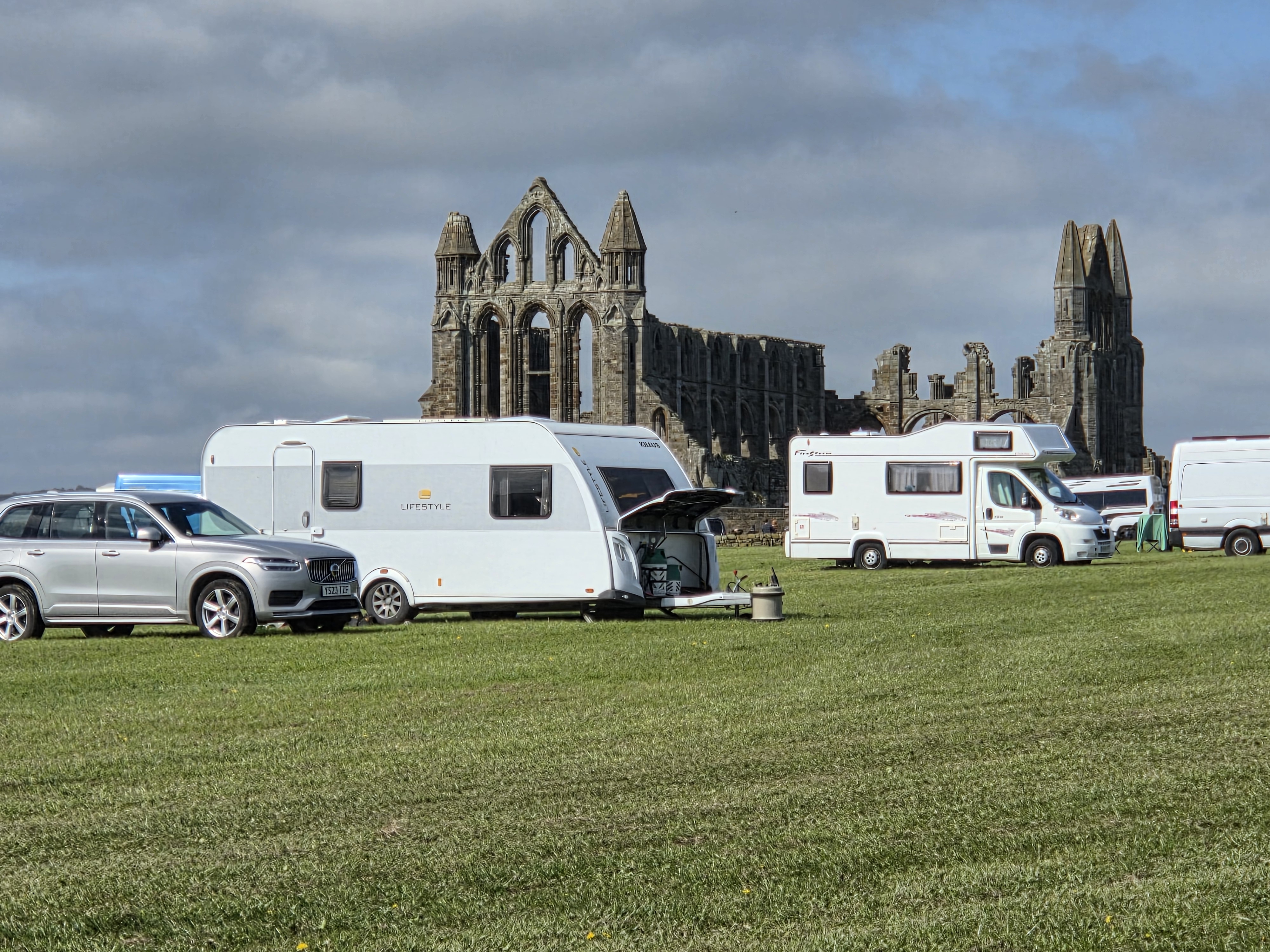
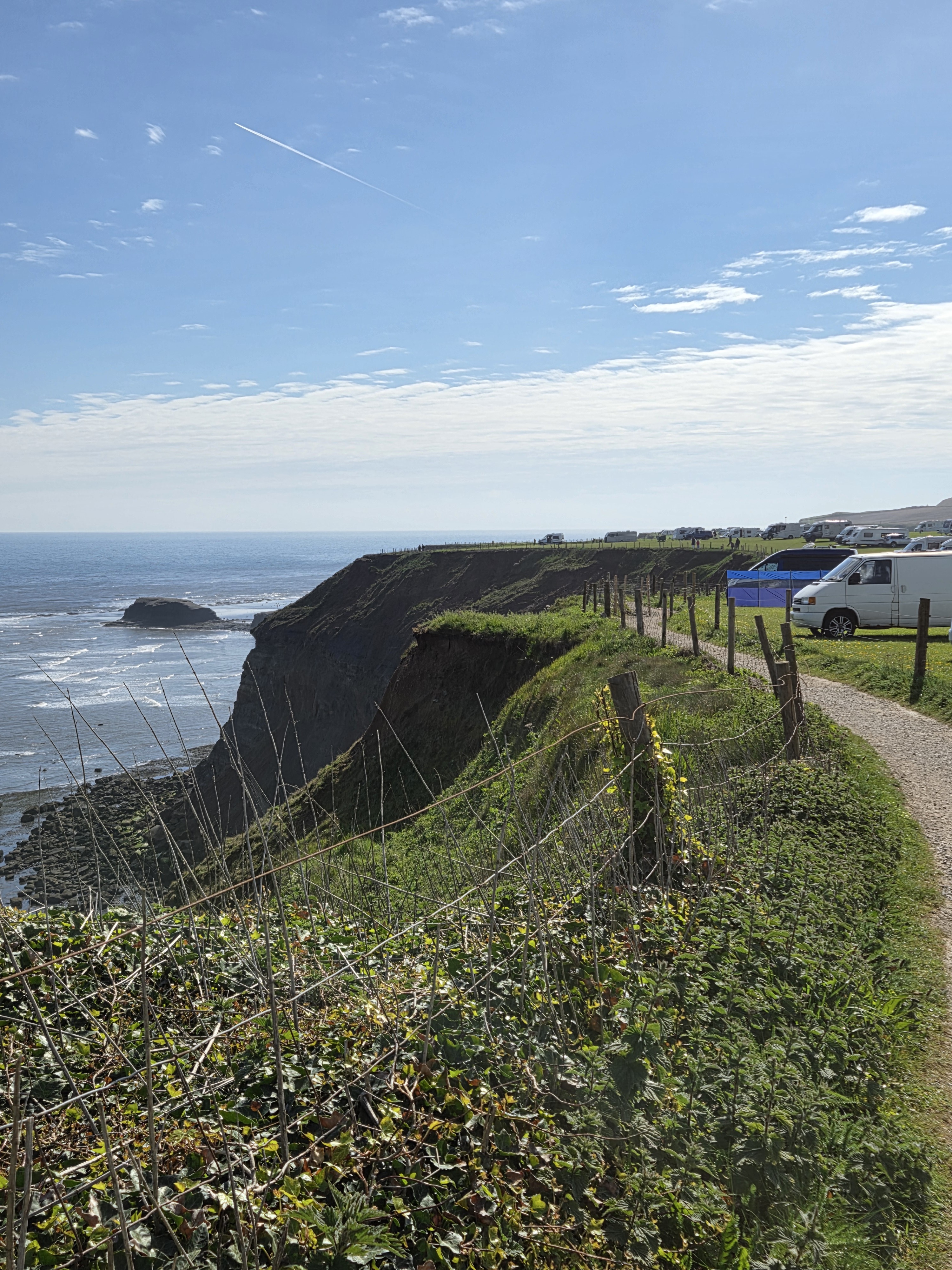
What Bram Stoker saw, more-or-less, from his perch on the bluff. Today, a caravan park nudges up against it on the other side and The Cleveland Way passes directly by.

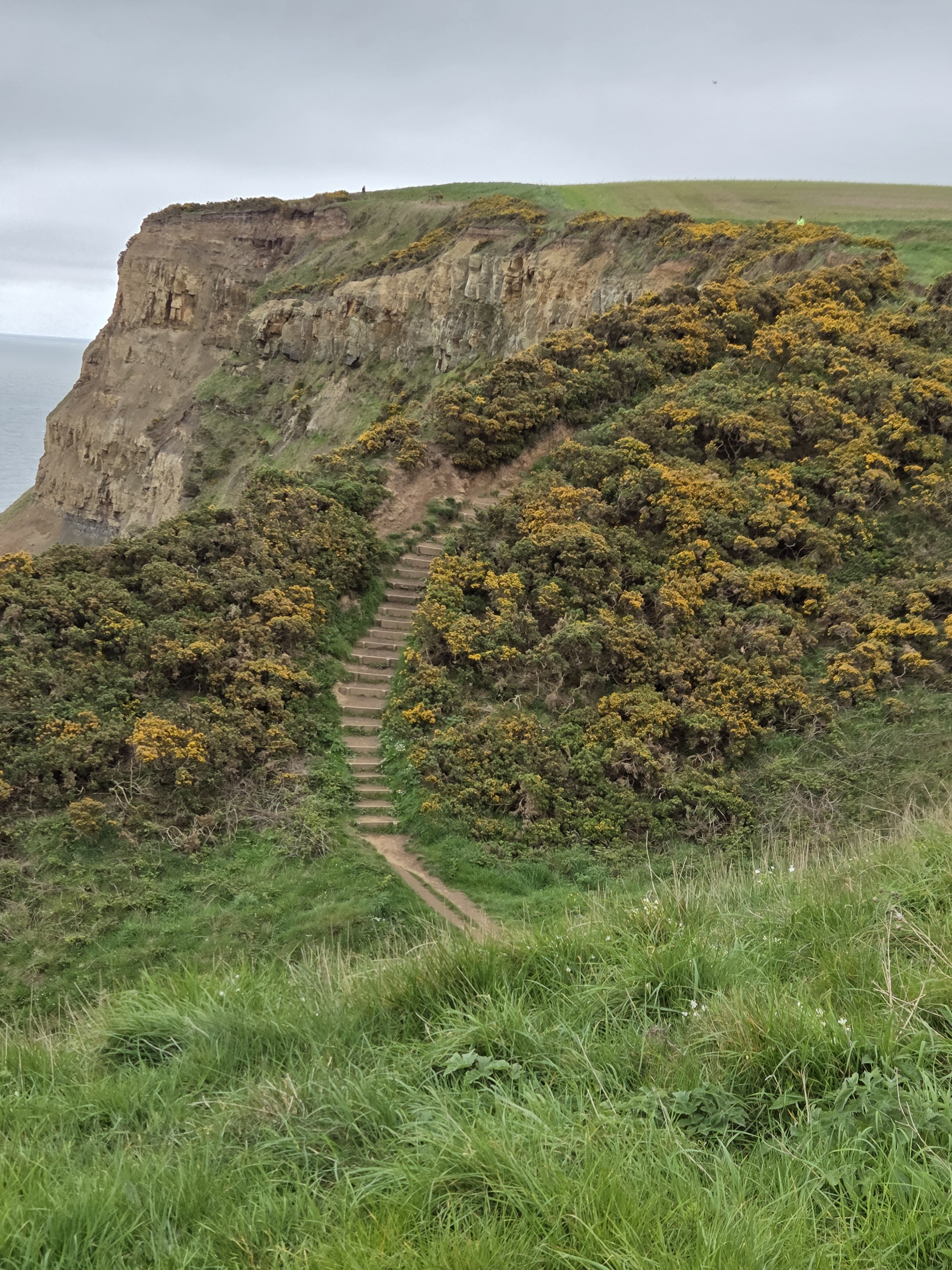
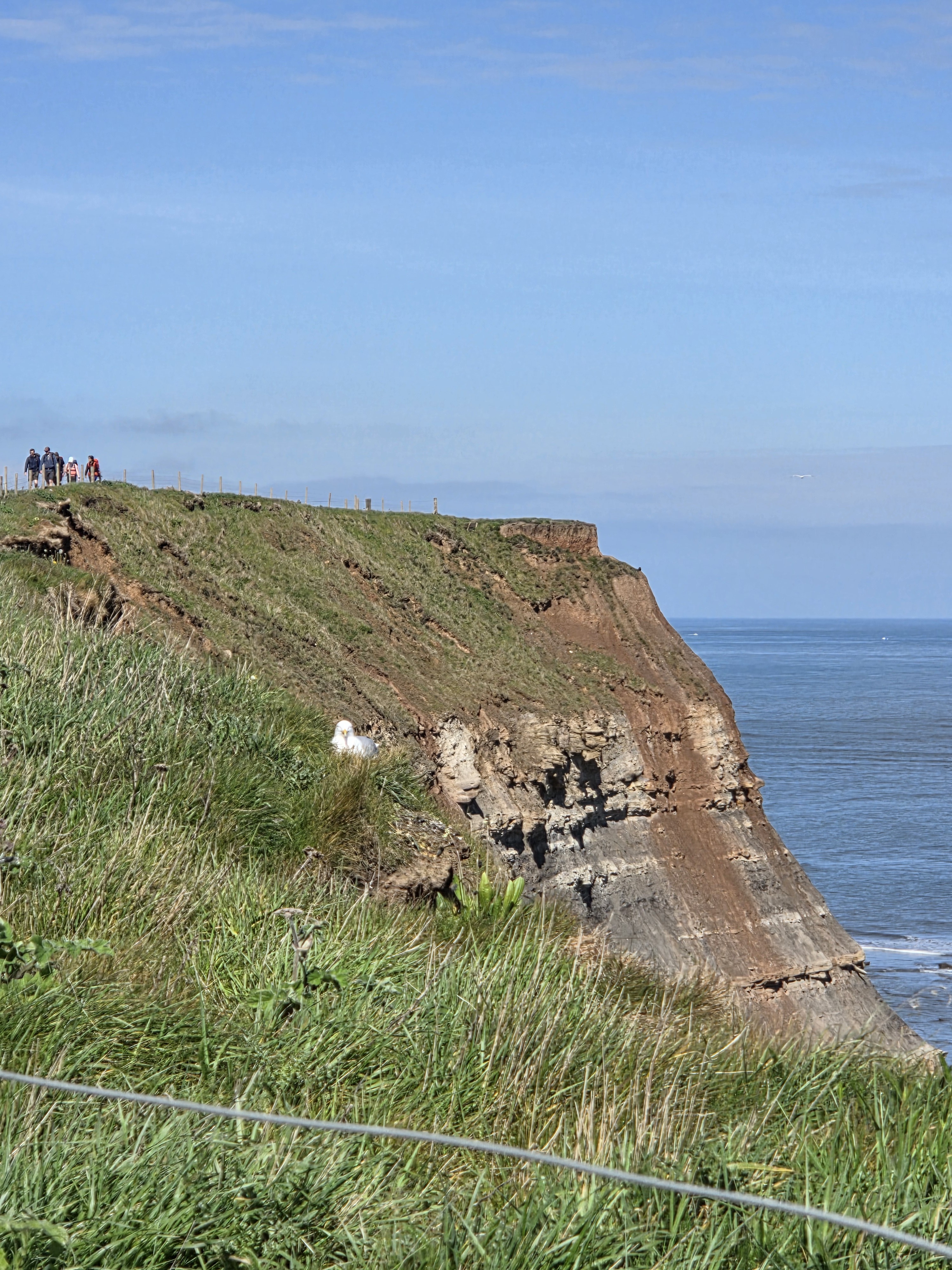
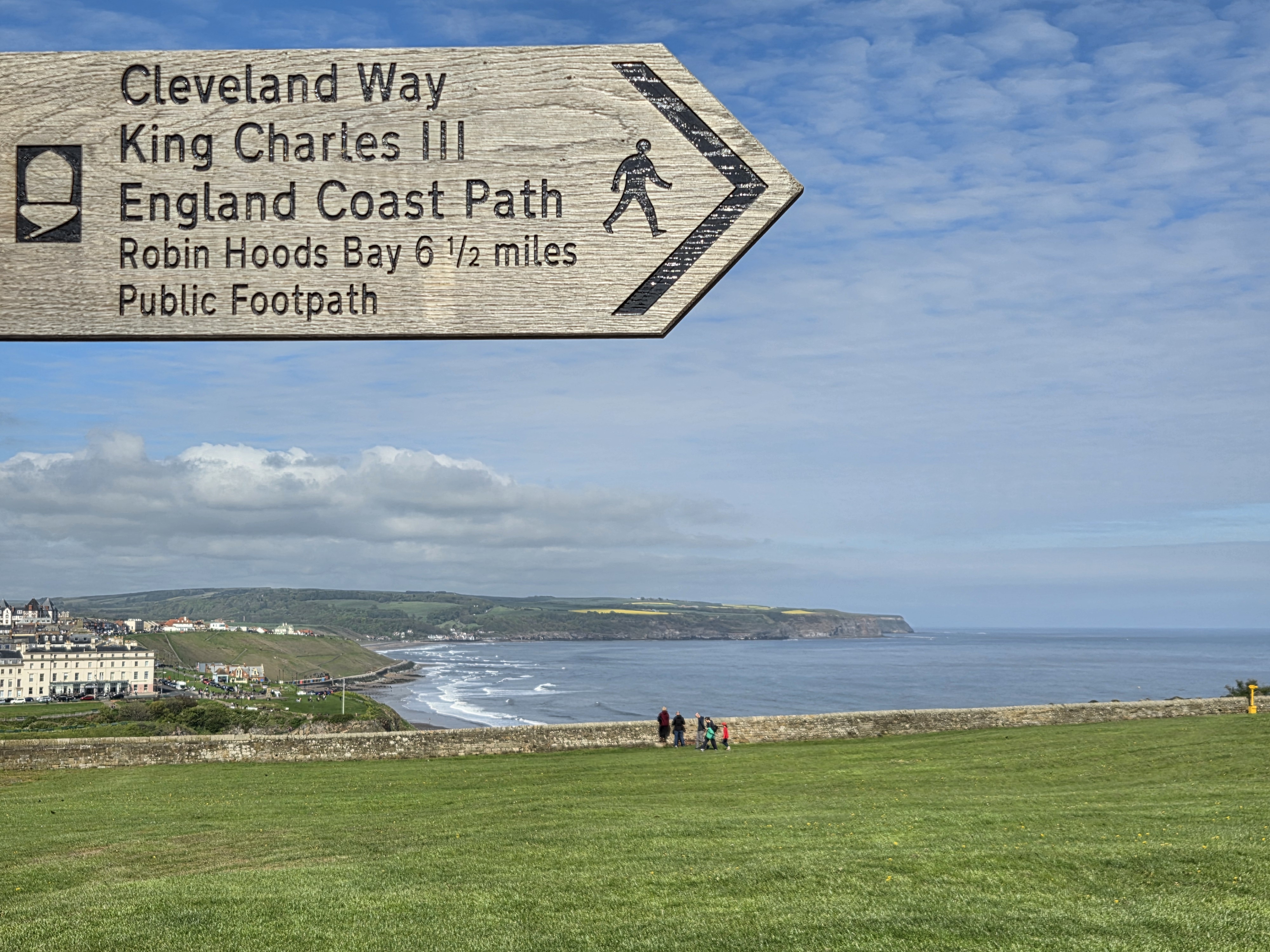
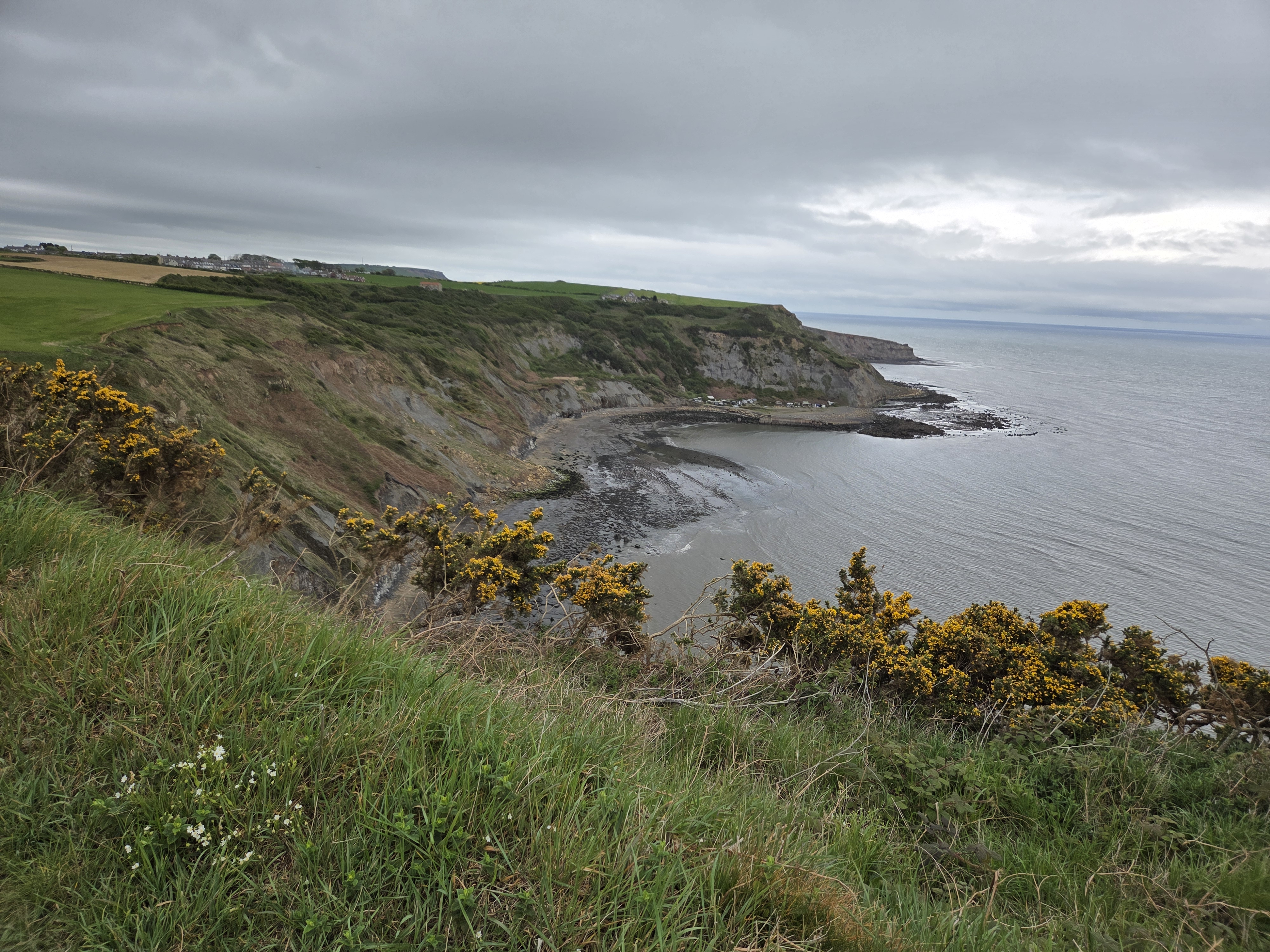
It’s chilly this week, but the rain has held off at least while we are walking. The extensive 109-mile Cleveland Way runs through this area, where we are walking daily in the North York Moors National Park including short coastal sections of the Cleveland Way. Very scenic, hugging the cliffs above rocky beaches and steep headlands, sometimes quite windy.

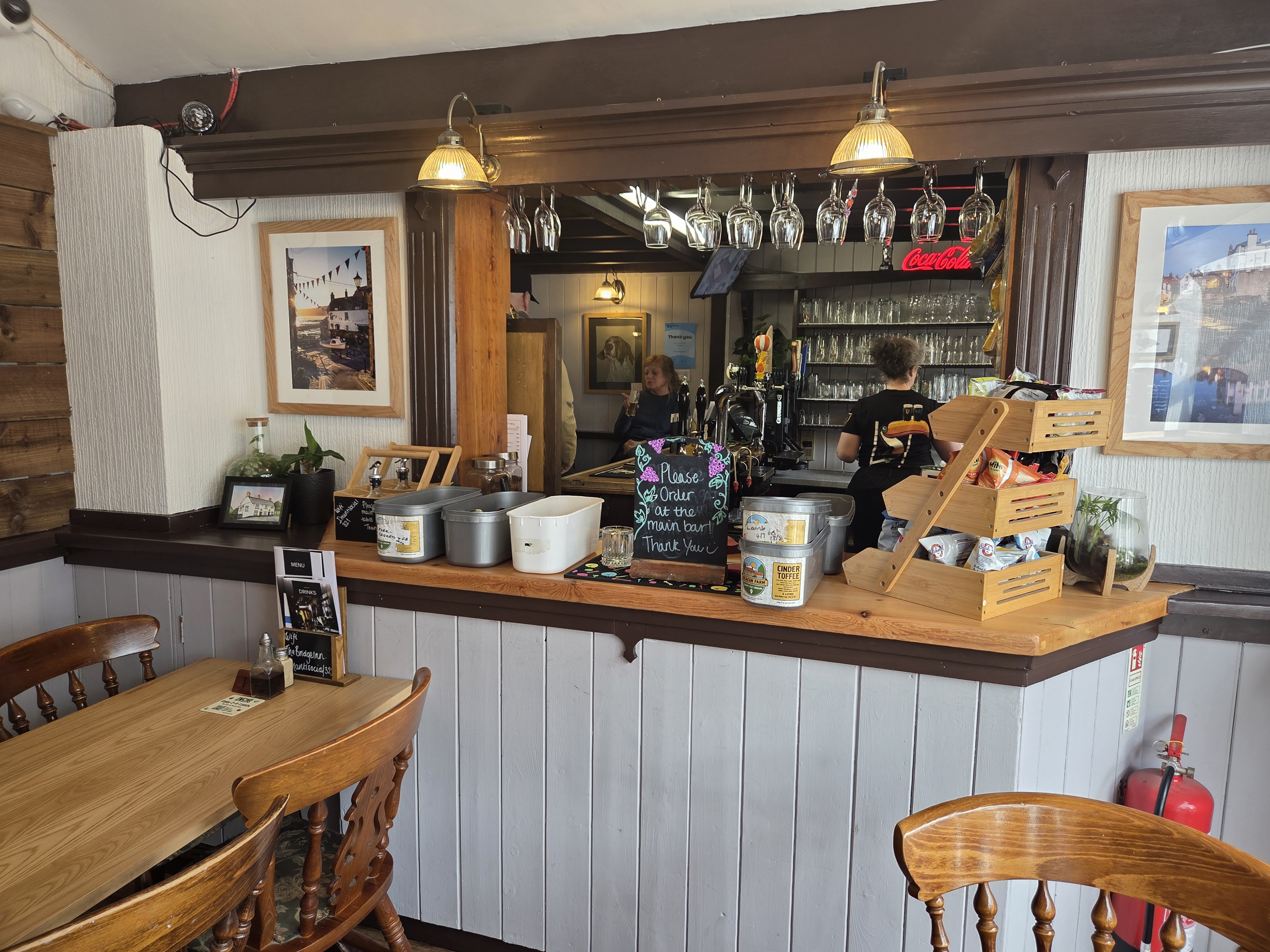
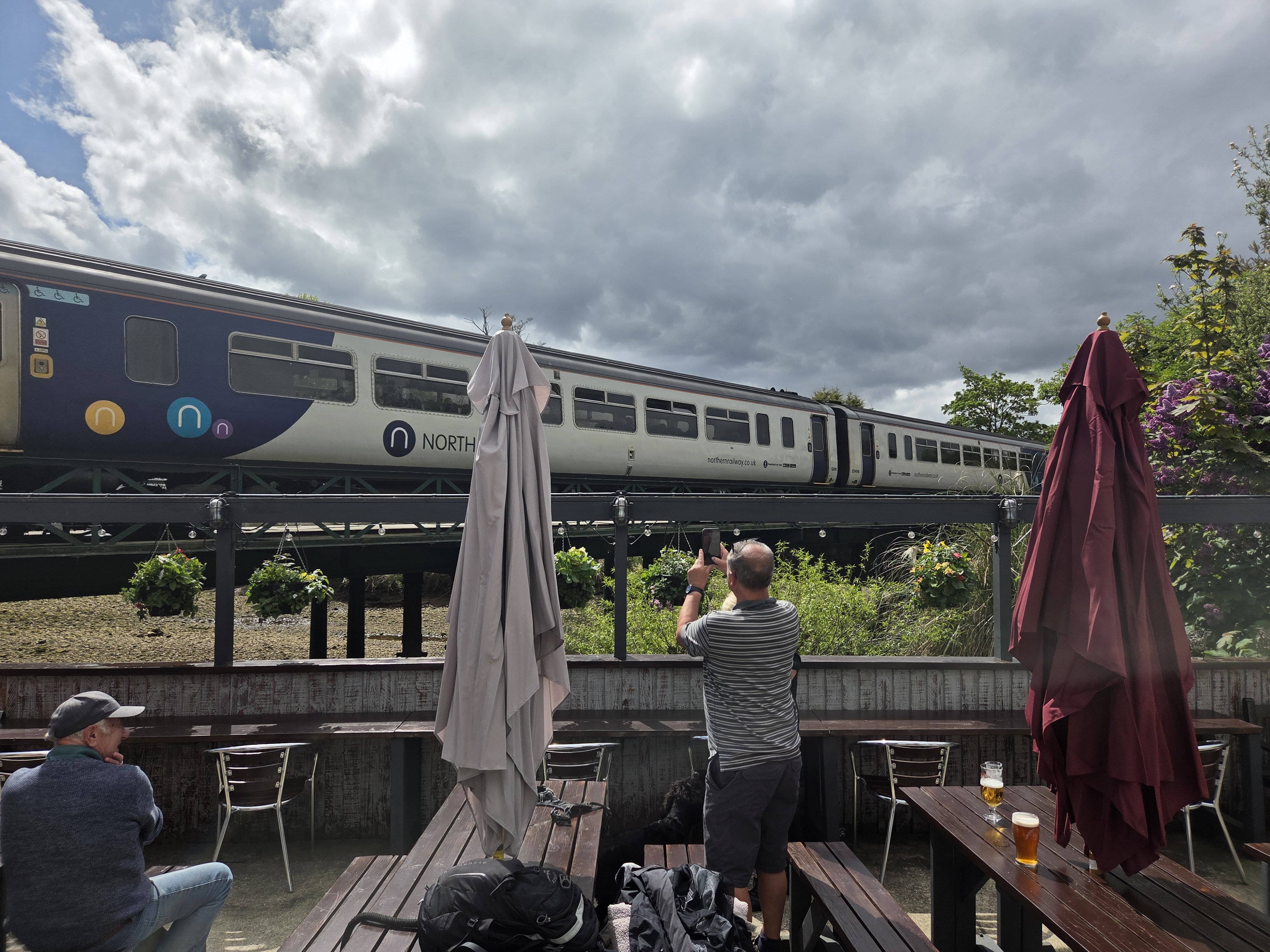
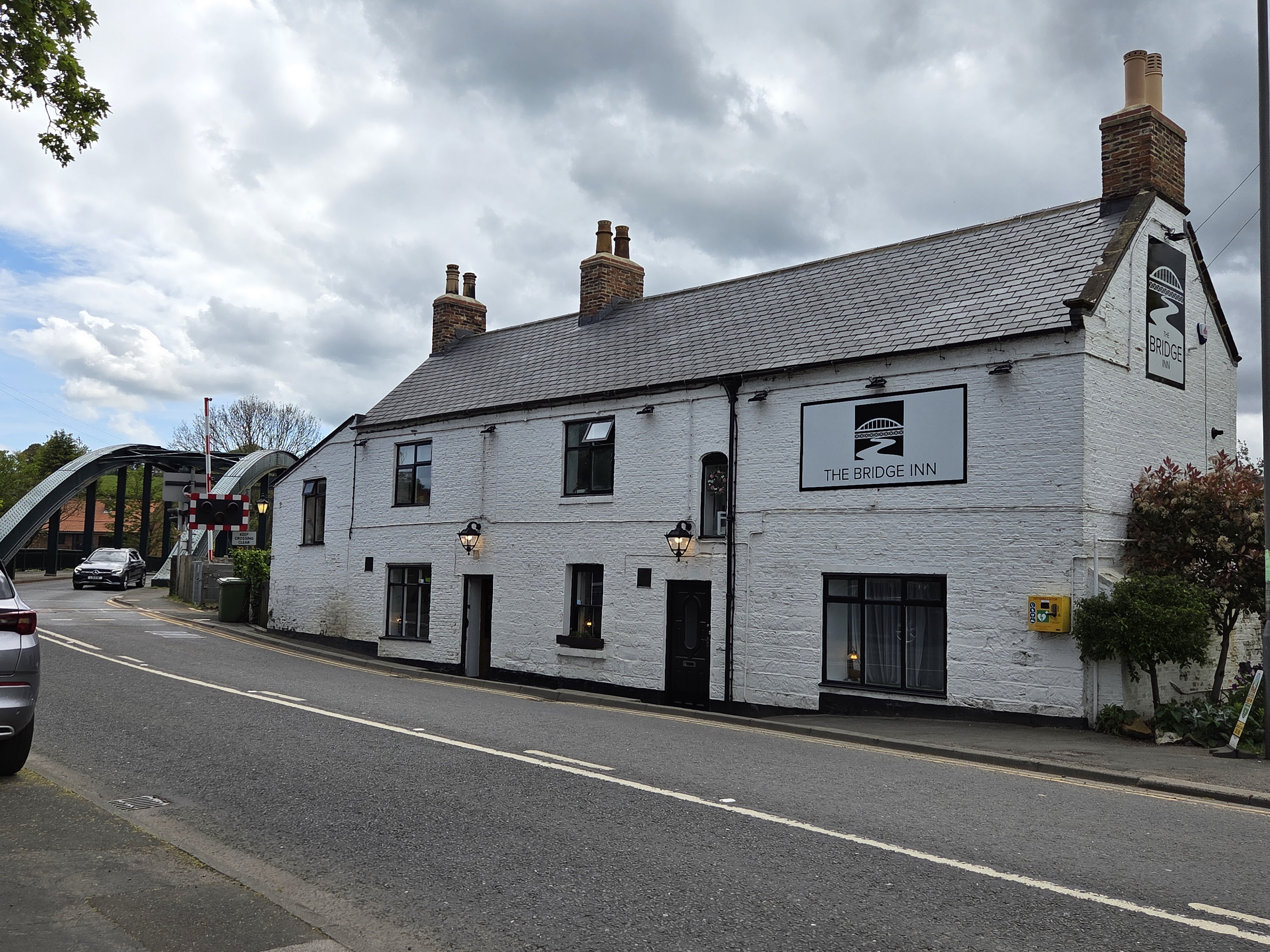
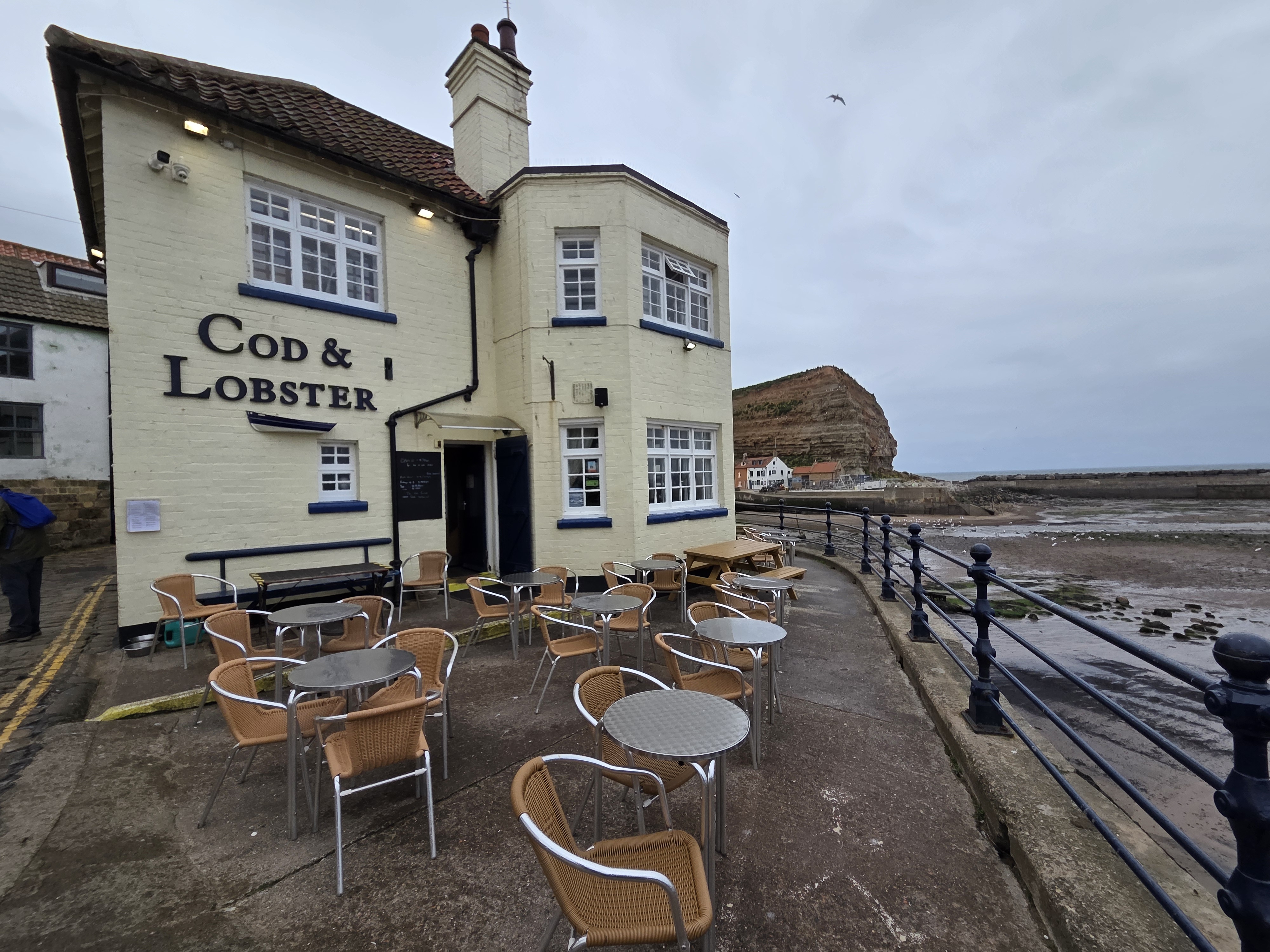
We’ve had a couple of “path to lunch” outings, with a charming pub awaiting mid-walk.

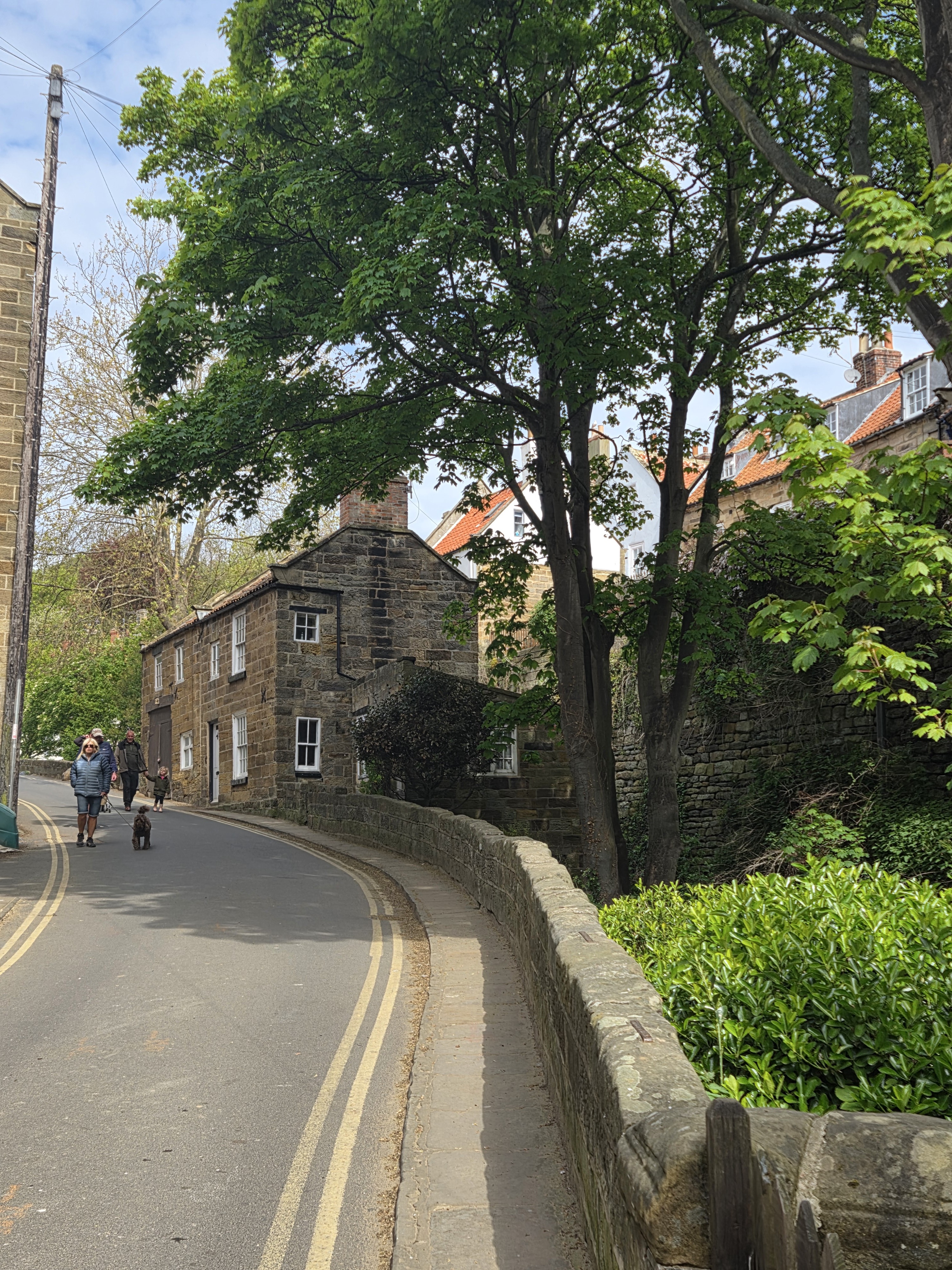
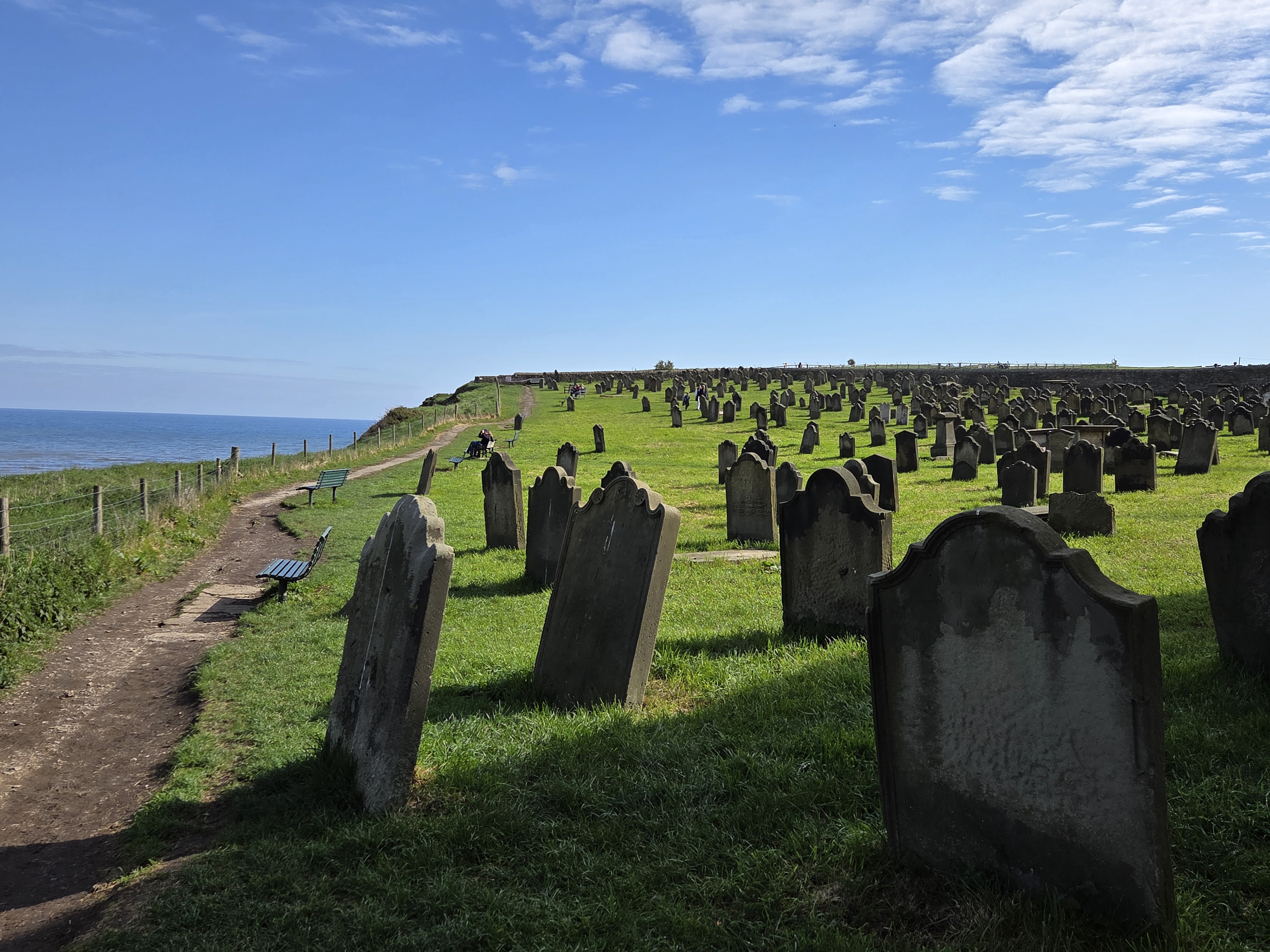
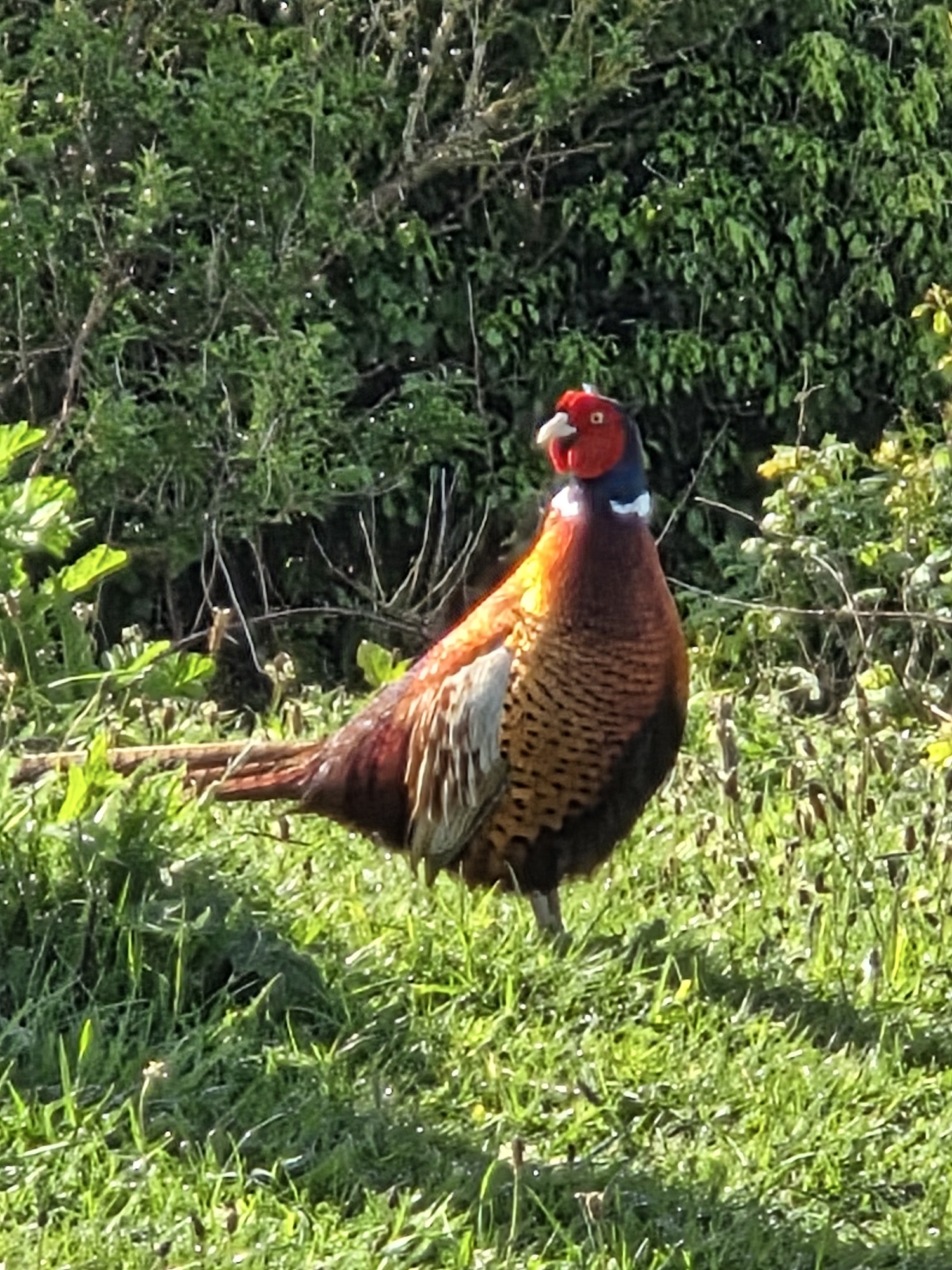
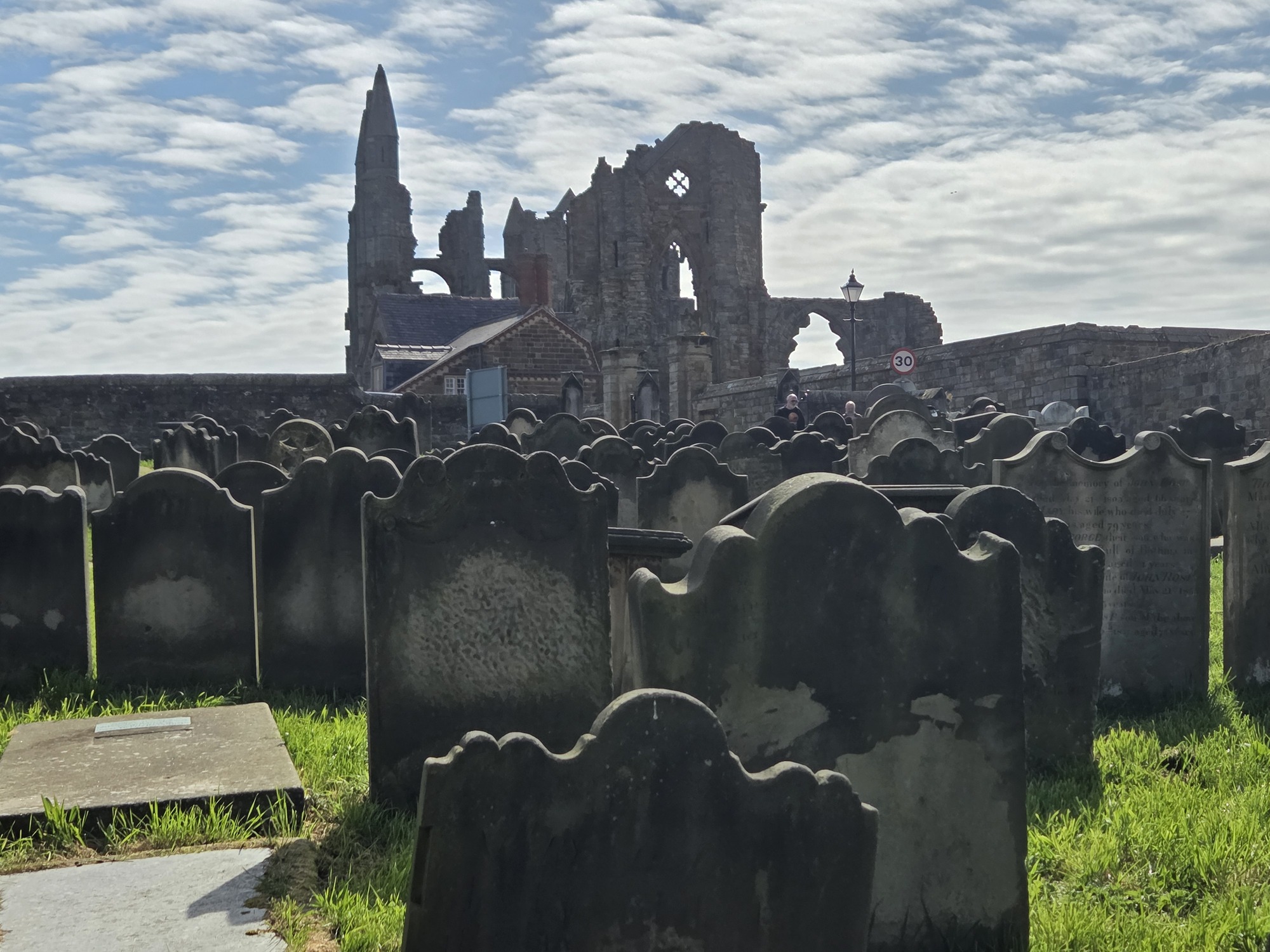
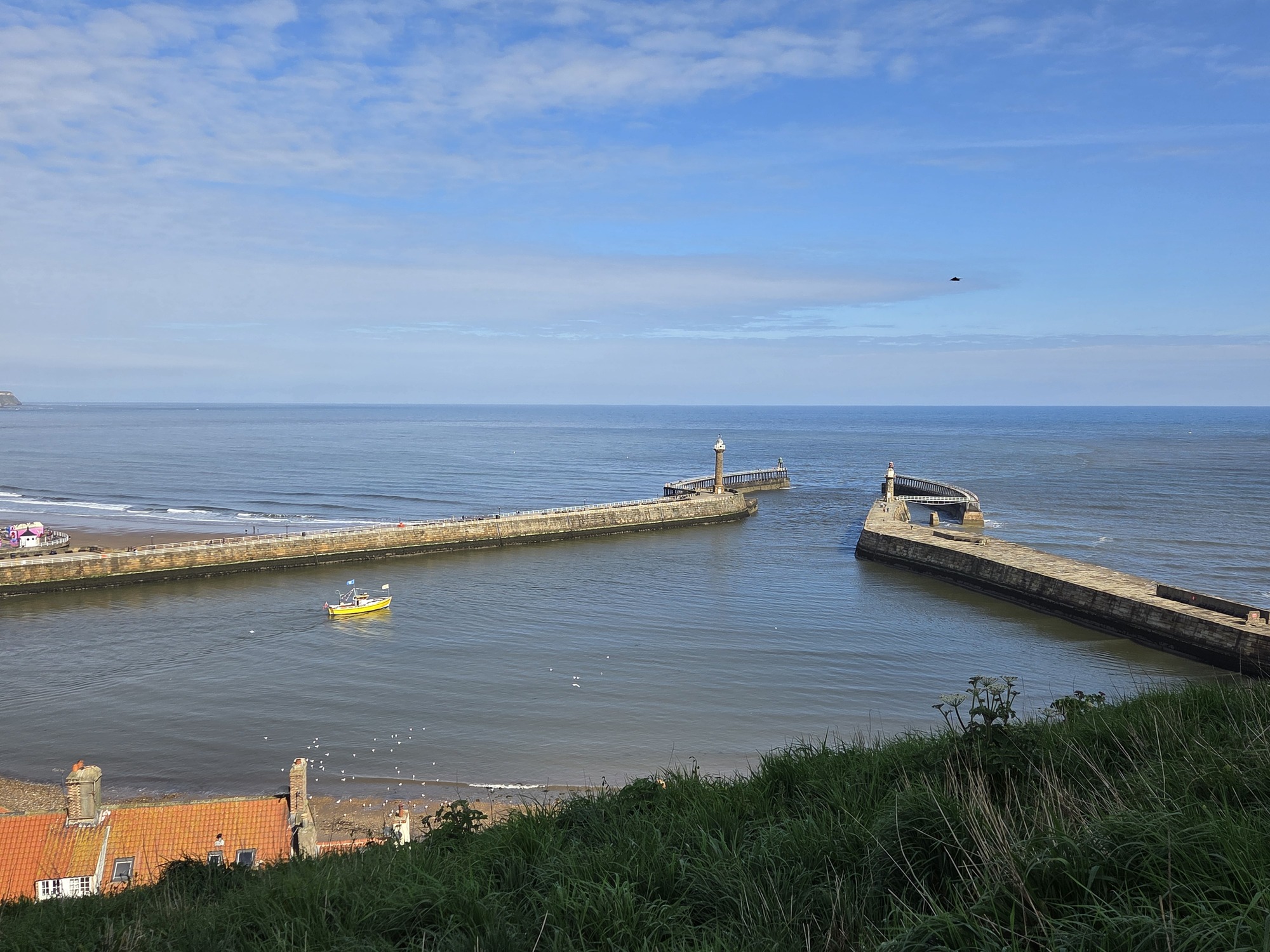
A random selection of photos from the week so far. Please click on a photo for a brief caption, if interested.
Sadly, the North York Moors Railway is not running to Whitby due to the same works on the line that plagued our arrival.

Our apartment for the week meets all our criteria: ground floor, washing machine, walk-in shower, full kitchen, and a coffee-pod machine. We no longer stay where we lug suitcases up stairs or climb over steep-sided British tubs to use the shower. If I am going to injure myself, I will do it outdoors, not in the shower.

We have not heard one word of American-accented English, and only once a couple speaking anything other than English. Most of our fellow travelers are from the UK, it seems.

From here, we head to Northumberland and the town of Berwick-on-Tweed. More from there soon!
61,000 Steps

6 Sep

6 September 2024.

Not a bad pedometer count for 2-and-a-half days. I struggle to get to 10K on any given day at home.

Richmond, UK, turned out to be a perfect post-Transatlantic flight stopover between Portland and Italy. Instead of taking a second hop to the continent, with the inevitable 3-hour layover at Heathrow, we opted this year to sleep where we landed for a few nights. (Last year the haul from PDX to LRH to ZRH was exhausting.)

We knew we wanted to visit some locations in Richmond and not stay in central London. We did not know how much walking we’d manage to do. Excellent weather helped.

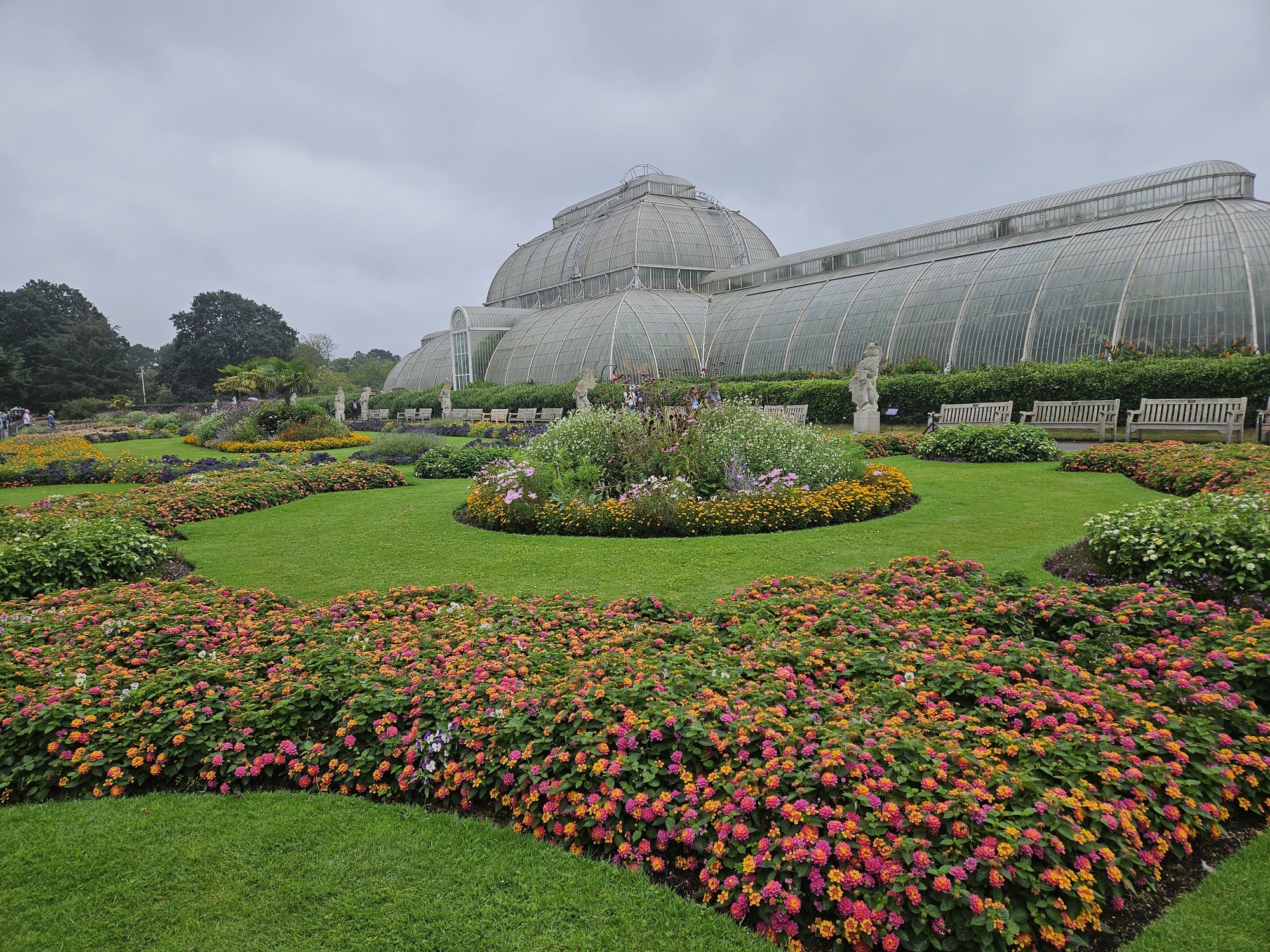
Kew Gardens is magnificent. This was our third tour there and we are still finding corners we had not explored. Kew is 330 acres of forest, groomed gardens, conservatories, a horticulture school, and research facilities. They claim status as “the largest and most diverse botanical and mycological collections in the world” according to Wikipedia. Kew (see map) is four times bigger than Bodnant Gardens, which impressed us so much in Wales last year.

This visit we discovered a few areas previously unknown to us, including a magnificent collection of rock gardens organized by geography, and the (seemingly) boring “Grass Garden” was actually a stunning display of ornamental grasses, not a field of Kentucky Bluegrass. Makes me want acreage to be able to plant in such masses. The biological diversity in these 330 acres is astounding. We have visited in spring, late fall, and now late summer. Each season is spectacular, so if you are in London, take a day away to visit charming Richmond and Kew Gardens. By train, no less.

Day two for us was to be a visit to Hampton Court Palace, one of Henry the VIII’s country homes. Sadly, a few days before we arrived, we received word that they would be closed for seasonal maintenance on the only two days we had to visit. Due to fascination with Henry VIII (thank you, Wolf Hall) we have had HCP on the list for a few years and there it shall remain. Next visit.

Top row: The 1844 Palm House; Autumn color creeping in. Second row: The Grass Garden. Third row: Rock Garden.These photos do not begin to show the extent and the beauty. Fourth row: The Broad Walk, colorful borders.

Instead, we chose to walk a section of the Thames River Path. Imagine if the major river where you live had a walking path along it the entire length of it. With few exceptions, you can walk the 180-mile length of the path from near the source of the Thames to near the mouth. For reference, the main stem of the Willamette River in my state of Oregon is 187 miles long, so you could walk from Eugene to the Columbia River.

First Mate Siren

180 miles and 10 days were not in our plans, but a perfectly lovely stretch of about 6 miles suited us and included a ferry crossing at Twickenham with Siren the first mate and coffee at a garden café, plopping us back into Richmond near Kew, just in time for lunch.

Great signage; Ferryman (Siren’s dad); wide path, at least here, much used by locals; view of Richmond; Richmond Bridge

Richmond is a wonderful place to spend a few nights recovering from overseas travel or just because. Many restaurants and pubs, highly walkable, convenient to central London via public transportation if that is in the plan.

Walkers, take note. Nothing difficult but you will get your steps in!
Detour, or why we are in Switzerland and not Ireland

20 May

20 May 2023.

Ireland was the plan: Switzerland is the reality. But first, Wales!
When last I wrote (see Styles of Stiles) we had just arrived in Wales in the charming town of Conwy. Northern Wales is lush and green, much like Western Oregon and Washington, with similar trees, shrubs, flowers, and even waterfowl. The weather was fine and there were neither mud nor cow dung underfoot. But then we were not walking in pastures. 

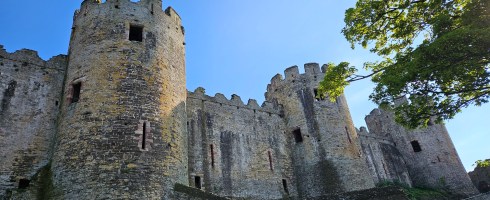
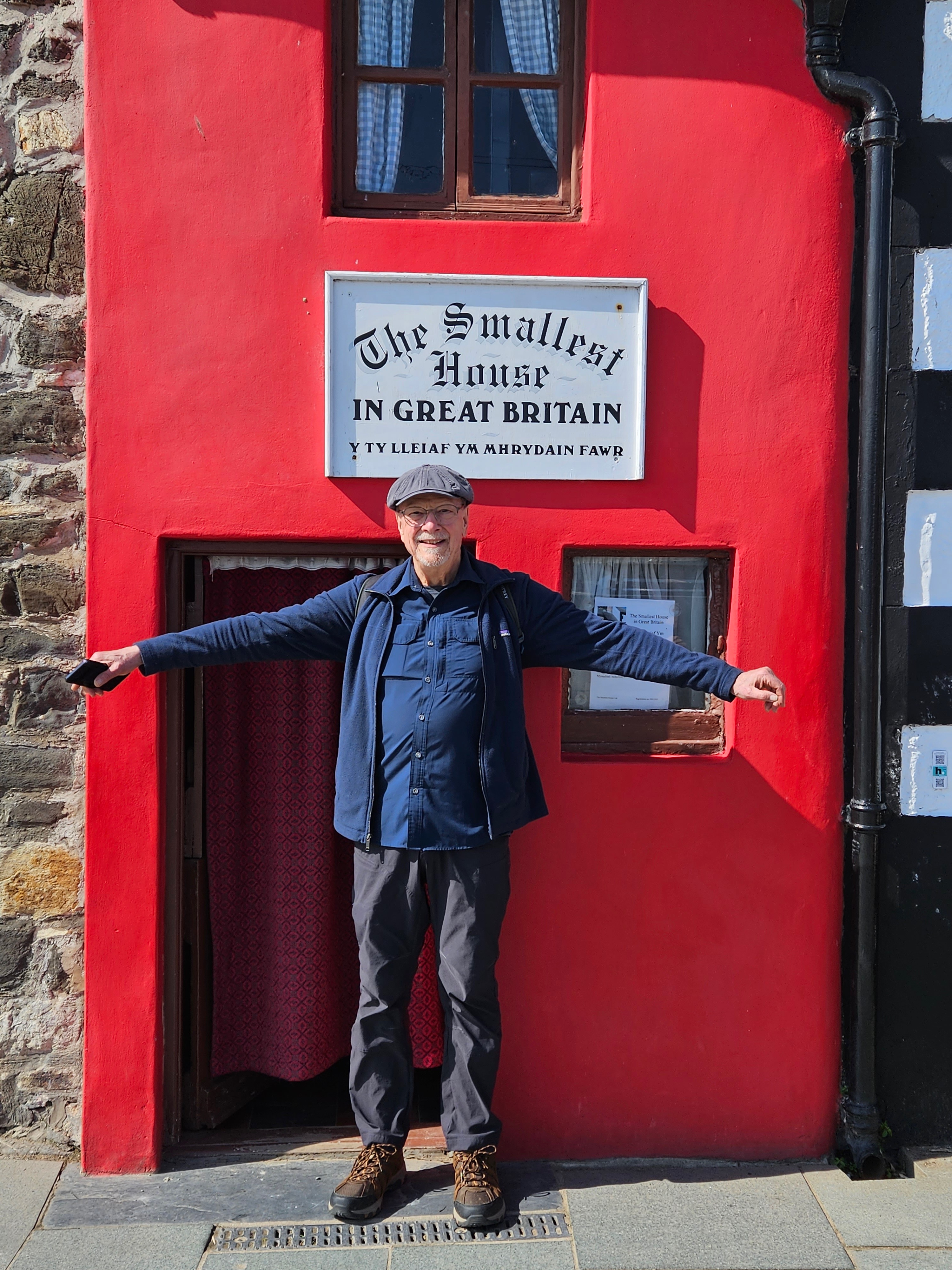
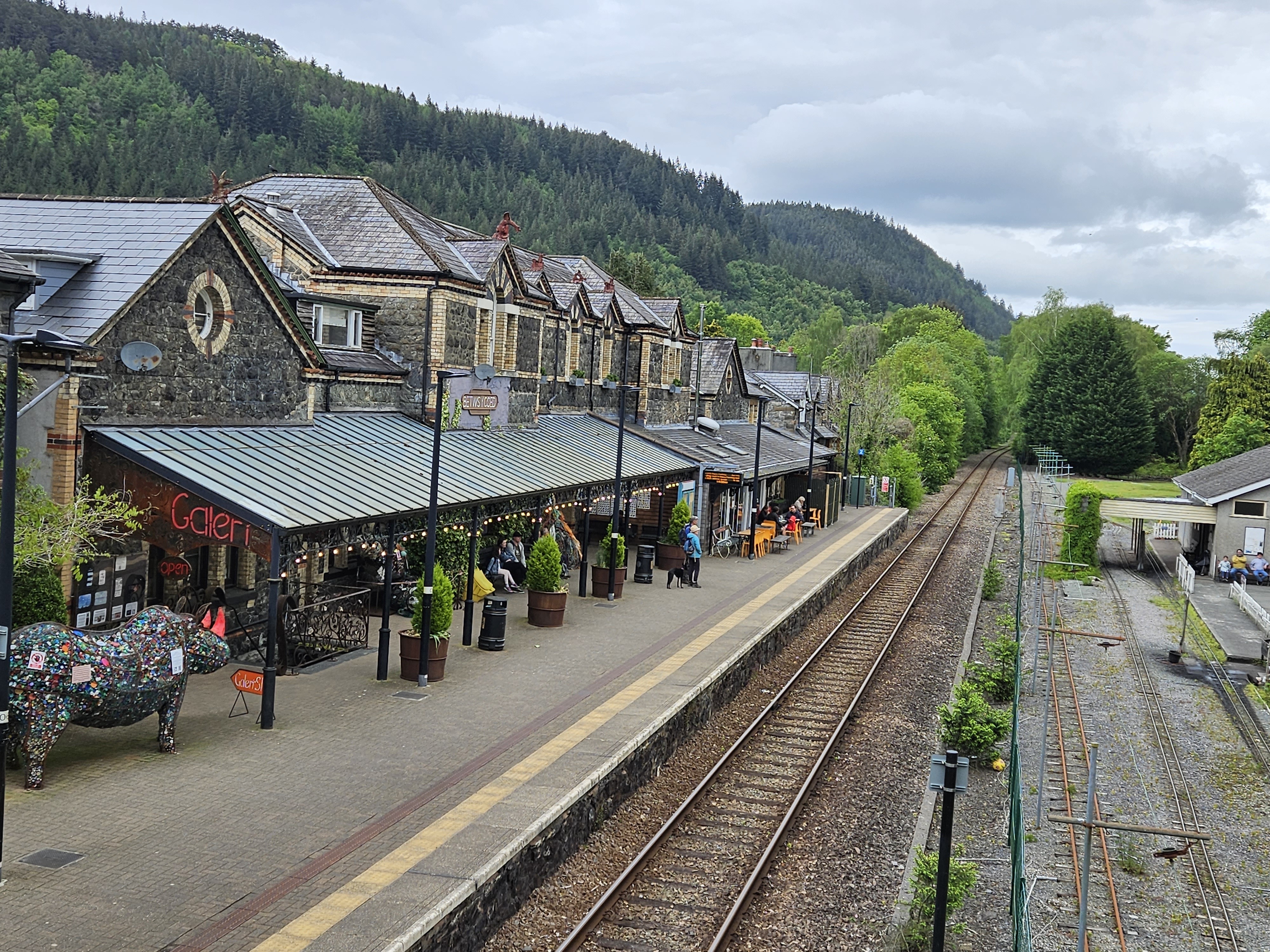
Where the Pacific Northwest has soaring mountains, Wales has castles. Lots of castles. Storming Conwy Castle, climbing the town walls, a day trip and walk in Betws-y-Coed (which I can now pronounce correctly), and strolling through Bodnant Gardens filled our three days. No rain hats required. 

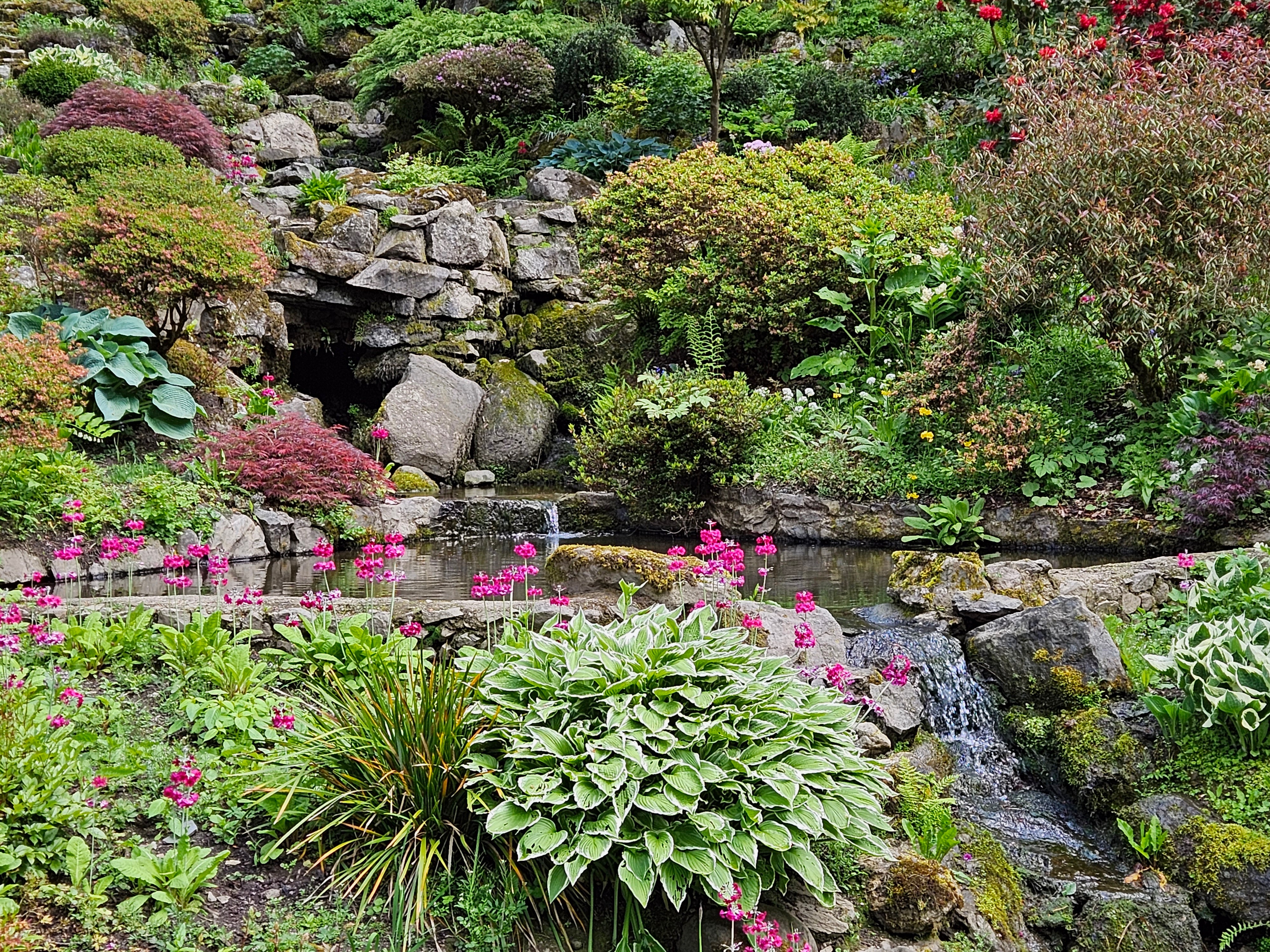
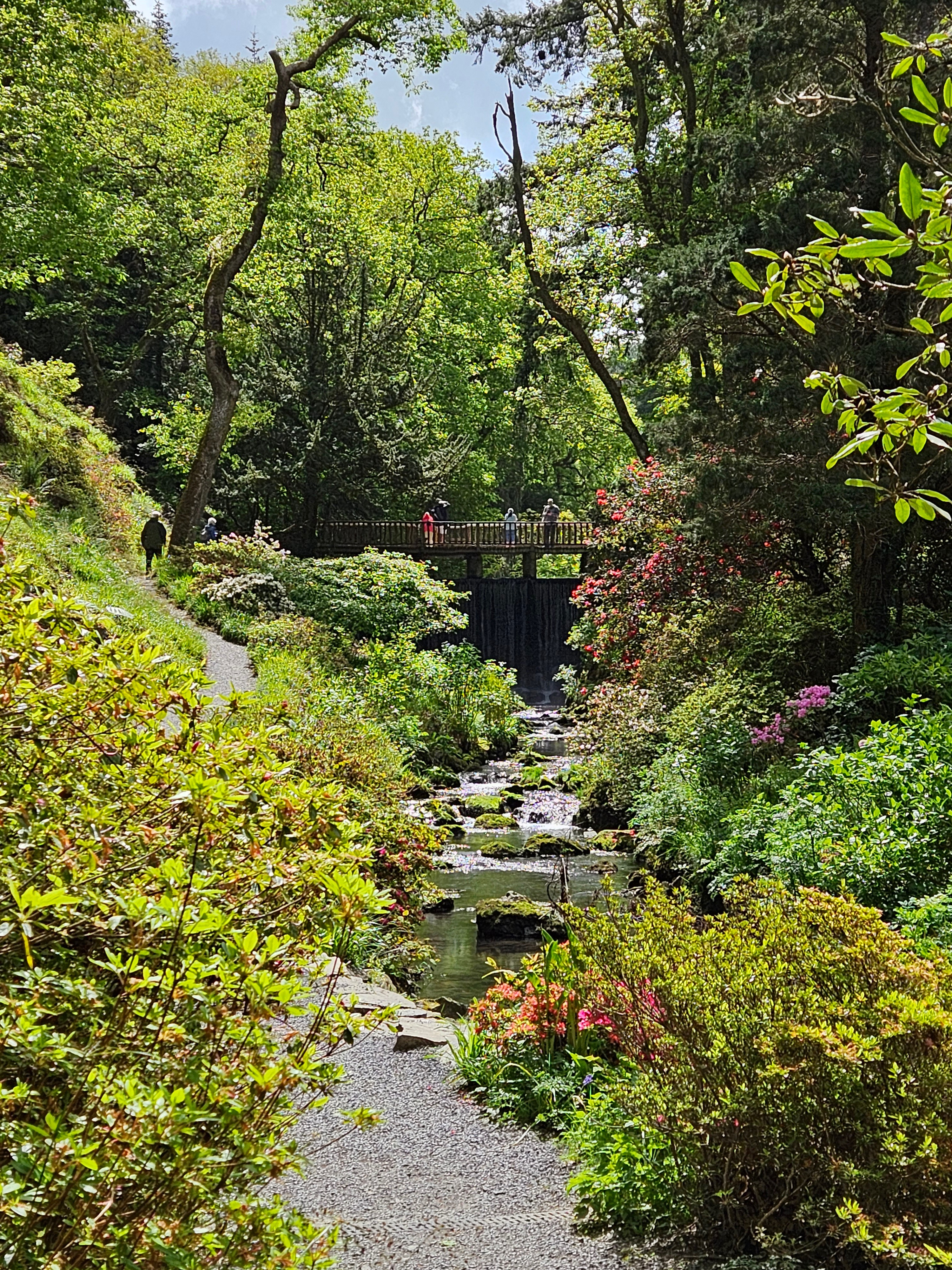
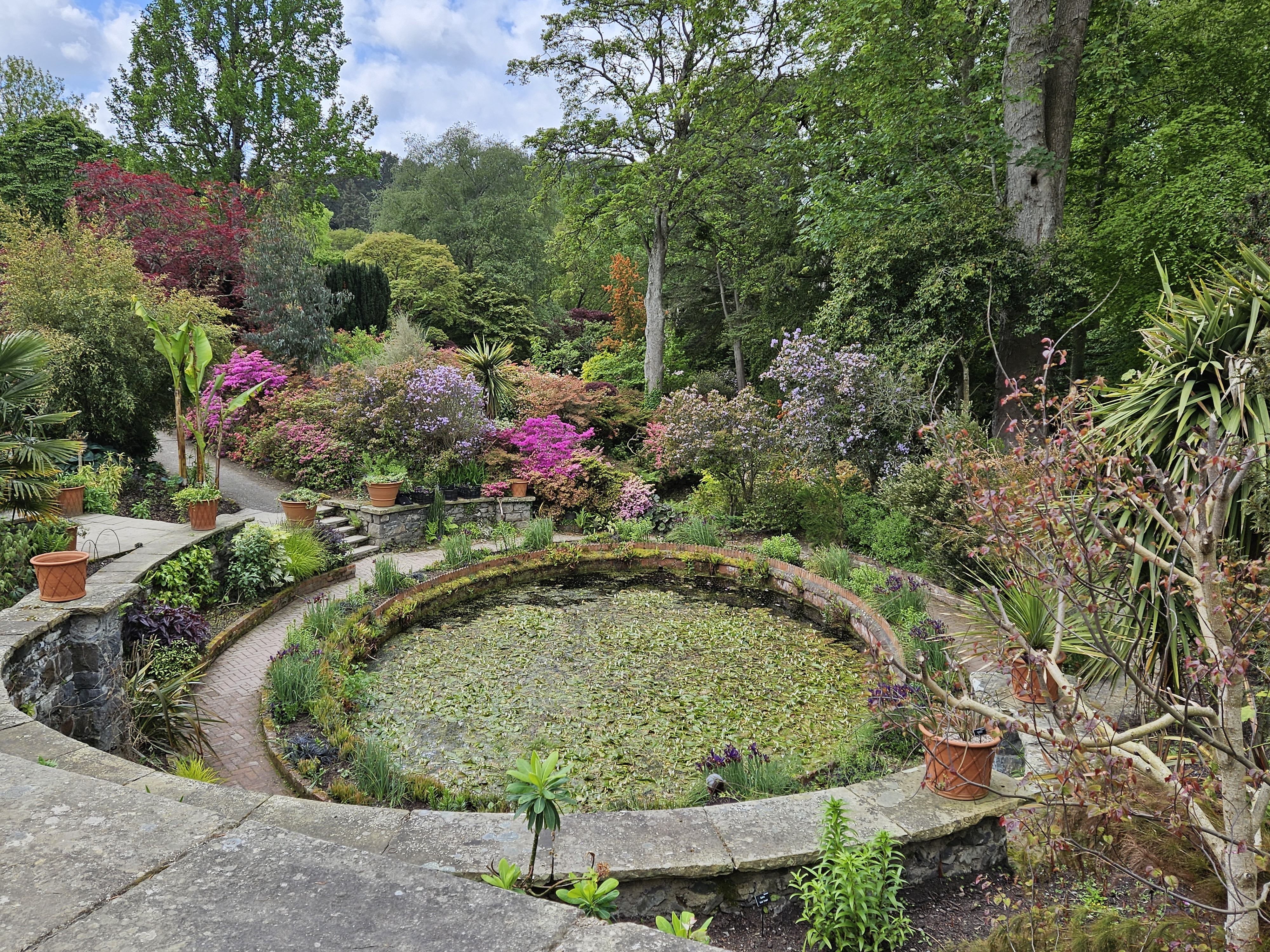
Bodnant Garden is an exceptional place. Acres and acres of manicured gardens, lush forest, winding paths, a folly here-and-there. Once a private estate, it was handed over to The National Trust in 1949. The house is still occupied by Lord Aberconwy. You can point a camera in any direction and get a beautiful shot. Click on any photo for an enlargement.

Our traveling companions including the experienced left-hand-side-of-the-road driver had to cancel their trip to Ireland due to family circumstances. Where we were going in Ireland was quite rural and was not going to be easy to do by train and bus. Ric and I are not left-hand drivers and not about to start. After a quick assessment of how we might best spend the next two weeks, we made an about face from Conwy and headed to the continent and our favorite refuge, The Lauterbrunnen Valley.

I briefly assessed changing our tickets to fly home sooner. Not only was it depressing to think of calling the trip to a halt, the cost to change was astronomical as airfares have escalated so dramatically since we bought our tickets in September. 

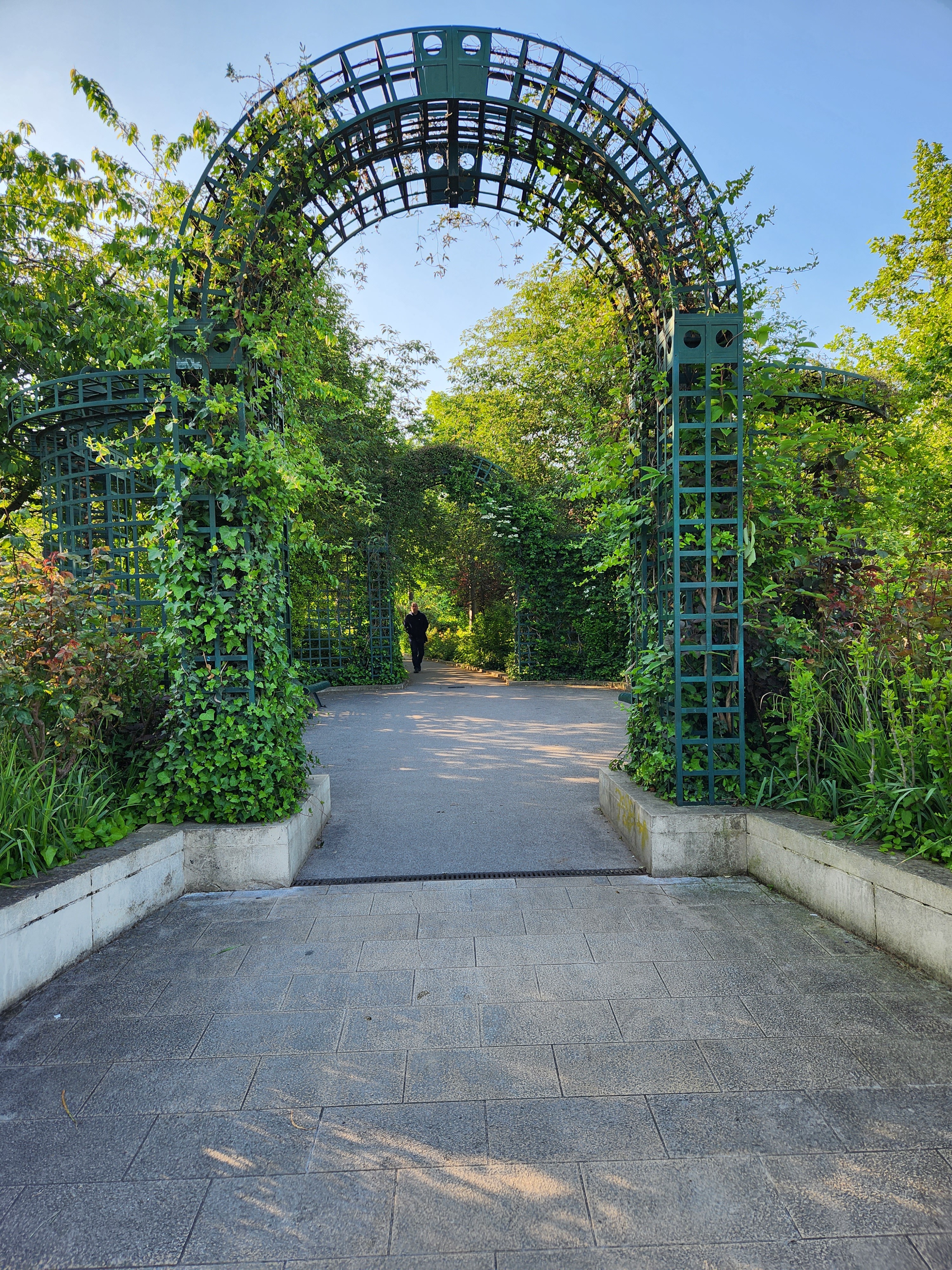
Getting here was a two-day journey. We avoid flying when we can and so we did. Tuesday we rode on two British trains to London, then the EuroStar to Paris, where we spent one night. The next day, a French TGV Lyria took us to Basel and was followed by a series of three Swiss trains to get us to our tiny mountain village. I know some would find this nightmarish (my brother’s idea of Hell, I think) but we travel light and find it far less stressful than flying. Plus a night and a morning in Paris = a fine meal and a lovely morning walk in an elevated garden, La Coulée Verte René-Dumont, which I wrote about four years ago in this Postcard from Paris.

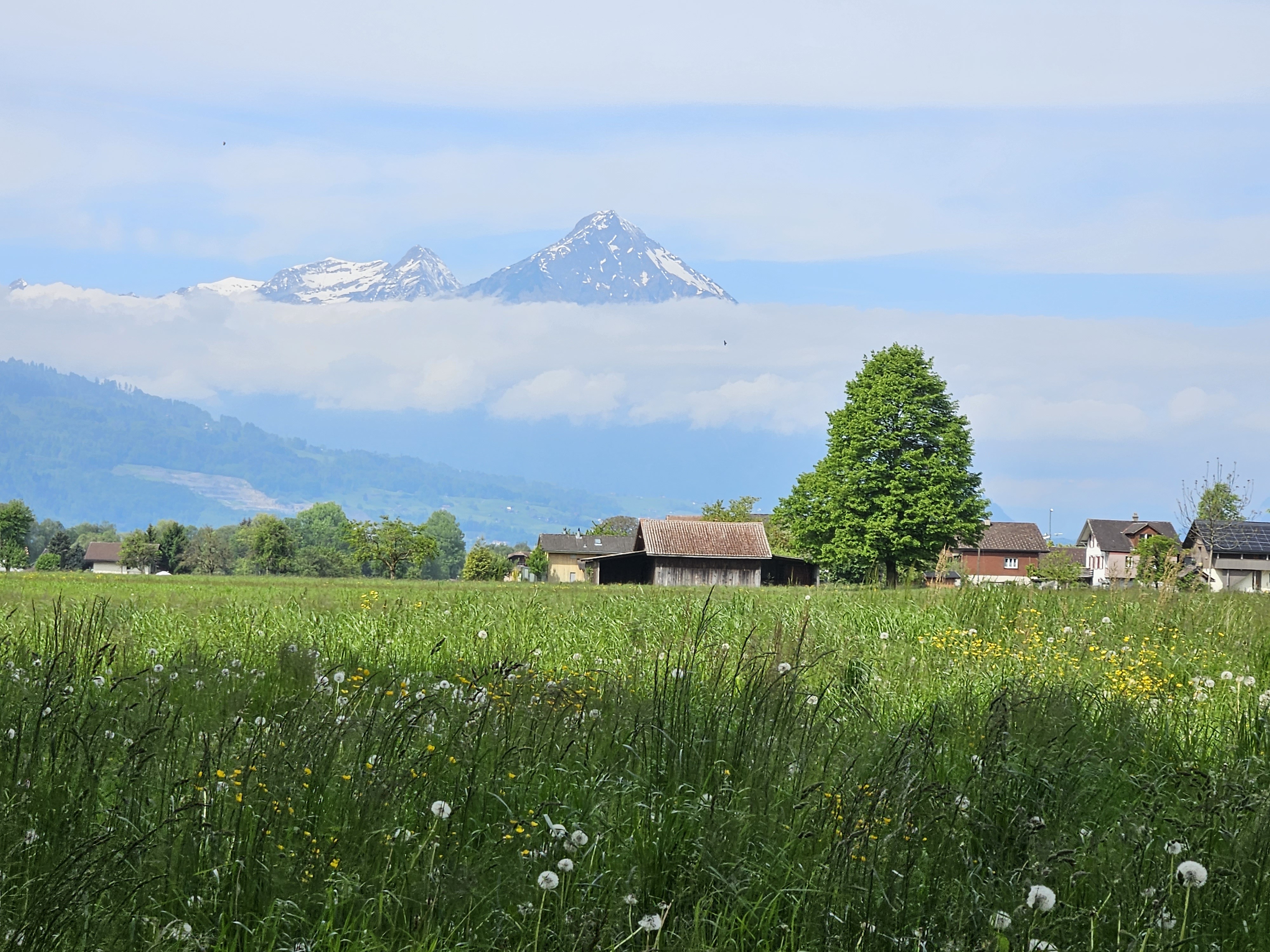
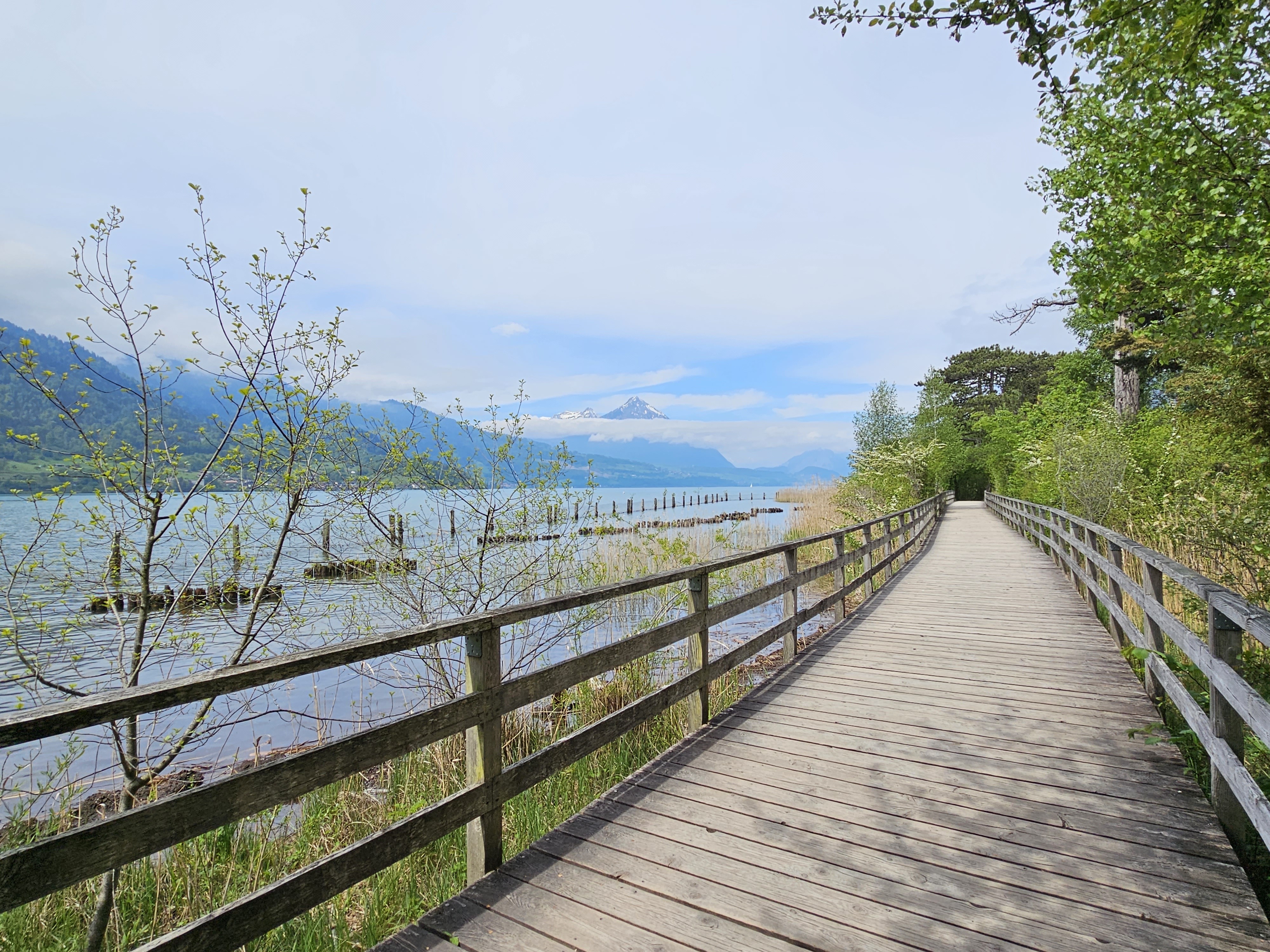
The weather forecast for the Lauterbrunnen area was daunting. Weather.com showed rain for the foreseeable future when we checked it before leaving Wales. But the reality is far better and the weather app MeteoSwiss has been our friend. I have not had to wear a rain hat yet and we even saw peeks of sunlight the past few days with continuing improvement ahead.

No book research, no major plans. Just enjoying seeing one of our favorite places in a different season; we have only visited in the fall and once, briefly, in the winter. It is a totally different experience in the spring: fewer tourists, although the transportation can be crowded, and many places are still closed for rest and renovations between ski season and hiking season. Tulips are still blooming and the deciduous trees just leafing out are a stunning contrast to the deep green conifers.

For those of you who know the area, the little cliff side train from Grütschalp to Mürren is out of service as they will bring the new equipment on-line in June. From what we could see, track-work must be just about complete. The corresponding gondola is also out of service until the middle of June although the path between Grütschalp and Mürren is open if you want to walk roundtrip, I guess. (We did not.)

We are riding trains and gondolas, taking easy hikes, and discovering new corners of this marvelous region. Might have to eat some rösti, too.

Styles of stiles and trip miscellany

13 May

13 May 2023.

England delivered exactly what we expected: occasional sun and plenty of damp, but high spirits surrounding the spectacle of King Charles III’s coronation.

What a privilege it was to be in-country for the event! When we booked our trip, Queen Elizabeth was still very much alive so being there — although not in London, thank the gods — was strictly coincidental.

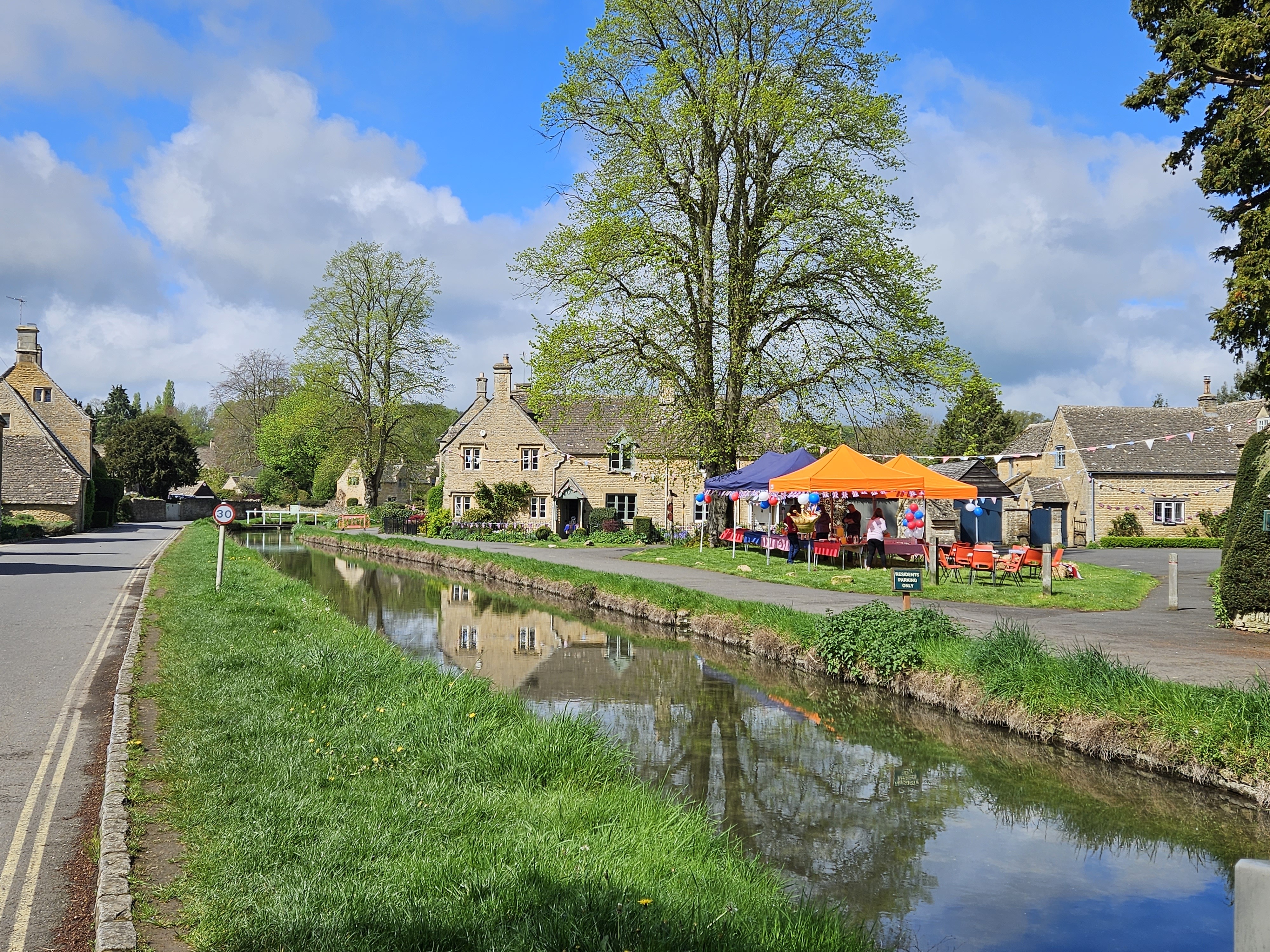
In Lower Slaughter on the Sunday after the Coronation, the village prepares for The Big Lunch, a community celebration. These parties took place all over the U.K.

First stop was Oxford, convenient on our path to The Cotswolds for some country walking. Oxford was decked out for the upcoming pageant and did not disappoint. We toured parts of Oxford University with a doctoral candidate and enjoyed his inside-take on how the place functions and inevitable comparisons to the U.S. university experience.

Blenheim Palace was a glimpse into the aristocratic lifestyle as the family still resides there. Goslings and ducklings peppered the estate grounds and the gardens were in fine form. I can only imagine how gorgeous the roses must be in season. Our final Oxford tour was of the Bodleian Libraries, dating to the 15th century when 281 manuscripts were donated, the libraries now house over 13 million printed items.

The oldest part of the Bodleian, Duke Humphrey’s’ Library. Volumes cannot be “checked out” but must be read on-site with a chaperone librarian.

Almost over jet lag, we headed to Bourton-on-the-Water, our home for a week. We chose a self-guided center-based itinerary with HF Holidays staying in a hotel that was previously a private residence built in 1662.

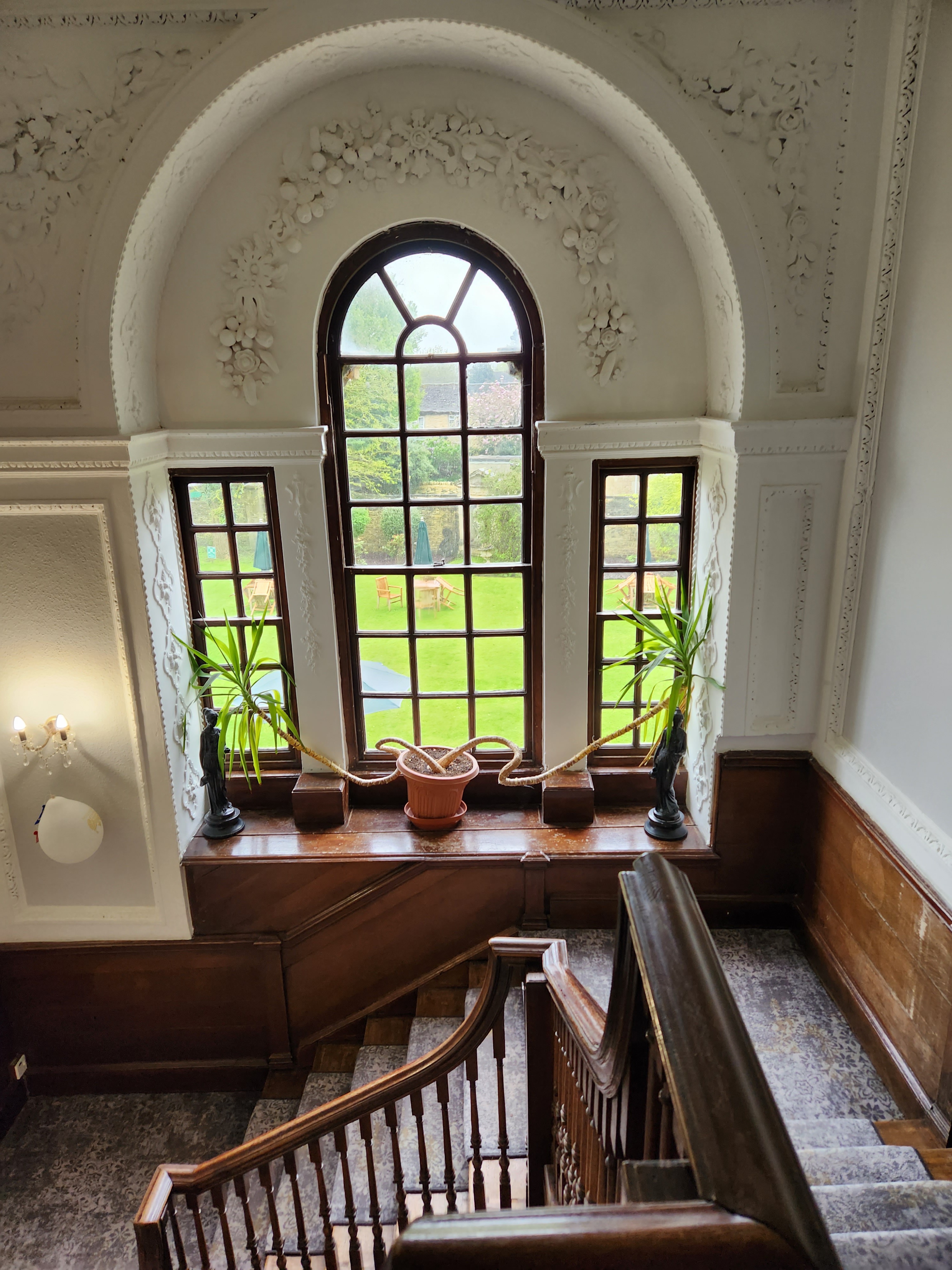
This is the view of the grand staircase that greeted us outside our our room.

No matter how often we tour in the UK or the rest of Europe I am constantly dumbfounded by the history and the preservation and adaptation of old buildings. HF Holidays provided a lovely room, cooked breakfast and dinner with a packed lunch daily, and dozens of walking itineraries to choose from. We could select from clear instructions encased in waterproof laminating to guide us. All we had to do was don our gear and head out each day.

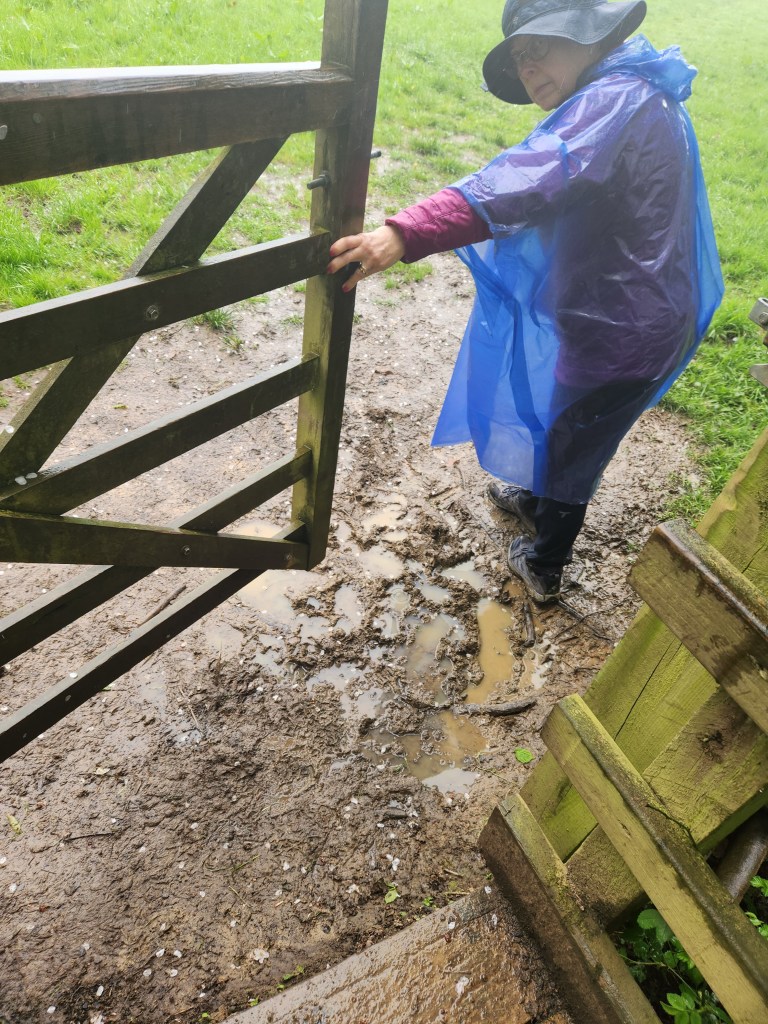
Those waterproof instructions were necessary. Our walk conditions have ranged from misty to sun-dappled to downright soggy. It reminded us of Oregon although in Oregon we have never hiked with sheep nor though mud as sticky and pervasive as we have done here.

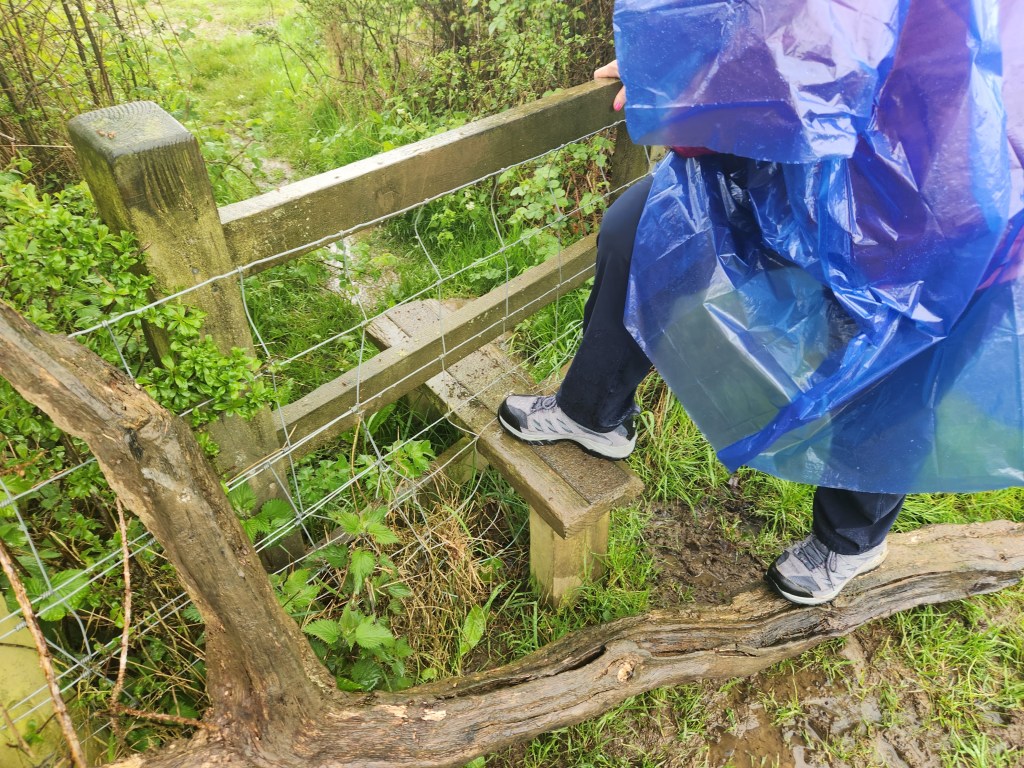
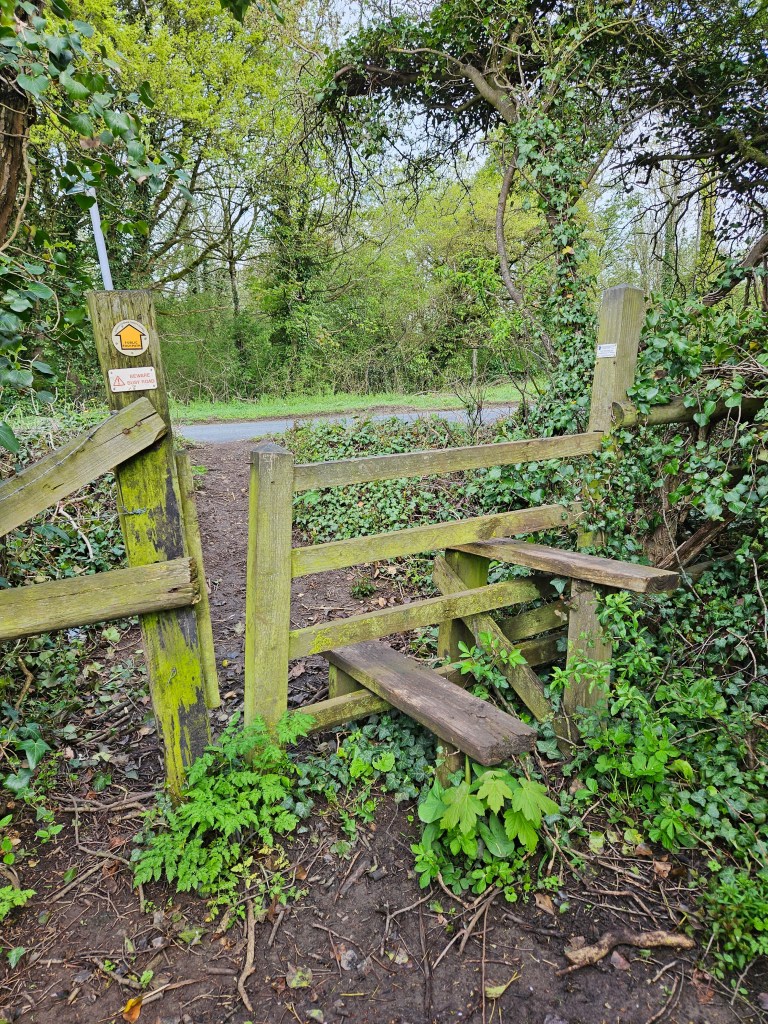
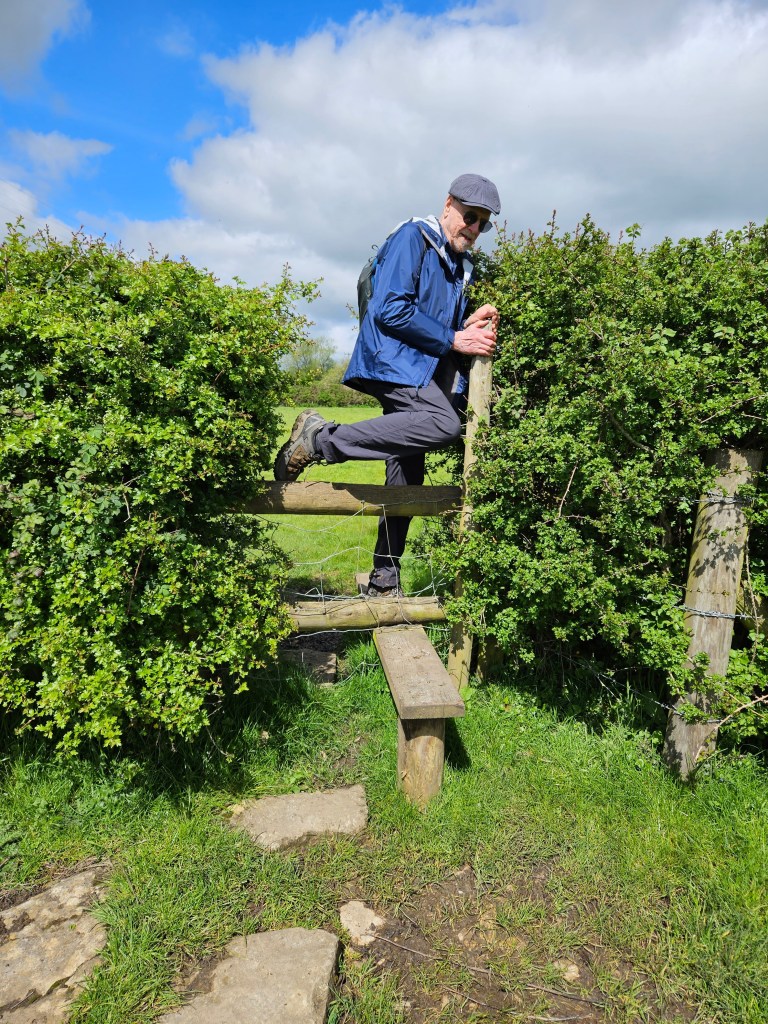
And there are stiles of many styles. Frankly, I prefer a good gate, but the stiles were definitely a sensible solution to allowing walkers to walk unhindered yet keep sheep and cows in their fields. They are being replaced in many areas to allow barrier-free access to public footpaths.

Our final day in Bourton-on-the-Water was weather perfection, a sunny day capped by a thunderstorm at 17:00 when we were safely “home.”

We set off for Wales yesterday (Friday). Almost two hours by private transport thanks to a rail strike in England, then a 3 hour train ride. Conwy, the town we are staying in, is charming and today’s weather exactly what you’d hope for on a spring day!

Will write more from Ireland later in the trip!

Postcard from England: Stone circles and urban hikes

10 Jun

10 June 2019.

Can it be ten days since we returned from our spring trip? Wrestling with jetlag, re-entry, laundry, and catch-up gardening took more than a week but the last segment of our 6-week trip is worth relating.

The weather gods continued to smile on us. I am sure the citizens of Wiltshire would have liked some rain but it suited us to a T to have sunny days and fluffy clouds. We even shed our jackets a few times.

From Wales we headed to Wiltshire, home to Stonehenge and the Avebury Circle as well as the city of Bath and the ancient city of Salisbury, where we made our base for four nights. Should have made it five nights.This is a rich, full area with much to see and mileage required to see it.

Stonehenge

It is a challenge to depict the size and the impressiveness of Stonehenge.

We barely stopped at Bath, only long enough to see the Roman bath complex. The center of the city was a madhouse of tourists! We had hoped to return another day to see more, but driving in, parking, and driving out bordered on the ridiculous. We had initially planned on staying in Bath, but although I had been trying to book 6 months in advance, lodging was scarce on this Bank Holiday weekend. So we moved on to lodgings in Salisbury.

Stonehenge was first on the agenda and so much more impressive than I expected! We arrived at opening and the crowd was minimal. Efficient buses ported us to the circle, which cleverly is not visible from the Visitors Center so the monument is revealed dramatically. I thought I would at least be interested but seeing Stonehenge in person is a pretty magnificent thing. We found the VC absorbing until late morning when the crowds became annoying, so we took off for Avebury.

Avebury is gigantic! I had read about it but did not have a good grasp until we actually arrived. The henge is so large there is a village inside the circle. With a pub. A great place for lunch and good timing as we were peckish by now.

Avebury stone

Ric demonstrates the size of one of the stones in the Avebury Circle.

Sheep at Avebury

Sheep and tiny lambs graze freely around the Avebury Circle.

A principal ceremonial site of Neolithic Britain, Avebury is considered to be one of the largest, and undoubtedly the most complex, of Britain’s surviving Neolithic henge monuments. We walked about the stones, enjoying the company of the sheep, and having the good fortune to visit with a guide who could add to our understanding. How did these ancient people have the vision, the strength, and the patience to build these sites? It would be a fantastic place to visit with an archeologist.

Another day we ventured to the ancient site of Old Sarum. If you’ve read Edward Rutherford’s epic novel Sarum this is a must-visit. How fascinating to see the little hill, the castle ruins, and the foundations of the old cathedral! We happened into Old Sarum the day of a Roman re-enactment, luckily arriving before the throngs expecting to watch staged battles. As I re-read Sarum, it is delightful to picture the site with a better understanding of the topography. For an aerial view, click here.

Old Sarum Roman woman

At Old Sarum, a re-enactor demonstrates what Roman life was like.

Re-enactors practice their Roman battle skills prior to an exhibition.

Old Sarum Cathedral

From the castle ruins one can gaze down on the massive foundations of the old cathedral, The cathedral was demolished in the 13th century and the stones used to build the new cathedral and close at Salisbury.


Not to be overlooked is the city of Salisbury itself. On the Sunday we visited, the Cathedral opened its doors to tourists after services so as the congregation gathered for coffee, we gawked at the magnificence. It is almost impossible to comprehend that it was built over the course of only 38 years in the 13th century. Notre Dame took 856 years; Sagrada Familia was started 150 years ago and still isn’ t completed.

Salisbury Cathedral

We walked through the close after dinner one evening to find the Salisbury Cathedral bathed in a golden glow.

The Cathedral is set in a magnificent close, the largest in Britain at 80 acres. The close contains schools, Diocesan offices, museums, and private residences, some of which are magnificent mansions. Ric and I thought we’d take a short walk through the close one afternoon which turned into well over an hour by the time we passed through it and around the walls back to our lodgings. It’s huge and worthy of further exploration.

Rick and Jane departed from Salisbury while Ric and I hung out for another day and night intending to do very little. We caught up on laundry and then had time to check out the Salisbury City Walk sponsored by the Visitors Center. It was a great overview and lesson in history and culture. Would that we had done this Day One!

Since the day was divine and we were purposefully unscheduled, we decided to wander after lunch. Finding a path along the River Avon, we were soon diverted through a park and into the Harnham Water Meadows along a meandering path with more views of the cathedral, sheep, and eventually the small town of Harnham. This is the kind of thing we love to stumble upon: an “urban hike” or, if our timing is right, “a path to lunch,” as had we known, we could have eaten in a pub situated in an old mill in Harnham.

Harnham

This old mill at Harnham is now a popular pub.

So our day off from travel turned into a delightful opportunity to further explore Salisbury and revealed many sights we could have explored with more time. If you choose to stay in Salisbury, give it some time as there is much to enjoy. Good restaurants, too! Check out The Giggling Squid.

Swan and cygnets

On the River Avon, a swan and her (his?) cygnets settle in for the night.

Our last three nights were in lovely London. We’ve been there many times, last in 2017 for two weeks, so this stop was meant to be a relaxing return to a favorite city before our long flights home.

London did not disappoint. No iconic sights this time, though. We met friends from Seattle for wine and tapas, walked for several hours through Kew Gardens, last visited in autumn and a completely different experience in spring. We ate excellent Indian food at Punjab, took another long urban hike through the sprawling Regent’s Park, and enjoyed a final pub meal with a superb pie at The Queen’s Head.

Herewith a few of our dozens of photos from Kew Gardens. There is a Chihuly exhibition in progress, a lovely surprise.

For the entire trip, I averaged 16000+ steps per day on the Fitbit, about 7 miles, as nearly as I can figure. Not bad compared to what we manage at home.

For now, the consumption of chips, crisps, beer, and scones has stopped. No more Parisian baguettes nor croissants for now. Camembert is off the menu for a while. No full bottles of wine at dinner. SIGH.

Back to reality…and planning the next trip: Italy and Switzerland in September!