Tag Archives: Milan

Hidden Venice (and other miscellany)

3 Nov

3 November 2025.

Venice doesn’t call to me, she screams at me to come and visit. It’s been four years since we last cast eyes on La Serenissima. You’d think after 11 visits we’d have seen all there is to see. Since we were staying an hour down the train line (Ferrara) and the day was fall perfection, we hopped a Frecciarossa and made the count an even dozen.

The challenge was to find something unique away from the crowds at San Marco and Rialto. Thanks to the 2025 Architecture Biennale, I found a walking tour that took us to places we did not know you could access, in particular, the Arsenale, which used to be off-limits except for The Biennale exhibits held in the Arsenale South. Now the northern section is open on a limited basis and the route to get there is astounding.

A brief historic diversion is in order if you do not know what the Arsenale is. It dates to 1104 and was the shipbuilding center of the Venetian Republic and lasted until Napoleon ruined things in 1797. It was the largest industrial complex in Europe before the Industrial Revolution. Wikipedia has a fine synopsis if you want to know the details and see some renderings. https://en.wikipedia.org/wiki/Venetian_Arsenal. Click on any picture for a better view..

The Arsenale: The approach to Tesa 105; Art in Tesa 105; Inside along the tese (old workshops); Waterfront inside. Imagine Venetian ships being built here 1000 years ago. Notice NO CROWDS.

The walking tour is called “Castello, Naval Art and Traditions.” No, it is not a Rick Steves Triple Triangle Must See tour. That is the beauty of it. Instagrammers have not descended en masse. Monday to Friday from 8:00-17:00 you can visit through Tese 105, an exhibit space and bar on the north side.

How you get there is circuitous, and that is the fun of a Venice walk, zig-zagging down various calle, up and down countless bridges, discovering new-to-you sights, second-guessing your location and direction, taking more pictures than you can fathom. We saw very few people anywhere on our route and most of them seemed to be local residents. We especially enjoyed the elevated metal walkway along the Laguna Nord wall of the Arsenale. Perfect waterfront view and luckily not a windy day or it could be a mite unpleasant. Click on any picture for a better view.

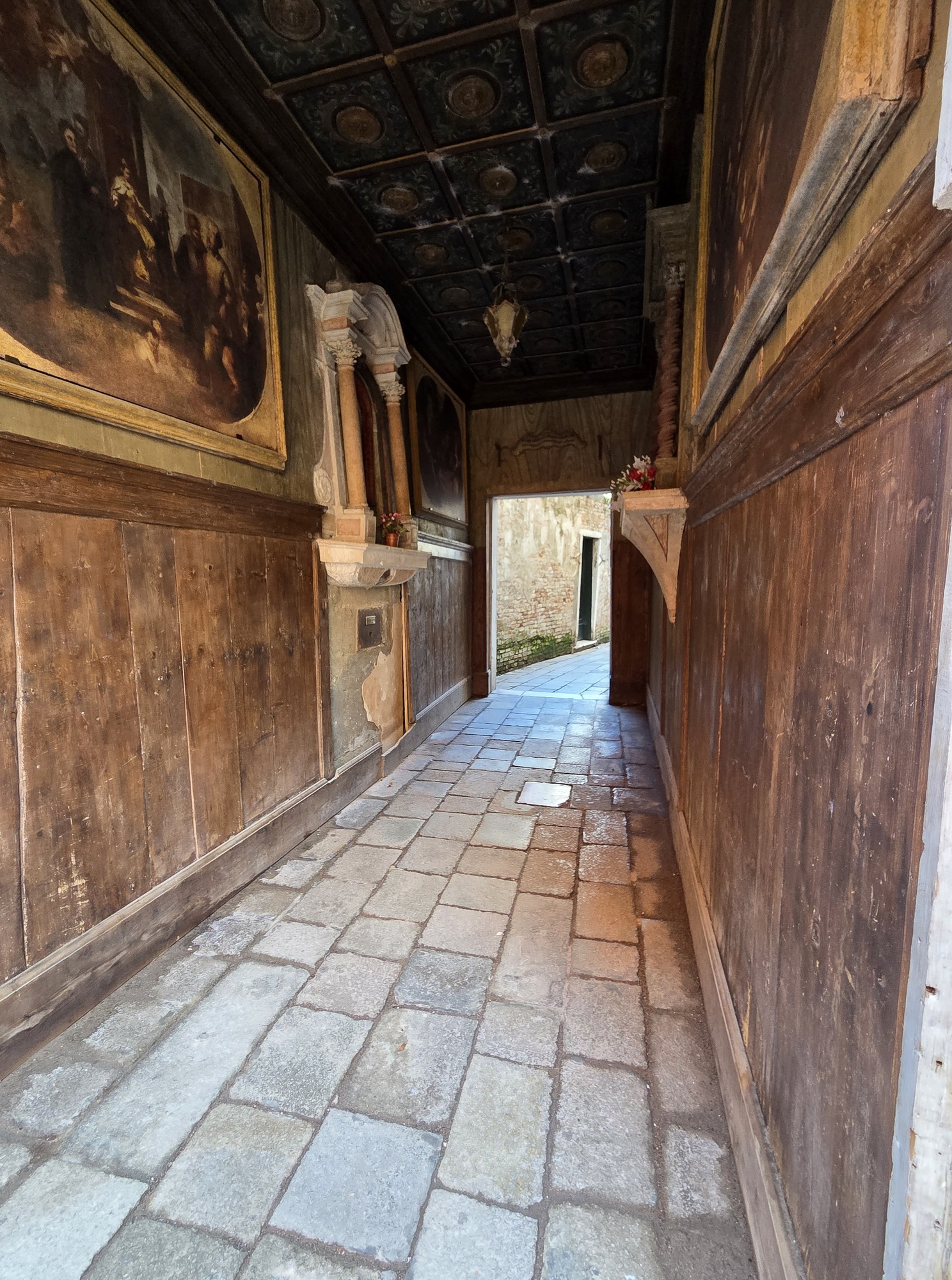
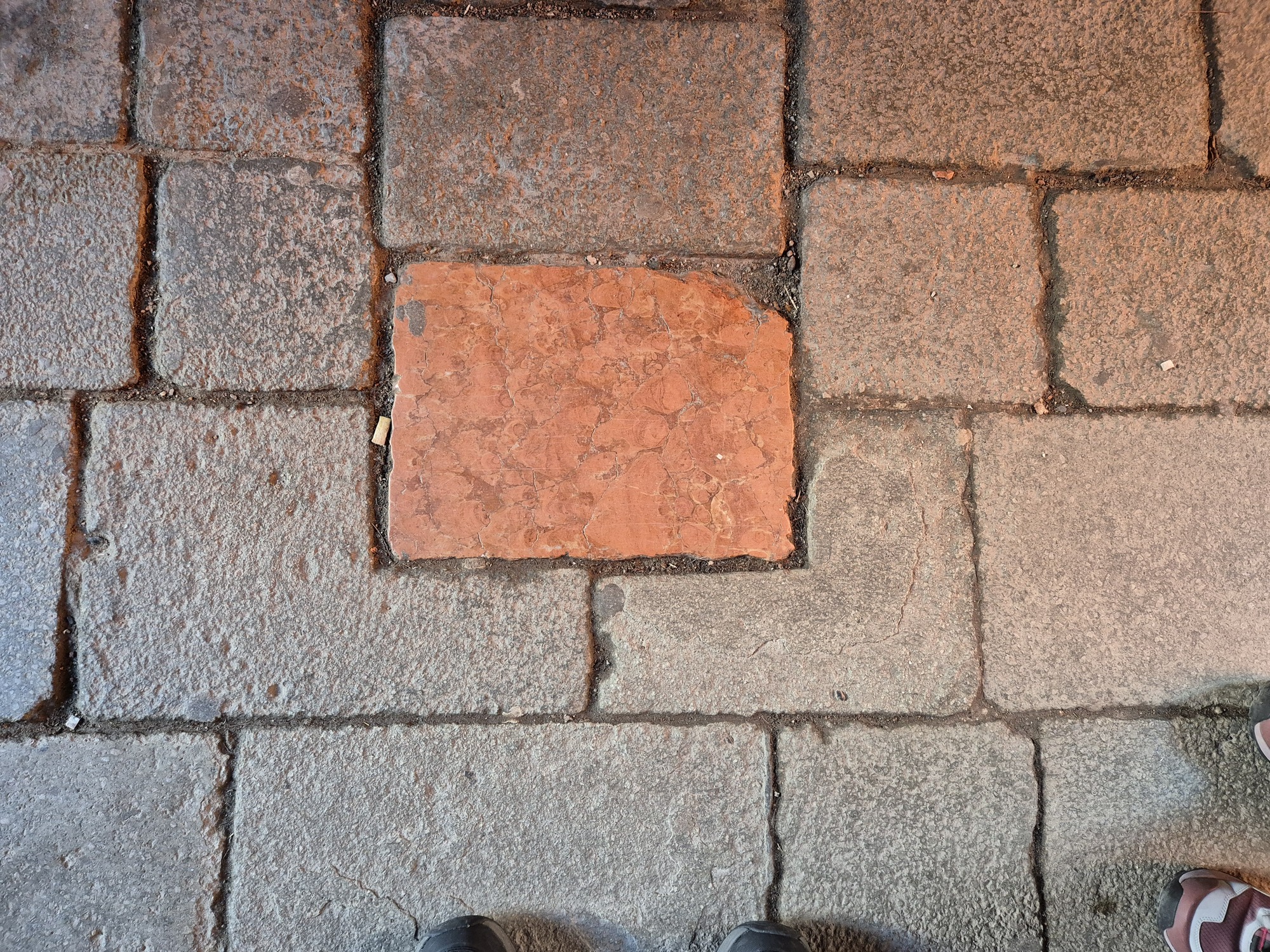
Top Row: Baroque Church in a narrow calle, far from the crowds of San Marco; A sotoportego (underpass) with a shrine dedicated to the Madonna for ending the plague in 1630; The Plague Stone is the only red stone in Venice and is said to bring bad luck if you step on it.

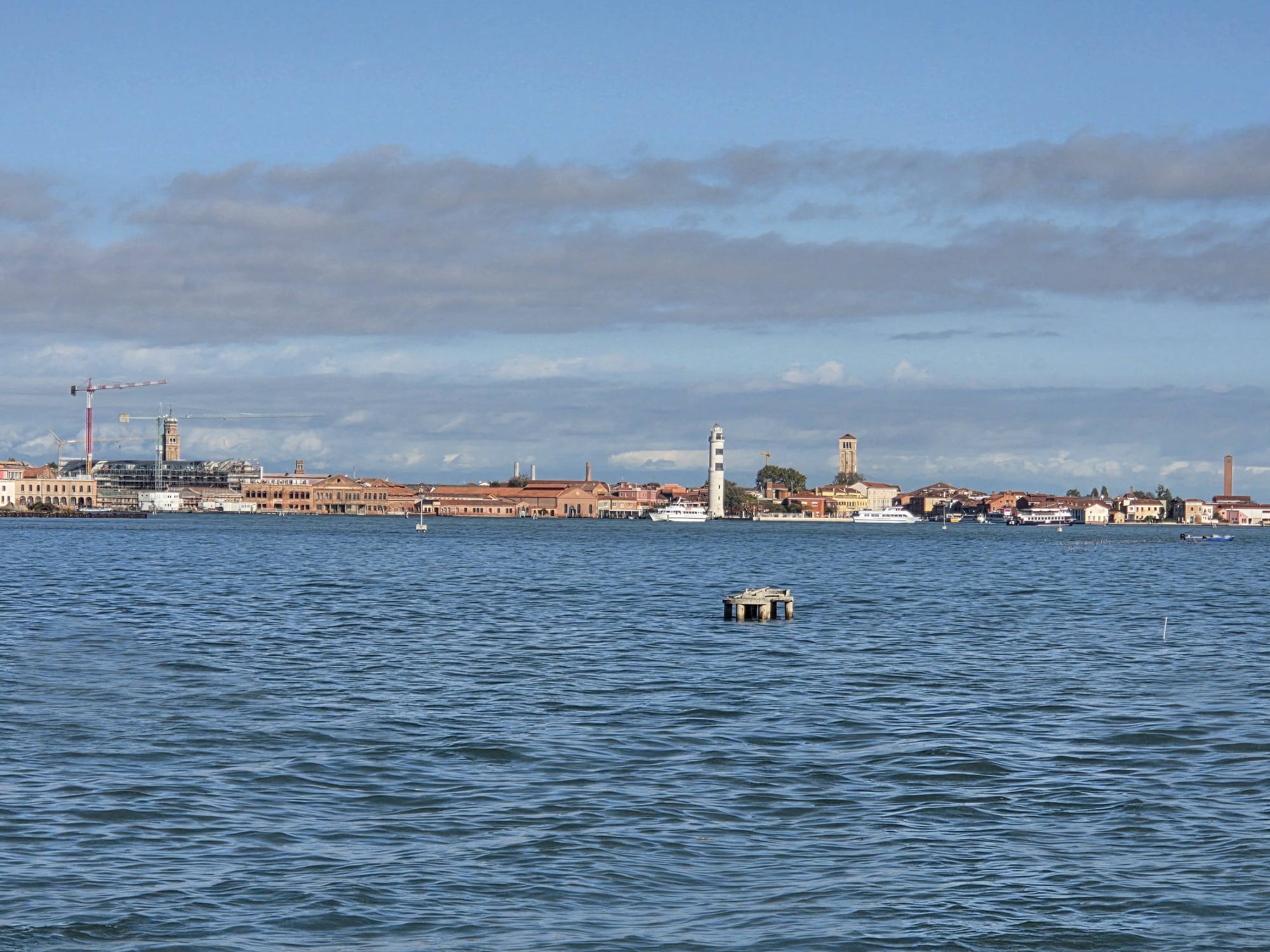
Bottom Row: The metal walkway along the imposing wall of the Arsenale; View of Murano from the walkway.

The tour is described in detail here https://events.veneziaunica.it/en/things-to-do-in-venice/itineraries/castello-naval-art-and-traditions. Full disclosure: we skipped steps 9 and 10 as we’ve toured the tail of the fish several times before. Click on any picture for a better view.
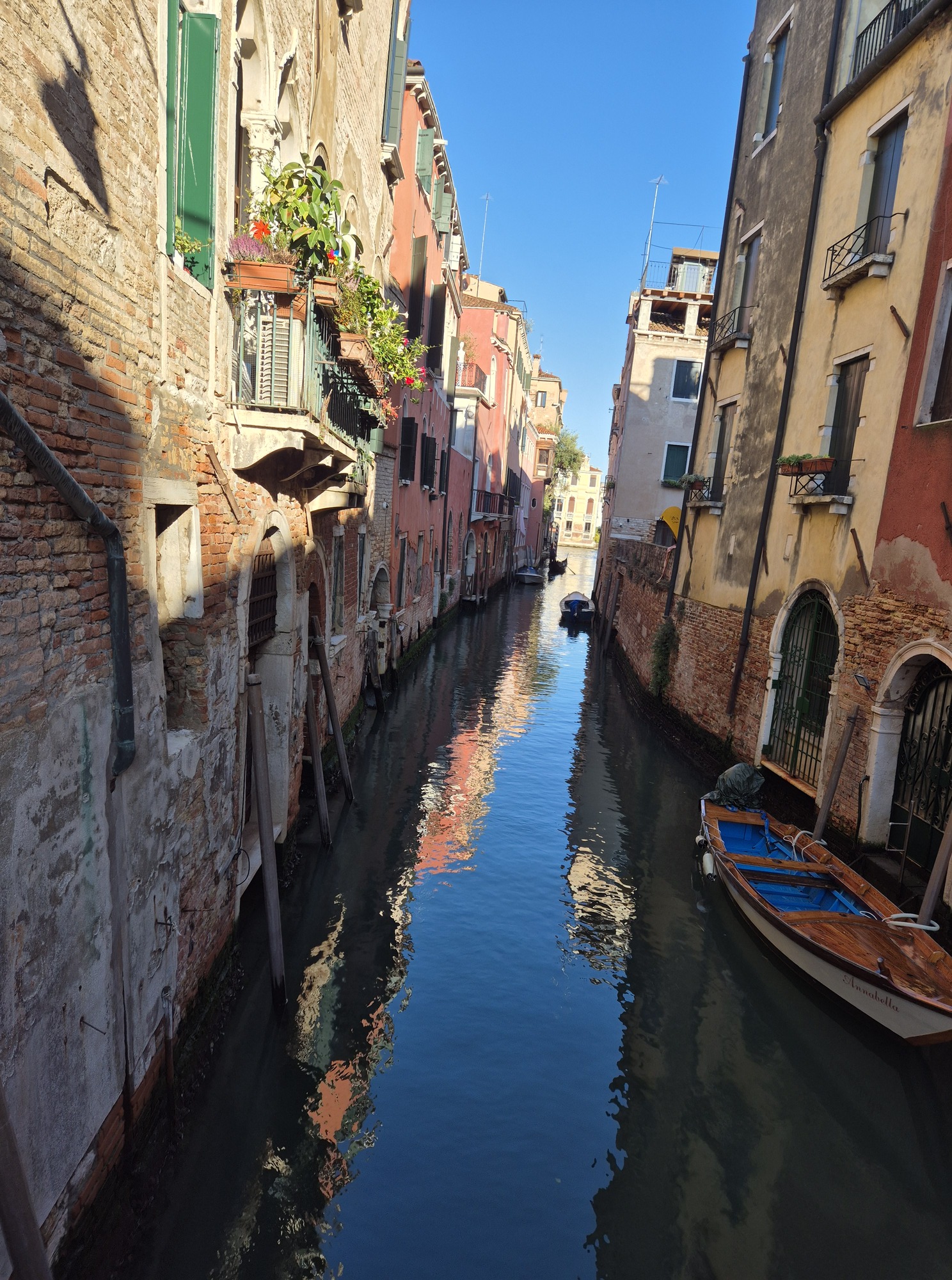
A few more Venice pics on a delightful October day with glorious light.

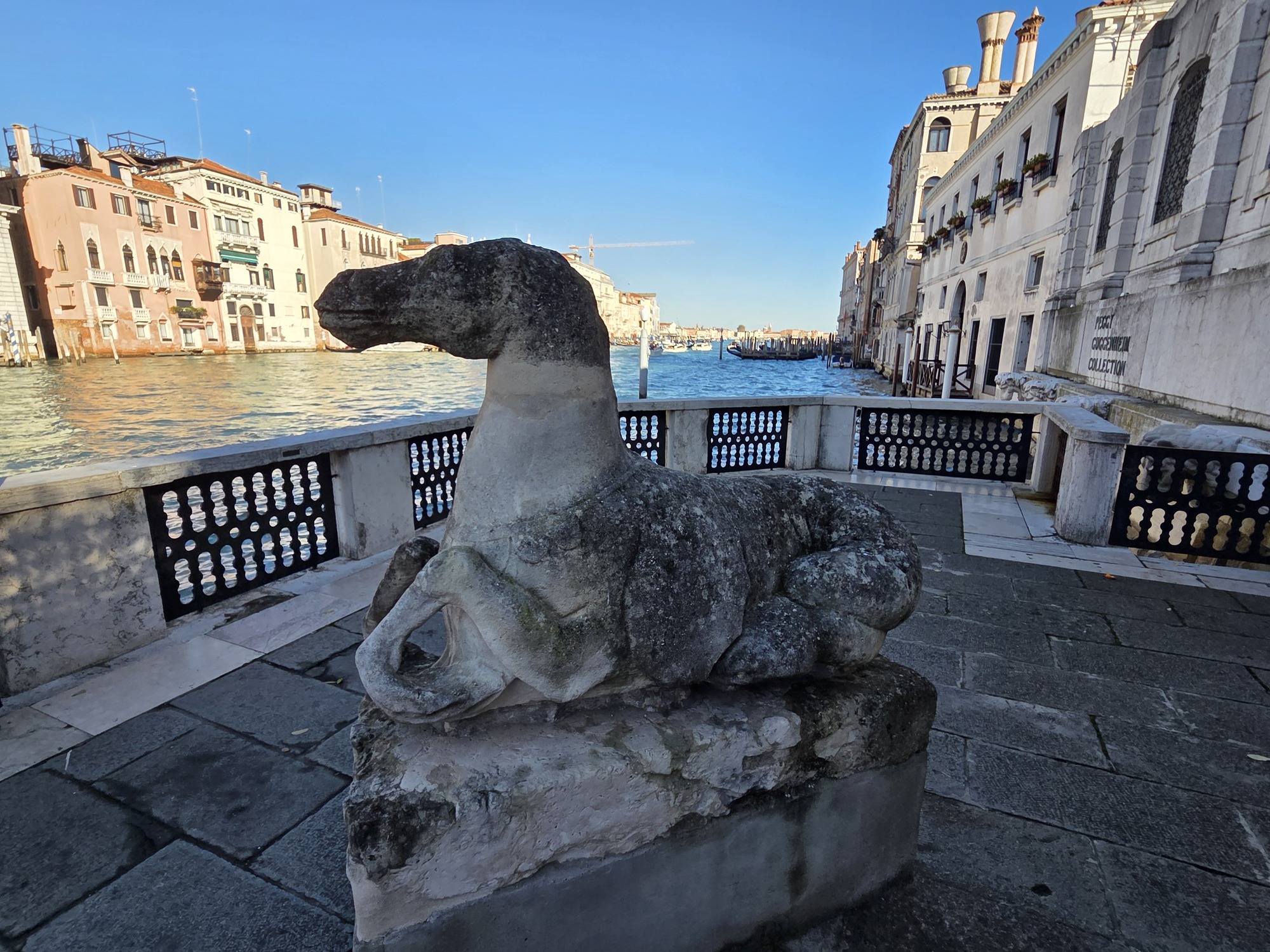
Top Row: Grand Canal view; Quiet canal; On the Guggenheim’s terrace. Middle: Selections from the Guggenheim Collection; Bottom: Peggy’s view of the Grand Canal.

This portion of our trip, two weeks in Ferrara, was day-trip centered. We dislike, in general, a lot of short stays of 2 and 3 nights, preferring a week, or more, as a base. In other words, SLOW TRAVEL This has served us well in hiking locations like Ortisei and Lauterbrunnen as well as in cities like Paris, London, Rome, and even Venice. In those places we’d head out on a hike or out to see a sight, returning as needed to our digs for meals or just to rest. Doing day trips from Ferrara, however, was challenging as we had several very long days door-ro-door with significant transit time. The good news is, that transit was by train. The downside is that a lot of the trains are regionale, meaning “local” trains that transport people to work and school and stop at many many places and ae often full of high school students.

Upside? We had a great apartment and delightful host. I got to speak Italian quite a bit as it is not a prime tourist destination. I don’t think I heard one native English-speaker until our last night in town, and she was married to an Italian raising bi-lingual children.

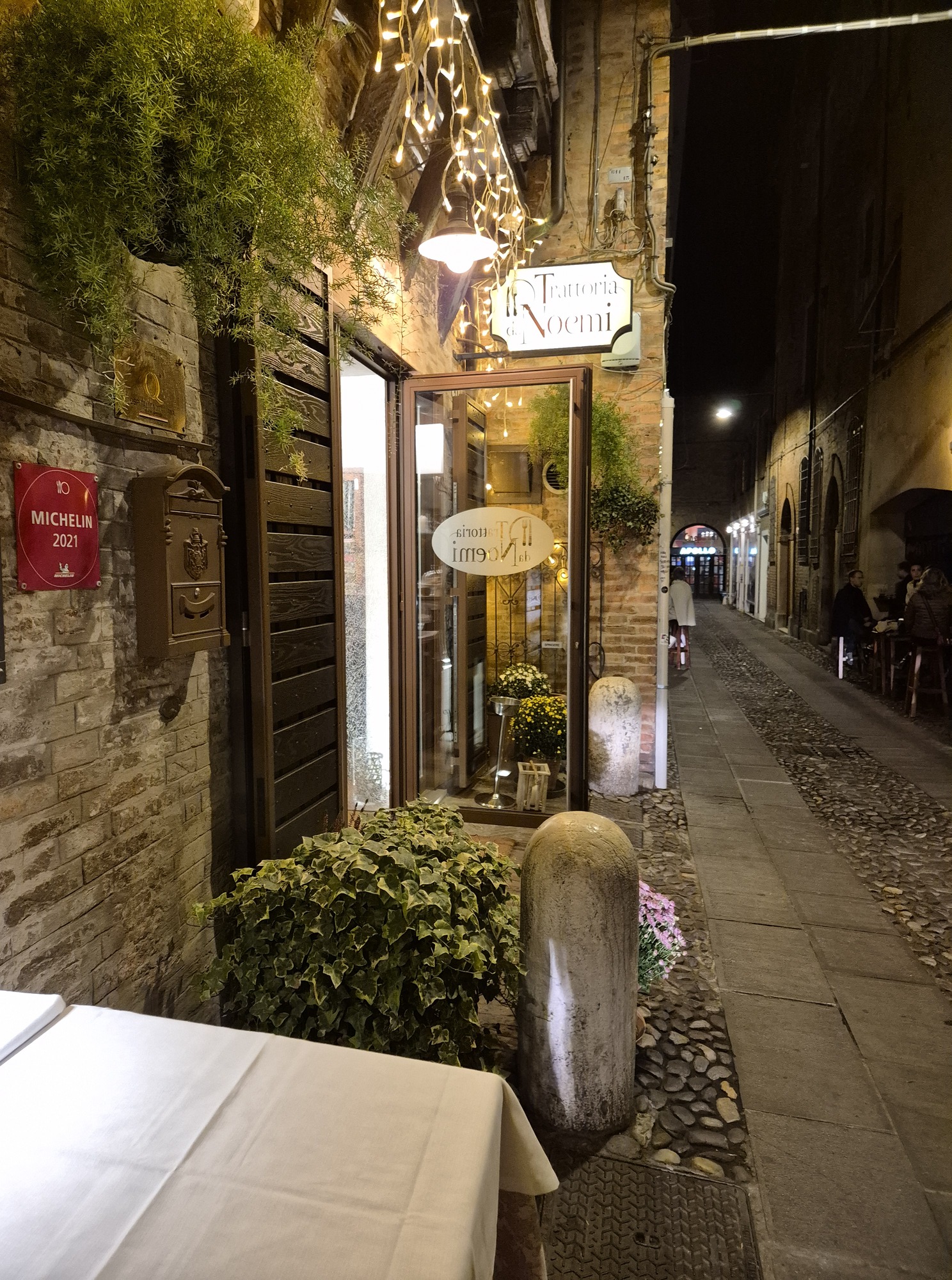
The food in Ferrara was excellent: cappelletti with pumpkin and ragu, pasticcio, and a tremendous pizza at Settantatrepercento, aka 73%, the percent hydration in their perfect crust.

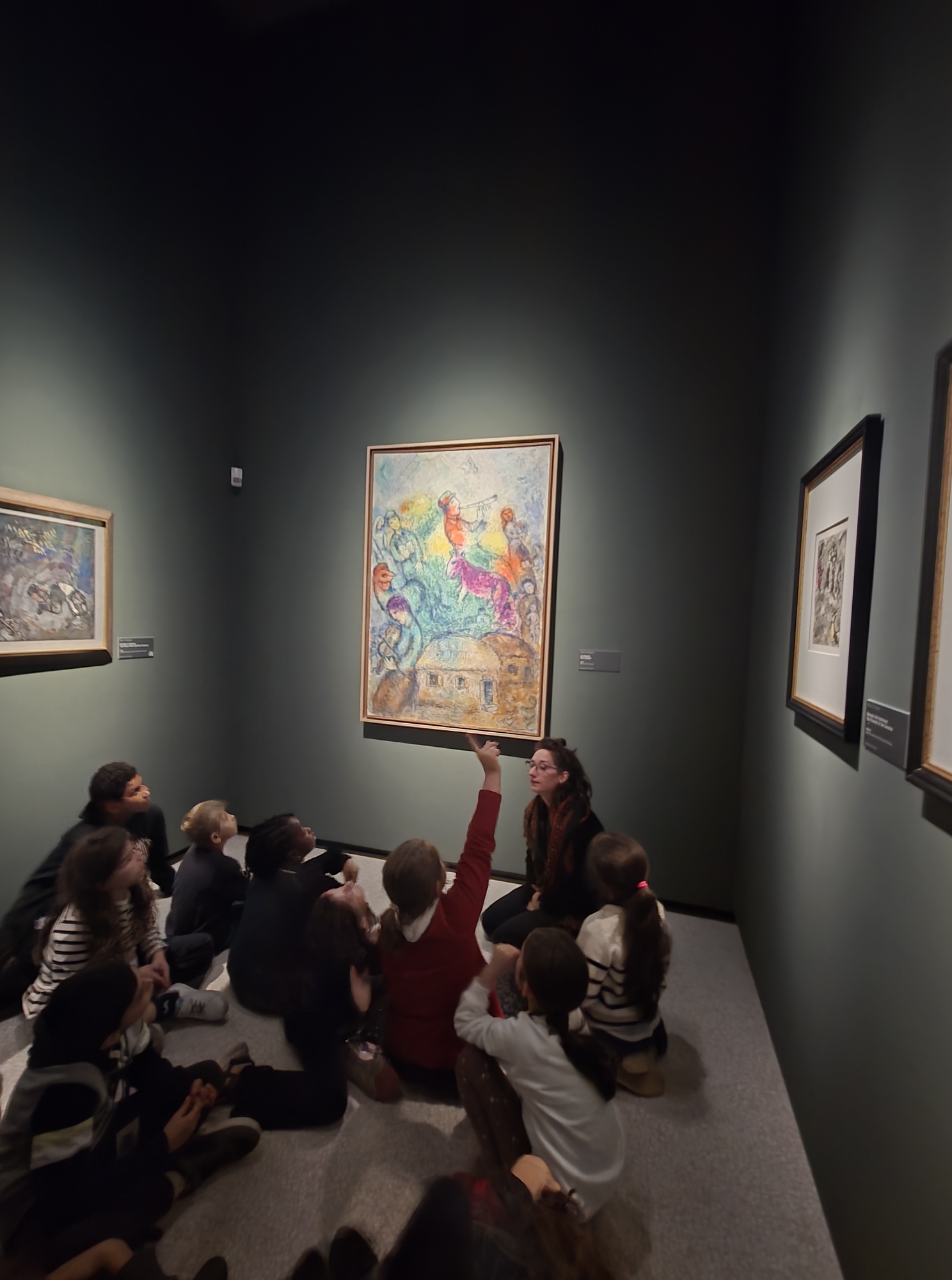
Ferrara is a very old city with an interesting history involving the Dukes of Este and the Papal governance after the duchy failed to produce an heir. We had great food and an insightful private walking tour. We walked the entire ancient perimeter wall (mostly intact) of about 6 miles, and saw an amazing Chagall exhibit that happened to be in town. We filled in with myriad day trips by train: Padova, Ravenna, Florence, Bologna, none of which had we visited in many years. Truly enjoyed seeing them again. Those mosaics in Ravenna! The Scrovegni Chapel in Padova! Florence was not as crazy with people as we feared it would be and we found a delightful trattoria where it seemed mostly locals were lunching. Venice still screams at me to come back and spend a few more nights. Click on any picture for a better view (unimpeded by captions).

Samedan, (see Graubunden Wrap-up) our first two-week leg, was excellent and probably our favorite. Lots of outdoor time, great Swiss trains, mostly good weather, well-equipped apartment and a lovely host. It’s a tiny town that does not draw tourists like its neighbors. They speak Italian as well as German, so that worked nicely.

Basel was interesting in itself, but harder to day-trip from as it turned out (see Basel Wrap-up). Everything in Switzerland was relatively easy to reach and there are cute towns and villages everywhere with ancient castles and charming streets. France was more challenging to reach due to poor transportation connections. We had hoped to spend more time in the Alsace but it was too difficult without a car. The best of the Black Forest in Germany is also a bit far removed from Basel to visit by train. To us, a decent day-trip should be within an hour by public transport. 90 minutes is OK, but two hours each way is a non-starter.

Ferrara tested our plan to try a base with regional day trips. We would not do it again and that is not to detract from Ferrara. Some of the rural places I counted on visiting by bus became impossible due to the schedules. Oh to have Swiss transportation everywhere!

We learned that we still do not want to drive. Thought about it twice, in Basel and in Ferrara, but rejected it as too stressful. In Basel, the cost of the rental was cost-prohibitive (about CHF 140.00 per day!) though the driving would have been more efficient and supported a wider range of options. In Italy, the cost to rent was not awful, but parking in Ferrara is at a premium and in some of the cities we visited by train, very hard to park as well, not to mention the dreaded ZTLs where you get fined if you enter.

We also learned that a first visit to an area should probably be in the 3-to-5 night range. Better to leave wanting more time than less. You can always go back. That does mean moving around more and less of what we see as SLOW TRAVEL. As we plan our trip for next fall, we are already thinking of visits to some of our favorites again, after a year off from Ortisei and Lauterbrunnen. But we’ll add in some new stops as well, as we continue to look for more places to call “favorite.”

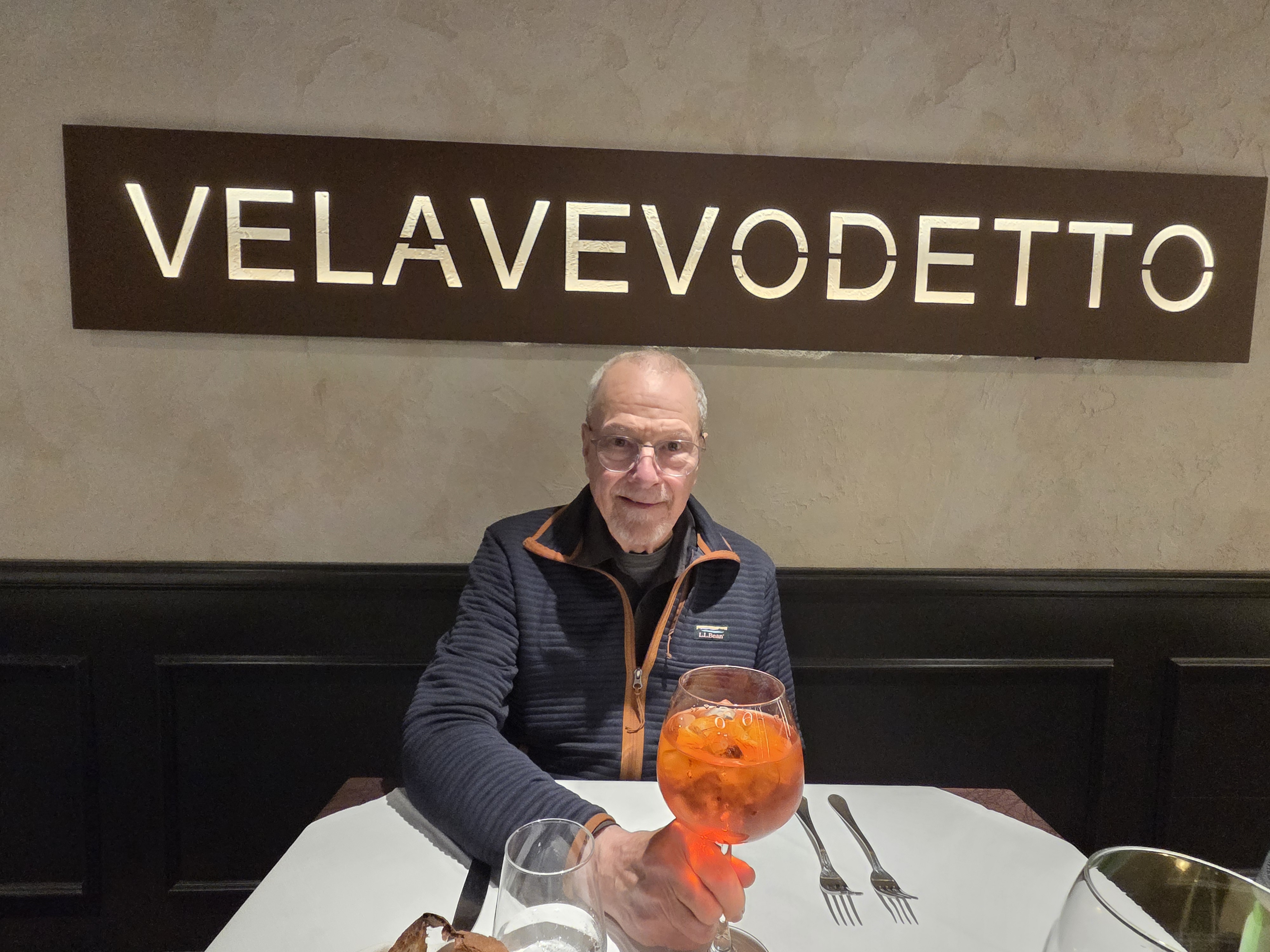
We wrapped up with a pre-flught stay in Milan, which is usually an annual stop for us. We have a favorite hotel and a restaurant we have dined at for over a decade, but this year we discovered a new-to-us restaurant called Velavevodetto. The original, Flavio Velavevodetto (Flavio, I told you so), is in Rome but we never managed to get there during our residence. We love Roman food so a tram trip across Milan on a pleasant October evening was appealing. It was terrific. Have to arrange a stop there again next fall.
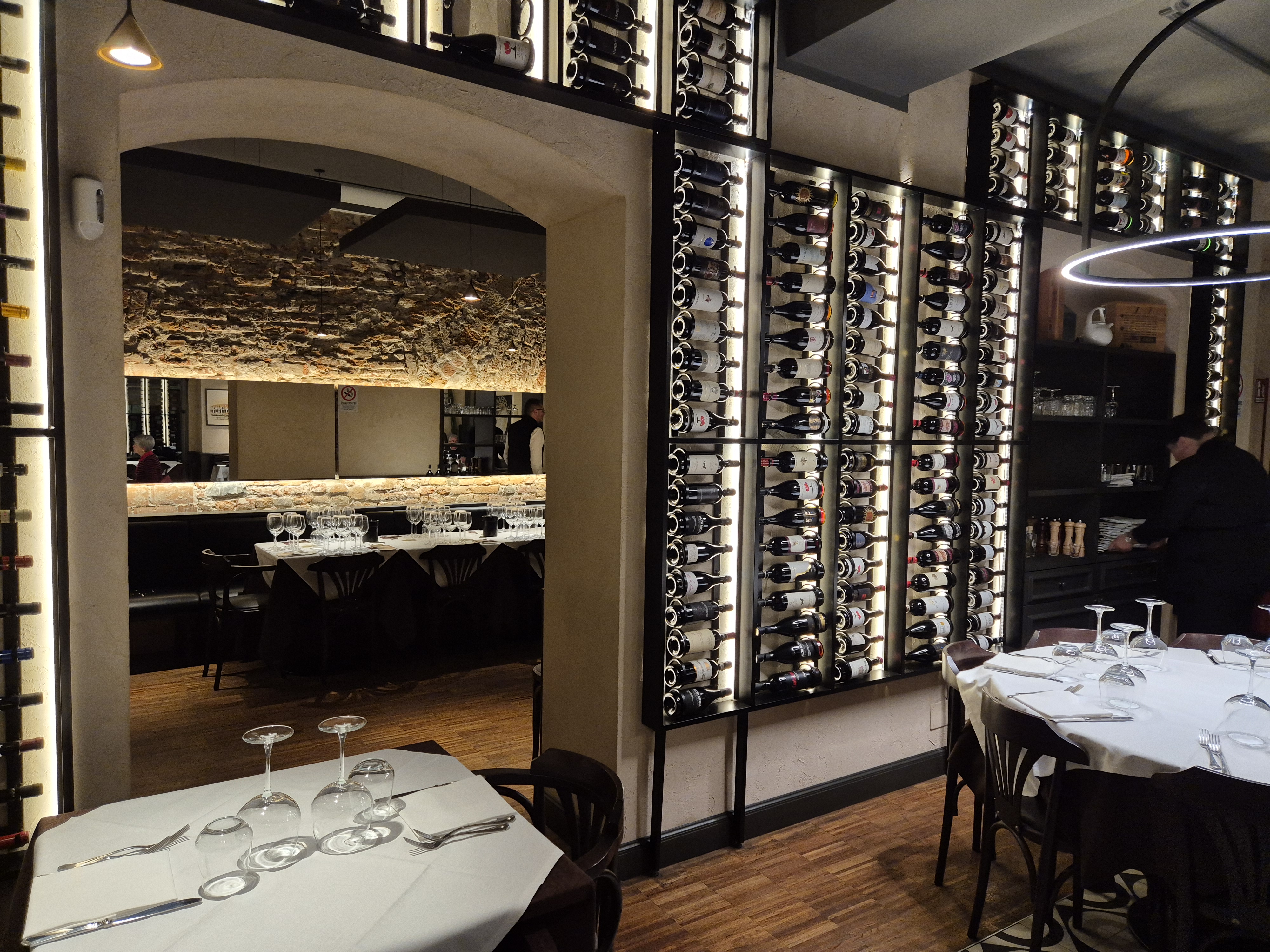
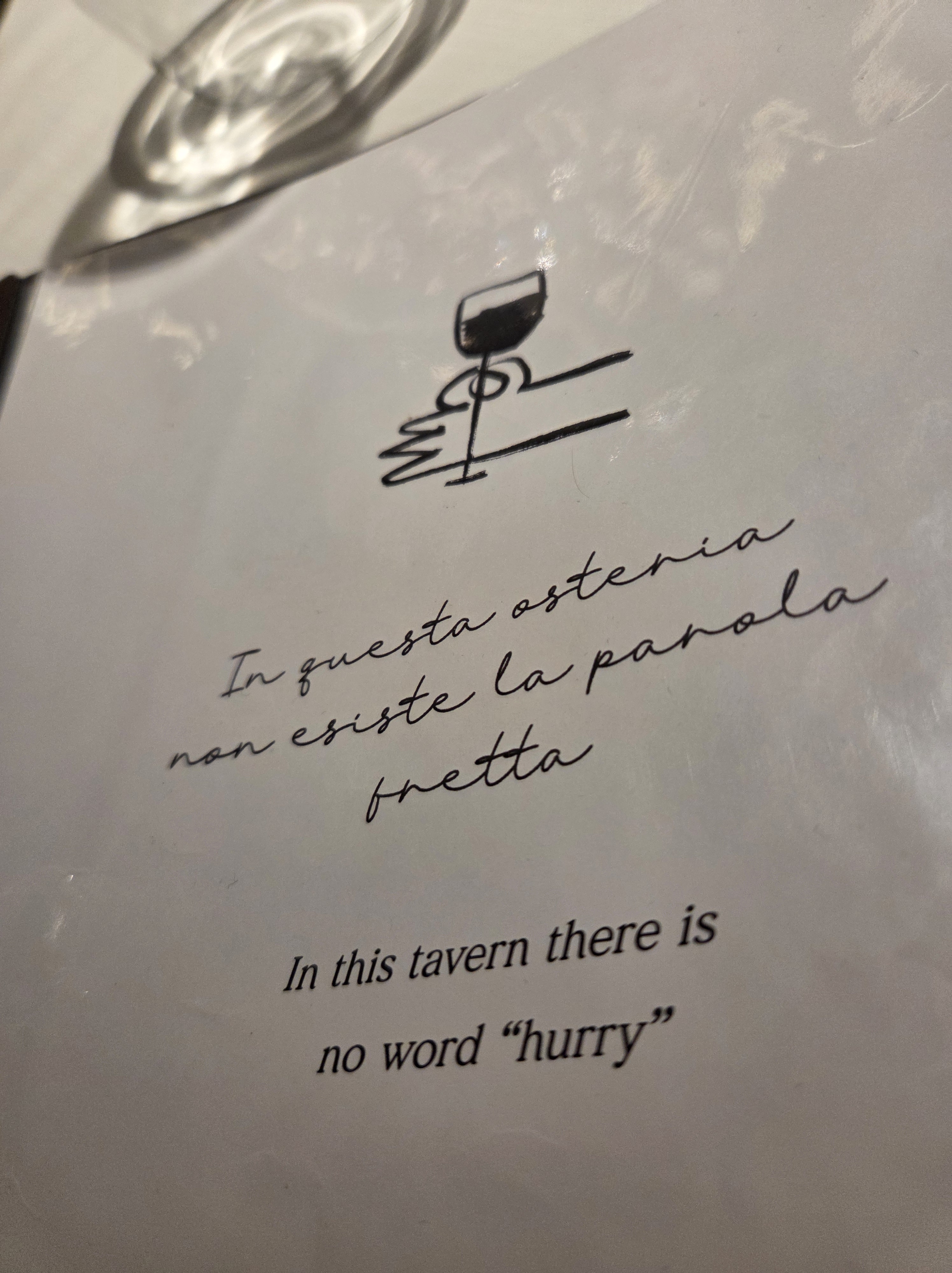
Not the usual travel photos

21 Apr
21 April 2016. We are once again traveling with stops in Milano, Paris, London, and Dijon. Rather than give you a rundown on the sights we’ve seen, I thought I’d share some of our more unusual photos. We have a lot of fun going to less-known neighborhoods and sights, taking walks where mostly locals walk, and looking at even famous sites with a fresh perspective.
Please click on any photo for a better view and complete caption. 


The wonder of Christmas lights

18 Dec
When we were kids, our parents used to take us out at least once every Christmas season to look at the lights in various neighborhoods of St. Paul, Minnesota. We so looked forward to those drives, wondering if the house on Snelling Avenue had the Santa, sleigh and reindeer up again this year (very special in the late 1950s/early 1960s) and marveling at the “rich people’s” houses where there were so many lights you knew they did not have any concerns about electrical bills. Our house always had a few strings of lights, but somehow the other neighborhoods seemed more exotic.

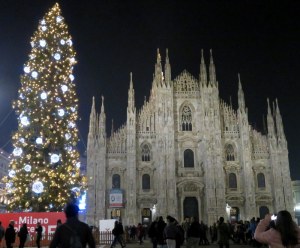
Ahhh, the Milano Duomo and its magnificent tree!

Ahhh, the Milano Duomo and its magnificent tree!

When my son was small I’d do the same thing with him although eventually these viewings became what he called forced marches through neighborhoods in Omaha and Portland as we took to our feet instead of the car. Ric and I have continued the tradition everywhere we’ve lived and traveled, with fond memories of wandering down Peacock Lane & strolling through the Grotto in Portland. In Italy the private dwellings are not the focus, it is the public lighting.
Wednesday night we traveled through Milano, stopping for one night on our way to Paris, and made a point of taking a Christmas Lights Walk. Subtle, like Roma, nothing really garish, but people were out in droves enjoying a crisp-but-not-cold night, taking the kids to see Santa, shopping, and gawking at the tree in Piazza del Duomo.
Adding to the festiveness, a live orchestra was performing in a building overlooking the Piazza del Duomo. Christmas songs done in a swing style with a proper chanteuse singing in slightly accented English (‘Ave you-self a merrrrry little Chris-mas.…) blared out through open windows and over a magnificent sound system. People were paying rapt attention even though one could not see the musicians. It truly was festive!
Click on any photo for a slide show.

I am looking forward to the French experience in Paris where I understand the lighting is far less subtle.

Milano Musings

2 Mar

2 March 2014

When you arrive in Milan after living in Rome for awhile, the first thing you notice is how tall the buildings are. (If you are coming from, say, Seattle or Denver, you won’t even notice.)

The Duomo in Milano, during a brief rain-free moment in the evening. It truly is spectacular!

The Duomo in Milano, during a brief rain-free moment in the evening. It truly is spectacular!

In Rome nothing can be taller than St. Peter’s Dome, so the buildings all top out at about 6 floors. This lends an interesting sameness to the architecture of Rome, a unity in height if in no other manner. Also, in Milan, there is a “newness.” As the city was heavily damaged in WWII, one doesn’t find as many old buildings.

The second thing you might notice is the streets: they are wider overall than in Rome, and fewer are winding alleyways. Some areas have broad flat sidewalks without loose stones so you can walk without watching your feet. And it is flat. Rome’s famous seven hills won’t exactly test the legs of someone from Portland, but Milan makes Omaha look hilly.

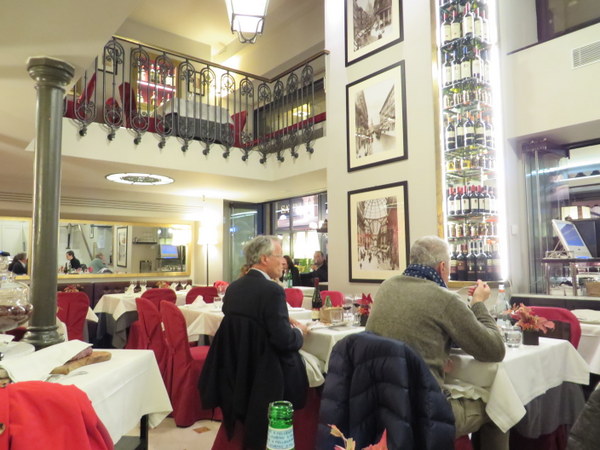
Not your average mall restaurant....

Not your average mall restaurant….

I had need to go to Milan for work, and Ric came to join me for the weekend. Two days in the office passed easily enough and I didn’t have time for any culturally significant outings. Upon Ric’s arrival we headed to Centro Storico to wander around, taking a quaint little tram that dated to 1928.  Now some real behavioral differences began. In Milan, those waiting to board a tram or a Metro train actually let those exiting get off before shoving their way on. Ric and I turned to each other in wonderment! What a delightful change in comportment!

We shopped a bit – after all Milan is the shopping Mecca of Italy – then proceeded to supper in the Galleria Vittorio Emanuele II. To call this a “mall” is like calling Villa Borghese a “playground.” No food court or discount stores here. Rather the likes of Prada, Valentino and Versace. For the record, we didn’t buy anything in the galleria.

Saturday dawned like a Portland March day, but even colder and wetter.

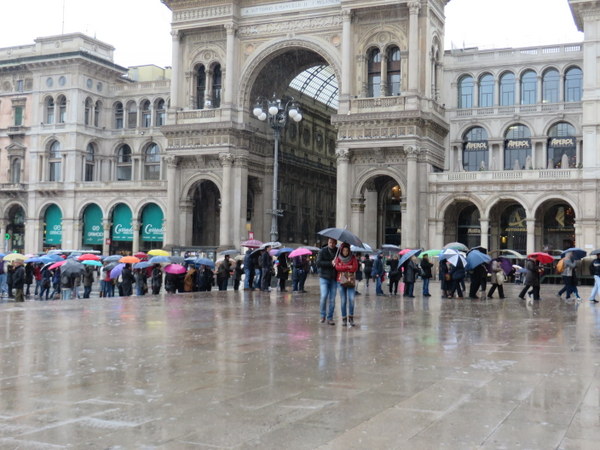
The rain did not deter the crowds waiting in line to enter the Duomo. Glad we arrived before the line was so long.

The rain did not deter the crowds waiting in line to enter the Duomo. Glad we arrived before the line was so long.

It never stopped raining, making for a good museum day. We were impressed at the number of people out despite the rain. Long queues of umbrellas waited patiently to enter the magnificent Duomo, and we narrowly beat the crowd both at the Duomo and for an Andy Warhol exhibit nearby, handily avoiding the long queues because we are early-birds. The Warhol exhibit was eye-opening as we discovered some of Andy’s less-known work, all from the private collection of Peter Brant. Truly amazing that one person could have amassed such a collection from a single artist.

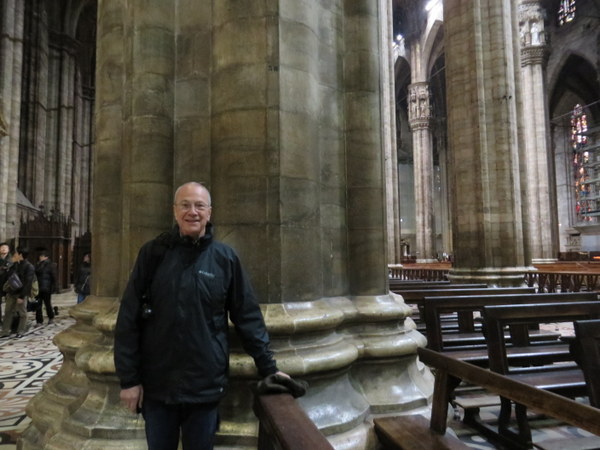
The pillars in the Duomo of Milan are about the size of sequoias.

The pillars in the Duomo of Milan are about the size of sequoias.

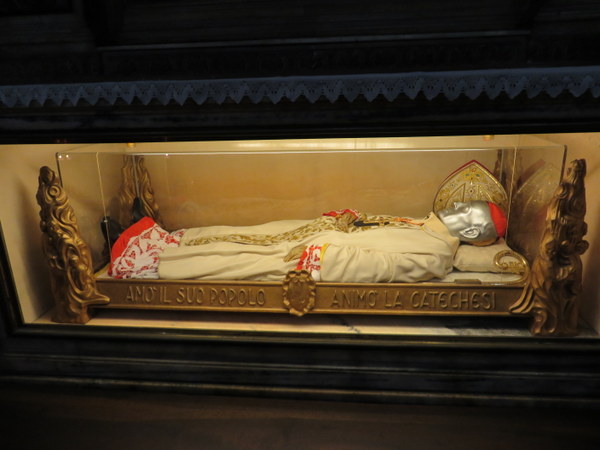
As to the Duomo, this is the fourth largest church in Europe and quite a contrast to most of those we’ve seen in Italy. Ric said “This church seems almost Lutheran,” which is quite insightful as it is predominantly Gothic, reminiscent of the Protestant Churches of Northern Europe. Of course the Lutheran churches in our hometowns lack marble, entombed remains of cardinals on display, or pillars the size of sequoias.

Yes, that's the body of a Cardinal, with a silver death mask. Nothing like this in St. Paul, either.

Yes, that’s the body of a Cardinal, with a silver death mask. There’s nothing like this in St. Paul, MN.

4th longest nave in Christendom, so says my guidebook.

4th longest nave in Christendom, so says my guidebook.

There's nothing quite like this in St. Paul, MN.

There’s nothing quite like this in St. Paul, either.

The afternoon took us to a more obscure museum, Pinacoteca Ambrosiana  where the building was as much art as the contents. This is a fabulous palace with amazing mosaics and inlaid floors. Regrettably, no photos allowed so I cannot show you. Again, a private collection, this time of none other than a Cardinal from the 17th century, Borromeo.  In this vast collection of 1600 items there’s a Caravaggio, Raphael’s original charcoal drawing for his Vatican fresco “The School of Athens,” a Tiziano, a Botticelli or two, a DaVinci, several Brueghels, and a lock of Lucretia Borgia’s blond hair. Oh, and Leonardo’s Codex Atlanticus in its 1119 page glory is in the library at Ambrosiana. We saw 22 pages carefully displayed. (It’s only 500 years-or-so old.) Church work was very profitable back in the old days…. I don’t think Papa Francesco would approve today.

For those looking at this post as a travel guide, we stayed at Hotel Teco, a sweet and relatively (for Milan!) inexpensive hotel at about €137.00 per night including breakfast. We were able to get a VAT exemption as diplomats. To my Embassy friends: don’t overlook the paperwork needed before you travel.  A 17 minute walk or €10.00 cab ride from Milano Centrale, Hotel Teco is convenient to the Metro (5 minute walk to the Rosso), and Tram #1 to the Duomo is about a 7 minute walk. Numerous restaurants including Ristorante Sabatini (the woman at the front desk said ottimo pizza” and she was right!) are a short walk away.  I also like Osteria Mamma Rosa nearby, although we didn’t make it there this trip.
I’ve been to Milan four times for work, and once prior in personal travel. I’ve either lacked time or weather sufficiently pleasant for a trip to the roof of the Duomo. I think we’ll have to take advantage some sunny summer day and hop a train to Milan just for the day and make our way to the top.