Archive | Language RSS feed for this section

Lost in translation

19 Oct
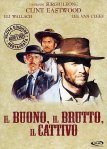
The Italian movie industry is quite prolific and has given us many fine films including the Academy Award winner “Life is Beautiful” from several years ago and last year’s “The Great Beauty.” Of course there are the so-called “Spaghetti Westerns” of Sergio Leone, Fellini’s famous “La Dolce Vita,” and even “Cleopatra” was filmed in Rome at CinecittàBuono Bruto CattivoStudios. Did you know that Italy has the biggest dubbing industry in the world? Many of American movies and TV shows are dubbed in Italian or sub-titled in Italian. We can watch “The Big Bang Theory,” “NCIS,” or “Law and Order” for example, in Italian or in English with sub-titles.  Naturally, as Italians are aficionados of American culture and entertainment, most major American pictures make their way into the dubbing studio for release in Italian.  Many of them end up with unusual titles that are far from a direct translation, resulting in some generally hilarious English re-translation or are cause for some head-scratching at the very least.
Here are a few of my favorites:
Jim Carrey’s “Eternal Sunshine of the Spotless Mind” was strange enough in English, but the Italian translation Se Mi Lasci Ti Cancello translates to If you Leave Me, I’ll Wipe the Slate Clean or alternately depending on your interpretation of cancello, it might be If you Leave Me, I’ll Cancel You. Huh?
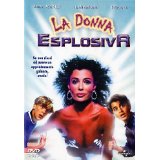
esplosiva1985’s “Weird Science” was a fun movie. In Italian perhaps even more fun as it is entitled La Donna Esplosiva, which can be restated as The Explosive Woman or  The Bombshell. I like the second one.
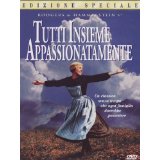
My curiosity about Italian names for movies and TV shows came when the annual showing of “The Sound of Music” hit my radar. It should literally beTutti insienetranslated as Il Suono di Musica, but no: In Italy it’s called Tutti Insieme con Appassionatamente or All Together Passionately. Strano.
Having stumbled upon a few fun titles, I did some research for other amusing tidbits. Enjoy!
 

English Title

Italian Translation

What the Italian title means in English

 The Shawshank Redemption
 Le Ali della Libert­à
 
The Wings of Liberty
The Producers
Per Favore, Non Toccare le Vecchiette!
Please Don’t Touch the Little Old Men!
 
Ferris Bueller’s Day Off
Una Pazza Giornata di Vacanze
A Crazy Day of Vacation
 
Risky Business
Fuori i Vecchi i Figli Ballano
When the Elders are away, the Sons Dance
 
Growing Pains
Genitori in Blue Jeans
Parents in Blue Jeans
 
Trading Places
Un Poltrone per Due
A Seat (or chair) for Two
 
Home Alone
Mamma Ho Person L’Aereo
Mom, I Missed the Plane!
 
The Seven Year Itch
Quando La Moglie e in Vacanza7 Year
When the Wife is on Vacation
 
Cityslickers
Scappo dalla Città – La Vita, l’Amore e le Vacche
I’m Fleeing the City – Life, Love and Cows
 
The Girl with the Dragon Tattoo
Millennium: Uomini che Odiano le Donne
Millennium: The Men Who Hate Women
 
Murder She Wrote
La Signora in GialloSignora Giallo
                 
The Woman in Yellow


Odiano DonneInterestingly, it is perhaps the American movie industry that misnamed Steig Larssen’s book and thus the movie “The Girl with the Dragon Tattoo.” In Swedish it is Män som hatar kvinnor which means, naturally, “Men who hate women.”
And there is an explanation for The Woman in Yellow as Jessica-what’s-her-name did not wear yellow to my knowledge. In Italy, murder mystery books were Libro Giallotraditionally printed with yellow (giallo) covers. The genre is called gialli. You can go to www.amazon.it and find books under Gialli e Thriller.  Some still have yellow covers or bindings.
Literalists that we Americans tend to be, I have not been able to find Italian movie titles translated as disparately or amusingly.  Here are a few you might know very well in English.

 Italian Title 

English Translation

La Vita è Bella
Life is Beautiful
 
La Grande Bellezza
The Great Beauty
 
Profumo di Donna
The Scent of a Woman
 
Il Buono, Il Bruto, Il Cattivo
The Good, The Bad and The Ugly (although due to the artistic license taken with adjective order, the Italian direct translation would be “The Good, The Ugly, The Bad”)
 
Per un Pugno dei Dollari
(For a) Fistful of Dollars
 
Not unlike the U.S., despite the abundance of material produced throughout the world and dubbed or subtitled for the vast network of cable channels, there’s still never anything on TV here.  “Ice Road Truckers” anyone? I mean Guida I camion tra I ghiacci. Questionnable  in any language.

When I open my mouth…

16 Aug
Now and then someone asks me how I am doing in my effort to speak Italian.  I am far from fluent, but I am able to communicate in a basic manner. Our friend Francesco rated a recent email I sent him as an A- in Italian, but I think he was too generous. Maybe a B- would be fair. The good thing is I am self-correcting on many grammatical issues; the bad news is that I often realize I need correcting after I hit “send” or after I open my mouth.
The other day I told someone what he wanted, (vuole) when I meant to tell him what I wanted (voglio).  And today I had to run through all six possibilities in conjugating a verb (I, you informal, he/she/you formal, we, you plural, they)  before the “they” form popped out of my mouth while the Italian I was speaking to gaped at me wondering what was going to spew forth after my long pause.
This is a culo.

This is a culo.

A few weeks ago my niece shipped us a portable crib in anticipation of their arrival with a two-year-old. When I went to pick it up at the Diplomatic Post Office they commented on the big box we had received. As I try to practice my Italian there – and they indulge me – I told them it was a culo. Cue the uproarious laughter as I told them she had sent me a “rear end.” The word I was after was culla. So many opportunities to make a culo of myself.
 For my linguist friends, I think the International Language Roundtable would put me at a 2 to a 2+ on a good day. I am not certain whether wine helps or hurts my efforts.
This is a "culla."

This is a “culla.”

False friends

30 Apr
Più io studio italiano, meno lo so.The more I study Italian, the less I know. When I took my community college classes in the U.S., I knew that a tutor would be key to any degree of fluency, but I also thought that “a few months” of one-on-one classes while actually living in Italy, would make me fluent. Ha! After 21 months of individual classes with a magnificent teacher, Eleonora, the more complex this language becomes.
Not only must you consider gender, number and how formal or informal you want to be before openinglearn-italian-language your mouth, but conjugating verbs is a nightmare even for Italians. There are fifteen tenses with 6 conjugations in each, plus the gerundio, participio and the infinito (don’t even ask) for a total of twenty-one (21) tenses, therefore about 95 conjugations for each infinitive. My Big Book of Verbs contains 601 infinitives: You do the math! Luckily there are patterns. Sort of. Except for the irregular verbs. È un incubo! (It’s a nightmare!)
Are you stating a fact, giving an order, or rendering an opinion? You’ll conjugate the verb differently. “I want you go to the moon” is conjugated differently than “Go to the moon if you want.” Io voglio che tu vada sulla luna versus Vai sulla luna se vuoi. (Vada and vai are different forms of the same verb “to go.” For that matter, voglio and vuoi are both conjugations of volere, “to want.”)
dsc_0024OK, too much info, but I wanted to give non-Italian learners an idea of the level of confusion I am in daily. Add to that “false friends.” No, I don’t mean traitors, betrayers, and two-faced meddlers. These “false friends” are words in Italian that drive the English learner mad. These are words that sound like something in English but mean something entirely different in Italian. In linguistic circles they are called false cognates.
Allow me to illustrate.
We have some favorite merchants, particularly at the market in Campo dei Fiori: The salumiere (the man who sells us superb fatty pork products from Umbria), the fruttivendolo (greengrocer), and our “snack guy” Manuele. I reduced Manuele to tears one day when I asked for “Mandorle leggermente saltato,” which mean “Almonds, lightly jumped.” I wanted them lightly salted, which is salato.
I present to you a few of the more amusing and tricky falsi amici in Italian:
  • Never go to the salumiere and ask for peperoni. He can sell you salume piccante, but only the fruttivendolo can sell you peppers. In a pizzeria, asking for peperoni pizza will result in a nice vegetarian pie with sautéed red peppers on it. Peperoni = pepper (red, or any other type); salume piccante = Spicy salami, something like what North Americans put on pizza.
  •  If you are fussy about additives in your food, you might be tempted to ask your waitress if the food contains preservativi. She might shake her head in wonderment as preservativi are prophylactics. A conservante is used to keep food from spoiling. Preservativo = condom; Conservante = food preservative.
  • When your friend asks you to non fare rumore she is not accusing you of gossiping, but asking you to be quiet. Rumore = noise; Rumor is pettegolezzo.
  • We go to the tabaccheria (tobacco shop) to buy postage among other things, and one day I heard a tourist asking for “una stampa.” Understandably the tabaccaio (tobacconist) was confused because of all the things they sell printing isn’t one of them. A postage stamp is francobollo, and una stampa is a something printed, like a picture.
  • When the bus is late we are not annoiato, but rather we find the situation fastidioso. Annoiato = bored; Fastidioso = annoying.
  • To borrow a book one must go to the biblioteca, not the libreria. One buys a book at the libreria and borrows one at the biblioteca. 
  • A cadavere is indeed a corpse, but it is not morbido, it is morboso. You might pet a kitty and pronounce it morbido; or a pastry might have a filling that is morbido. Morbido = soft. It took me a long time to get that one!
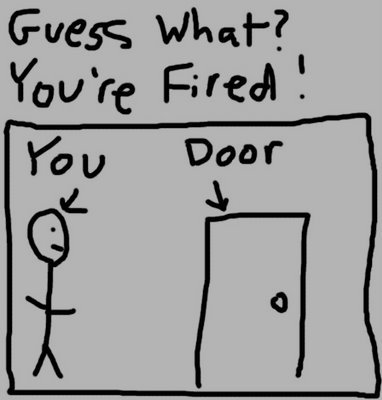
    Tu sei licenziato!

    Tu sei licenziato!

  • When your colleague says “Sono stato licenziato” he was not just awarded a license, but fired. To license = autorizzare. 
  • When shopping for a hotel, asking for one that is lussuria may land you in the wrong place. A five-star hotel might better be described as lusso. Lussuria = lust while lusso = luxury.
  •  Children who are maleducato are not illiterate, they are badly behaved. Educato = well-mannered or polite, but istruito = educated.
  • One can take a photo of a camera, but you cannot take a photo with a camera. Camera = room; Macchina fotografica = camera.
My head about to explode as I learn the dreaded subjunctive tense.

My head about to explode as I learn the dreaded subjunctive tense.

 Non pretendere does not mean you should give up your flights of fancy, it means you should not make demands. You can fingere (pretend) you speak Italian all you want! Pretendere = demand while fingere = pretend.
 An ingiuria is an insult, while an injury is a ferita.
A fabbrica is a factory, while fabric is tessuto.
At the newsstand when I want something to read, I must ask for una rivista. If I ask for un magazzino I might end up renting a warehouse.
Finally, a person who is sensibile (sen-SEE-bill-ay) is not someone with common sense, but rather someone who is given to being easily upset or emotional, i.e., sensitive. But a person who is sensitivo (sen-si-TEE-vo) is level-headed or sensible.
Is it any wonder I end the day with a glass or two of wine?

Feeling German in Italy

25 Jul
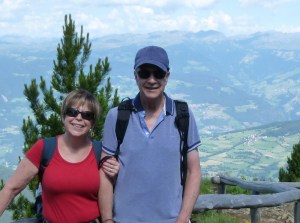
A nice Italian man - who lives in NYC - offered to take our photo high in the Alpe at Puflatsch.

A nice Italian man – who lives in NYC – offered to take our photo high in the Alpe at Puflatsch.

I am feeling rather German – or perhaps more accurately, Austrian – right now for three reasons.

  1. I bought a pair of hiking shorts for the first time in 12 or 13 years. Thanks first to my vascular surgeon, but also to my personal trainer, my legs are in better shape than they have been in 25 years;
  2. We are drinking beer with lunch;
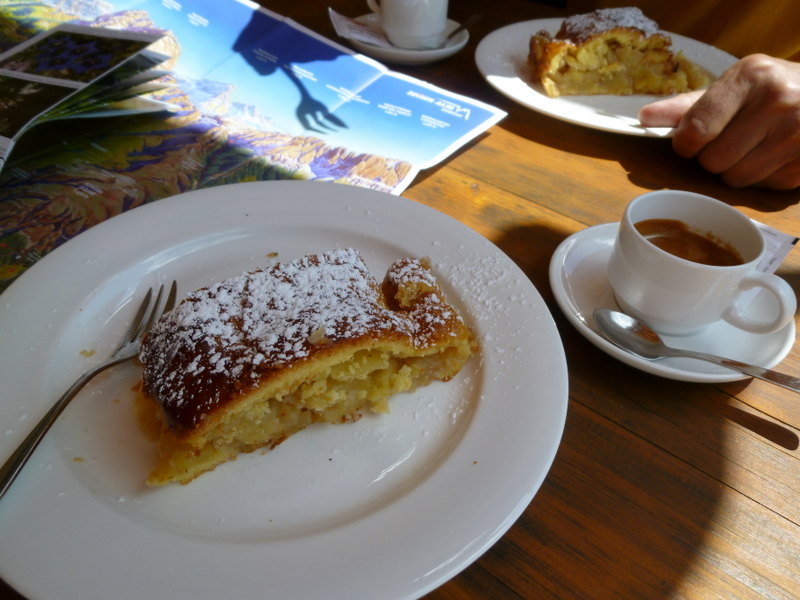
  3. We are eating apple strudel every day.

Even some of my high-school-and-university German is flooding back into my head, crowding the Italian I work so hard to speak. The other day I asked for a spiesekarte (menu) at a restaurant. What deep and obscure part of my memory bank did that come from?

We are in far northern Italy, the Val Gardena, an area that was Austrian until the end of WWI and has kept its flavor more German than Italian. Here we see menus with spaghetti aglio, olio e pepperoncini alongside weinerschnitzel and strudel.

This is a hiker’s paradise. First stop, the Alpe di Siusi, the largest high-alpine meadow in Europe.  We scoped out the area on our

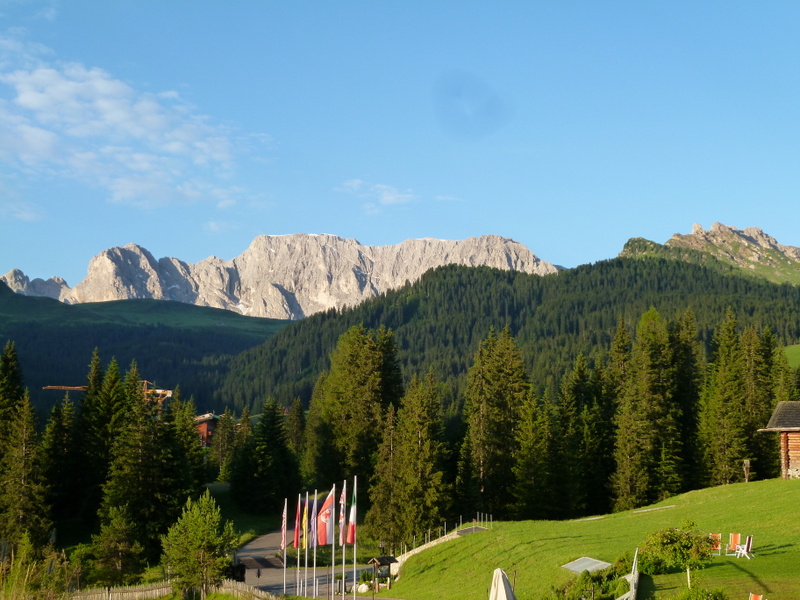
Sunrise on the mountains as seen from our hotel at Saltria.

Sunrise on the mountains as seen from our hotel at Saltria.

2012 trip to Ortisei and made a two-night stay in the meadow a priority this year so we could hike more up in the alpe (meadow). We chose the Hotel Saltria  for its relative remoteness. One train, two buses and the cable lift/gondola up to the meadow made for a varied travel day, proving you can visit the alpe without a car.  Hotel Saltria is a half-pension hotel: both breakfast and dinner are included in the per person price, something we’ve not experienced before, preferring to find our own dining options. Did I mention this place is remote? There are no other dining options. The food was plentiful and nicely done.

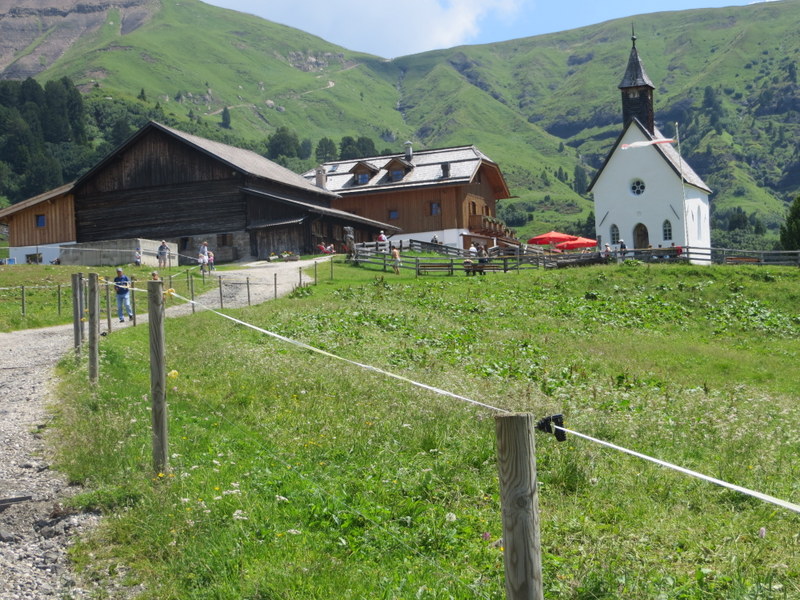
I didn’t really understand the Alpe di Siusi until we had visited. It sits at about 6000-6500 feet with mountain peaks towering over the meadow. The meadow is rolling, with tiny barns, haying operations, herds of cows and horses, crisscrossed with hiking paths for every level of fitness and dotted with wonderful little places called rifugi, refuges where one can take sustenance, quaff a beer, or spend the night. Ric said the word “refuge” brought to mind a rustic lean-to to shelter to use in case of inclement weather. Far from his description, in a rifigio you can find food to rival a café in a major city.

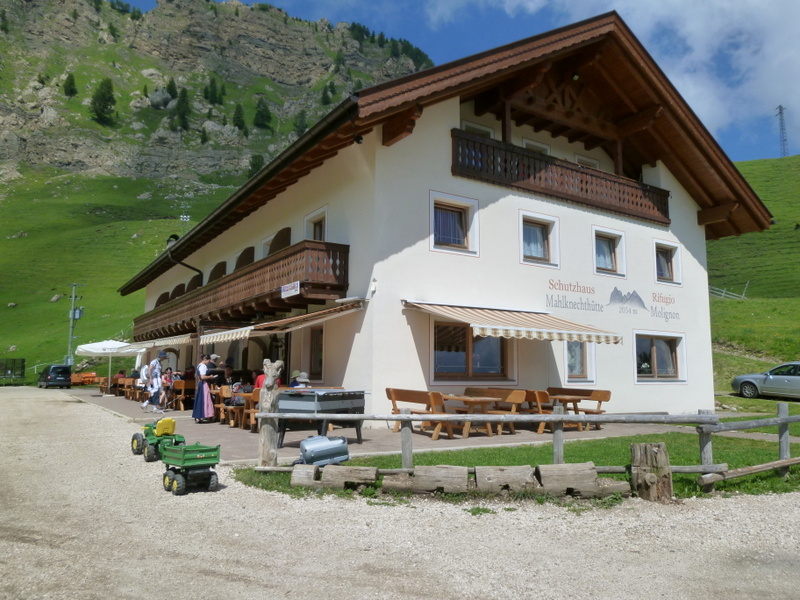
Rifugio means a place to refresh, eat, even take a room for the night.

Rifugio means a place to refresh, eat, even take a room for the night.

Monday we took the first bus out of Saltria, connected to a chairlift at Panorama, and set out on a four hour excursion, a loop that had us walking to a point where we could make our descent to the hotel at the end. This up-and-down hike allowed a stop for second-breakfast at cute Rifugio Molignon, serving apple strudel and great coffee.  We marched on through alpine splendor, ending at another rifugio for lunch before taking a final chairlift down.  For those seeking this particular journey, and for the record so I can look back at this blog and remember, after ascending to Panorama, we hiked to Rifugio Molignon, and then on to Rifugio Zallinger, ending at the Florian lift, using trails 2 & 7. It’s briefly described in Rick Steves’ guide where he calls the hike “moderately strenuous.” We’d agree!

Tuesday we only had time for a two-hour trek, but what a walk it was! Taking the Puflatsch-Bullaccia chairlift, we toured the north side of the Alpe di Siusi, looking back at the previous day’s venue and taking in the view down into the Val Gardena and little Ortisei, where we were to spend the next four nights. From the very edge of the Alpe di Siusi we could make out Castelrotto and see far to the north toward Austria before moving on to complete our hike, descend the Alpe and make check-in time at Ortisei. For the record, trails PU and 14 make a nice moderately easy loop.

The trails are amazingly well-signed. You barely need a map once you have a vague idea of the area you wish to hike. The landscape

Well-signed trails make it easy to find your way.

Well-signed trails make it easy to find your way.

changes from lush meadow with wildflowers to alpine scrub, with rushing streams – some of which need to be forded – as well as forested glades. You hear only the sound of cowbells on the breeze, occasional bleating of goats, and the voices of passing hikers. Pure serenity seasoned with the odor of freshly mowed hay. Some paths are carefully laid rock while others are more traditional dirt. All are well-engineered for drainage. It is much easier to navigate than the Cinque Terre and much less crowded.

We made it to Ortisei Tuesday evening. But that part of the trip will have to keep for another post.  Time for dinner, but I cannot resist adding a few more photos to illustrate the beauty of this area.

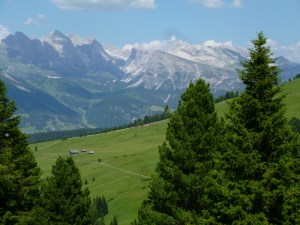
The varied landscape of the Alpe di Siusi.
The varied landscape of the Alpe di Siusi.

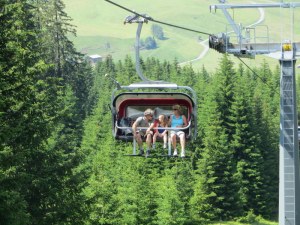
Chairlift at Florian

The way up…and the way down. Chairlift at Florian.
One of the fun aspects of hiking here is seeing the path you travel unfurl behind or in front of you.
One of the fun aspects of hiking here is seeing the path you travel unfurl behind or in front of you.

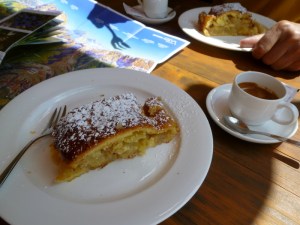
An apple a day keeps the doctor away....Does it count if it's in your strudel?

An apple a day keeps the doctor away….Does it count if it’s in your strudel?
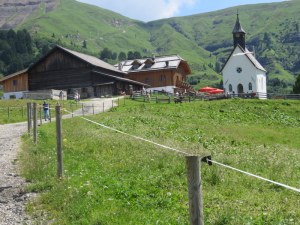
Rifugio Zallinger. Amazing location!

Rifugio Zallinger. Amazing location!

You can hike from rifugio to rifugio, for snacks, meals, rest, restroom. What a concept!

You can hike from rifugio to rifugio, for snacks, meals, rest, restroom. What a concept!

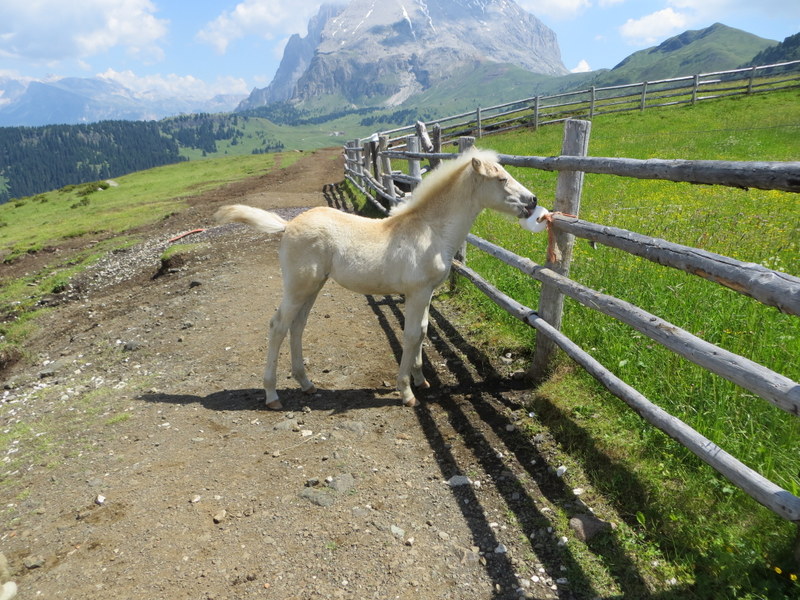
One segment led through a pasture with horses and cows.
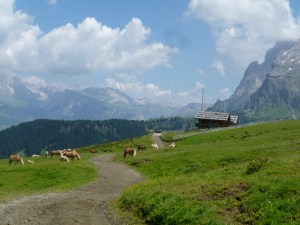
One segment led through a pasture with horses and cows.

Cows have the right of way.

Yes, this is the trail. Cows have the right of way.

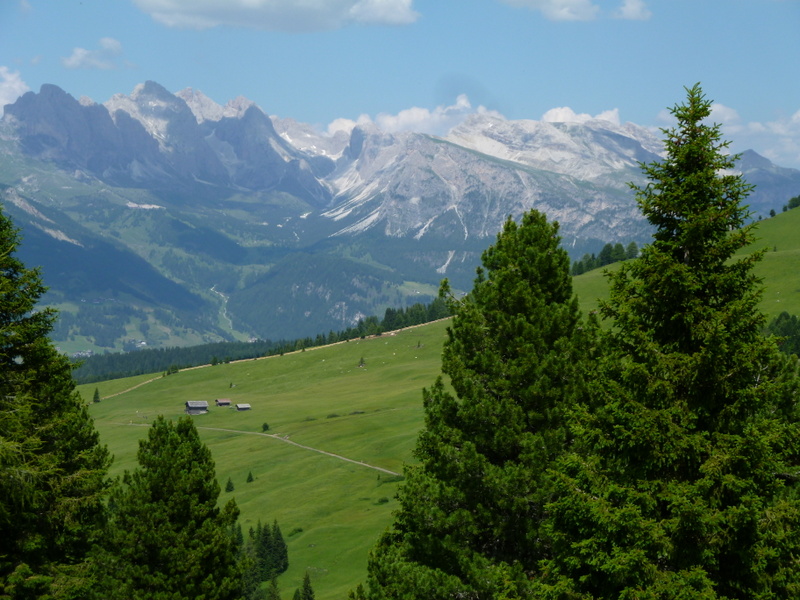
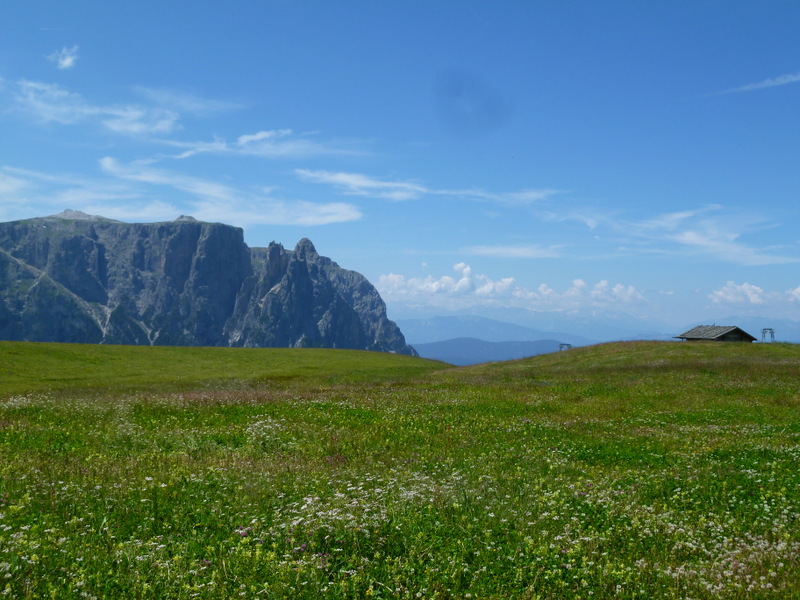
Alpine meadow view of the Sciliar
Alpine meadow view of the Sciliar

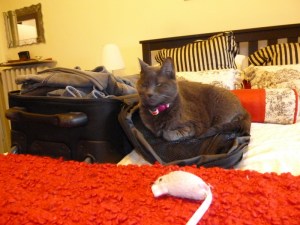
Cat on suitcase

Ric’s overbonded cat Janie planted herself on his suitcase as if to say “Don’t go.”

Fish balls and snow

15 Mar

The food in Sicilia, and most especially our experience in Tràpani, is amazing. It is perhaps the best part of the trip: that and the people.

I am known by many of you to make a fine Köttbullar or Swedish Meatball. Beef, pork and veal meatballs flavored with nutmeg in an artery-clogging cream gravy.  These are the taste of my childhood.

Polpette

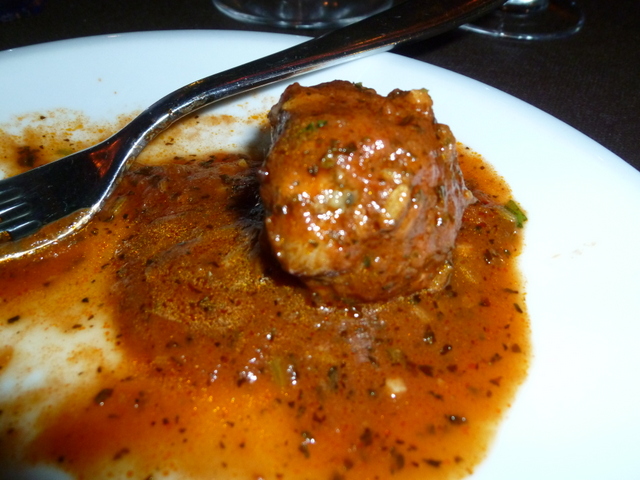
“Fish balls’ does not do justice to this masterpiece. Better in Italian “Polpette di Sarde in Sugo.”

Normally I would not be one to order the unfortunately named item “fish balls in sauce.” Luckily it sounds better in Italian. We’ve had “fish balls” twice: once made of swordfish (polpette di pesce spade) in Palermo, but of particular note were the ones we ate last night in Tràpani – polpette di sarde in sugo – made with fresh sardines and pine nuts with mint in a rich tomato-based sauce. I wanted to lick the plate clean. I am going to learn how to make these Sicilian wonders. Anyone who is open to my trial-and-error experimentation please raise your hand, you are invited for dinner.

The polpette antipasto and accompanying fish dinner were the highlight of our day Thursday. The weather, in a word, sucks. Cold, rainy, violently windy, impossible to partake in the outdoor activities we came for. We have barely glimpsed the Egadi Islands we came here to hike. We finally drove to Erice despite the clouds and during a rare respite from the rain, but found it too cold to walk around. Bitingly cold. (We didn’t think to bring puffy jackets and gloves on our spring trip to the south.) So we passed the day reading, writing, napping. Not all that bad for vacation but not what we had in mind. Friday presented us with more of the same only worse. The winds are about 40 mph so we hopped in the car hoping to escape the brutal coastal conditions and headed inland a bit, planning on seeing Monreale and a bit of the countryside off the autostrada. Ha! We were greeted with terrible traffic and closed roads due to flooding, and a downpour that turned into sleet and snow. We turned around. More reading time today and maybe more “fish balls” for dinner.