Archive | Rome RSS feed for this section

Things are different here

30 Mar

Banking, shopping, mammograms: there are many differences here in bella Italia.

Banking was invented in Italy. In fact, the oldest bank in the world is Monte dei Paschi di Siena, which is in deep doo doo over some questionable transactions…but I digress.  We needed to open an Italian bank account so we could pay some local doctors’ bills. The process of opening the account was akin to closing on a house, only more difficult. It took several days and 3 visits to the bank, but no money was deposited until the account was open and we had a fistful of documents in hand to prove it. Only then were we allowed to deposit money.

And about depositing money: We get reimbursement checks from various sources that we deposit here rather than send back to the U.S. for deposit. One day I popped into the bank with four checks, totaling about $150. No deposit slip is necessary; you just tell the teller your account number. For a deposit of four checks, 10 pieces of A4 paper are generated. Each check requires two (one for me, one for the bank), and the deposit itself requires two (same drill). I signed five times to deposit four checks. They are very nice people, very accommodating, and the experience is very personal, as opposed to the no-human-touch-required ATM deposit.  As long as our balance is correct…but many trees sacrificed their lives.

On the other hand, no trees are harmed in creation of bank statements: everything is electronic and self-service. When we opened our account, we received a random-code-generator token for secure access. It’s quite efficient and more advanced than the 3 online banking systems we access in the U.S.

Paying bills is a matter of making a wire transfer. If you want to pay a doctor’s bill, unless you are paying in cash which is quite common, you need the doctor’s International Banking Number as well as bank name. Simple and not too costly. I marched into the bank armed with this information only to be asked by the teller “what is this payment for?”  Hmmm, seems a bit intrusive and personal to ask what I am paying a doctor for. How detailed to get? I mean what if you had something rather, um, sensitive and personal done? Do you blurt out “pap smear” or “wart removal?” (Neither of which were involved I might add.)  I opted for a rather vanilla “medical consultation,” then hours later realized that without an invoice number, perhaps the recipient of the payment might find information beyond the patient name useful in matching payment to service.  Still, a potentially awkward moment; No HIPAA rules here. I’m sticking with “medical consultation.”

Campo dei Fiori

Campo dei Fiori market. Let the vendor select your produce or risk a scolding.

Shopping has oh-so-many differences from the U.S.  First, it can be rather disjointed. Megastores are few, and out in the suburbs. One may need to go to many stores to accomplish what a stop at Target would do. I like small businesses and wandering around Rome, so it’s an opportunity to poke my head into various establishments. But sometimes it is hard to know where to go to get what. Light bulbs, for example, are most likely in an electrical shop, although there are some in the larger grocery stores. Need a curling iron? Don’t try a beauty supply store; go to an appliance and electronics shop.  Cosmetics? A profumeria of course.  If all else fails, try a ferramenta, which is a household goods store with everything from toilet paper to wine glasses, but in the tiniest stores!

Store hours also need to be considered. The larger grocery stores are usually open continually, but a ferramenta or an electrical shop might close from 13:30-16:00. A large wine shop near us does this, even on a busy Saturday, as does Ric’s favorite men’s clothier. They re-open from 16:00-20:00. Since one does not eat before 21:00, these are prime shopping hours.  Even the electronics giant Euronics takes la pausa on Saturday and they close on Sunday, limiting recreational shopping. Quality of life versus consumerism: interesting concept.

At the outdoor markets, like Campo dei Fiori (think large Farmers’ Market in the U.S.) one never touches the produce. Let the nice vendor help you. Be prepared for questions like “What are you going to use them for” when you ask for tomatoes: “For sauce or to eat?” You’ll get different tomatoes based on the answer.  Or the fish monger might ask “How many people is this for,” then argue with you about whether you are buying enough. (He’ll also want to know your method of preparation.)

Rabbit babyfood

Pat the Bunny? No eat the bunny, Babyfood in flavors attuned to Italian tastes. I have not seen equine….

In the grocery store produce department, one dons a plastic glove, then bags, weighs, and prices one’s own produce. You won’t forget to do that more than once,because if in a moment of American-ness you get distracted and head for the checkout, the cassa will send you trotting back through the store to price the goods, holding up the entire line while you do so. Che imbarazzante! (I’ve only done it once.)

Milk is sold in shelf-stable cartons that do not have to be refrigerated until after opening, and eggs are always on the shelf at room temp.  There is a staggering variety of pasta of course, and the best tuna ever, packed in olive oil. Who needs mayonnaise? Ethnic foods (Mexican, Thai, Chinese) are impossible to find in a regular store. There are specialty shops, but I have not sought them out yet. However, if your infant likes parmesan cheese, salmon, or rabbit, there’s a baby food for that. 

mammografiaThis picture says almost all you need to know about getting a mammogram here: there is no virtually useless “gown.” Just strip to the waist and belly up to the bar. I was warned by the Embassy Health Unit what to expect, and provided a paper gown to take along, but geez, really, did I want to be la Americana there with the Italian women, the only one shielding her girls with a flimsy gown that was mostly coming off anyway?  So I went along with local custom.  But there’s one more surprise for those of us from a sheltered, HIPAA-indoctrinated, North American, law-suit inspired environment: many of the mammographers are men. 

As I entered the office of the senologist (breasts are their only business), I saw a man in scrubs with long gray hair, a little wild, who resembled an aging 60s rock musician. “Please God, don’t let that be my mammographer,” I pleaded silently.  I waited with the other women and was relieved to be summoned to an exam room by a lovely young woman; Take off everything from the waist up and so we begin. But could this be a straightforward get-it-done process? Of course not! She’d get me arranged in the machine then open the door to the adjoining suite and ask a question. She set me up again, and with my breast pressed inextricably between two plates of glass, open the door to the reception area and talk to another person. At one point she left me hanging (literally and figuratively) for about 2 minutes while she went through yet a third door and talked to someone else! At the end of the session she motioned to the chair where I had left my clothes and said I should make myself comfortable (Si accomodi usually means make yourself comfortable, have a seat;  but I now know it can also be used as for “lay back and relax”) and wait for the doctor. To me comfortable  (and relaxed!) is fully dressed, so I began to suit up. I had just put my bra on and had my arms in the sleeves of my blouse when a man in a white coat opened Door Number 3 and my tech beamed with a cheery Ciao bello! Buongiorno! As they consulted over some technical issue (I don’t know if he was a doctor or a computer technician), I buttoned my blouse and donned my sweater. Standing there awkwardly I asked if I should wait. “Sì” and another wave to the chair.

About 40 seconds later in sweeps another young woman who escorts me into the room where I thought the aging rocker was. Yup; He’s the doctor. I figured he was going to give me the “all clear” and I’d be on my way.  Huge office with a desk on one side, mammograms up on the large computer screens, which the doctor is studying. On the other side of the office is an exam table, which the nurse escorts me to and tells me to undress. I ask: “What are we doing?” “An exam” she says, perplexed. I had heard they do ultrasounds on most everyone…. So I strip to the waist again and lay down (Si accomodi!), only to be left there, half-naked and certainly not comfortable, while the doctor makes a phone call and the nurse comes-and-goes a couple of times. They ask me for my last films (not handy – they are in Oregon), and finally the doctor does the ultrasound.  I give great credit for thoroughness.  My favorite part (tongue firmly in cheek) was when he motioned bare-breasted me 20 feet across the huge office to see my mammogram close up, and then back again to the complete the exam.  My only question is why they even allowed me to dress between the two exams. I suspect an Italian woman would not do so, would know she was moving on through Door Number 1 for the sonogram.

In our own environment we know pretty-much what to expect, and I think in North America medical personnel tend to explain — maybe even over-explain — what you are to do, what is going to happen, what to expect. Here there seems to be a great assumption that one already knows what to expect. And of course in North America we have huge body-consciousness/privacy issues. Not worth having here….

I can hardly wait for a trip to the gynecologist.

Beyond il Colosseo

20 Feb

Beyond il Colosseo

Every guest wants to see il Colosseo, followed closely by the Vatican Museums, St. Peter’s, Villa Borghese, and many of Rome’s grand and well-known sites. But where do you go once you’ve seen all the most-popular sites? What treasures await those who have more time in Rome? Ric and I have made a point of visiting some lesser-known venues over the past few months and have found some true gems, virtually free of tourists, lacking long lines and crowds.

Palazzo Braschi Museo di Roma

Grand staircase Palazzo Braschi

The art is interesting, but Palazzo Braschi is the star.

New by Roman standards, Palazzo Braschi dates only to the 18th century. Situated adjacent to Piazza Navona, it is a wonder that so few people venture in. The building itself is amazing, with one of the grandest staircases imaginable. Built with Papal wealth, after financial problems plagued the owner the building was sold to the State. After the Second World War, 300 homeless families lived here causing extensive damage, but restoration work resulted in the fine museum we see today.  One hot June day, at the height of tourist season, we found ourselves among a mere handful of people enjoying the cool interior of Palazzo Braschi.  The collection features scenes of Rome as painted during the Renaissance. It’s fun to see how things looked to the artists of the time, but the real star is the Palazzo itself. Revel in the architecture and imagine a time when this was a private residence. 

 Palazzo Colonna 

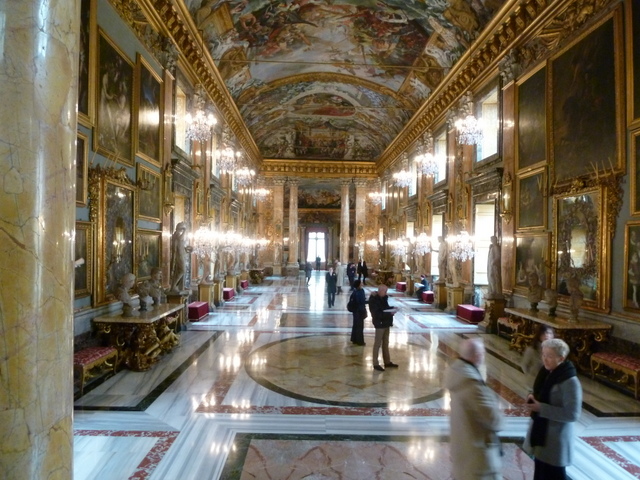
Great Hall Palazzo Colonna

Palazzo Colonna grandeur: only available on a Saturday.

Not every museum is open every day. A truly notable exception is the Palazzo/Galleria Colonna. Open only on Saturdays from 09:00-13:15, one has to plan to see this treasure. As a bonus, there is an English tour at 11:45 (Italian at 11:00).  Just off Via IV Novembre, Palazzo Colonna presents a less-than-stunning edifice. In fact, we have been past this structure dozens of times without realizing the importance of the site and the art within. (The wax museum at street level provides an odd contrast and is no doubt visited by more people daily than Palazzo Colonna sees in a month… or two.)  Once you are inside, it is jaw-droppingly beautiful. If you recall the movie “Roman Holiday” with Audrey Hepburn and Gregory Peck, the final scene of a palace press conference was filmed in Palazzo Colonna. Parts of the palazzo date from the 13th century and there is a claim that “Dante slept here.” Popes and Hapsburgs, feuds and wars, provide background to this enormous and elegant residence and gallery. The family still lives in apartments at the site, explaining perhaps why it is open so few hours each week.

Palazzo Colonna

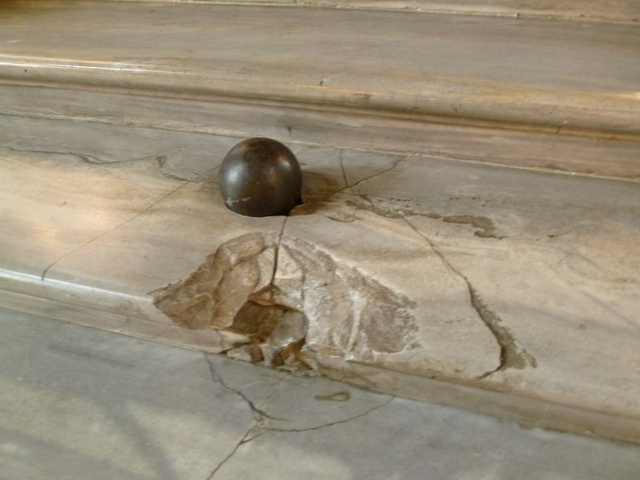
Palazzo Colonna: You’ll have to take the tour to hear the story of the cannon ball….

Palazzo Farnese

Palazzo Farnese

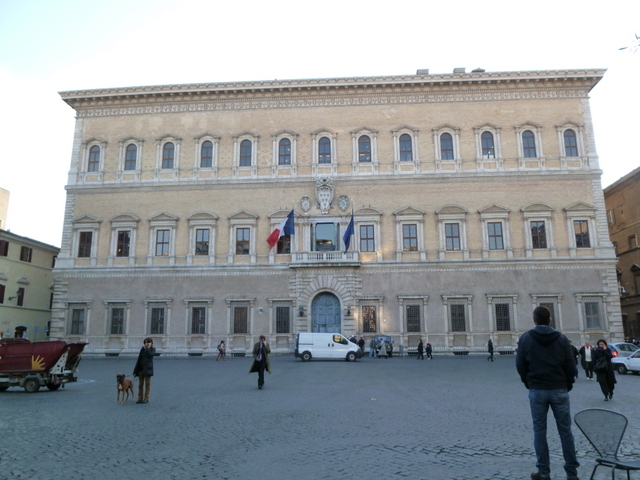
A formidable façade reveals a grand beauty, seat of the French Embassy.

Another one-day-a-week venue – at least for English speakers –  is the French Embassy to Italy, located in Palazzo Farnese, which is only open for tours in English on Wednesday, and only at 17:00. (French and Italian language tours are also available on Monday and Friday.)  As a working embassy, only portions of the building and grounds are accessible, and one must reserve at least a week in advance; However, for the modest price of €5.00, it is perhaps one of the highest value tours available.  A pope, Michelangelo, Puccini, Annibale Carracci, Queen Christina of Sweden (the proverbial tenant from Hell), and Giacomo della Porta all played a role in the rich history of this palace.  No pictures are allowed inside, but trust me; the severe exterior on Piazza Farnese does no favors to the beauty within. 


Villa Torlonia

Villa Torlonia

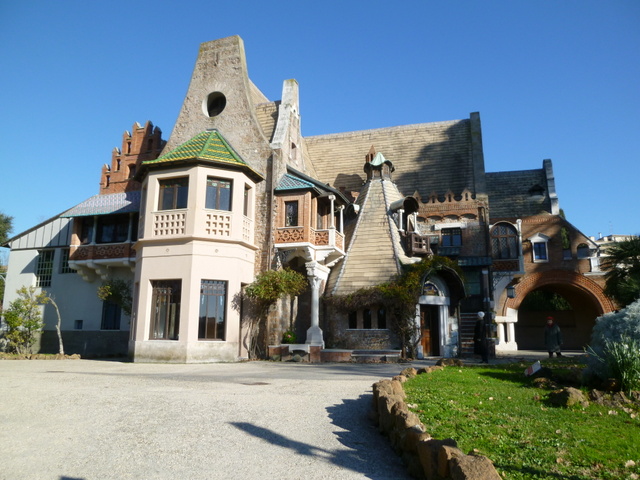
La Casina delle Civette, a curious mix of styles.

This is a truly off-the-beaten-path location even for many Romans, Villa Torlonia is a vast and beautiful park with three diverse villas now serving as museums. Once owned by the Pamphilj family (Villa Pamphilj and Galleria Doria Pamphilj are also properties of this enormously wealthy dynasty), it passed to the Colonna family and finally the Torlonia. The estate was extensively remodeled in the early 19th century. There are winding paths, small lakes and fountains, obelisks, the three museums, and more restoration work in progress.  Mussolini lived in the Casino Nobile for 18 years, renting it for one Lira per year.  You will see families enjoying the grounds, playing, walking, and soaking up the sun from a bench. My favorite building is the Casina delle Civette, House of the Owls. Formerly known as “The Swiss Cabin” and originally a refuge from the grand villa Casino Nobile, it has been transformed through the years with a mixture of architectural styles that almost defy description. Go for the stained glass and enjoy the inlaid wood, medieval influences, mosaics and majolica.  


Villa Medici

Villa Medici

Villa Medici from the garden.

On a recent Sunday, we were among only four Americans touring Villa Medici. Bordering Villa Borghese, above Viale del Muro Torto, just north of Piazza di Spagna, you will find this magnificent palazzo and grounds. Entering from the fortress like side facing Viale Trinità dei Monti, the villa is impressive only in size and age. Sign up for the guided tour and the beauty of this 16th century enclave is revealed. Villa Medici is like most palazzi, steeped in the history of cardinals, artists, architects and even ancient Romans. Today it is the seat of the French Academy in Rome, hosting artists from all over the world in residency fellowships.  The focus of the tour is on the grounds, which are truly magnificent.  Unfortunately with the Tuscan heritage of Cardinal Ricci and Cardinal Ferdinando de’ Medici, much of the original sculpture collection is now in Firenze in the Uffizi. Through restoration and replicas, we can enjoy the site much as it once was.  In the private pavilion of Cardinal Medici admire recently restored frescoes from the 17th century, once covered

Villa MEdici

Niobe suffers from hubris and loses al of her children.

thoughtlessly with many coats of lime, now again visible thanks to one of the artist-in-residence fellows.  And in one of the 16 squares of the garden, we discover the dramatic installation of Niobe and her dying children.  The entire estate was restored in the 20th century, ensuring many generations can continue to enjoy this oasis in the midst of busy Rome. By all means one should see the Colosseum, Forum, Palatine Hill, Borghese Gallery, the Vatican and St. Peter’s. When you’ve seen these historic “must do” sites, when you’ve seen the Caravaggios and the Michelangelos in the magnificent churches, there’s still more to discover in Rome: places where you might just find yourself alone with the art.

Rain in Rome

20 Jan
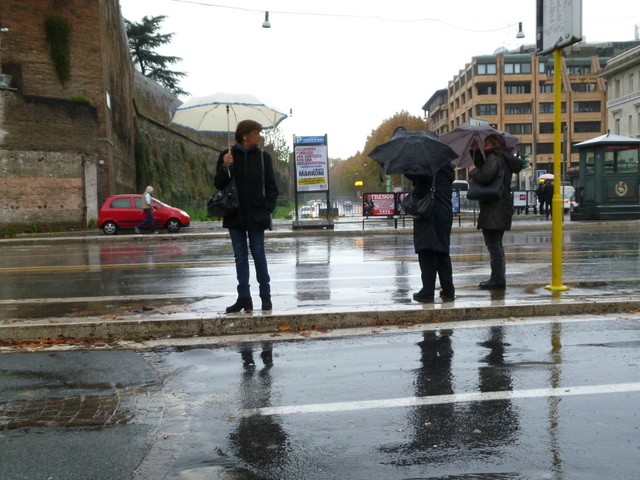
Waiting for the bus in the rain is one of the distinct pleasures of living here.

Waiting for the bus in the rain is one of the distinct pleasures of living here.

20 January 2013.

People bemoan the rain and what it does to their carefully laid plans, especially tourists with a limited schedule and vast lists of “must-dos” in Rome. True, this is a great city for being out-and-about, but the rain forces one to think of new indoor venues, especially when you’ve already seen the biggies: The Vatican, Villa Borghese, the Pantheon, Capitoline Museums, Palazzo Massimo (National Museum of Rome), San Luigi dei Francesi and countless other magnificent churches.

There are many delightful and under-appreciated sites. I wrote of one last summer, when we had Palazzo Braschi Museo di Roma almost to ourselves on a Sunday. I’ve sent many visitors there and received reports of how peaceful and interesting it was.
This great hall was featured in the press conference scene of Roman Holiday with Gregory Peck and Audrey Hepburn.

This great hall was featured in the press conference scene of Roman Holiday with Gregory Peck and Audrey Hepburn.

Usually our Saturday meanderings take us to Campo dei Fiori. This Saturday it was more like a bad day in Portland and not suitable to a 7km walk and marketing. So we ventured into another lesser-known but magnificent museum, Palazzo Colonna. I don’t know how many times I have passed by the rather unimposing edifice on via Nazionale, where the wax museum and various shops do not invite me to linger. But just around the corner, down a small alley-like street with several delightful marble bridges, is the entrance to perhaps the most impressive palazzo we have had the pleasure of visiting. As with many buildings here, the exterior is unremarkable but the interior is incredible. The property itself is gigantic, larger than the Vatican Museums, right in the middle of Rome, yet one can walk by daily, unaware of the treasures within.

Embedded in the steps of the Great Hall, this cannon ball dates back to the Risorgimento.

Embedded in the steps of the Great Hall, this cannon ball dates back to the Risorgimento.

The family has lived here – yes they still occupy apartments – for eight centuries. Having never lived in one house for more than 8 ½ years, I am in awe of roots that run so deep.  The building is as much art as the collection. Only open Saturday mornings, a visit includes a guided tour by an art historian, and the enthusiasm of the staff is itself a treat to behold.

So if you find yourself in Rome on a rainy Saturday – or even on a sunny one – Palazzo Colonna should be on your list.

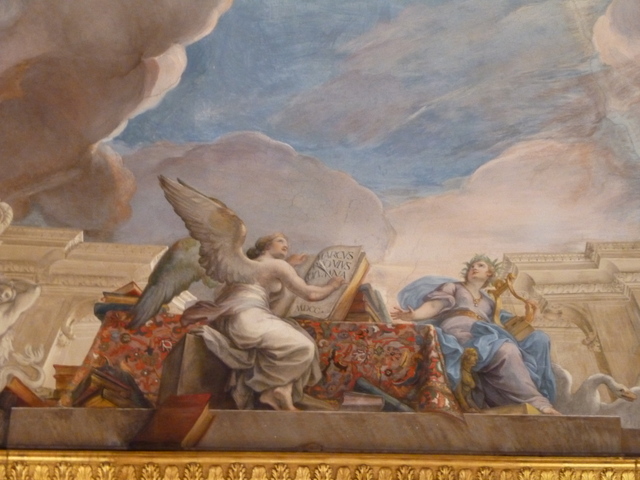
Magnificent frescoes and Tromp L'oiel cover the ceilings.

Magnificent frescoes and Tromp L’oiel cover the ceilings.

A Colonna was responsible for defeating the Turks at Lepanto. This table base depicts captured Turks in chains.

A Colonna was responsible for defeating the Turks at Lepanto. This table base depicts captured Turks in chains.

A different sort of New Year’s Eve

1 Jan
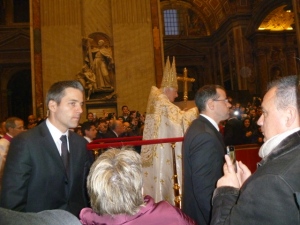
It was actually quite a thrill to see the Pope in person!

It was actually quite a thrill to see the Pope in person!

Our friends and relatives know we are not usually partiers on New Year’s Eve. Our Portland routine was take-and-bake pizza from Papa Murphy’s, a great bottle of wine, and a movie from Netflix. No way we want to be out driving on NYE! Oh, there have been a couple of private parties over the years, maybe trivial Pursuit with Barry and Veronica, and in 2011 we were flying home to Portland from our vacation in Italy on 31 December, but usually we are very low-key. So low-key that we have occasionally “missed” the turn of the year because we were already asleep. Quite pathetic. 

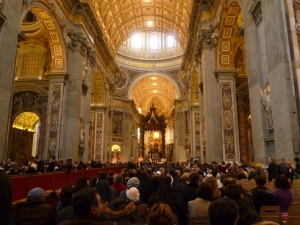
Allora things have changed a bit for us in our new life! We started the evening — really in mid-afternoon — heading to St. Peter’s Basilica for 5:00PM vespers with il Papa. This is a ticketed (free, but still ticketed) event and we were fortunate to receive them courtesy of the Embassy.  Arriving about 3:45PM, we were able to get seats not-too-far-off the main aisle.  A few thousand (seriously a lot of people) were seated inside St. Peter’s and, as you see on TV, giant screens in the square allowed the non-ticketed to watch outdoors, standing.

It was beautiful and very exciting for this Swedish-Lutheran girl from St. Paul Minnesota to attend a service

The magnificent Basilica San Pietro, with a few thousand people.... and us!

The magnificent Basilica San Pietro, with a few thousand people…. and us!

in St. Peter’s, presided over by the Pope himself! Very moving to see the excitement ripple through the crowd, the little nuns standing on chairs to try for a view, the security people unsuccessfully trying to dissuade such indecorous behavior. Here are a few photos I snapped to try to give you a feel for the evening.  I wish you could hear the magnificent male choir in four-part harmony, singing the Latin service. Post vespers (a 90+ minute service), we wandered home through the busy streets and via tram.  But there was more to come this year!

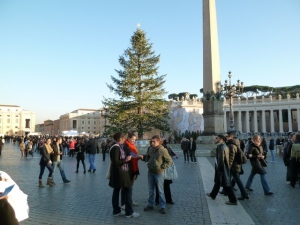
The crowd gathers in St. Peter's Square before New Year's Eve vespers.

The crowd gathers in St. Peter’s Square before New Year’s Eve vespers.


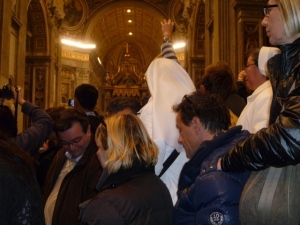
In anticipation of seeing il Papa, even the nuns stand on the chairs. The excitement was palpable.

In anticipation of seeing il Papa, even the nuns stand on the chairs. The excitement was palpable.


Most of our friends & family know we used to dine quite early in Portland. 7:00PM was getting “late” as a starting time for dinner out. If you have read this blog for a while, you know we have become more Italian in our dining hour: a self-defense move in summer to avoid the heat, and any time as most decent restaurants are only open after 7:30 or 8:00PM.  (Even at home on a week night we don’t eat until at least 8:00PM.) And if you show up at 8:00PM in a restaurant, you may well be dining almost alone with a few other Americans, Brits and Germans.  But I digress….

We had a 10:00PM reservation at a place that is perhaps a 12-15 minute walk from our place. Yes, a 10:00PM start. The location, close to home, is significant because all of the buses in Rome stopped running at 9:00PM on New Year’s Eve. 9:00PM!!  We can only conjecture, but we think the crowds are just too intense in the main piazzas and on the main streets to allow free passage of the buses. And then there are the fireworks….

So we went to a fine little neighborhood place, good fish, nice crowd, everyone quite dressed-up. Suits on the men (somewhat extraordinary in our Roman dining experiences), cocktail attire on some of the women. We were a bit under-dressed as it turns out, although in Portland we would have been over dressed. [Note to self: Next year make Ric wear a suit on NYE, and I’ll wear the sparkly jewelry.] At least I put on make-up for a change.

On our walk to dinner — indeed even before — we heard some fireworks being set off. Big, booming, morter-shell-sounding fireworks. All through dinner smoke drifted up the street in front of the restaurant as the occasional bottle-rocket or whatever was set off. A few minutes before midnight, so as to avoid the party-hats being passed out in the restaurant, we paid the bill and exited to an ever-increasing barrage of fireworks. And when the clock struck 12 , all hell broke loose throughout Rome from what we could see and hear.  From behind us, ahead of us,

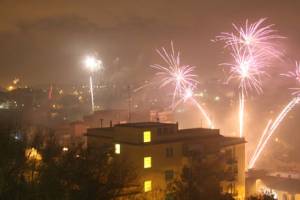
Stole this one from the website of one of the newspapers.... This is how our neighborhood looked.

Stole this one from the website of one of the newspapers…. This is how our neighborhood looked.

and all sides, we heard and saw fireworks that absolutely had to be illegal, but were quite thrilling! As we climbed the hill to our apartment, displays appeared from neighborhoods across the Tiber, as well as off balconies and rooftops right on our street. Standing at Piazza della Muse, we can look out over the northern reaches of Rome and we could see fireworks (Ric says) all the way to Viterbo! This celebration made anything we have ever experienced on the 4th-of-July in the U.S. seem miniscule by comparison. The noise from every quarter was enormous! Right across the street, from the penthouse of a 6-story building, a rather professionally-executed display was going on when we arrived home about 12:15 and went on another 15 minutes after we arrived. At the Catholic church across the street, a group of grade-school children were accompanied by a few adults to wave sparklers and set off firecrackers. Although we were a bit concerned when one of the priests tucked a wad of sparklers behind a pipe running up the side of the church and set them off. (Ric hoped it wasn’t a gas pipe.)  But then quiet: By 12:45AM it was over, at least as far as we could hear from inside the apartment. And the cats came out from under the bed.  Buon Anno, tutti!

Scenes from a Roman Saturday

23 Dec
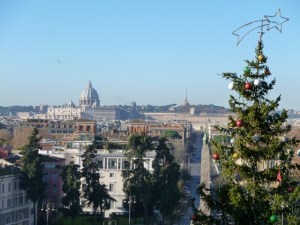
A view from Piazzale Napoleone. across P.za del Popolo to the Vatican. Bellissima!

A view from Piazzale Napoleone. across P.za del Popolo to the Vatican. Bellissima!

Saturday we headed out into a beautiful crisp clear day. Our routine each Saturday is to go on foot from our home to Piazza del Popolo, then on down via Ripetta, stopping for caffè e cornetti, and on to Campo dei Fiori where we shop for our fresh fruits & vegetables  (also occasionally baked goods, cheese, salumi).  It takes about 75 minutes for the walk, and we often stop at Piazzale Napoleone to take in the view of the Vatican from above Piazza del Popolo.  Yesterday the view was enhanced by a huge Christmas tree towering above the piazza.

We are “regulars” with some vendors at Campo dei Fiori after so many months of shopping there. Emanuele at the dried fruit-and-nut booth always has something extra for us, or a discount. The family that runs the produce stall I favor, constantly calling back-and-forth. “Zio, how much for La Signora?” or “Papa where are the cranberries?” Hard-working people, appreciative of return business.  Last week Ric had to work on Saturday so I went alone. The guys at the salumeria we patronize missed him and asked me to tell Ric hello for them! We seldom experienced this in Portland, even after half-a-dozen years of going to the PSU Farmer’s Market almost every week. Yet here, in a city many times the size of Portland in population, we are warmly and personally greeted at shops and restaurants we frequent. And they put up with my Italian, God bless them! Emanuele even tries to teach me.

Lights run from Piazza Venezia all the way to Piazza del Popolo, this year in white with blue twinkles. Absolutely stunning!

 In the evening we headed for dinner, walking through the serene Villa Borghese all the way to the Spanish Steps and on into the Centro Storico. Much to our surprise, even at the peak dining hours from 21:00-23:00, there weren’t many people out and about. Perhaps private parties and final weekend preparations took precedence over the usual dining frenzy of a Saturday night.  We meandered the back alleys and enjoyed the lights relatively crowd-free.

Almost every street is draped in lights.

Almost every street is draped in lights.

Panettone

Panettone from Roscioli. None better!

While at Campo dei Fiori Saturday morning we stopped at Roscioli to buy their incredible bread, still warm from the oven, which I will use for the Christmas Day stuffing. The warm, fragrant, pane integrale (whole-wheat bread) enticed us all the way home. As soon as we arrived, I sliced into the middle and we feasted on that good warm bread. We also picked up an artigianale panettone, the traditional Italian Christmas bread. Ours is made with frutti di bosco (berries) and we could not delay our gratification. Had to cut into it for Sunday breakfast.

Completing our Sunday, a trip to see “Big Bambu” at MACRO Testaccio, followed by a Natale organ concert high atop the Gianicolo at San Pietro di Montorio.