Archive | Travel RSS feed for this section

Chianti Weekend

12 Sep

ImageI am told to be a successful blogger you have to post at least twice a week. Clearly I am not successful. This “thing” can take over your life. I am always looking at a cultural tidbit, beautiful view, piece of art, or an incident with an eye toward a blog entry. But somehow life gets in the way of actually making that entry.

Since last I wrote, I have been immersed in Italian lessons 4 or 5 days each week (an hour at a time), plus homework. Ric has started lessons too, 2 or 3 times each week. We have continued to enrich our understanding of this grand city seeing more museums, historical sites, and of course expanding our culinary knowledge.  And some extraordinary events have led to bus trips to previously unexplored sections of the city. I entered the Italian medical system (just minor!) which is a lengthy story in itself of interesting contrasts with the North American medical culture. In between events we actually manage to go to work.

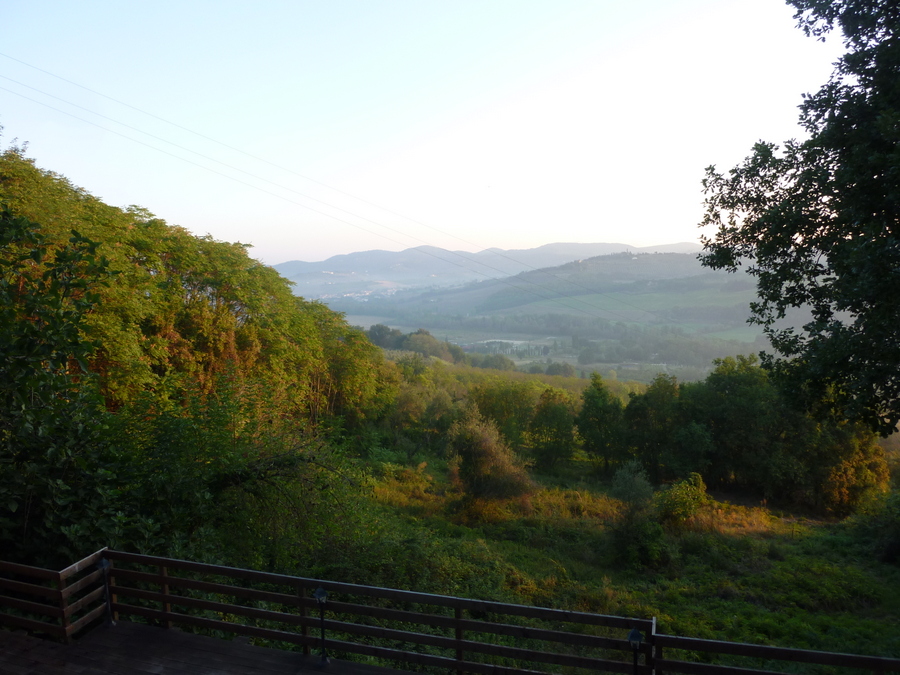
We have also had guests, and this past weekend our nephew Eddie invited us along on a trip to the Chianti Region, where he had rented a house. This is the early morning view from the deck.
Image

What a lovely way to wake up! Sipping stong Italian coffee while the sun creeps over the valley. The occasional bark of a dog or crow of a cock is all you hear.
Image

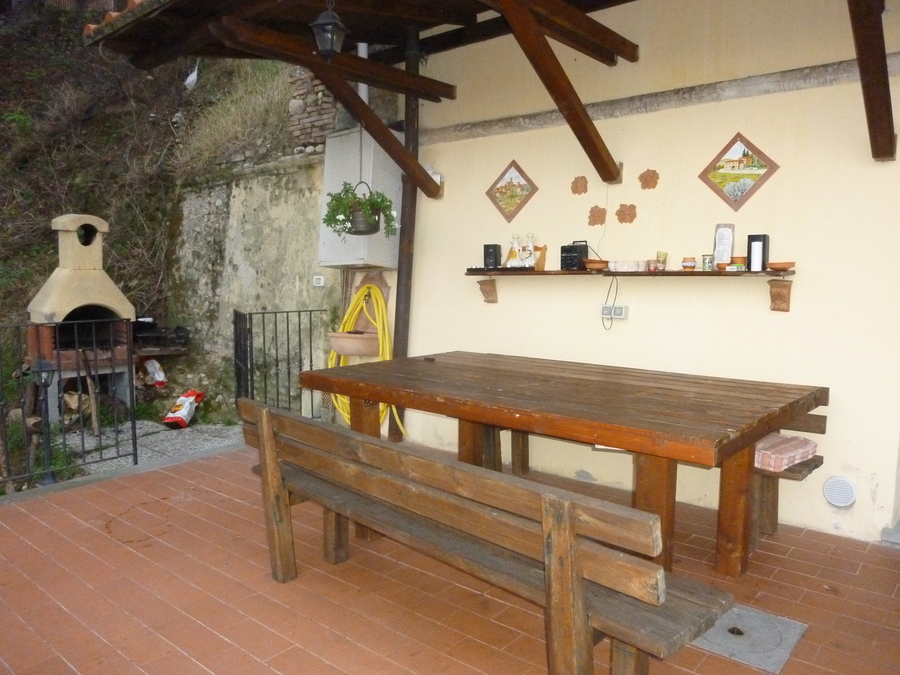
Lovely setting: quaint, practical, with a drop-dead gorgeous view.

We passed briefly through Firenze, then headed out to the countryside. Our family had discovered a sagre (festival centered on an agricultural specialty) in Grevè in Chianti, where for €10.00 you could taste up to 7 wines. (Or if they “forgot” to punch your ticket, maybe 10, or 14.) We met lovely people from all over the world helping out with the sagre and intent on the upcoming harvest. We spent the evening at our Tuscan retreat grilling Bistecca alla Fiorentina and enjoying some local wines.

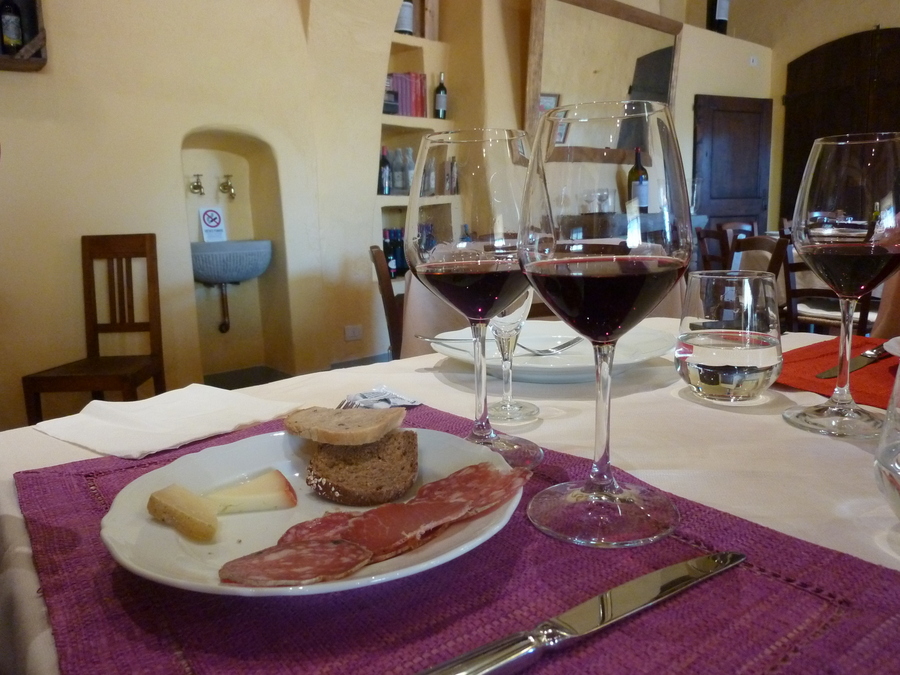
The next day we ventured to San Gimignano, followed by a visit to Villa Vignamaggio, famous not only for its wine, but as the home of the woman who posed for DaVinci’s Mona Lisa. It was also the site of the 1993 movie Much Ado About Nothing. They were kind enough to not only show us the cellars (which date back over 500 years), but to share some product.  There is a B&B at Villa Vignamaggio, which begs a return visit.
Image

Wine tasting and Tuscan specialities at Vignamaggio. A bit more formal than our Oregon experiences.

I can hardly describe the peacefulness of this place. Eddie’s rented villa was one of the quietest places we have ever stayed. The deck looked out over a lovely valley with village lights in the distance. We heard only the occasional barking dog. While star-gazing an enormous “shooting star” lit up the sky in a way you never experience in a city.

Clearly I’ve been much too busy to write.
Image

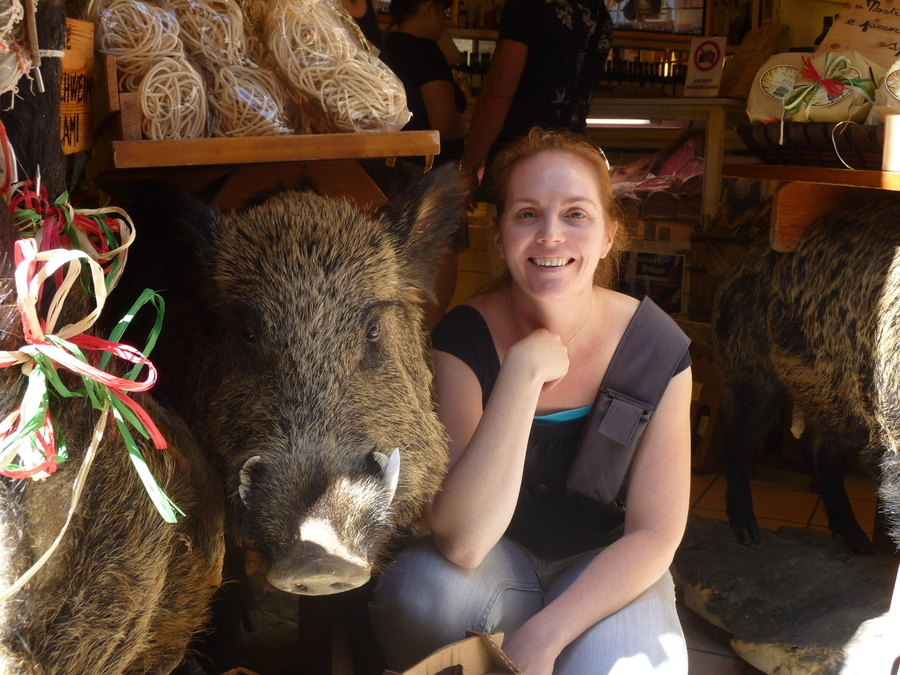
The lovely Helen poses with a Tuscan wild boar. This shop and its delightful owner were the source of our hand cut bistecca alla fiorentina.
Laurel & Ric on vacation: Part II – Ortisei

28 Jul

It’s been hot everywhere it seems. Ric and I took it hard here in Rome when the heat hit in mid-June, earlier than “usual” we are told. Hottest June in 231 years said one source. Who knew weather records were kept for more than 200 years?  We’ve also been warned that “Rome closes down in August. All of the Italians leave town.” Everyone, it seems, goes to the beach or the mountains to escape the hot city.

Now we get it. Three refreshing days in Ortisei (OR-tee-zay) in the Alto Adige region was an amazing, revitalizing getaway.

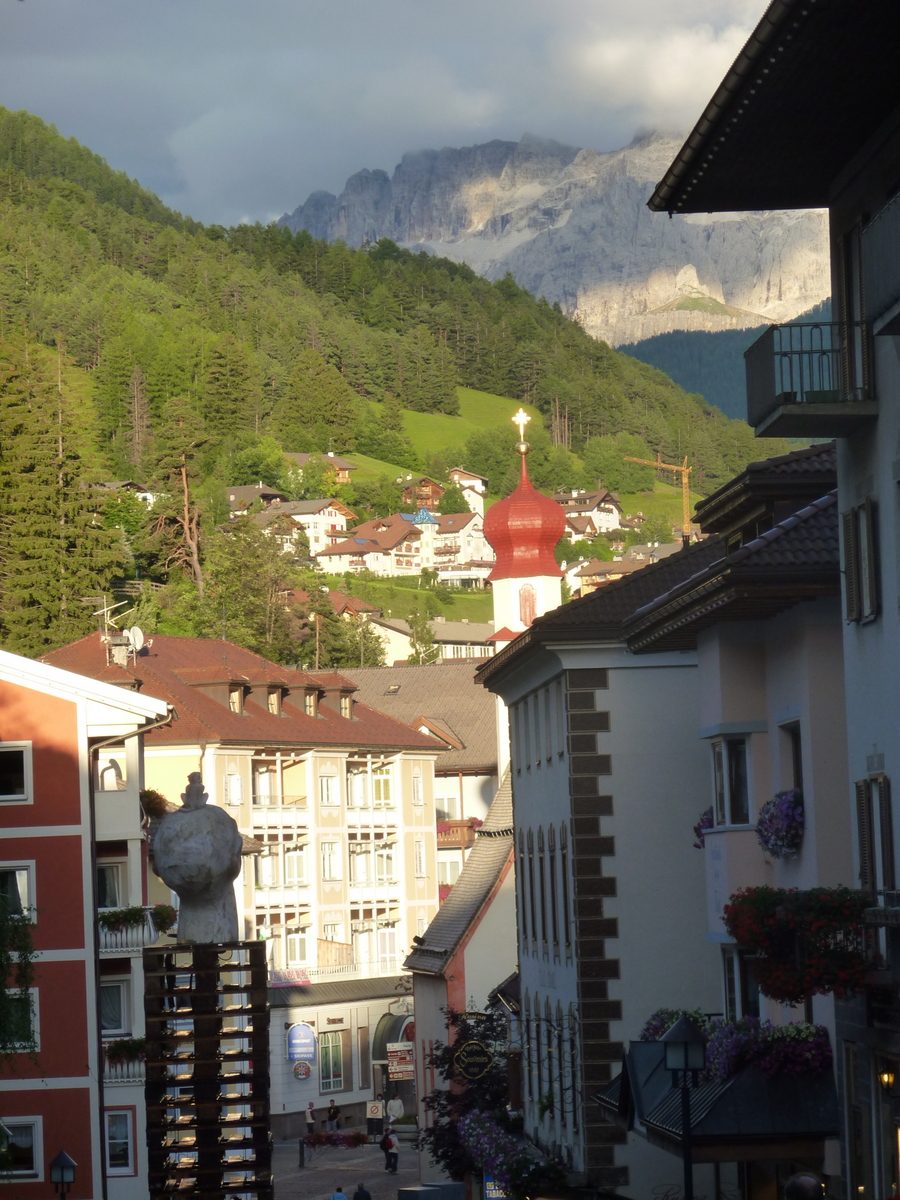
VIew down the main pedestrian-only street in Ortisei.

The town is absolutely charming. While heavy on tourist lodgings with more rooms available for tourists than there are residents of the town, Ortisei retains its character and doesn’t come off as phony or overly commercial.  Ortisei feels more like Austria or Germany than Italy.  One of our Italian colleagues said “It’s not Italy!”  The food, the bread, the signs, the architecture all led to a we’re-not-in-Italy-any-more feeling.  Given that the region was Austrian until 1919, this is not so terribly surprising. Residents generally speak three languages: German, Italian and Ladin, a regional dialect. While many also speak at least some English, the first words out of their mouths are likely to be German. But respond in Italian or English and you will likely end up in a polyglot conversation!

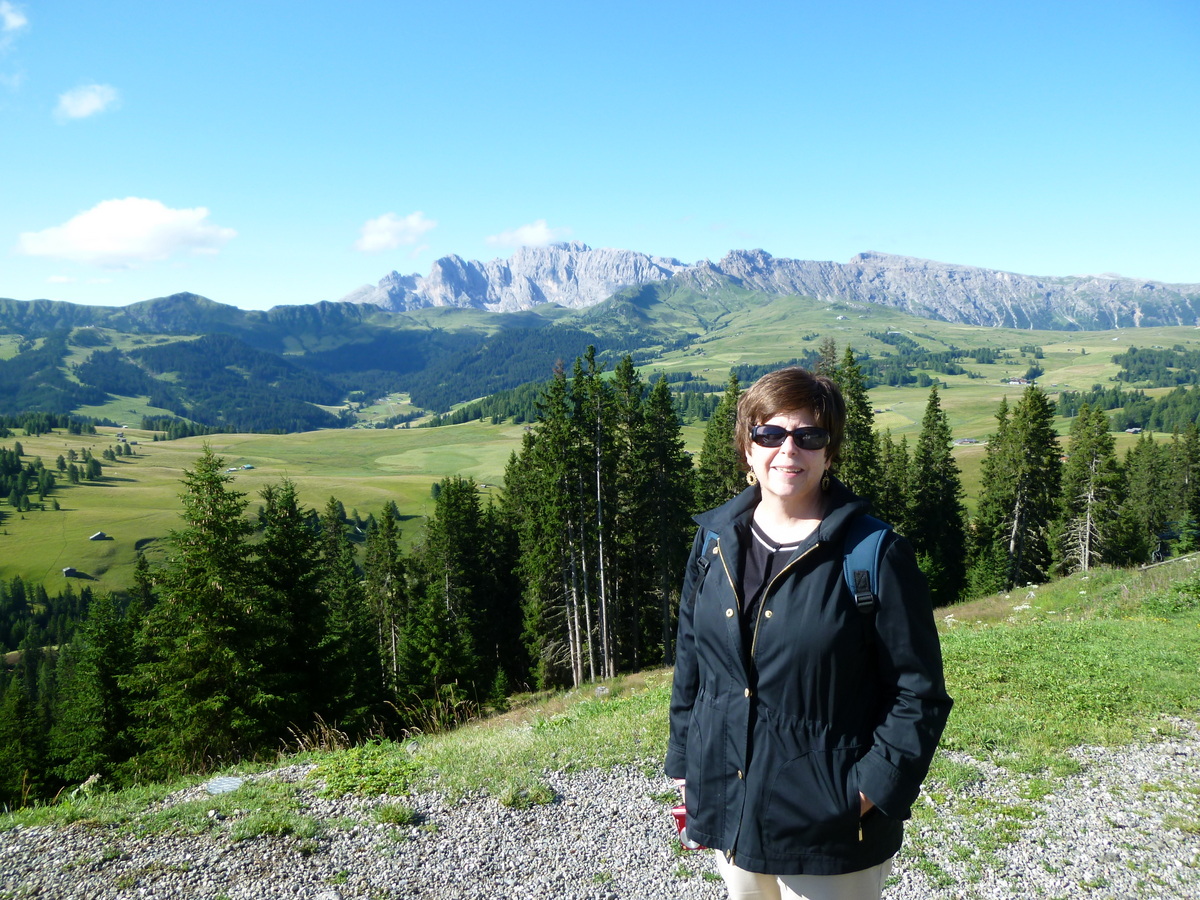
From our balcony we had a view up the valley toward S. Cristina and the Sella Group.

We stayed in the very lovely Hotel Garni Walter. It was a short hike up from the central piazza, and oh-so-pretty and serene. La famiglia Demetz has owned and managed the B&B for 43 years and recently renovated the entire place. Each room is outfitted in pine furniture, Tyrolean fabrics, and federbetten (German-style feather comforters) that kept us warm during the cold nights. No A/C required! To give you an idea of how refreshing the summers are, Sylvia told us on arrival that it was “warm for here: 24C (75F) degrees.” Ortisei is the first of a string of three villages in the Val Gardena. Only a few minutes apart by car or bus, you can also easily visit S. Cristina and Selva Gardena.  All three towns have two names: one Italian and one German. Ortisei is St. Ulrich to the German-speaking population. Each street has two names as well. (Luckily they are clearly marked unlike many in Rome.) The architecture is Tyrolean, with onion-domed churches throughout the area.

Gondolas or “cabinovia” ferry people up — or down — from the Alpe di Siusi.

We love trains, as most of you know, and the area is easy to access by train and bus. Local transportation options include great, comfortable busses plus the cabinovia and funivia: cable ways, lifts, funiculars. Serving skiers in the winter and hikers in the summer, these lifts crisscross the hills, mountains, and high meadows.  (Ric was in heaven with all of these transportation options. During our 6 day trip we took 4 trains, several busses, and 4 cable lifts.)

In the Alpe di Siusi, starting our hike at 44 degrees F, bright sunshine, and a terrain so beautiful it could bring tears to your eyes.

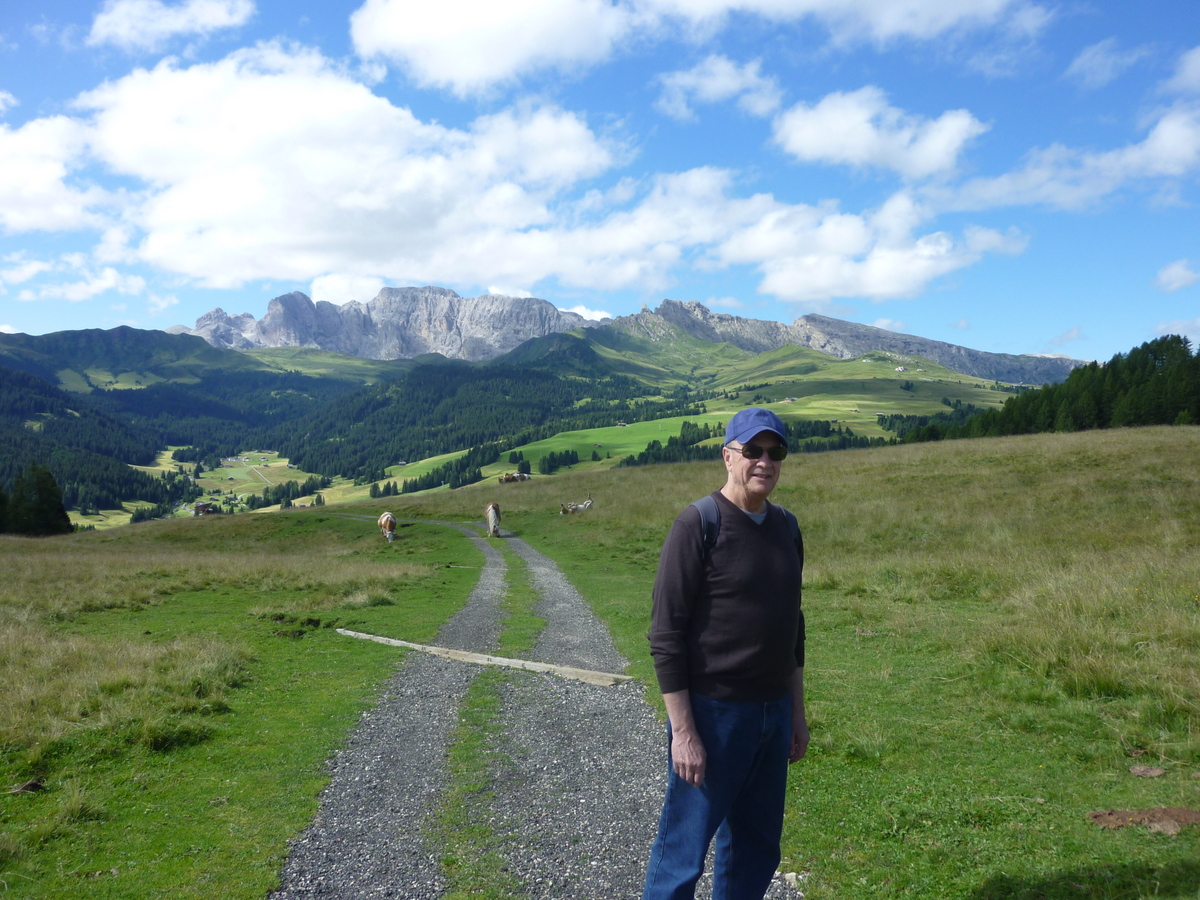
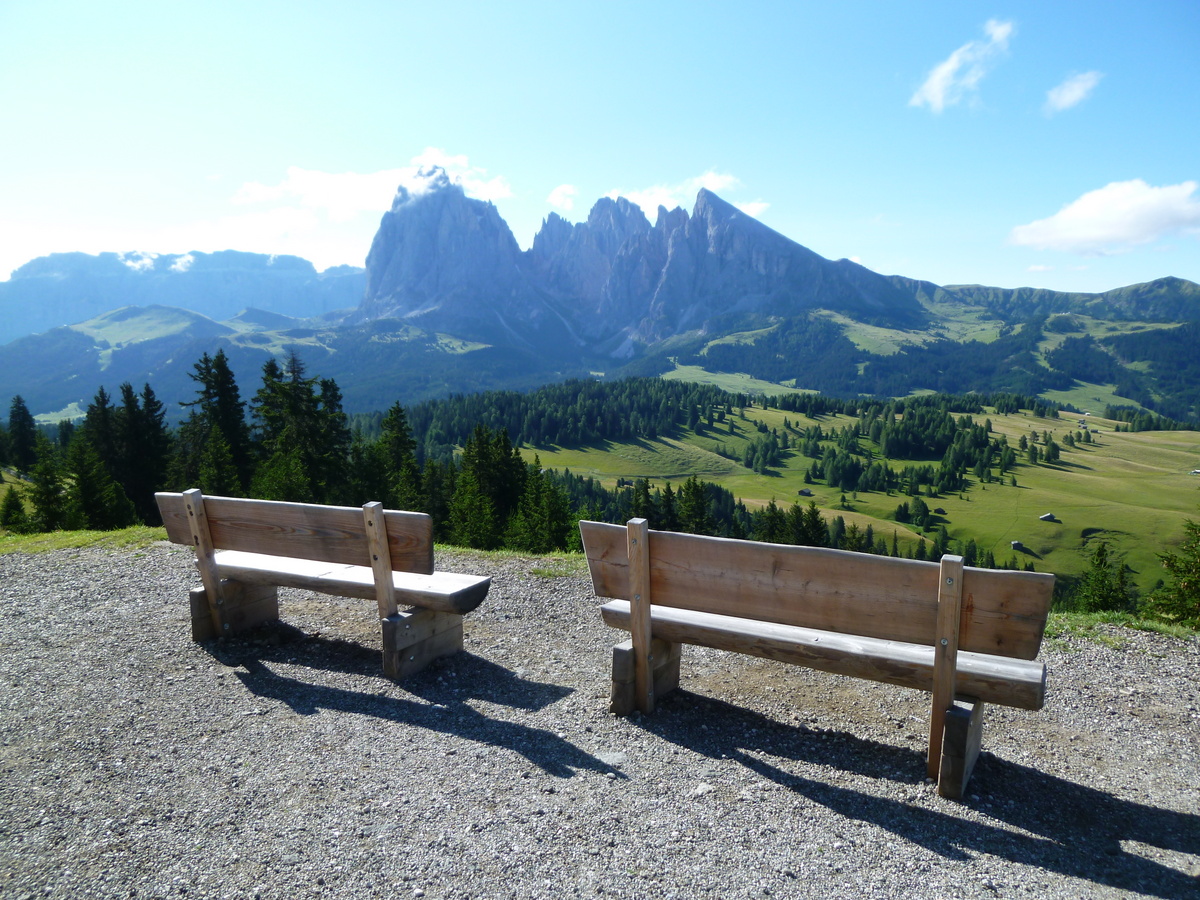
The Val Gardena is a hiker’s paradise. One can hike in the mountains on either side of the Val Gardena, or from town-to-town in the valley. You can hike up to the high meadows or ride cable ways up and hike – or bike – down. We had a lovely hike in the Alpe di Siusi. Starting out one morning at 09:00 the temperature up on top was a brisk 44F/7C but sunny and clear. The green meadows, wild flowers and soaring peaks of i Dolomiti are achingly beautiful.  The peace was disturbed only by the distant ringing of cowbells carried on the light breeze. We set off for Saltria, a “town” at the other end of the meadow from the terminus of our cable way. As is often the case in Italy, the trails are not groomed in the way they are in the Pacific Northwest. Sturdy hiking shoes are a necessity. The trails in the Alpe di Siusi are well-signed however, so getting lost is unlikely. Our terrain included a road large enough for a horse-drawn cart, a footpath through a grazing herd, and a forest path much like in Oregon.

Ric on the hike to Saltria, through a meadow with grazing animals. Yes, this was the marked path, through the herd.

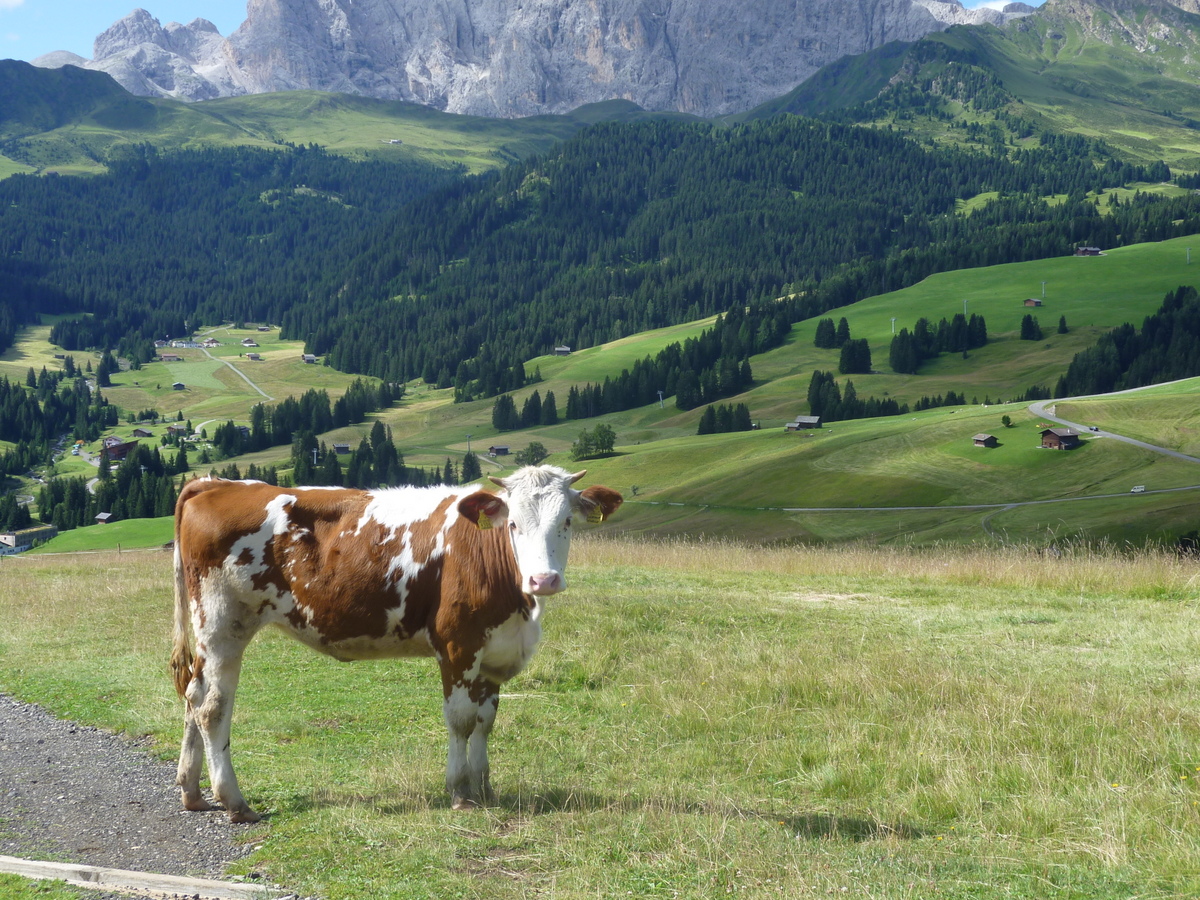
Not common in Oregon are cows straddling the road

Wildlife in the Alpe di Siusi.

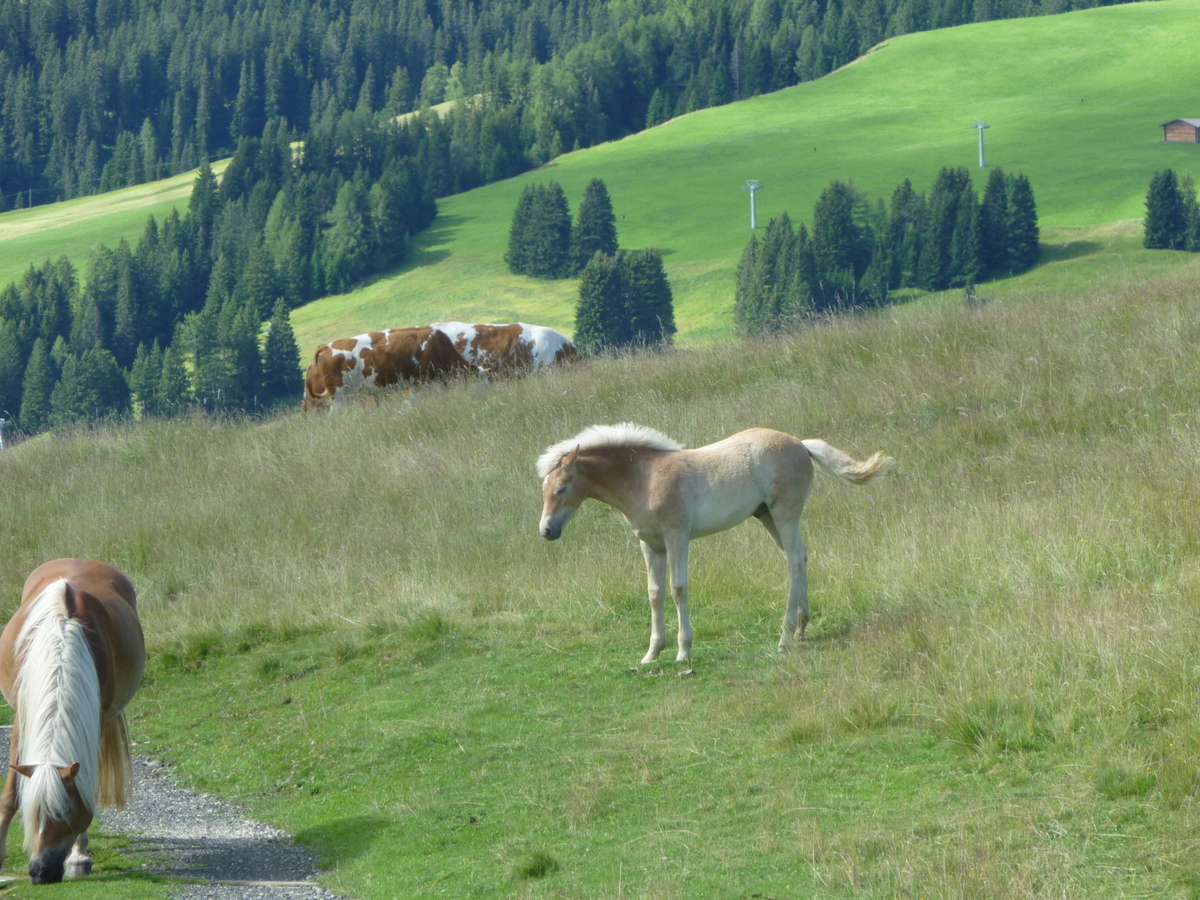
nor ponies looking for a handout. (Shannon T., this photo is included for you.)

Moments earlier, this little guy had been rolling in the grass, thoroughly enjoying the alpine morning.

The “town” of Saltria consists primarily of two resort-hotel/spas and a large bus stop. You can take a comfortable bus from Saltria to Compatsch, where there are more resorts, lifts, and hikes. We were quite taken by the opportunity to actually stay in the Alpe di Siusi, and plan on doing so next year.

I could go on and on. The food is great, as we have come to expect in Italy. You can have a fine pizza from a forno a legno  (wood burning oven), and certainly there is pasta, but also many regional specialties like canaderli (dumplings), Wiener schnitzel, and speck (a type of bacon) is everywhere. We saw – and ate – more potatoes in a weekend than we’ve had in two months in Rome. One of the more unique pasta dishes was spaghetti con cervo, a sauce made with venison.  And a vegetarian option of grilled vegetables is served with a round of warm camembert cheese. That’s one dish I plan to try at home.

We will likely make this an annual trip. Rates go up significantly in August when Rome empties out, so I think we’ll take our annual cool-down break in July when the area isn’t over-flowing with everyone else escaping the hot cities.

We’ll be back next year for certain.

Laurel & Ric on vacation: Part I – Verona

24 Jul

I hear you cynics out there: You took a vacation, and you live in Rome? Yes friends, we had to get away and see more of this amazing country. Plus we needed to cool off!

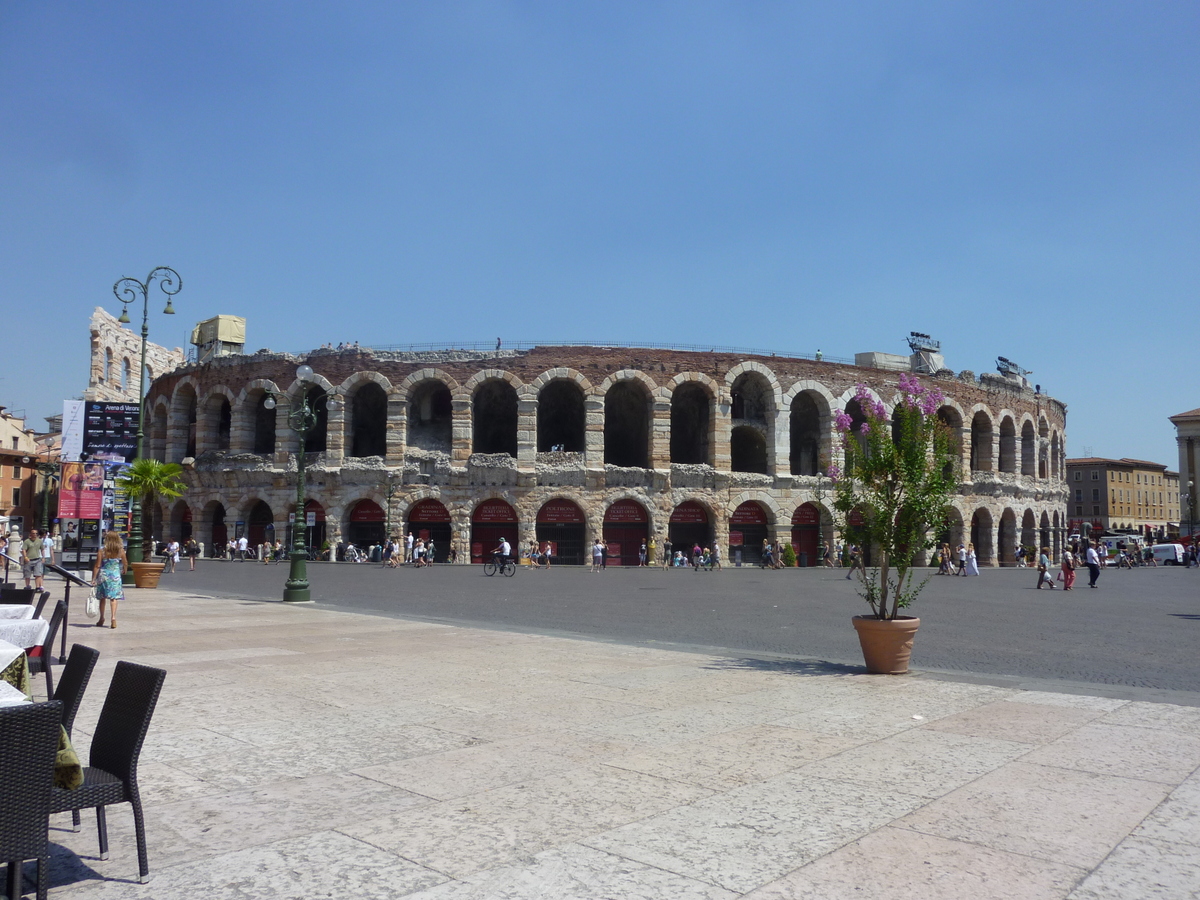
First stop, Verona. You know, Shakespeare: Romeo and Juliet, and Two Gentlemen of Verona. While we made the obligatory stop at “Juliet’s Balcony,” the motivation was to experience this town we’ve heard much about, and to attend an opera in the Arena, a 2000 year old structure much like Rome’s famous Colosseo. It was quite a production.

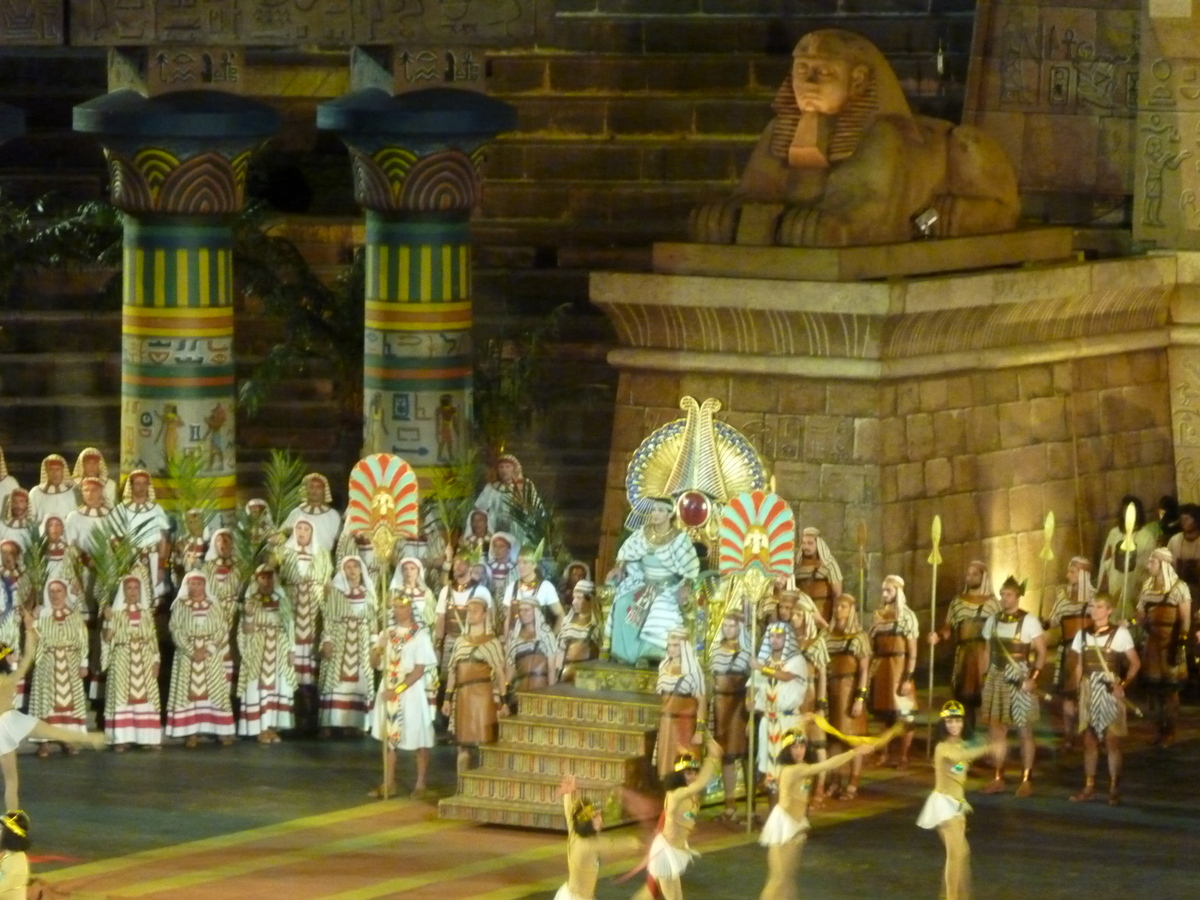
“Aida” is a huge and fascinating work. Staged in the ancient Arena in Verona, the stage was elaborate and took full advantage of the venue.

I wanted to see Aida, which is four (4!) hours long, starting at 21:15 (very late for Americans), after sundown, when the day starts to be tolerable. Ric almost threw me over the stands when I told him I thought it was three hours long. (Of course I waited to tell him until we were seated with our rather expensive tickets long since paid for.) It turned to be four hours because there are 4 acts and 3 long intermissions, totaling at least an hour, to facilitate changing the elaborate sets. There were dozens of supernumeraries but only about 5 main singing roles. The “supers” filled the stage, climbed to the highest ledges with lighted torches, and generally added to the “really big show.”  It was so riveting, even in Italian with no translation (ah, Portland Opera, you spoiled us!) that Ric stayed awake for almost all of it. (OK, I rested my eyes during some of he particularly long arias too. Just a little. During the really long ones.)

The Arena in Verona used to be twice as tall. Amazing to be able to attend an opera in a 2000-year-old structure!

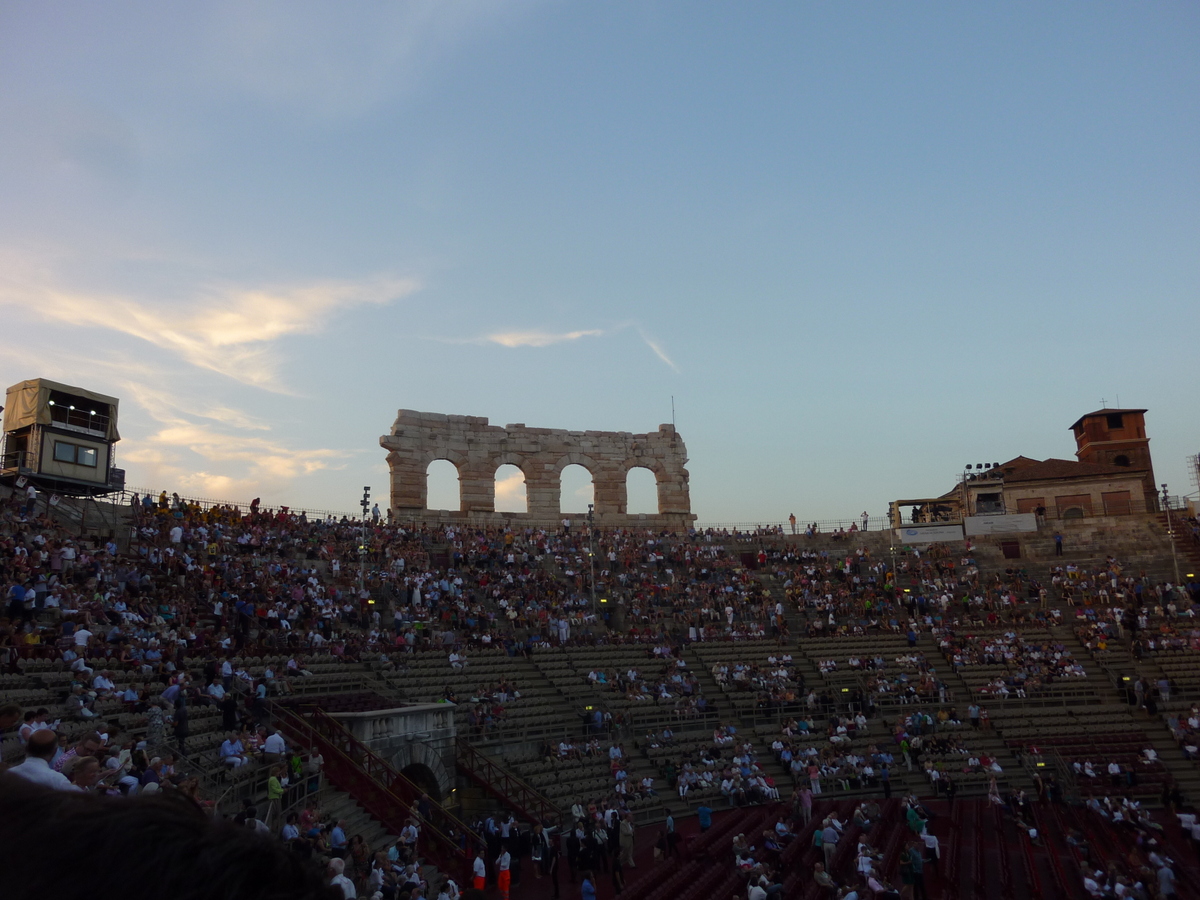
The Arena begins to fill with opera-goers as the sun fades away and night descends.

In honor of Verdi and the 100th performance of “Aida” many years ago, opera goers are provided candles to simulate a time when there was no light and the opera fans provided it with candles. (Long story; Google it.)

Verona is a very nice little city settled by the Romans in the crook of a river, the Adige. Anchored by beautiful Piazza Bra (nothing to do with women’s lingerie), Verona requires nothing more of one than to stroll, savoring the architecture, the ambience, the food.

Not quite like the Willamette River, the Adige runs fast through Verona, but there are a lot of bridges, green hillsides, and charming architecture. Many bicycles, too. More than we’ve seen since Amsterdam.

In Verona you are still clearly in Italy. But move a little further north, and it’s not so clear. More to come…

Getaway

17 Jul

Taking off for a little vacation to Verona and Ortisei. Libbyjean may have some separation issues. She’s taken over my backpack.

What with the relocation, we haven’t had a getaway since we came home from our last Italy trip on New Years’ Eve 2011. Yes, we had 2 weeks of glorious pre-deployment training, and a trip to the midwest to see family before the move, but this is to be a Ric-and-Laurel-Getaway. Be back in a few days to share photos and stories. Ciao!

Day trip to Ostia Antica

19 Jun

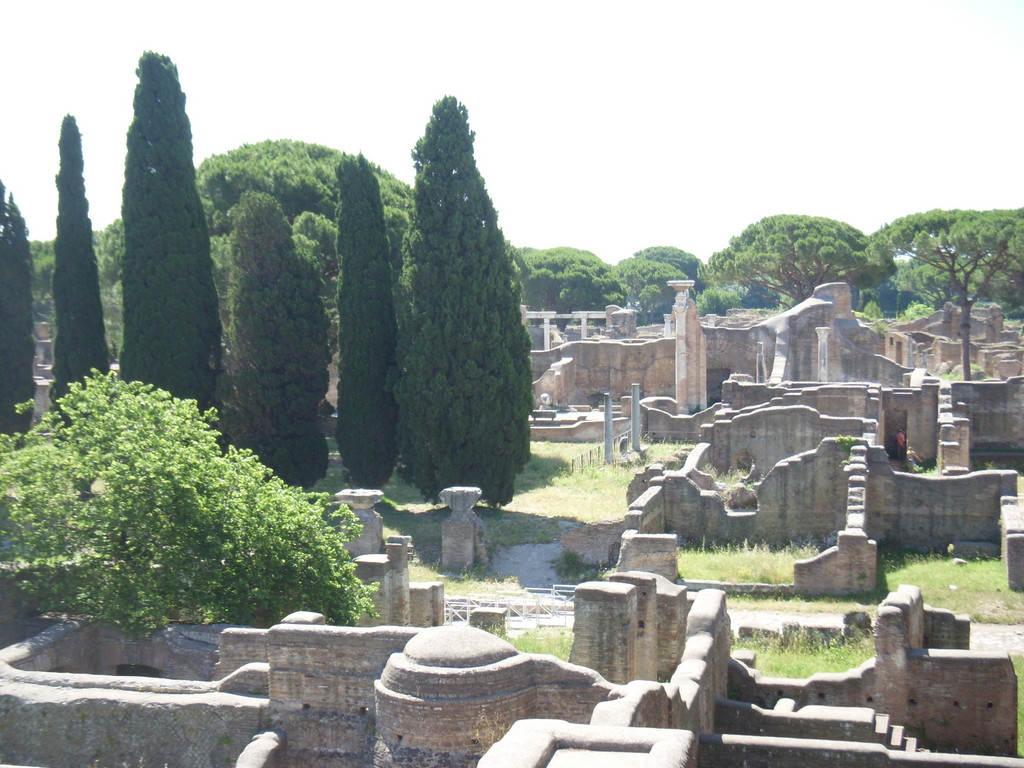
Ostia Antica, Photo by NIcholas DiStefano.

Friends Nick and Wally were here for 5 days after their 2+ weeks in Sicilia. Pompeii was initially high on their list, but they decided to try the Ostia Antica experience instead of the lllooonnngggg day trip to Pompeii from Roma. We were game to accompany them as Ostia is on our list.

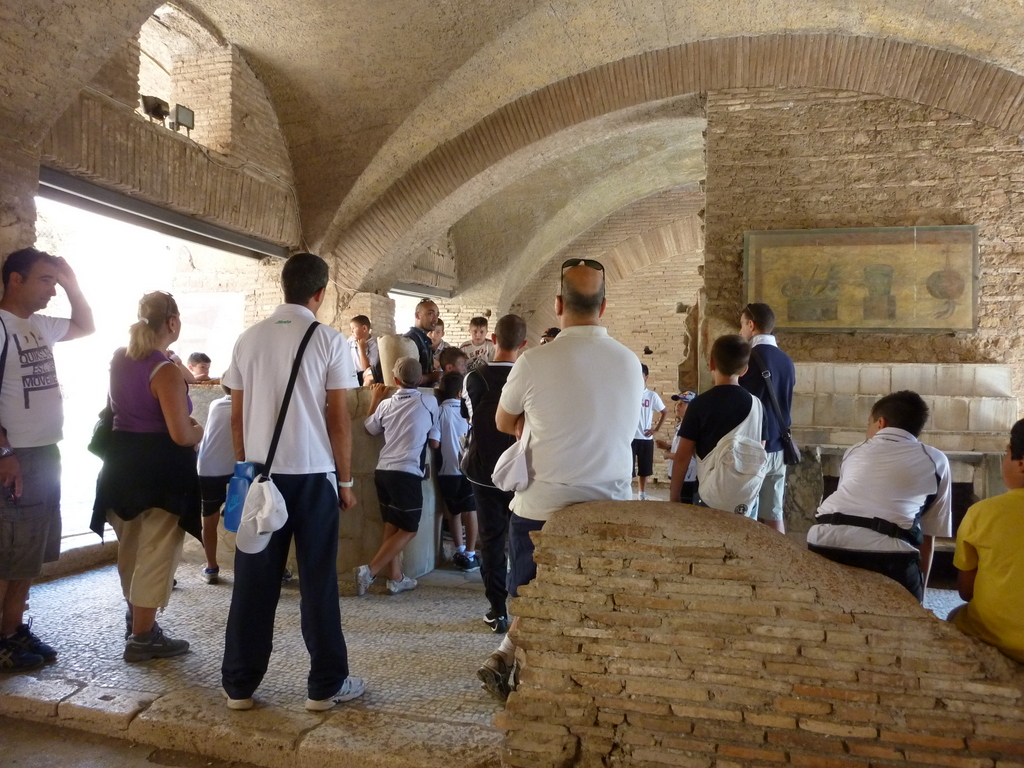
Field trip: I was lucky to catch part of the teacher’s lecture. Luckier still to have understood most of it! Perhaps my Italian comprehension level approaches 3rd grade.

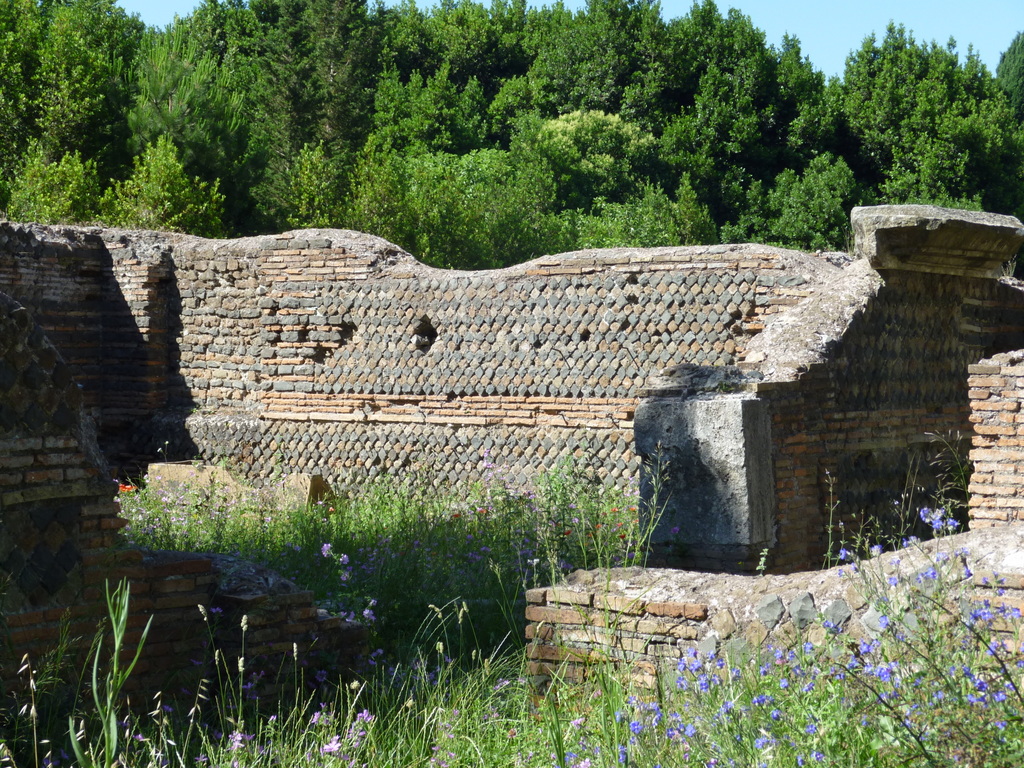
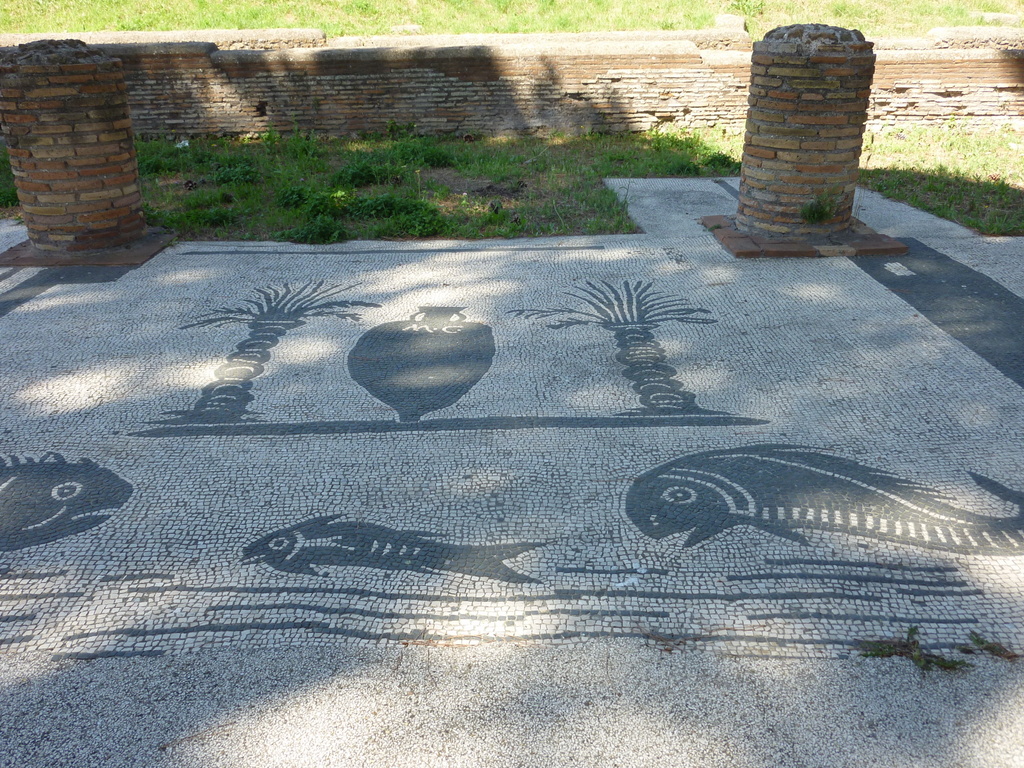
To avoid the afternoon heat we started out at 08:15 Sunday morning. Bus to Termini, metro to Porta San Paolo, and then a train to Ostia, put us at the gate to OA about 09:30. We almost had the place to ourselves! There was a German group of college-age kids, a couple of other groups that seems to be archeology students, and what appeared to be an Italian grade school group on a field trip.Ric and I loved Pompeii when we visited there last December, but this is such a different experience. Ostia is an easy self-guided tour, with Rick Steves’ narrative to keep us on track. It is a very peaceful site where one can wander at will. The wildflowers bloom throughout the site, softening the edges of the ruins. There are amazing intact mosaics depicting the merchants and baths of Ostia.

It seems like nature could easily take over the site and it would be lost to us forever.

Ostia has a long history, having been founded in 620 B.C. (!!!), but as the Roman Empire declined, Ostia became less important. There were invasions and pirate sackings, and eventually due to floods the Tiber River shifted and land-locked Ostia. What the volcano did to Pompeii, politics, flooding and time did to Ostia.Ostia gives wonderful insight to Roman town planning, life and construction. You can arrive from Roma on a simple metro/bus ticket for €1.50 each way. It’s a half-day trip, perfect for a summer morning. We were home for lunch by 13:30. Entry is €8.50 per person (although residents over 65 with a codice fiscale get in for free). I won’t drag the narrative on and on. Here are some additional pictures to tell the story.

In the “Piazzale delle Corporazioni” or Square of the Guilds. mosaics depict services and products in a universal language.

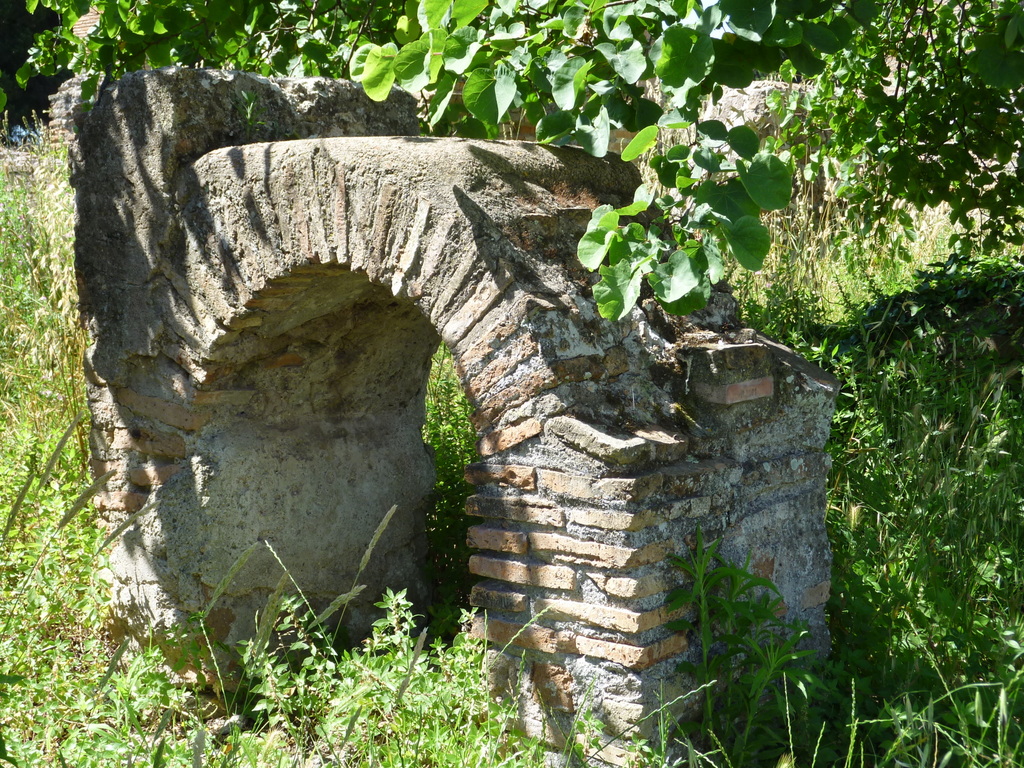
Arch overrun by greenery

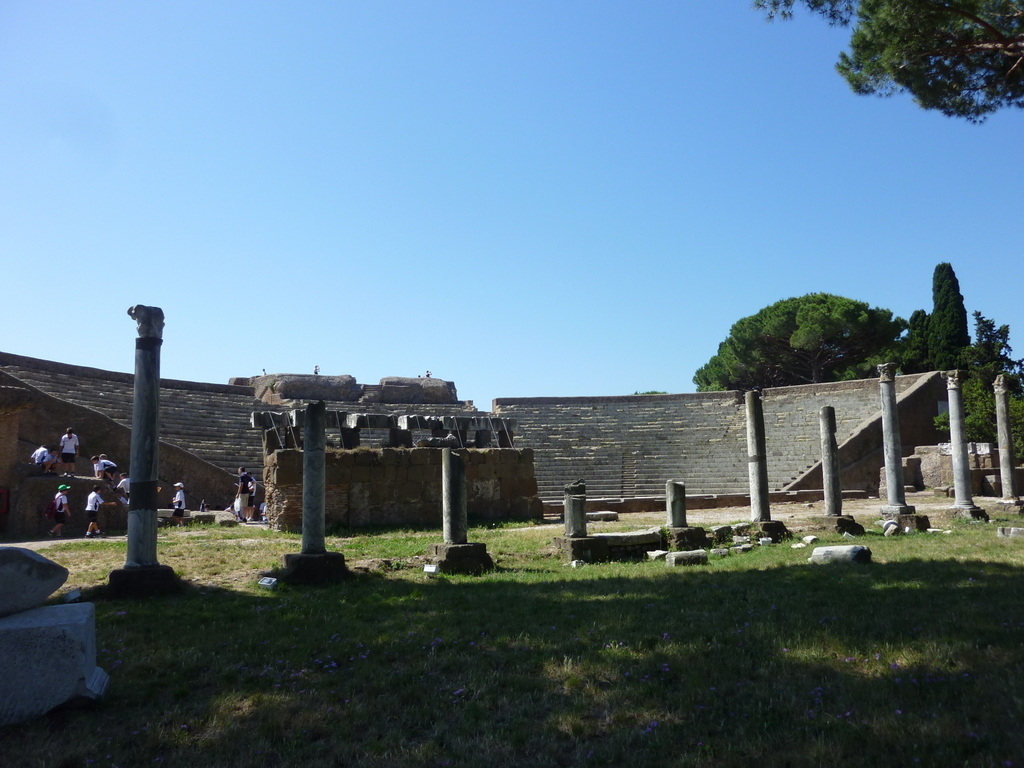
Ostia’s Theatre: Still the site of entertainment, but leaning toward concerts in the current era.