Tag Archives: Italian language

Lost in translation

19 Oct
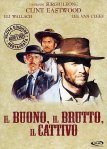
The Italian movie industry is quite prolific and has given us many fine films including the Academy Award winner “Life is Beautiful” from several years ago and last year’s “The Great Beauty.” Of course there are the so-called “Spaghetti Westerns” of Sergio Leone, Fellini’s famous “La Dolce Vita,” and even “Cleopatra” was filmed in Rome at CinecittàBuono Bruto CattivoStudios. Did you know that Italy has the biggest dubbing industry in the world? Many of American movies and TV shows are dubbed in Italian or sub-titled in Italian. We can watch “The Big Bang Theory,” “NCIS,” or “Law and Order” for example, in Italian or in English with sub-titles.  Naturally, as Italians are aficionados of American culture and entertainment, most major American pictures make their way into the dubbing studio for release in Italian.  Many of them end up with unusual titles that are far from a direct translation, resulting in some generally hilarious English re-translation or are cause for some head-scratching at the very least.
Here are a few of my favorites:
Jim Carrey’s “Eternal Sunshine of the Spotless Mind” was strange enough in English, but the Italian translation Se Mi Lasci Ti Cancello translates to If you Leave Me, I’ll Wipe the Slate Clean or alternately depending on your interpretation of cancello, it might be If you Leave Me, I’ll Cancel You. Huh?
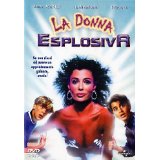
esplosiva1985’s “Weird Science” was a fun movie. In Italian perhaps even more fun as it is entitled La Donna Esplosiva, which can be restated as The Explosive Woman or  The Bombshell. I like the second one.
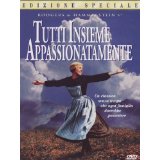
My curiosity about Italian names for movies and TV shows came when the annual showing of “The Sound of Music” hit my radar. It should literally beTutti insienetranslated as Il Suono di Musica, but no: In Italy it’s called Tutti Insieme con Appassionatamente or All Together Passionately. Strano.
Having stumbled upon a few fun titles, I did some research for other amusing tidbits. Enjoy!
 

English Title

Italian Translation

What the Italian title means in English

 The Shawshank Redemption
 Le Ali della Libert­à
 
The Wings of Liberty
The Producers
Per Favore, Non Toccare le Vecchiette!
Please Don’t Touch the Little Old Men!
 
Ferris Bueller’s Day Off
Una Pazza Giornata di Vacanze
A Crazy Day of Vacation
 
Risky Business
Fuori i Vecchi i Figli Ballano
When the Elders are away, the Sons Dance
 
Growing Pains
Genitori in Blue Jeans
Parents in Blue Jeans
 
Trading Places
Un Poltrone per Due
A Seat (or chair) for Two
 
Home Alone
Mamma Ho Person L’Aereo
Mom, I Missed the Plane!
 
The Seven Year Itch
Quando La Moglie e in Vacanza7 Year
When the Wife is on Vacation
 
Cityslickers
Scappo dalla Città – La Vita, l’Amore e le Vacche
I’m Fleeing the City – Life, Love and Cows
 
The Girl with the Dragon Tattoo
Millennium: Uomini che Odiano le Donne
Millennium: The Men Who Hate Women
 
Murder She Wrote
La Signora in GialloSignora Giallo
                 
The Woman in Yellow


Odiano DonneInterestingly, it is perhaps the American movie industry that misnamed Steig Larssen’s book and thus the movie “The Girl with the Dragon Tattoo.” In Swedish it is Män som hatar kvinnor which means, naturally, “Men who hate women.”
And there is an explanation for The Woman in Yellow as Jessica-what’s-her-name did not wear yellow to my knowledge. In Italy, murder mystery books were Libro Giallotraditionally printed with yellow (giallo) covers. The genre is called gialli. You can go to www.amazon.it and find books under Gialli e Thriller.  Some still have yellow covers or bindings.
Literalists that we Americans tend to be, I have not been able to find Italian movie titles translated as disparately or amusingly.  Here are a few you might know very well in English.

 Italian Title 

English Translation

La Vita è Bella
Life is Beautiful
 
La Grande Bellezza
The Great Beauty
 
Profumo di Donna
The Scent of a Woman
 
Il Buono, Il Bruto, Il Cattivo
The Good, The Bad and The Ugly (although due to the artistic license taken with adjective order, the Italian direct translation would be “The Good, The Ugly, The Bad”)
 
Per un Pugno dei Dollari
(For a) Fistful of Dollars
 
Not unlike the U.S., despite the abundance of material produced throughout the world and dubbed or subtitled for the vast network of cable channels, there’s still never anything on TV here.  “Ice Road Truckers” anyone? I mean Guida I camion tra I ghiacci. Questionnable  in any language.

When I open my mouth…

16 Aug
Now and then someone asks me how I am doing in my effort to speak Italian.  I am far from fluent, but I am able to communicate in a basic manner. Our friend Francesco rated a recent email I sent him as an A- in Italian, but I think he was too generous. Maybe a B- would be fair. The good thing is I am self-correcting on many grammatical issues; the bad news is that I often realize I need correcting after I hit “send” or after I open my mouth.
The other day I told someone what he wanted, (vuole) when I meant to tell him what I wanted (voglio).  And today I had to run through all six possibilities in conjugating a verb (I, you informal, he/she/you formal, we, you plural, they)  before the “they” form popped out of my mouth while the Italian I was speaking to gaped at me wondering what was going to spew forth after my long pause.
This is a culo.

This is a culo.

A few weeks ago my niece shipped us a portable crib in anticipation of their arrival with a two-year-old. When I went to pick it up at the Diplomatic Post Office they commented on the big box we had received. As I try to practice my Italian there – and they indulge me – I told them it was a culo. Cue the uproarious laughter as I told them she had sent me a “rear end.” The word I was after was culla. So many opportunities to make a culo of myself.
 For my linguist friends, I think the International Language Roundtable would put me at a 2 to a 2+ on a good day. I am not certain whether wine helps or hurts my efforts.
This is a "culla."

This is a “culla.”

False friends

30 Apr
Più io studio italiano, meno lo so.The more I study Italian, the less I know. When I took my community college classes in the U.S., I knew that a tutor would be key to any degree of fluency, but I also thought that “a few months” of one-on-one classes while actually living in Italy, would make me fluent. Ha! After 21 months of individual classes with a magnificent teacher, Eleonora, the more complex this language becomes.
Not only must you consider gender, number and how formal or informal you want to be before openinglearn-italian-language your mouth, but conjugating verbs is a nightmare even for Italians. There are fifteen tenses with 6 conjugations in each, plus the gerundio, participio and the infinito (don’t even ask) for a total of twenty-one (21) tenses, therefore about 95 conjugations for each infinitive. My Big Book of Verbs contains 601 infinitives: You do the math! Luckily there are patterns. Sort of. Except for the irregular verbs. È un incubo! (It’s a nightmare!)
Are you stating a fact, giving an order, or rendering an opinion? You’ll conjugate the verb differently. “I want you go to the moon” is conjugated differently than “Go to the moon if you want.” Io voglio che tu vada sulla luna versus Vai sulla luna se vuoi. (Vada and vai are different forms of the same verb “to go.” For that matter, voglio and vuoi are both conjugations of volere, “to want.”)
dsc_0024OK, too much info, but I wanted to give non-Italian learners an idea of the level of confusion I am in daily. Add to that “false friends.” No, I don’t mean traitors, betrayers, and two-faced meddlers. These “false friends” are words in Italian that drive the English learner mad. These are words that sound like something in English but mean something entirely different in Italian. In linguistic circles they are called false cognates.
Allow me to illustrate.
We have some favorite merchants, particularly at the market in Campo dei Fiori: The salumiere (the man who sells us superb fatty pork products from Umbria), the fruttivendolo (greengrocer), and our “snack guy” Manuele. I reduced Manuele to tears one day when I asked for “Mandorle leggermente saltato,” which mean “Almonds, lightly jumped.” I wanted them lightly salted, which is salato.
I present to you a few of the more amusing and tricky falsi amici in Italian:
  • Never go to the salumiere and ask for peperoni. He can sell you salume piccante, but only the fruttivendolo can sell you peppers. In a pizzeria, asking for peperoni pizza will result in a nice vegetarian pie with sautéed red peppers on it. Peperoni = pepper (red, or any other type); salume piccante = Spicy salami, something like what North Americans put on pizza.
  •  If you are fussy about additives in your food, you might be tempted to ask your waitress if the food contains preservativi. She might shake her head in wonderment as preservativi are prophylactics. A conservante is used to keep food from spoiling. Preservativo = condom; Conservante = food preservative.
  • When your friend asks you to non fare rumore she is not accusing you of gossiping, but asking you to be quiet. Rumore = noise; Rumor is pettegolezzo.
  • We go to the tabaccheria (tobacco shop) to buy postage among other things, and one day I heard a tourist asking for “una stampa.” Understandably the tabaccaio (tobacconist) was confused because of all the things they sell printing isn’t one of them. A postage stamp is francobollo, and una stampa is a something printed, like a picture.
  • When the bus is late we are not annoiato, but rather we find the situation fastidioso. Annoiato = bored; Fastidioso = annoying.
  • To borrow a book one must go to the biblioteca, not the libreria. One buys a book at the libreria and borrows one at the biblioteca. 
  • A cadavere is indeed a corpse, but it is not morbido, it is morboso. You might pet a kitty and pronounce it morbido; or a pastry might have a filling that is morbido. Morbido = soft. It took me a long time to get that one!
    Tu sei licenziato!

    Tu sei licenziato!

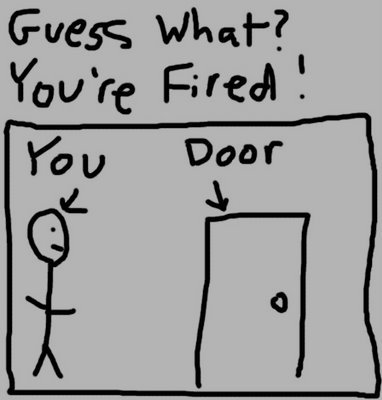
  • When your colleague says “Sono stato licenziato” he was not just awarded a license, but fired. To license = autorizzare. 
  • When shopping for a hotel, asking for one that is lussuria may land you in the wrong place. A five-star hotel might better be described as lusso. Lussuria = lust while lusso = luxury.
  •  Children who are maleducato are not illiterate, they are badly behaved. Educato = well-mannered or polite, but istruito = educated.
  • One can take a photo of a camera, but you cannot take a photo with a camera. Camera = room; Macchina fotografica = camera.
My head about to explode as I learn the dreaded subjunctive tense.

My head about to explode as I learn the dreaded subjunctive tense.

 Non pretendere does not mean you should give up your flights of fancy, it means you should not make demands. You can fingere (pretend) you speak Italian all you want! Pretendere = demand while fingere = pretend.
 An ingiuria is an insult, while an injury is a ferita.
A fabbrica is a factory, while fabric is tessuto.
At the newsstand when I want something to read, I must ask for una rivista. If I ask for un magazzino I might end up renting a warehouse.
Finally, a person who is sensibile (sen-SEE-bill-ay) is not someone with common sense, but rather someone who is given to being easily upset or emotional, i.e., sensitive. But a person who is sensitivo (sen-si-TEE-vo) is level-headed or sensible.
Is it any wonder I end the day with a glass or two of wine?

Fish balls and snow

15 Mar

The food in Sicilia, and most especially our experience in Tràpani, is amazing. It is perhaps the best part of the trip: that and the people.

I am known by many of you to make a fine Köttbullar or Swedish Meatball. Beef, pork and veal meatballs flavored with nutmeg in an artery-clogging cream gravy.  These are the taste of my childhood.

Polpette

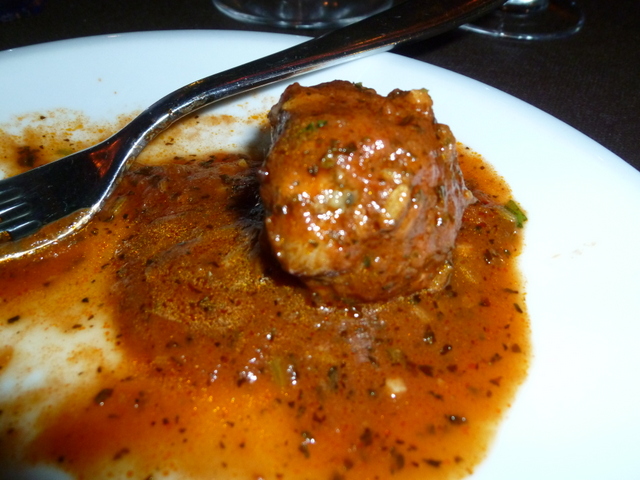
“Fish balls’ does not do justice to this masterpiece. Better in Italian “Polpette di Sarde in Sugo.”

Normally I would not be one to order the unfortunately named item “fish balls in sauce.” Luckily it sounds better in Italian. We’ve had “fish balls” twice: once made of swordfish (polpette di pesce spade) in Palermo, but of particular note were the ones we ate last night in Tràpani – polpette di sarde in sugo – made with fresh sardines and pine nuts with mint in a rich tomato-based sauce. I wanted to lick the plate clean. I am going to learn how to make these Sicilian wonders. Anyone who is open to my trial-and-error experimentation please raise your hand, you are invited for dinner.

The polpette antipasto and accompanying fish dinner were the highlight of our day Thursday. The weather, in a word, sucks. Cold, rainy, violently windy, impossible to partake in the outdoor activities we came for. We have barely glimpsed the Egadi Islands we came here to hike. We finally drove to Erice despite the clouds and during a rare respite from the rain, but found it too cold to walk around. Bitingly cold. (We didn’t think to bring puffy jackets and gloves on our spring trip to the south.) So we passed the day reading, writing, napping. Not all that bad for vacation but not what we had in mind. Friday presented us with more of the same only worse. The winds are about 40 mph so we hopped in the car hoping to escape the brutal coastal conditions and headed inland a bit, planning on seeing Monreale and a bit of the countryside off the autostrada. Ha! We were greeted with terrible traffic and closed roads due to flooding, and a downpour that turned into sleet and snow. We turned around. More reading time today and maybe more “fish balls” for dinner.

Fear of Speaking

14 Nov

Pasquino, the most famous “talking statue” in Rome. Used since the 16th century to post messages and claims.

Italiano  

Lately I find myself thinking about language a lot. In Rome one hears a polyglot of tongues, from French and German to Swedish, Senegalese and Chinese. I have been asked for help by a Chinese tour guide, whose English was perfect, but who knew only the fewest words in Italian. In the market I heard an immigrant vendor speak almost simultaneously in Italian, English, German and Pakistani. On a bus headed to via Appia Antica, a French woman sought help in Italian, but the bus was full of Germans and English-speakers, no Italians. I was surprised to find my Italian was the common denominator as she spoke no English and we managed quite well in our shared foreign tongue. Yet English is the usual common denominator, the language in which an Italian and a German, for example, will engage to find clarity.

Old joke:

What do you call a person who speaks three languages? Trilingual.

What do you call a person who speaks two languages? Bilingual.

What do you call a person who speaks one language? American.

I want to be fluent in Italian, but my progress is so erratic. One day I am sailing through the Roman landscape, doing my errands, giving directions  in Italian to people in the street (people are always asking me for directions), answering the office phone without totally losing my cool at the sound of an Italian voice, and navigating the whole hospital experience. I learn something new in Italian every single day and think how marvelous it is that after less than 6 months in Rome, I am not only surviving but thriving. Then the next day, I am totally flummoxed when the fishmonger asks me how I am going to prepare the fish. Dashed by the reality of my limitations, I struggle to stand up and walk talk again.

I pride myself on my English skills:  I am often asked to edit others’ work, I am consulted on English usage, and I am even funny in English, I am told.  When I worked with a group of linguists in the U.S., we challenged each other with word games, had in-depth discussions about usage, and compared grammatical structures of languages from Arabic to French to Japanese. How I admire multi-lingual people! Yet I am here, in a love affair with this bel paese, where they speak one of the most beautiful-sounding languages on the planet, and I feel like a 3-year-old in my language skills. I may get the gender right, but screw up the conjugation. I can only use four of the 21 tenses and I misuse prepositions all the time. How many times have I hit a point in a conversation where I have no idea what the right word is because my vocabulary is so small? (Non so la parola in italiano, ma….)

I tune in-and-out of conversations around me. Some days it is just too difficult and I revert to tourist-speak or totally block-out the people speaking mellifluous Italian around me.  I was in my doctor’s office again the other day for post-surgery bandage removal. He and another doctor were chatting away while they cut off the mummy-wraps. I know they wondered if I was following along, and in fact may have been gauging my comprehension, but I was on a different plane.  I was a bit stressed and had much on my mind that day (not to mention the fact that they were wielding scissors across my tender thighs). I tuned out when it would have been a marvelous opportunity to practice. Will the day come that I comprehend everything being said around me?

When we learn a language, we accomplish so much. It honors the people and the culture. Learning the language allows us to stand on our own and helps us navigate challenging situations without having to pray that someone else will come along with the language skills to help. I’ve written about how great the hospital staff was, and because we each knew some of the others’ language, with un misto di lingue I made it through.  But what if Ric and I land in a situation where there is no misto? What if I have to make a go of it in Italian for health, safety, or legal reasons? I must become fluent. I have no right to assume someone will speak English here for my convenience.

When we learn the local lingo, we can participate in a conversation, not simply ask and answer survival questions. On a personal level, I want to be able to engage people in Italian. I envy these very social people who can chit-chat about anything, everything, and nothing. Mastery will allow me to better serve my employer and represent my country. I want to be able to make people laugh in Italian on purpose, not because I am so terrible at it.

I should give myself some credit for progress. In the three months I have been taking private lessons here, I have progressed thanks to the tutelage of my fantastic instructor.  (Who will think I am sucking up when she reads this.) She makes me speak and causes me to think on the spot and try to muddle through in Italian.  In fact, I think in just 6 months of living here, I have made more progress than I did in the prior 2 ½ years of community college classes, because outside of the classroom in Portland, I was surrounded only by English. Here the situational immersion is obviously of benefit, but those classes in the U.S. gave me a valuable foundation to build on. (Grazie Lina & Kathy!)

However, when someone speaks English better than I speak Italian, I will always go to that safe place, unless I get over my fear.  I fear being wrong, miscommunicating, looking stupid. So what I am going to do about it? Reading and writing are an important part of becoming more sophisticated in the language. I do quite well at comprehension in simple readings and on the Internet. And although it takes a lot of effort, I am starting to be able to write more clearly in Italian. The process of forming sentences in writing, using my own thoughts, is powerful. I am tired of learning phrases like “Dobbiamo prenotare le camere in albergo per nostra vacanze.” (Pimsleur, I love you, but come on!)

Here is my plan, my commitment:

  • I am going to write at least part of this blog in Italian as well as English
  • I am going to put myself out there and attempt to engage more people in spontaneous conversation in Italian
  • I am going to work comprehensively on one new vocabulary word a day. This means not a simple definition, but to more fully understand words with multiple meanings, words that are nouns and verbs, words that have colloquial expressions intimately tied to them.

Here is a link to this same material in Italian. (GoodDayRome, now in Italian, too!) By the time I post this, it will have been edited by my instructor as I have made this a part of my formal training. Over time, I pray the correction ratio will plummet as I get stronger.

She laughed when she read the part about “sucking up.”