

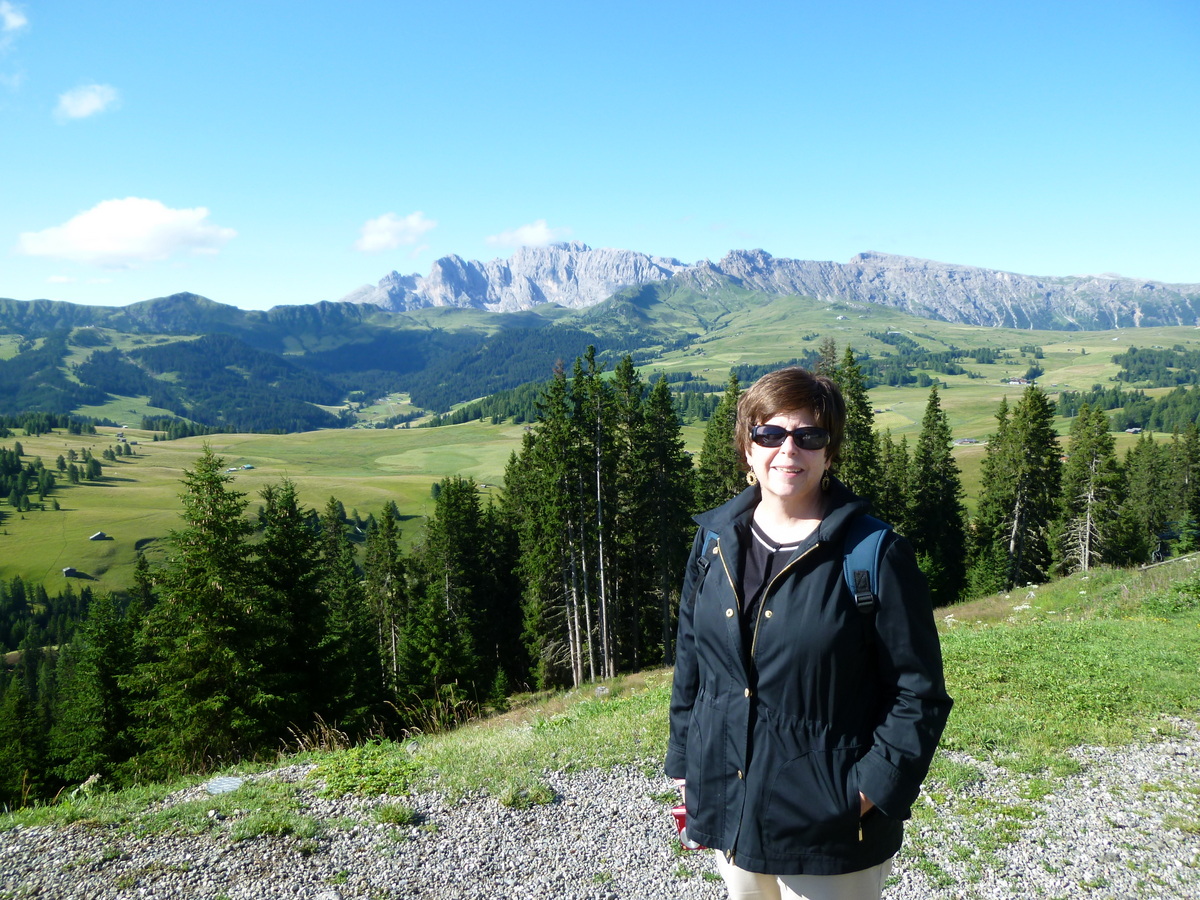
A nice Italian man – who lives in NYC – offered to take our photo high in the Alpe at Puflatsch.
I am feeling rather German – or perhaps more accurately, Austrian – right now for three reasons.
- I bought a pair of hiking shorts for the first time in 12 or 13 years. Thanks first to my vascular surgeon, but also to my personal trainer, my legs are in better shape than they have been in 25 years;
- We are drinking beer with lunch;
- We are eating apple strudel every day.
Even some of my high-school-and-university German is flooding back into my head, crowding the Italian I work so hard to speak. The other day I asked for a spiesekarte (menu) at a restaurant. What deep and obscure part of my memory bank did that come from?
We are in far northern Italy, the Val Gardena, an area that was Austrian until the end of WWI and has kept its flavor more German than Italian. Here we see menus with spaghetti aglio, olio e pepperoncini alongside weinerschnitzel and strudel.
This is a hiker’s paradise. First stop, the Alpe di Siusi, the largest high-alpine meadow in Europe. We scoped out the area on our
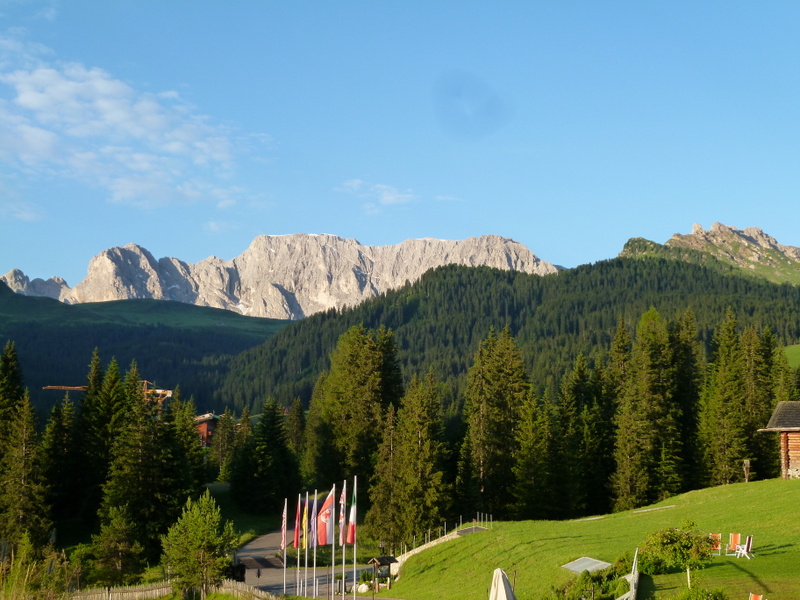
Sunrise on the mountains as seen from our hotel at Saltria.
2012 trip to Ortisei and made a two-night stay in the meadow a priority this year so we could hike more up in the alpe (meadow). We chose the Hotel Saltria for its relative remoteness. One train, two buses and the cable lift/gondola up to the meadow made for a varied travel day, proving you can visit the alpe without a car. Hotel Saltria is a half-pension hotel: both breakfast and dinner are included in the per person price, something we’ve not experienced before, preferring to find our own dining options. Did I mention this place is remote? There are no other dining options. The food was plentiful and nicely done.
I didn’t really understand the Alpe di Siusi until we had visited. It sits at about 6000-6500 feet with mountain peaks towering over the meadow. The meadow is rolling, with tiny barns, haying operations, herds of cows and horses, crisscrossed with hiking paths for every level of fitness and dotted with wonderful little places called rifugi, refuges where one can take sustenance, quaff a beer, or spend the night. Ric said the word “refuge” brought to mind a rustic lean-to to shelter to use in case of inclement weather. Far from his description, in a rifigio you can find food to rival a café in a major city.
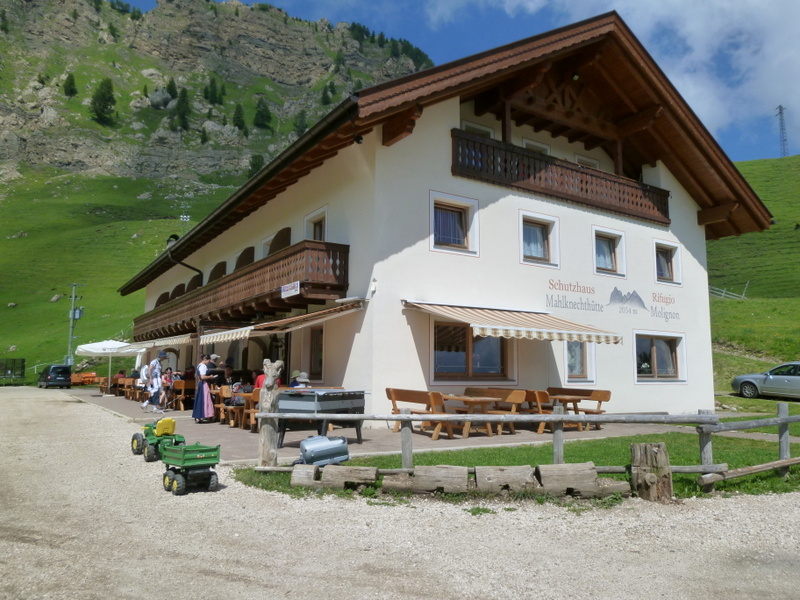
Rifugio means a place to refresh, eat, even take a room for the night.
Monday we took the first bus out of Saltria, connected to a chairlift at Panorama, and set out on a four hour excursion, a loop that had us walking to a point where we could make our descent to the hotel at the end. This up-and-down hike allowed a stop for second-breakfast at cute Rifugio Molignon, serving apple strudel and great coffee. We marched on through alpine splendor, ending at another rifugio for lunch before taking a final chairlift down. For those seeking this particular journey, and for the record so I can look back at this blog and remember, after ascending to Panorama, we hiked to Rifugio Molignon, and then on to Rifugio Zallinger, ending at the Florian lift, using trails 2 & 7. It’s briefly described in Rick Steves’ guide where he calls the hike “moderately strenuous.” We’d agree!
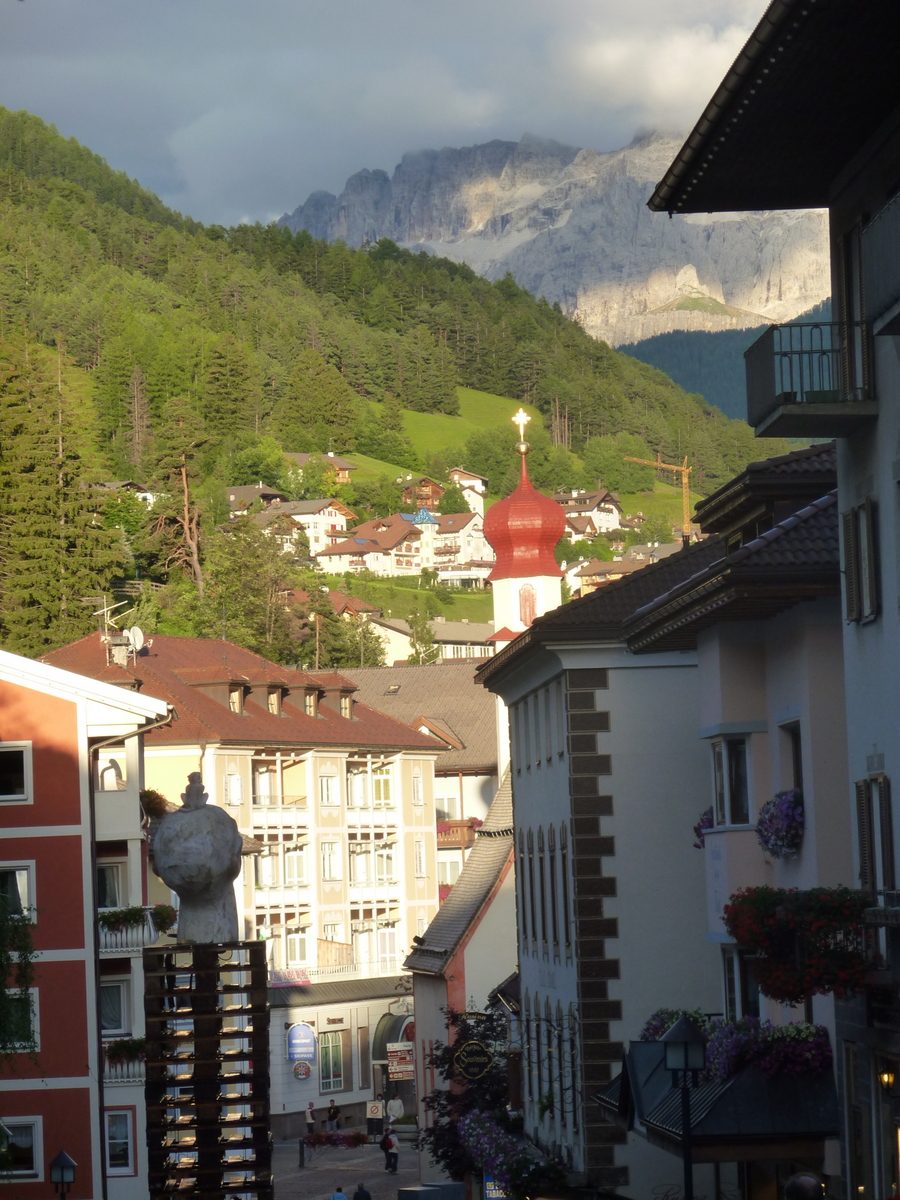
Tuesday we only had time for a two-hour trek, but what a walk it was! Taking the Puflatsch-Bullaccia chairlift, we toured the north side of the Alpe di Siusi, looking back at the previous day’s venue and taking in the view down into the Val Gardena and little Ortisei, where we were to spend the next four nights. From the very edge of the Alpe di Siusi we could make out Castelrotto and see far to the north toward Austria before moving on to complete our hike, descend the Alpe and make check-in time at Ortisei. For the record, trails PU and 14 make a nice moderately easy loop.
The trails are amazingly well-signed. You barely need a map once you have a vague idea of the area you wish to hike. The landscape

Well-signed trails make it easy to find your way.
changes from lush meadow with wildflowers to alpine scrub, with rushing streams – some of which need to be forded – as well as forested glades. You hear only the sound of cowbells on the breeze, occasional bleating of goats, and the voices of passing hikers. Pure serenity seasoned with the odor of freshly mowed hay. Some paths are carefully laid rock while others are more traditional dirt. All are well-engineered for drainage. It is much easier to navigate than the Cinque Terre and much less crowded.
We made it to Ortisei Tuesday evening. But that part of the trip will have to keep for another post. Time for dinner, but I cannot resist adding a few more photos to illustrate the beauty of this area.

The varied landscape of the Alpe di Siusi.

The way up…and the way down. Chairlift at Florian.
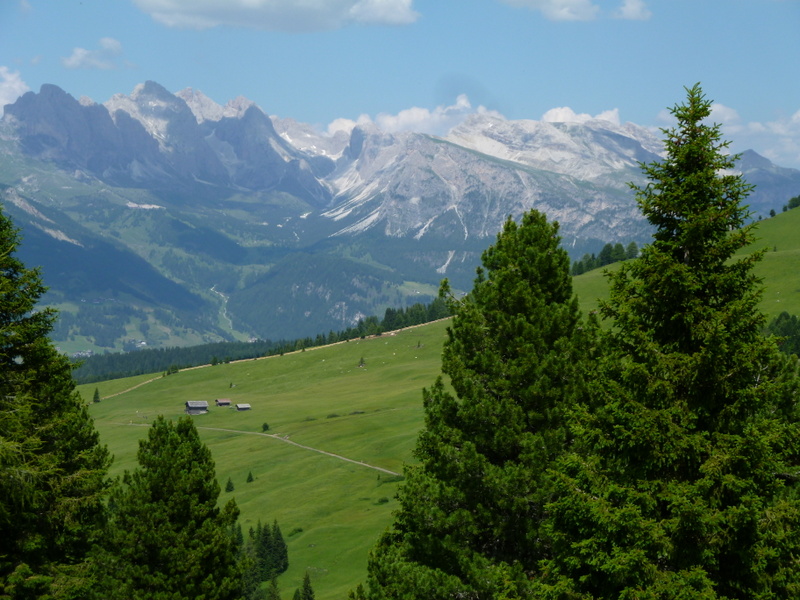
One of the fun aspects of hiking here is seeing the path you travel unfurl behind or in front of you.
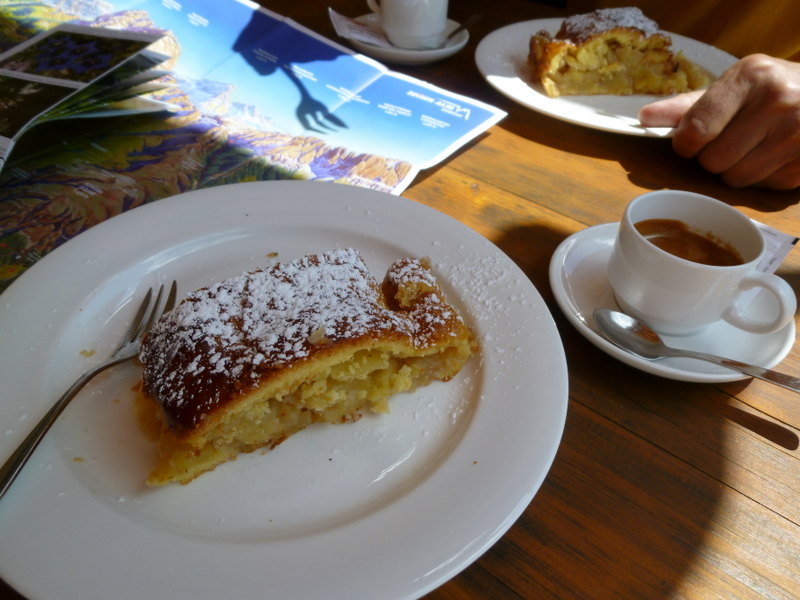
An apple a day keeps the doctor away….Does it count if it’s in your strudel?
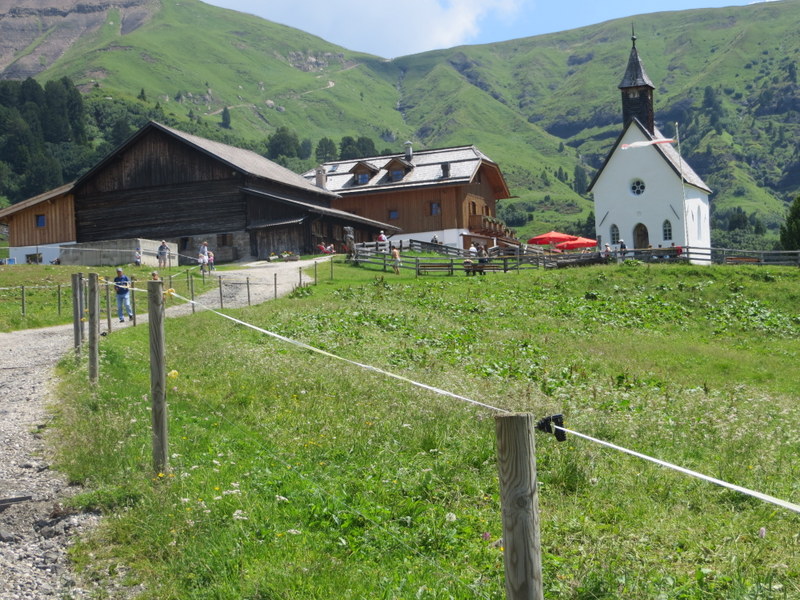
Rifugio Zallinger. Amazing location!

You can hike from rifugio to rifugio, for snacks, meals, rest, restroom. What a concept!
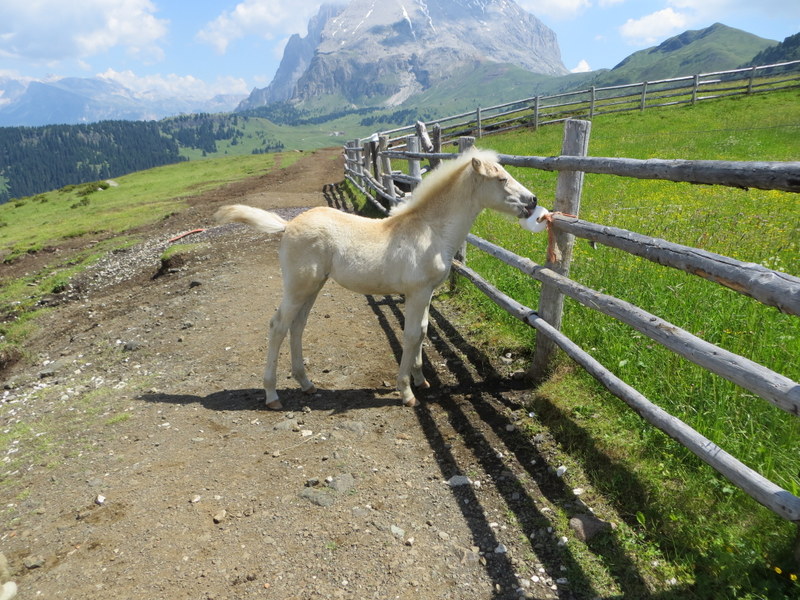
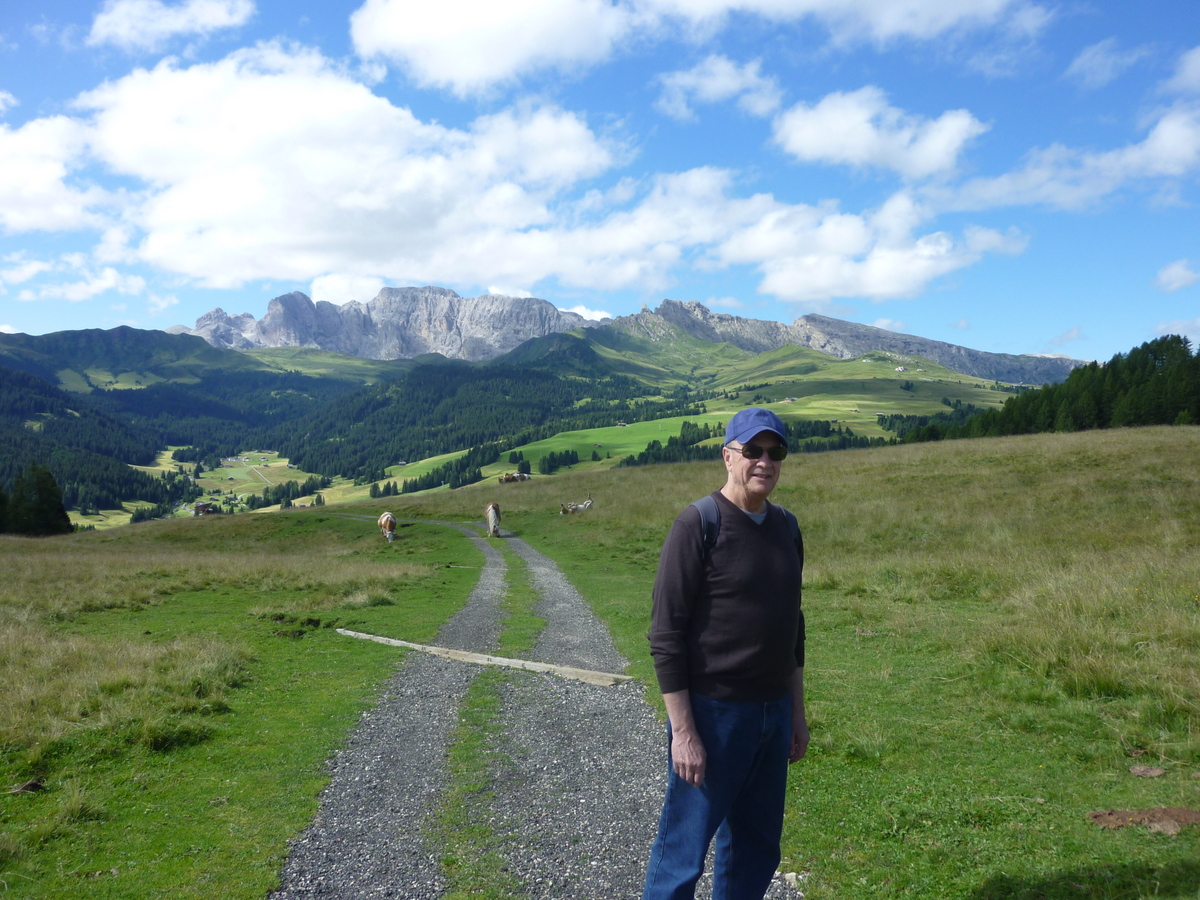
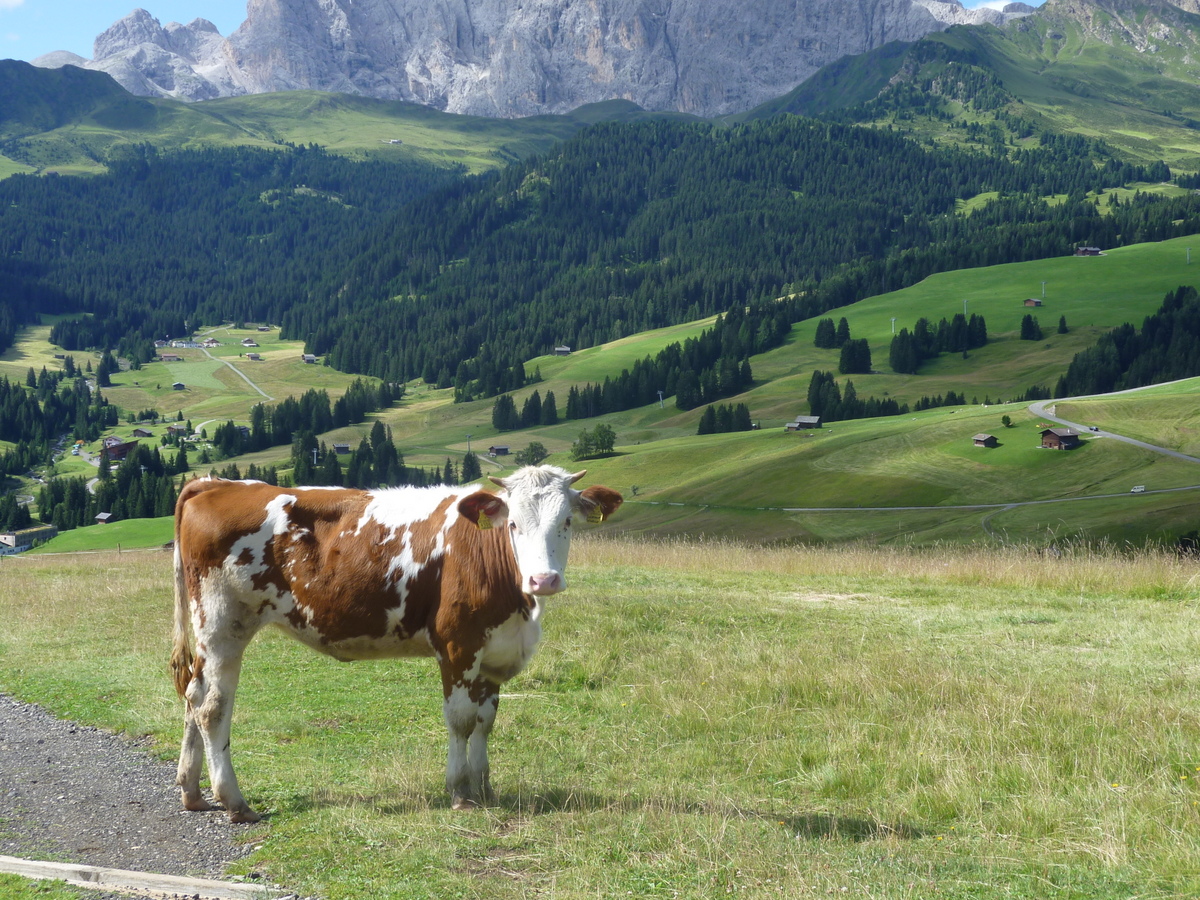
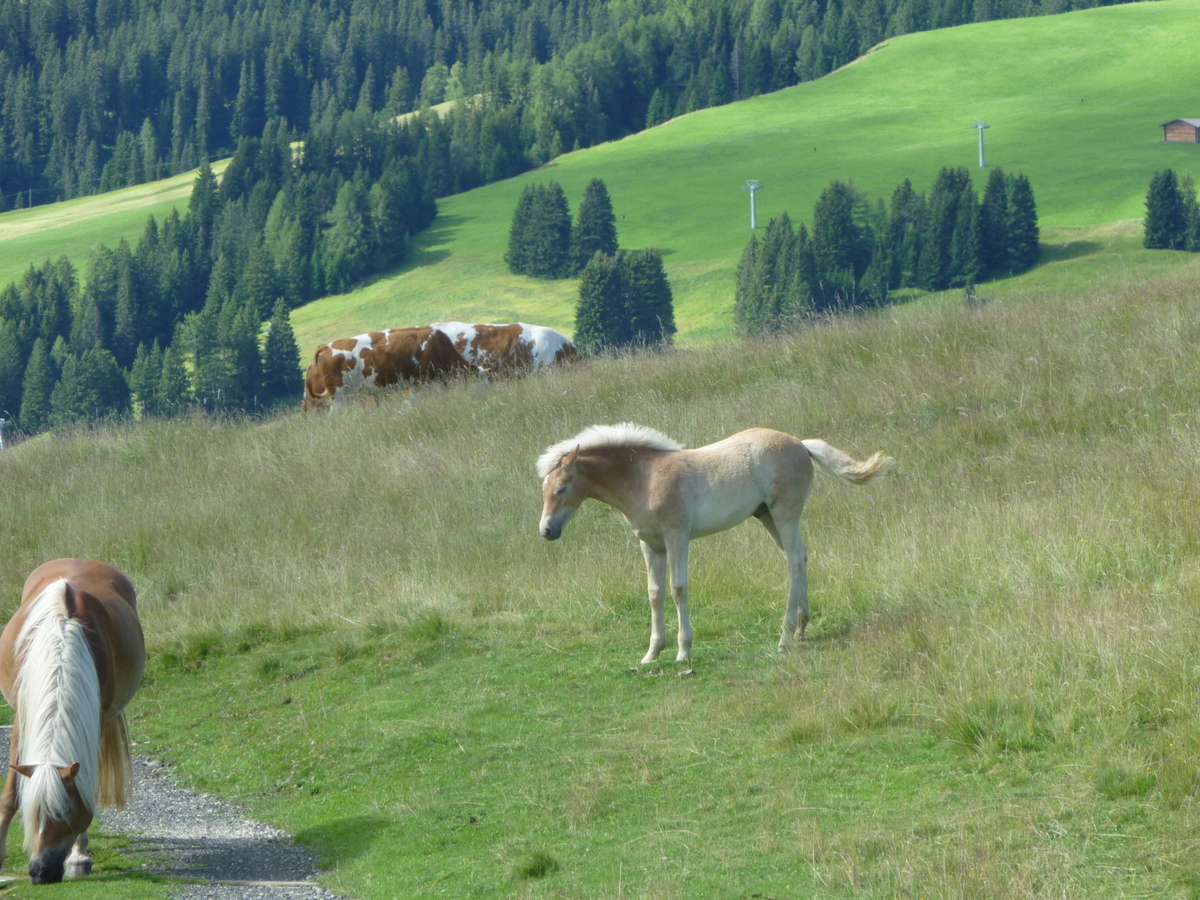
One segment led through a pasture with horses and cows.

Yes, this is the trail. Cows have the right of way.
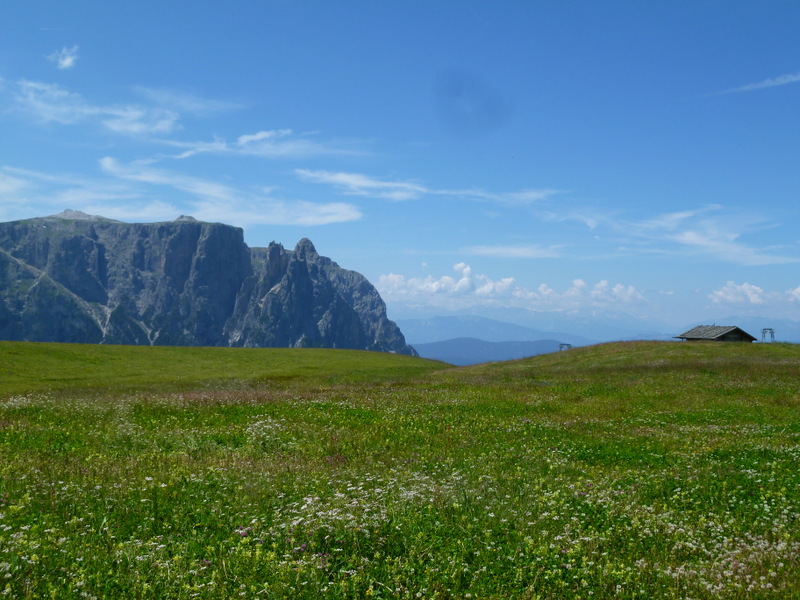
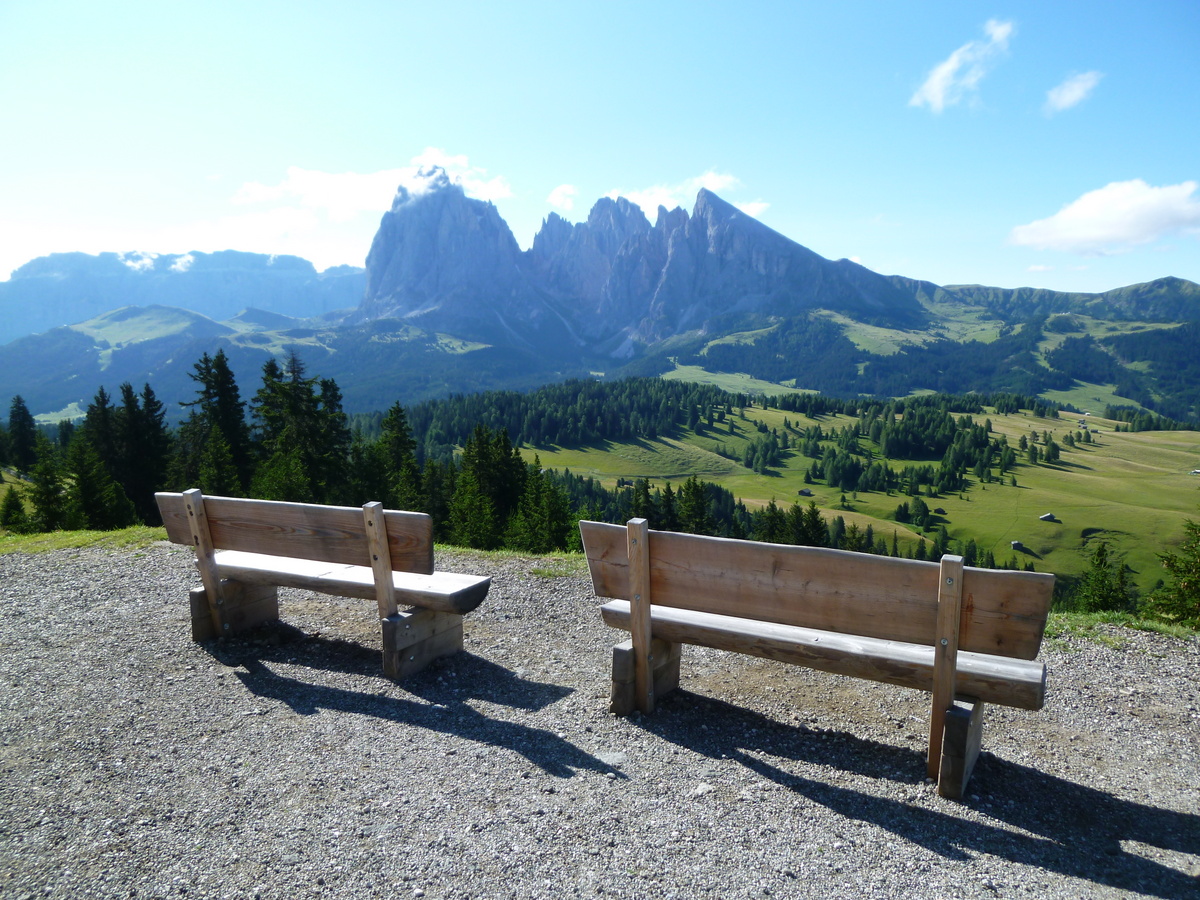
Alpine meadow view of the Sciliar

Ric’s overbonded cat Janie planted herself on his suitcase as if to say “Don’t go.”
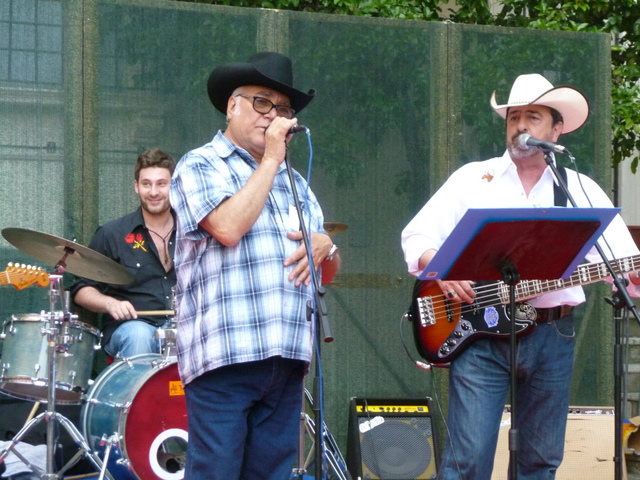


 Girovaga