Tag Archives: Switzerland

Business trip

10 Oct

9 October 2024.

Most of you think we are on vacation, walking familiar trails, snapping pictures of stunning vistas, and sipping an aperol spritz on the deck.

Sure, we do all of that. But this is a working trip. New editions of our two books Walking in Italy’s Val Gardena and Walking in Switzerland’s Berner Oberland were released in January 2025, requiring us to check routes and supporting facts. We always try to find something new to experience and recommend as well.

We will not recommend any walk we haven’t done ourselves so we end up taking new trails often.

Sometimes a hike or walk we have included in the book no longer meets our standards. There is one in our Val Gardena book that has not been well maintained and no longer has an appeal. It will be replaced by one we have come to love.

In the past week in Switzerland, we’ve tried three supposed easy-hikes and came away with mixed results: Two unsuitable and one we are not sure is quite easy enough.

WALK ONE: Not the ending we expected

We had high hopes of recommending a Giro di Lauterbrunnen (Circuit of Lauterbrunnen) or in German, Lauterbrunnen Rundweg. For years we have noticed a trail partway up the cliff side, traversing cow-infested meadows and crossing tracks for the Wengernalpbahn train. We have walked that path from the south edge of Lauterbrunnen to the middle of the village where we descended on a paved road, but we knew it went farther. Maps enticed us to see if it would be feasible to extend it to the north, descend to the river, and walk back to the village, offering terrific views of the village from one end to the other as well as a good 3 ½ mile walk.

In fact, one CAN do this hike IF one has the footing of a steinbock.

Steinbock or Ibex family, very surefooted. Courtesy of IamExpat.

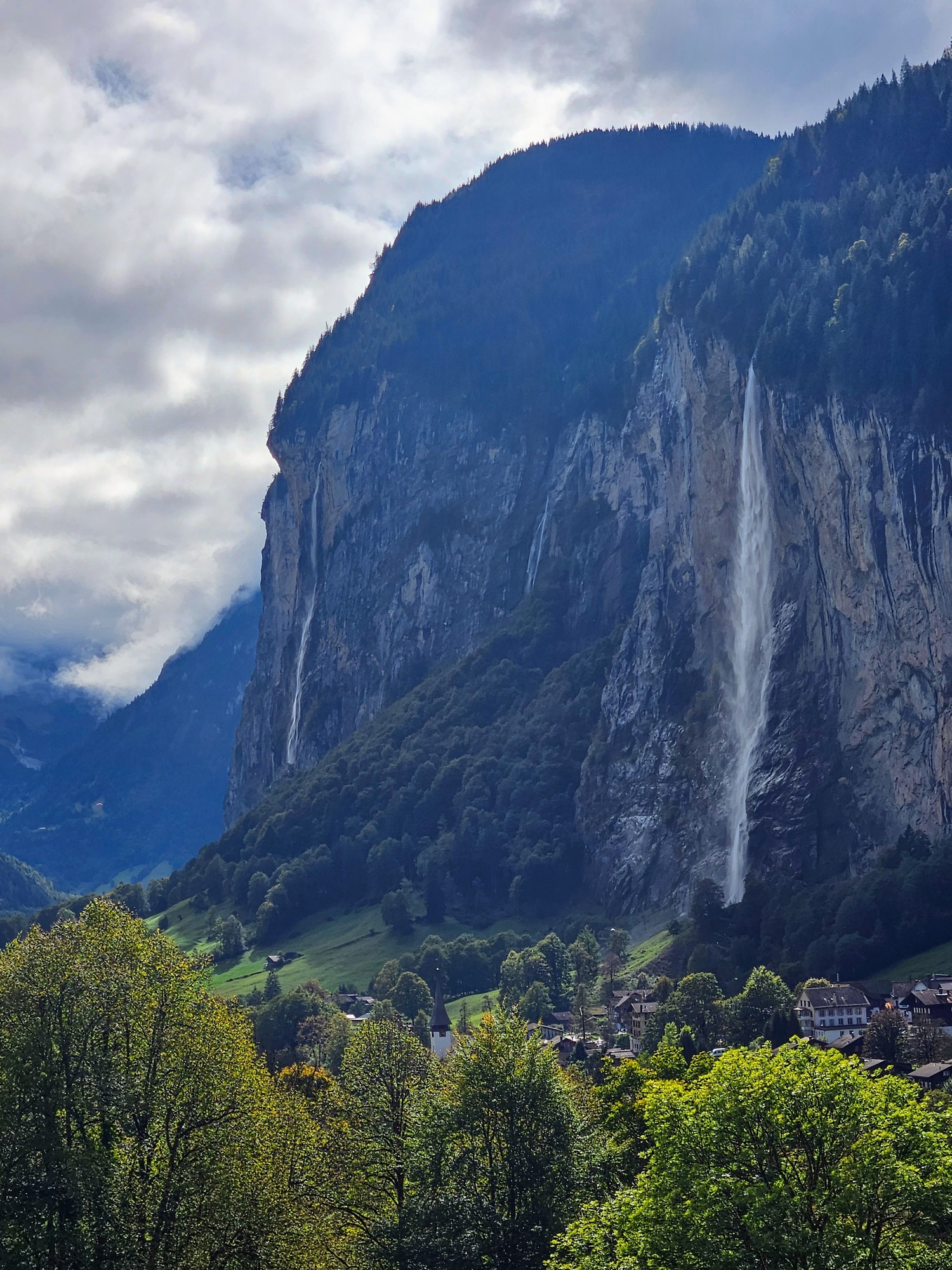
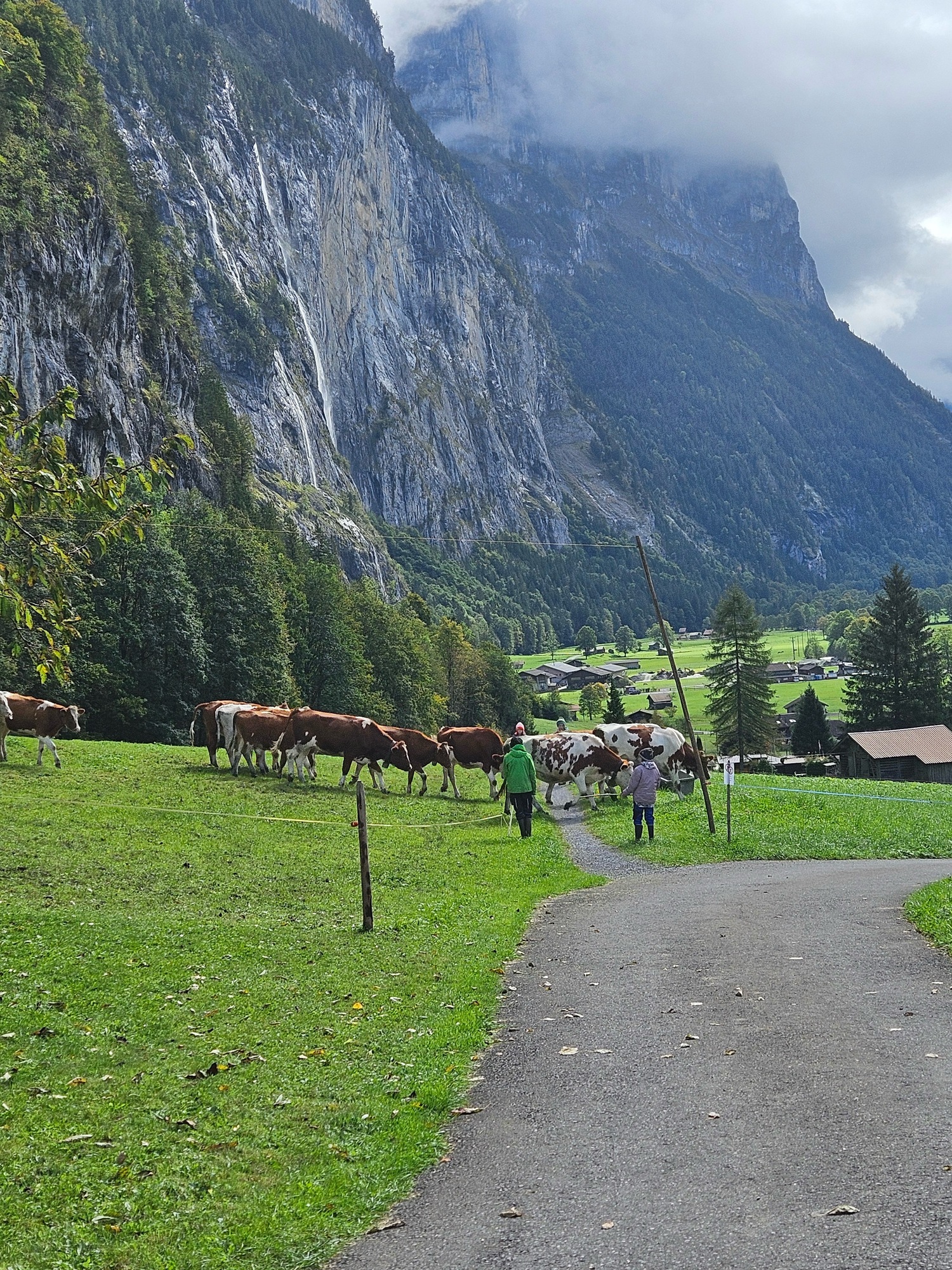
We thoroughly enjoyed the mostly flat walk, witnessing a herd of cows who welcomed their humans who had come to move them to a new pasture; taking pictures of the mountain train; wandering past a settlement of summer cabins and remote farms. The views were as we hoped including the Staubbach Falls, the train station, the Grütschalp cable car, and the entire village at our feet like a model train layout.

Then we came to the descent through the forest. Concrete forms designed to keep the farm road stable (to me, difficult to walk on) transitioned to dirt road, then, after a barrier prohibiting vehicles, a steeper, rocky downhill. As we hesitantly started down — using our hiking sticks mind you — Ric suddenly careened, fast-footing in a not-quite-controlled manner, finally stopping himself after about 30 feet by grabbing ahold of a convenient metal pole supporting a trail directional sign. I followed with terrific hesitation and concern for Ric, who much to his credit never lost his feet.

I did not think to snap a photo of the really bad area. these two pictures will give you an idea of our flat trail becoming steeper. On the left, the road starts to descend past a farm and it was fine. On the right, Ric is standing just above the final building on the farm and after that point, we rounded a corner and found a “no vehicles” barrier.

The next bit of trail was even steeper and more treacherous looking. It did not seem safe nor prudent to proceed. A 40-year-old with good knees, strong hips, and no sense of their own mortality would not hesitate to descend, but we have none of those criteria going for us, so we turned back. A broken hip would not enhance our experience. Luckily going back to the paved road into the village was under a mile.

This is a particularly local section of Lauterbrunnen: there just are not tourist lodgings on this road. Although there is one small holiday let, coming from the village the paved road leads to a retirement apartment building, local farms, and then to the route we walked.

Still, people who have no business driving here in their rental cars insist on touring the roads where they are warned not to drive. How much clearer can it be that this sign is at the entrance to the road? Can you tell it is such a problem they have to post it in multiple languages?
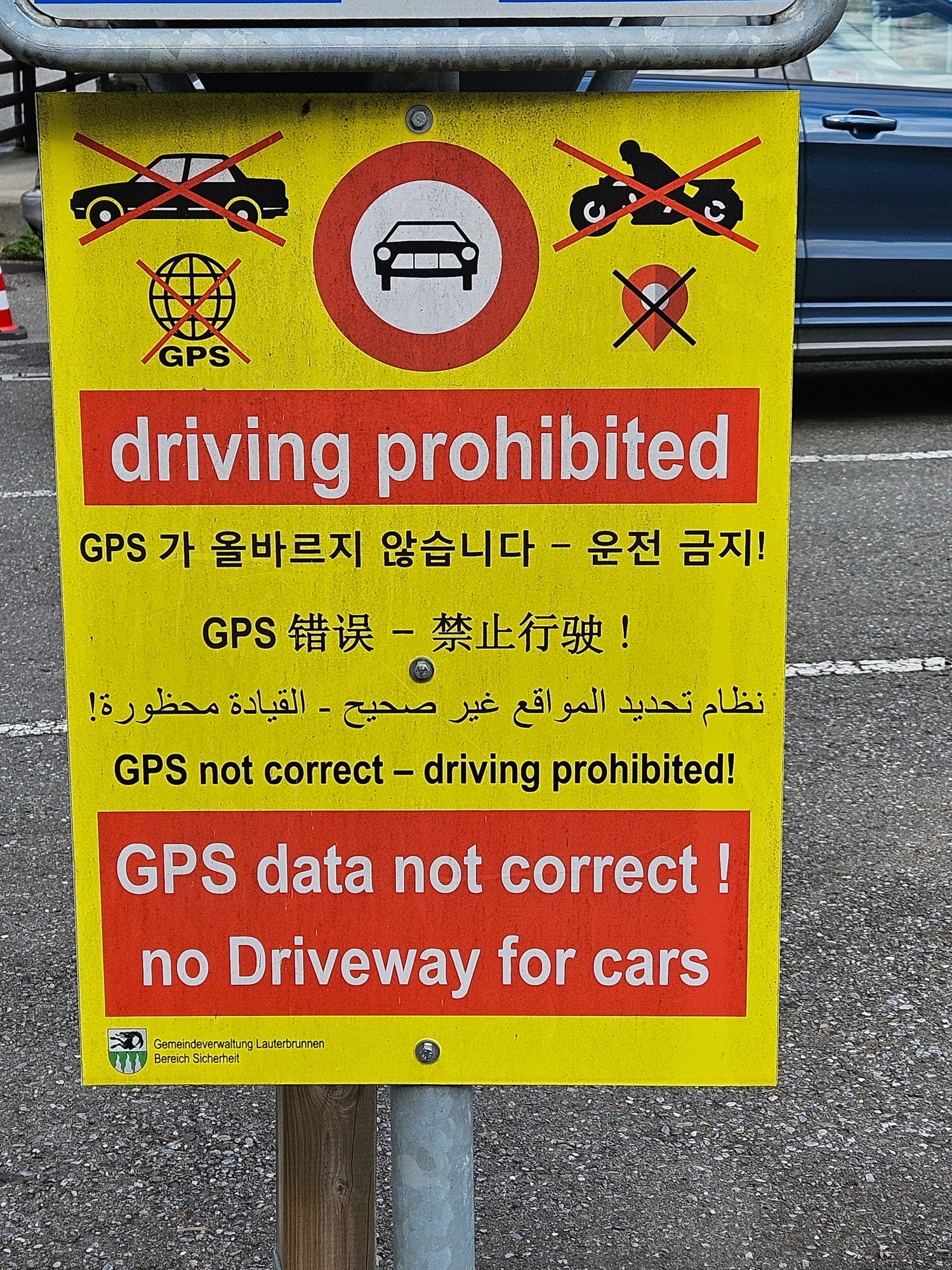
On our descent we saw three cars, one after another, come up and encounter problems. One driver tried to turn around in the patio/driveway of a local who came out and gave him a finger-wagging dressing-down. Immediately behind this confused lad, three guys in a BMW stopped, realized they were blocked, tried to turn into a lane not much wider than a footpath, and banged into a raised sewer cover. Ouch! Hope they had insurance! Hot on their tail was another pair of guys who at least had the good graces to look abashed at having driven into the forbidden area.

Last year some yokel tried to drive up to the car-free town of Wengen and got stuck on the trail. They had to be airlifted out by a helicopter. Can you imagine how excited their car rental agency was?

Our search for a circular walk of Lauterbrunnen did not work out but the ending was quite entertaining. I feel sorry for the locals who deal with this day-in-and-day-out, though.

WALK TWO: Too dull to finish

We have spent precious little time on Lake Brienz: we have one lovely lakeside walk in our book, from the tiny village of Iseltwald to Giessbach Falls. We endeavored to find a route on the south shore of the lake, close to Interlaken but away from the tourist hoards. Sad to say, our walk at Ringgenburg while definitely off-the-beaten and offering nice lake views, was so dull we stopped halfway through and caught a bus back.

WALK THREE: Good potential

A couple of years ago a local resident of Thun told me about a loop route at Aeschi bei Spiez, above the lake town of Spiez, about an hour from Lauterbrunnen. The Aeschi Bänkli Rundweg takes in the cow-studded meadows above Spiez, distant peaks, and stunning views of Lake Thun. At 4+ miles it seemed doable — and we did it — but has some downsides that have us hesitant to recommend it. One half is largely paved roads where you can walk abreast. The other half is not paved and consists in part of faint paths across grass and some other very narrow paths. We had to do a bit of way-finding to decipher the best route and made a couple of misjudgments. Can’t have that in a book so we’d have to re-walk the route to get a good fix on foolproof directions.

One half of the hike is relentlessly up-up-up and the other a constant descent. There is little undulation nor flat walking. The ascent was gentle but still, two miles of constant uphill for a total of 568 feet; the descent was not steep but needed constant attention. While relatively easy, this walk might be a Category 2 or 3 walk in our book, but we certainly cannot recommend it as pram worthy (Category 1), and I would hesitate to take small children as there were several sections of very narrow paths bordered by electrified pasture wires. What could go wrong?

Pluses: truly quiet, uncrowded, locals only. No sign of the usual tourist throngs who flock to the waterfalls of Lauterbrunnen and the higher mountain vistas. There were many cows, a llama and alpaca farm, a small ranch, and the possibility of a meal along the way: except on Mondays when those restaurants take their rühe tag. (We were there on a Monday, the “rest day.” We ended up with grocery store sandwiches in the village. No Aperol Spritz.)

We are unlikely to include this one in the book, but I am always amazed by the Swiss ability to create walking routes centered on even the smallest villages. They are mostly well-signed, interconnected, and not only recreational but often a route easily incorporated in a day’s errands. There is a national network of barrier-free trails as well, meaning everyone can enjoy the outdoors right from a train station.

I guess if you grow up walking through pastures, you think nothing of narrowly skirting an electric fence.

Now back to my Aperol Spritz while you watch this video of the Wengernalpbahn that crossed our path Walk 1 above.

When the cows come down, the people party

28 Sep

28 September 2024.

On the streets of every village are traces of the alpabzüg, the annual descent of the cows from mountain grazing pastures (alps) to the valley villages and towns. The cows and their people take the same routes every year, some of which are the very paths hikers use. It is a big deal and a steady rain after is welcome, at least by me, to remove those telltale streaks. A cow must do what a cow must do, and hundreds have made the descent in the past few days.

We have seen many “cow parades” over the 10 years we have been coming to the Jungfrau Region as well as some in other parts of the country. Sometimes there are formal festivals with costumes for both cows and humans. Sometimes it is a farmer simply walking down the street with his 5 or 6 cows when he has the notion to descend. When we hear the giant bells clanging, we run to the street or window (along with many others) to watch the ancient tradition.

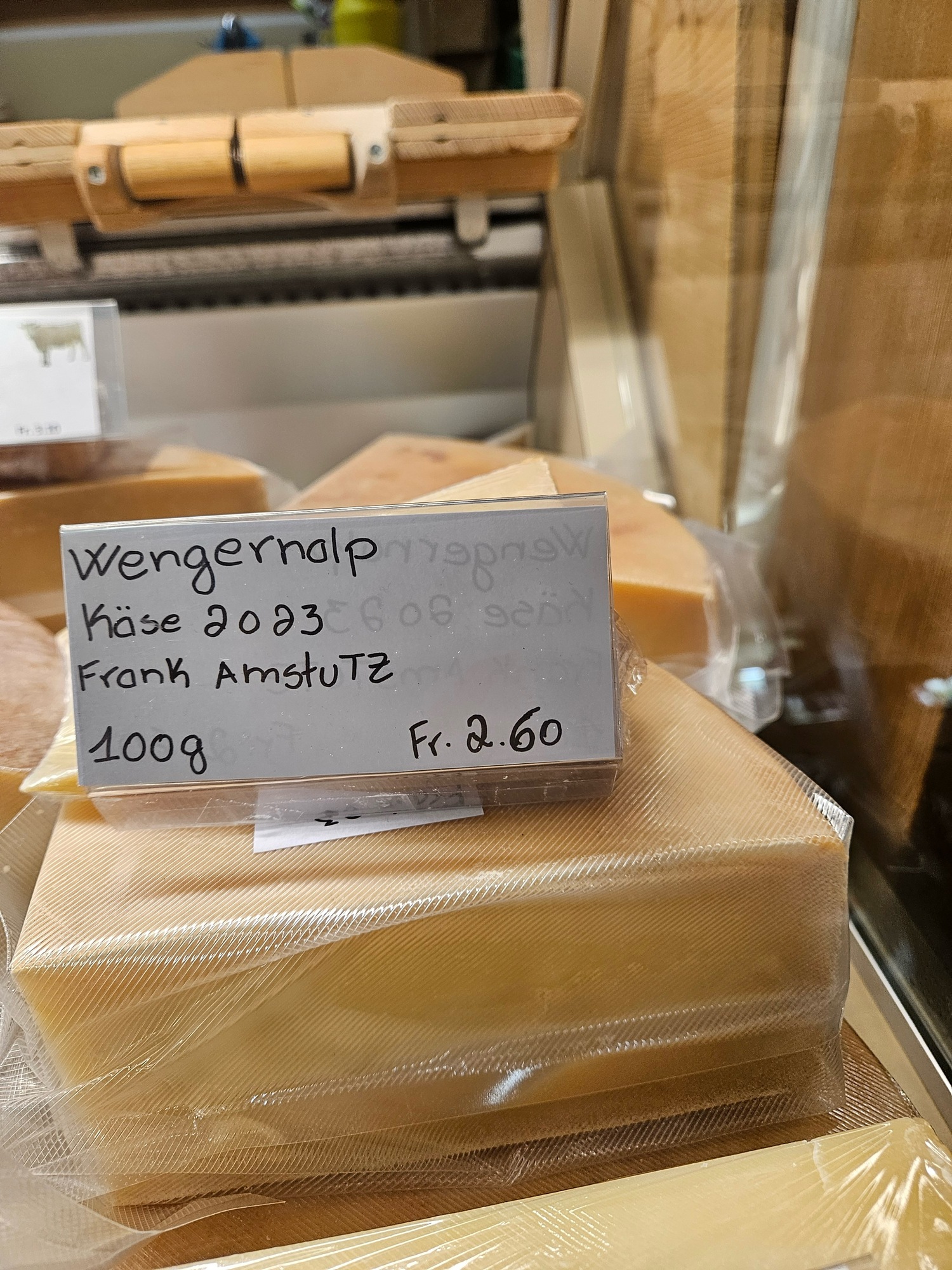
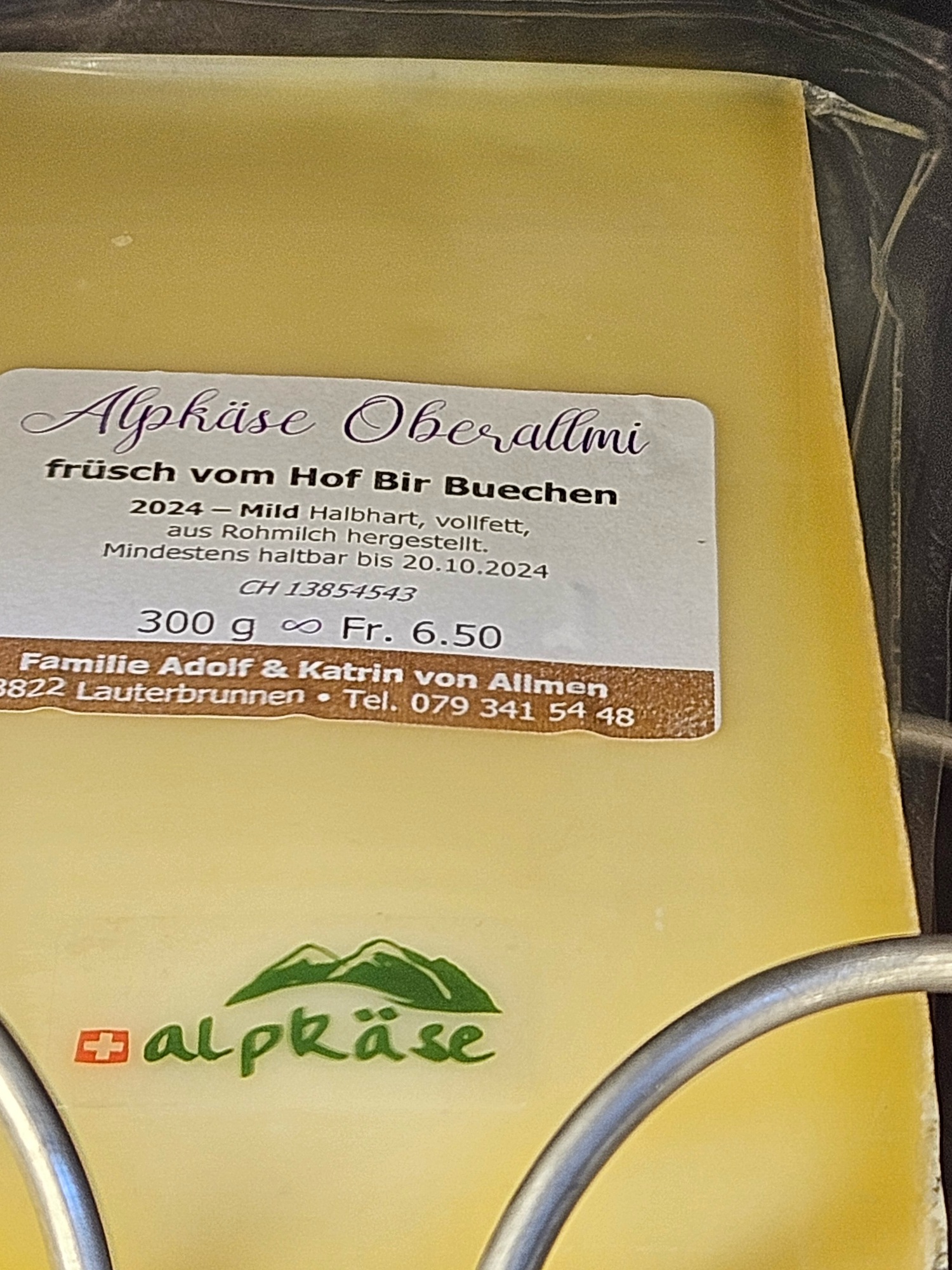
After the descent, the villages celebrate with the chästeilet, or cheese festival, a gathering for music, food, dancing and, of course, the selling of the alpkäse, or cheese made while the cows are feeding on lush mountain grass. Each farmer marks their cheese with their farm name. When we go to the local grocery stores, we can see the products of the various farms displayed. Occasionally we see entrepreneurial farmers selling their cheeses in vending machines along the road along with beverages, dried apple slices, and other snacks.

Two cheeses labeled in the grocery store case, one from Stechelberg and another form Wengernalp. The third entry is in a vending machine outside the farm along a road many walk through the valley.

Festivals can be tiny or grand in scale. At little Winteregg, which is where the little cliff top train from Grütschalp to Mürren crosses paths with hiking and cycling trails, we found a small gathering of farm folk with cakes and drinks (beer, schnapps, coffee) available. No entertainment. Just the cheesemakers whose hut is nearby and the farmers who supply the milk.

Winteregg’s 2023 festival, a community gathering right next to the hut where the cheese is made.

Three and a half kilometers away, as the crow flies (12 km by car, but you cannot drive there) is Wengen, which put on a grand chästeilet Saturday and Sunday a week ago. An evening and a day of celebration with music and massive quantities of food, table space for hundreds of people, gigantic cheeses, and handmade goods for sale. You could arrange to purchase a cow share. (Not sure if that means alive or butchered.) For a community of 1,300 permanent residents, it was an amazing event.

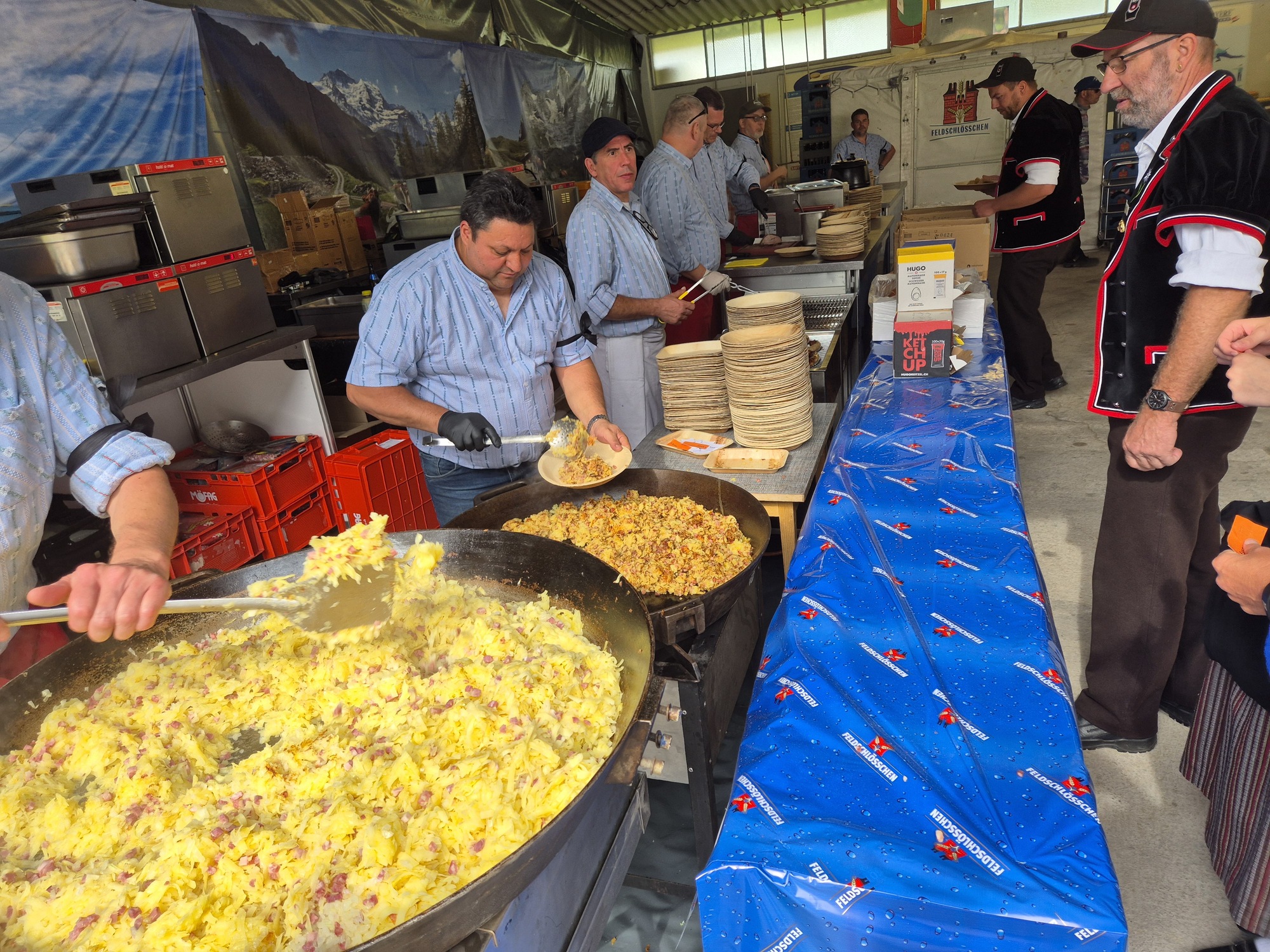
Wengen’s chästeilet is a huge affair for the surrounding farms, locals, and tourists. Massive wheels of cheese, samples, crafts for sale, and a community feed with vats of rösti and other local fare. Of course there was beer, homemade cakes, and coffee.

Last year someone tried to drive to Wengen. We know the path: it leads up from Lauterbrunnen and is clearly marked not for driving. Cringe-worthy video here.

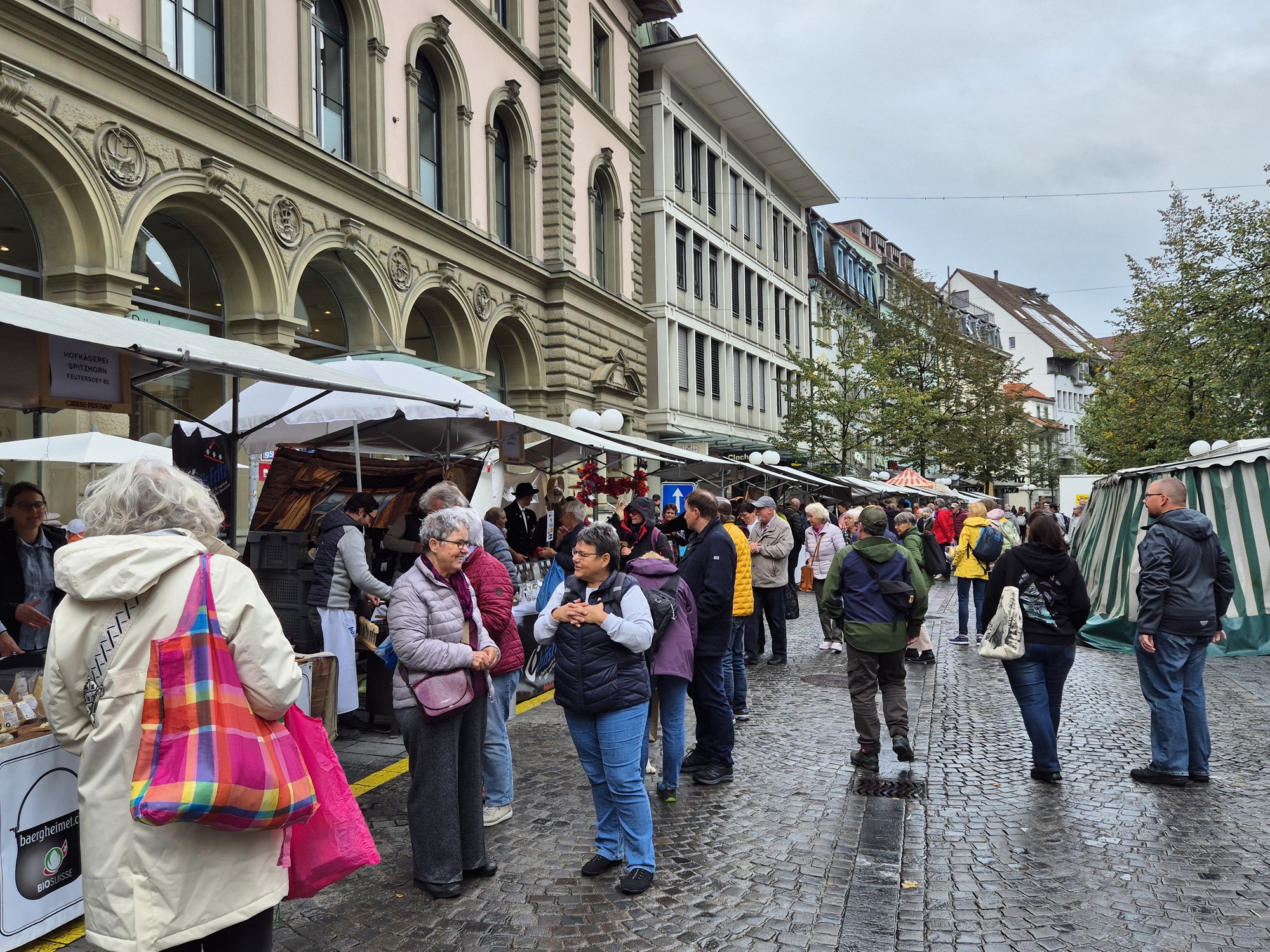
Today we attended the cheese festival in Thun (pronounced ‘tune,’) 42 km away on the shores of Lake Thun. Thun is much larger at 42,000+ people, and draws farmers’ production from all over the Canton of Bern, so the festival is huge. Here they call it käsefest. There must have been 40 vendors as the Thun festival is all about sampling and selling. Cows milk cheese, goats milk cheese (it’s not all feta or chèvre), sheeps milk cheese, organic or not, they had it. Need your fondue or raclette cheese stash fortified for the coming cold months? Buy direct from the farmer at the Thun käsefest. Perhaps chilli pepper laced alp cheese or an herb-flecked mild cheese is more to your liking.

The French may have over 400 types of cheese, but the farmers of the Canton must have at least that many varieties of alp cheese.

The cheese festival was conducted next to the farmers market in charming Thun on the Aare River and included not only sampling, but cheese made on site. Each farm had its own kiosk. Click on any photo for a better view.

Frankly, we are a bit cheesed-out at this point, so we bought some great dark chocolate. Swiss, of course.

Switzerland in the Spring

3 Jun

3 June 2023.

Our 11 nights in the Jungfrau Region were delightful. This was most definitely the right course correction after we had to abandon Ireland. We had the benefit of familiarity but, as always, we found new corners to explore.

Most of our trips have been in September/October plus a post-New Year’s-weekend in 2014. This time we experienced the lushness and variety of Switzerland in the spring. There are marked differences not only in the landscape but in services and activities.

There was still snow on the ground keeping trails impassable or at best unsafe. Some lifts do not run until the very end of May or into early June, which limited our access to the higher places.

Construction and maintenance season comes between the skiing and hiking seasons in springtime as well as between the hiking and skiing in the fall. The little mountain train between Grütschalp and Mürren was down for a month, reopening June 2, after we departed. We think (hope?) it will be with the new trains, which we have been looking forward to. The gondola to one of our favorite locations, Maennlichen, only opened on our final day after a between-seasons closure. Many hotels were still shuttered with signs indicating they’d be reopening in early June. Some of these will be closed again by early September.

Tulips were at peak bloom when we arrived mid-month, thanks to the elevation in Wengen, long past the bloom date in Oregon. Bleeding hearts still dripped with their distinctive flowers as well, and the deciduous trees at elevation were just starting to leaf out. By the end of the month, our initially mountain-view apartment had a leafy-view.

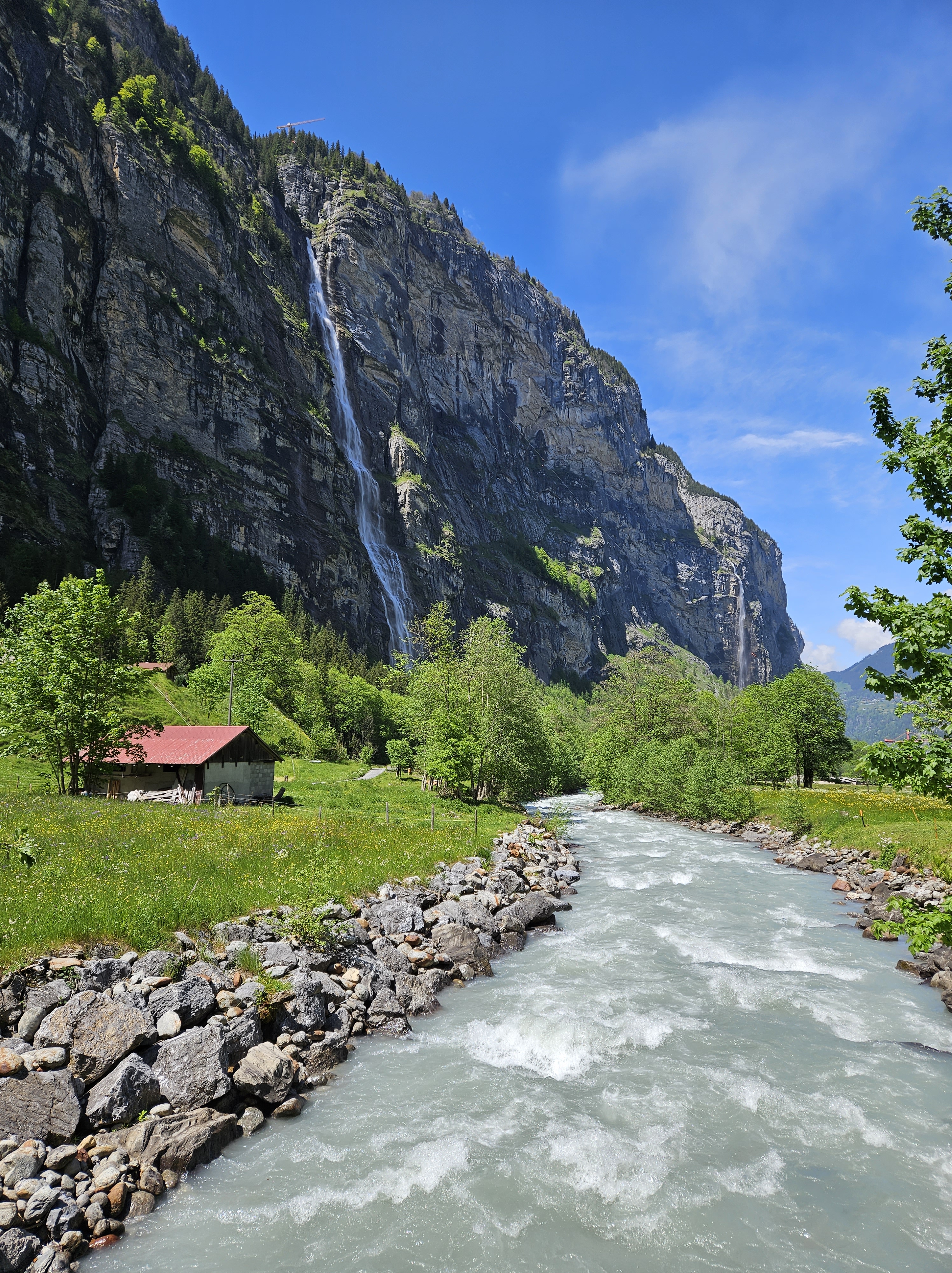
What else is different about Switzerland in the spring? WATER! Water gushes in the streams becoming a rushing flow in the rivers. Previously invisible waterfalls spring from cliffs and crevices. Each bend in the track of our little mountain train from Wengen to Lauterbrunnen was a treat with white, frothy waterfalls cascading close by.

There are four waterfalls easily visible in this photo but in autumn we rarely see any in this same location.

The river is running about twice as fast as later in the season. The sound carries throughout the valley.

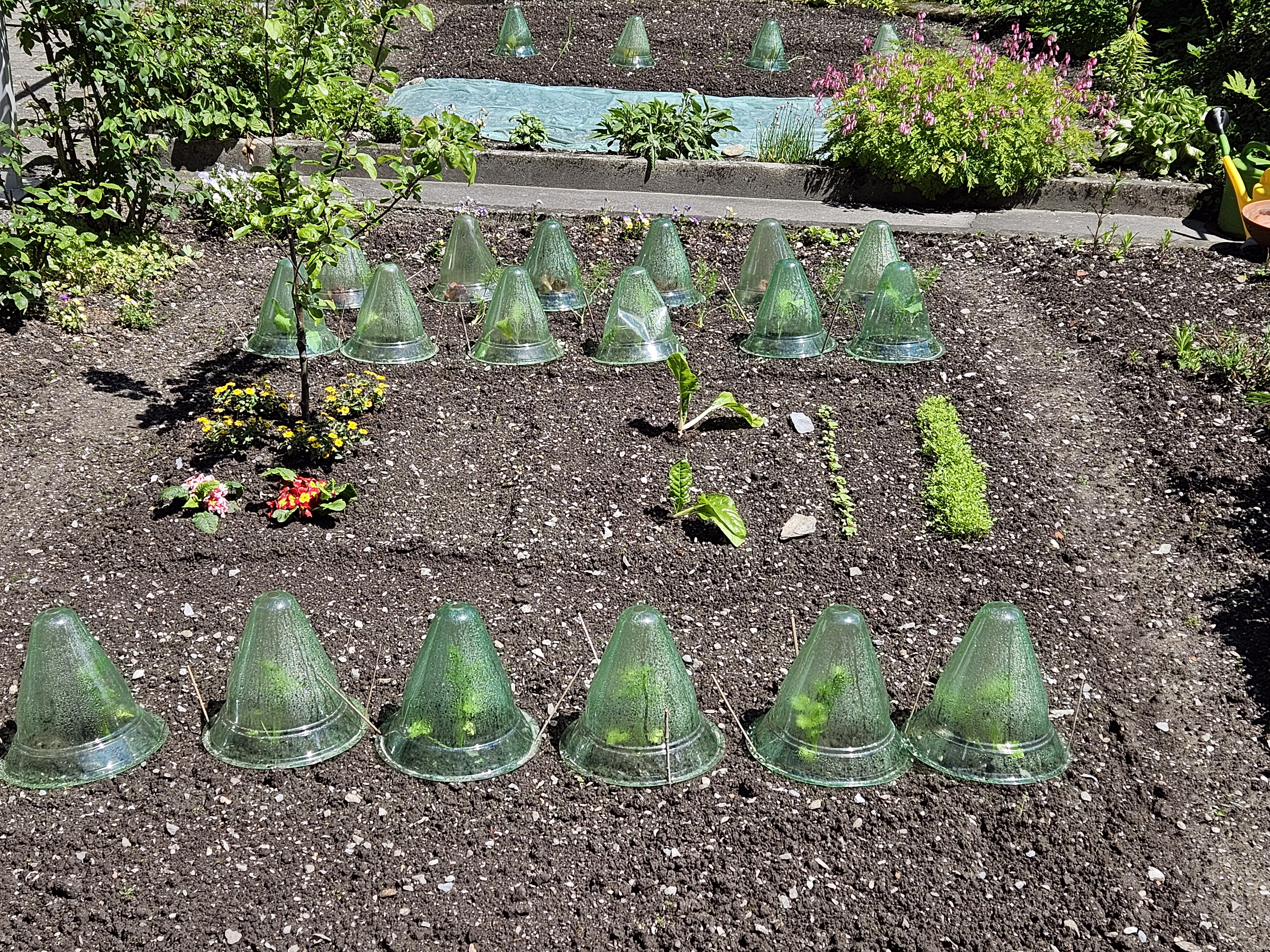
Swiss gardens, which we see on the post-harvest end of the season each year, were neat little patches with hopeful plant starts. Nurseries popped up in the villages and the COOP had a supply of bagged dirt and geraniums out front with promising packets of seeds. The vegetable gardens are always immaculate,  no matter the season, and worthy of being in the front of the houses, unlike our tendency to hide them out back in the US. Gardens are highlighted by whimsy and there is always room for flowers as well as edibles.

Tourism is back in a big way. Now that Asia is wide open post-pandemic, the Chinese tour groups and Japanese honeymoon couples joined Middle Eastern and South Asian families experiencing snow with glee. Many Swiss were traveling in their own country as there were two holiday weekends during our stay. As usual, we found that once we were away from the train stations and easier-to-access viewpoints and sights, we were mostly alone on the trails. That rarely changes whether spring or autumn.

We are home and mostly recovered from travel, caught up on laundry, and looking forward to 2 ½ months of summer. August 22 we will welcome our fabulous house sitter for a repeat engagement and return to lovely Switzerland as has been planned for many months. If there are changes, we’ll let you know!

Walking Wengen: Easy Hikes with Fabulous Views

26 May

27 May 2023.

It was with some reluctance that we stayed in Wengen this trip. As our plans were made only a few days in advance, finding a suitable apartment in one of the three villages boiled down to only a few choices that we could gulp and swallow the price on. 

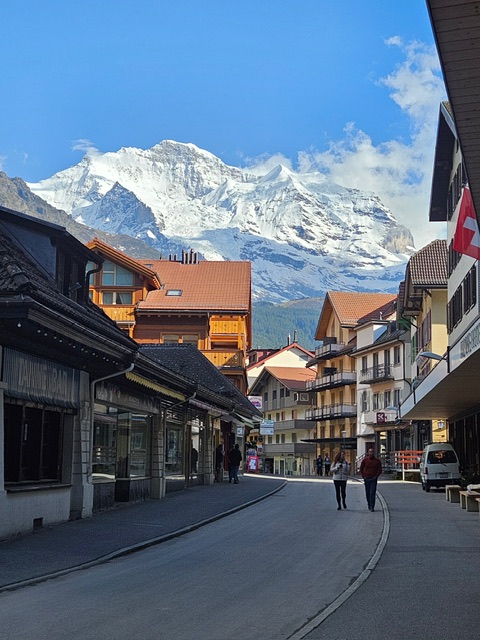
Wengen’s Main Street: a few shops and restaurants along with several hotels, nestled beneath the Jungfrau.

Luckily, the apartment is comfortable and has all we need: dishwasher, washing machine, clothes dryer, and, most importantly, a Nespresso machine. It is also quiet since the village is car-free and each morning we wake to birdsong. We are immune to the hourly tolling of the church bells nearby as we fall into bed very tired from the day’s activities. 

Our reluctance to stay in Wengen stemmed from the need to ride the train down and up from the Lauterbrunnen station every day. While it is less than 20 minutes each way, it does add to travel times when going to Interlaken, Grindelwald, Mürren and beyond. It is, however, a stunningly beautiful ride and, after all, what else do we have to do? 

I took this photo of Lauterbrunnen from the train on our way back to Wengen yesterday.

On the plus side, we have gotten to know Wengen just a bit better. Prior trips had us passing through on the way to-or-from the Männlichen cable car. We had eaten a couple of meals here and years ago Ric once bought a wool hiking hat that still makes every trip. In the past we’ve taken in the view from the church and enjoyed two walks — Mönchblick and Staubbachbänkli — that we wrote about in our book Walking in Switzerland’s Berner Oberland. Our temporary residency has led us to “discover” two more lovely walks as well as the fabulous Restaurant Maya Caprice and we have come to appreciate the silence of this car-free zone. 

Same waterfall, viewed from Hunneflue, above Wengen after a 25 minute walk.

We still love Lauterbrunnen and our happy home at James’ and Michele’s apartment, where we will pass a month again this fall. Wengen will also be on our list for a few outings in the fall.

For those visiting the area, be certain to stop at the Wengen Tourism Office next to the cable car station and pick up the Dorfplan, which is a little map of the village showing several very easy to moderate walks to viewpoints. These require no transportation and are lovely at any time of day with ever-changing lighting on the magnificent views. They will take you to corners of Wengen the casual visitor misses entirely as the majority are focused on the village center and getting up the mountains by train or cable car. Most of the paths are paved and many have lighting so that evening walks are feasible. 

No wonder we come back so often. There is always something new for the easy-hiker to discover.

Detour, or why we are in Switzerland and not Ireland

20 May

20 May 2023.

Ireland was the plan: Switzerland is the reality. But first, Wales!

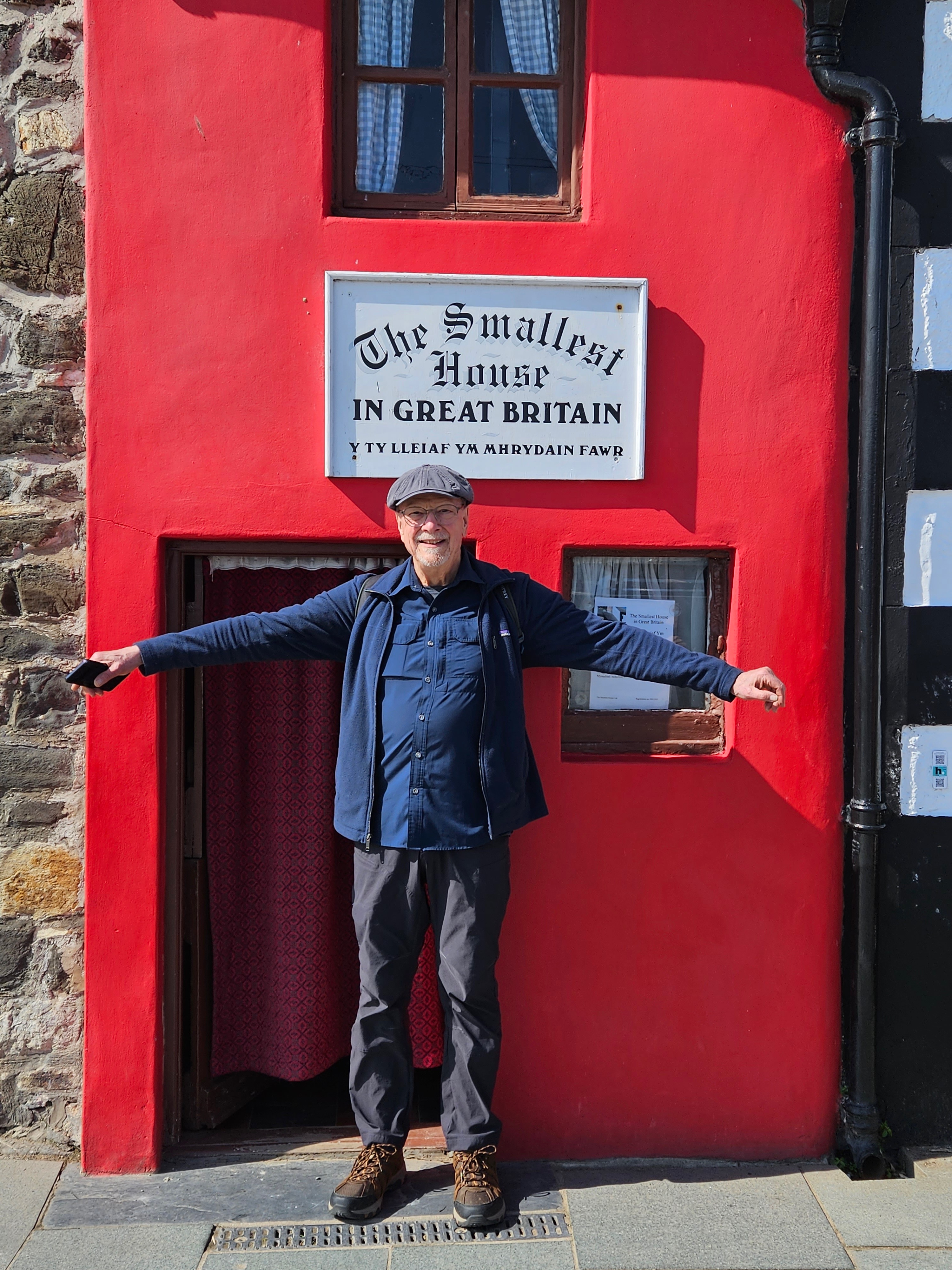
When last I wrote (see Styles of Stiles) we had just arrived in Wales in the charming town of Conwy. Northern Wales is lush and green, much like Western Oregon and Washington, with similar trees, shrubs, flowers, and even waterfowl. The weather was fine and there were neither mud nor cow dung underfoot. But then we were not walking in pastures. 

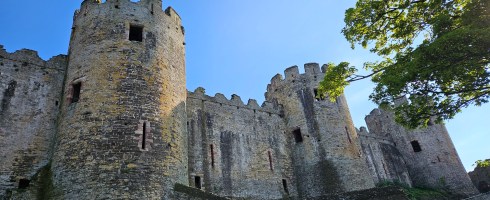
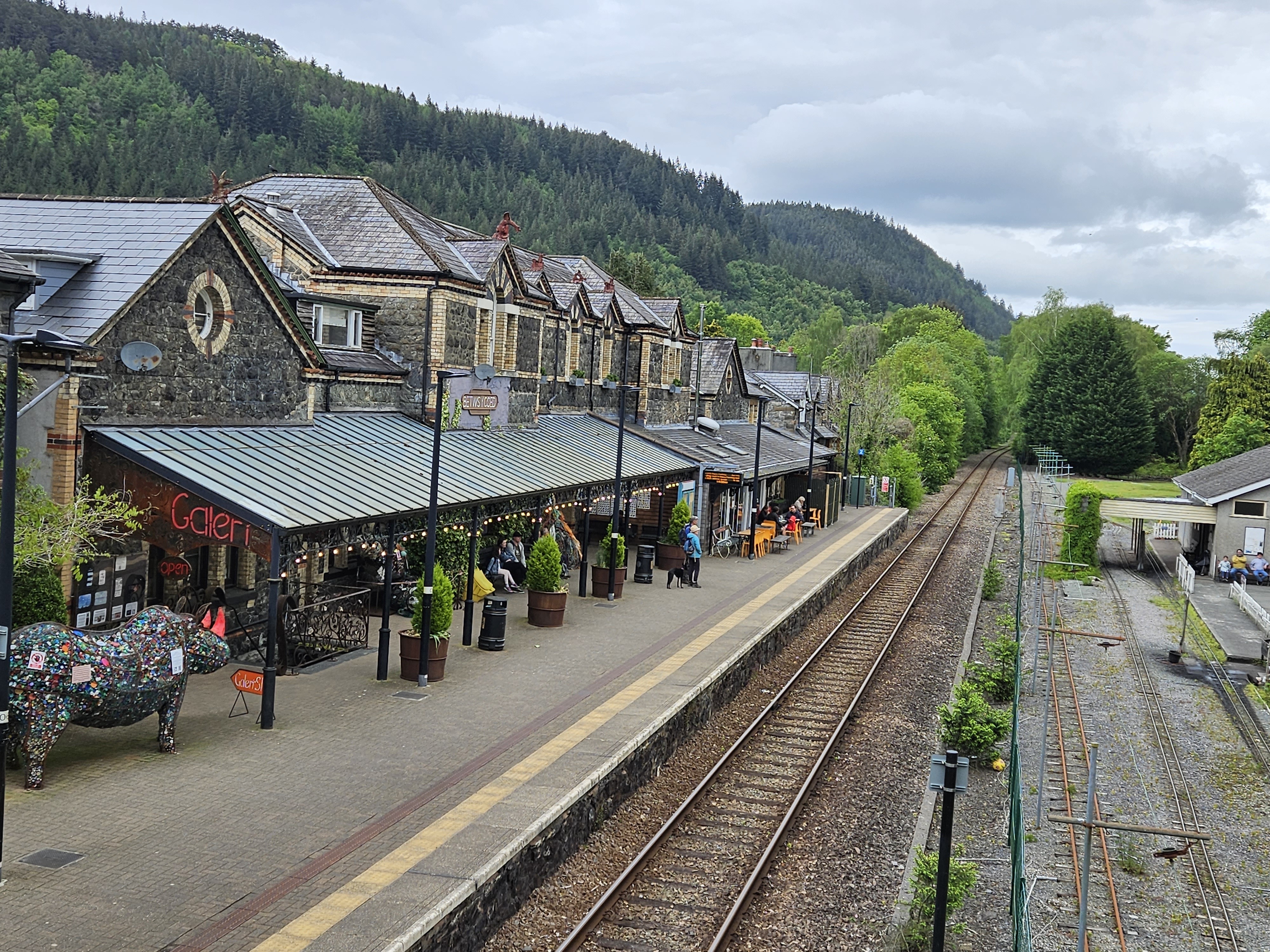
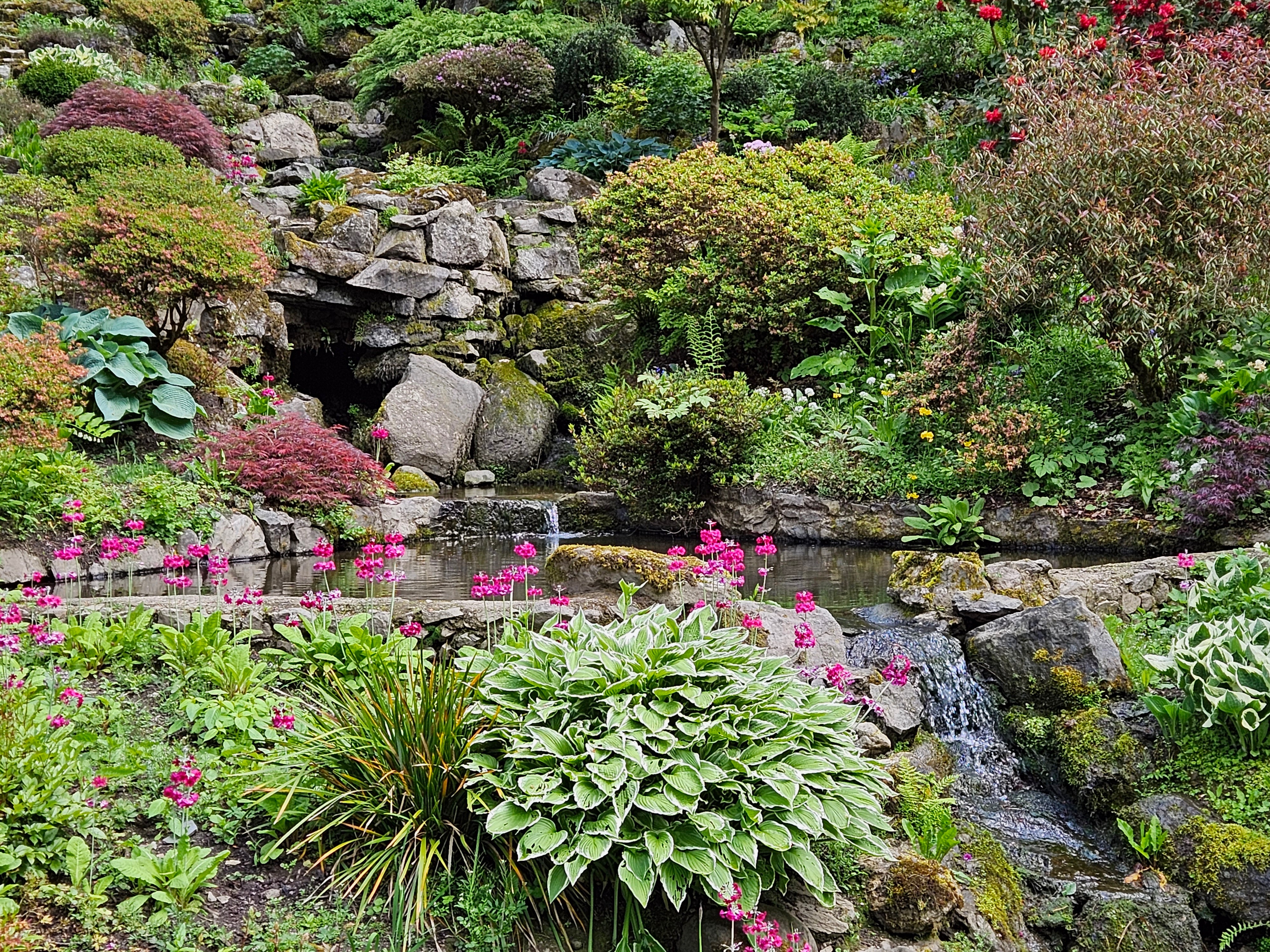
Where the Pacific Northwest has soaring mountains, Wales has castles. Lots of castles. Storming Conwy Castle, climbing the town walls, a day trip and walk in Betws-y-Coed (which I can now pronounce correctly), and strolling through Bodnant Gardens filled our three days. No rain hats required. 

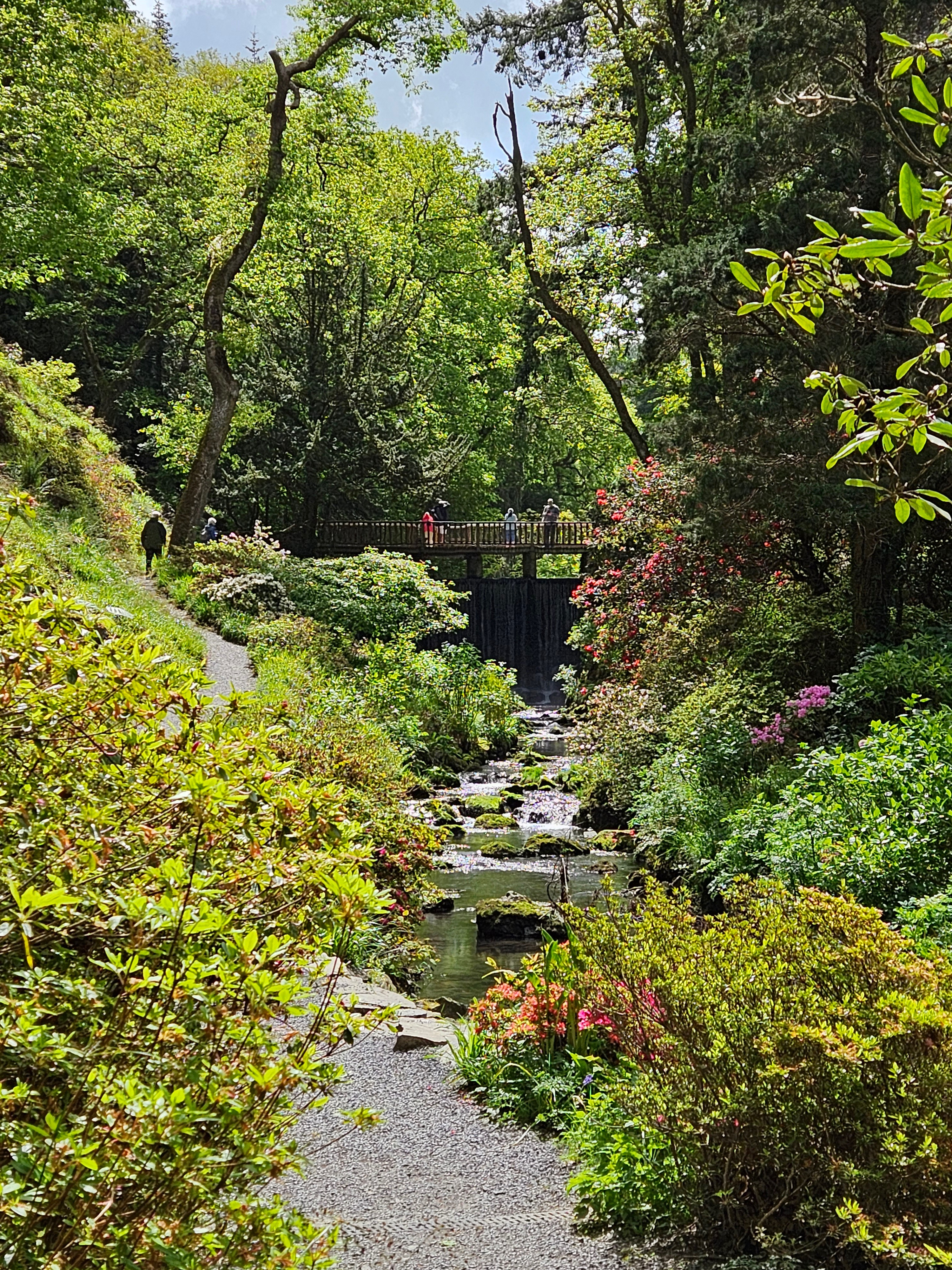
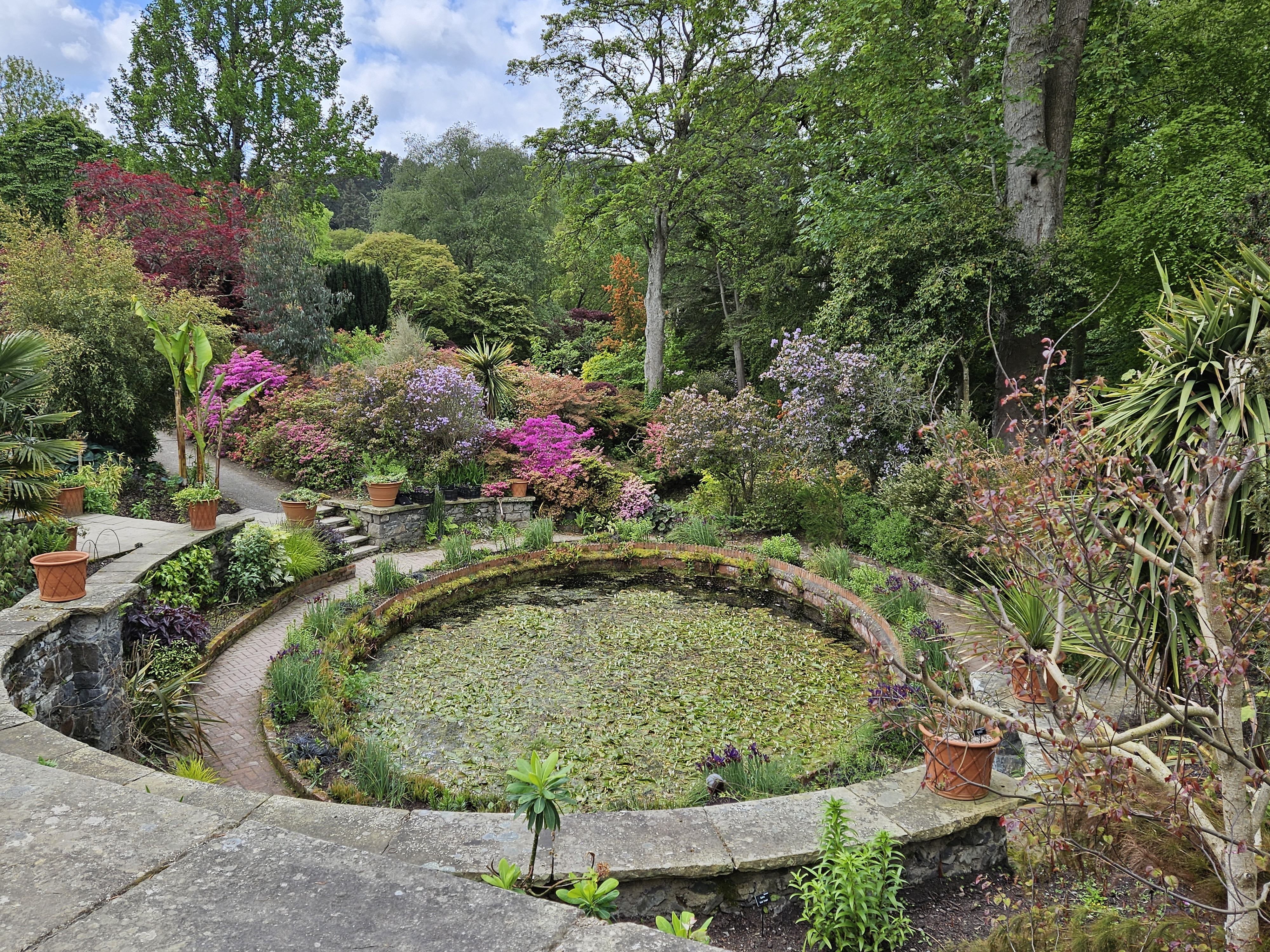
Bodnant Garden is an exceptional place. Acres and acres of manicured gardens, lush forest, winding paths, a folly here-and-there. Once a private estate, it was handed over to The National Trust in 1949. The house is still occupied by Lord Aberconwy. You can point a camera in any direction and get a beautiful shot. Click on any photo for an enlargement.

Our traveling companions including the experienced left-hand-side-of-the-road driver had to cancel their trip to Ireland due to family circumstances. Where we were going in Ireland was quite rural and was not going to be easy to do by train and bus. Ric and I are not left-hand drivers and not about to start. After a quick assessment of how we might best spend the next two weeks, we made an about face from Conwy and headed to the continent and our favorite refuge, The Lauterbrunnen Valley.

I briefly assessed changing our tickets to fly home sooner. Not only was it depressing to think of calling the trip to a halt, the cost to change was astronomical as airfares have escalated so dramatically since we bought our tickets in September. 

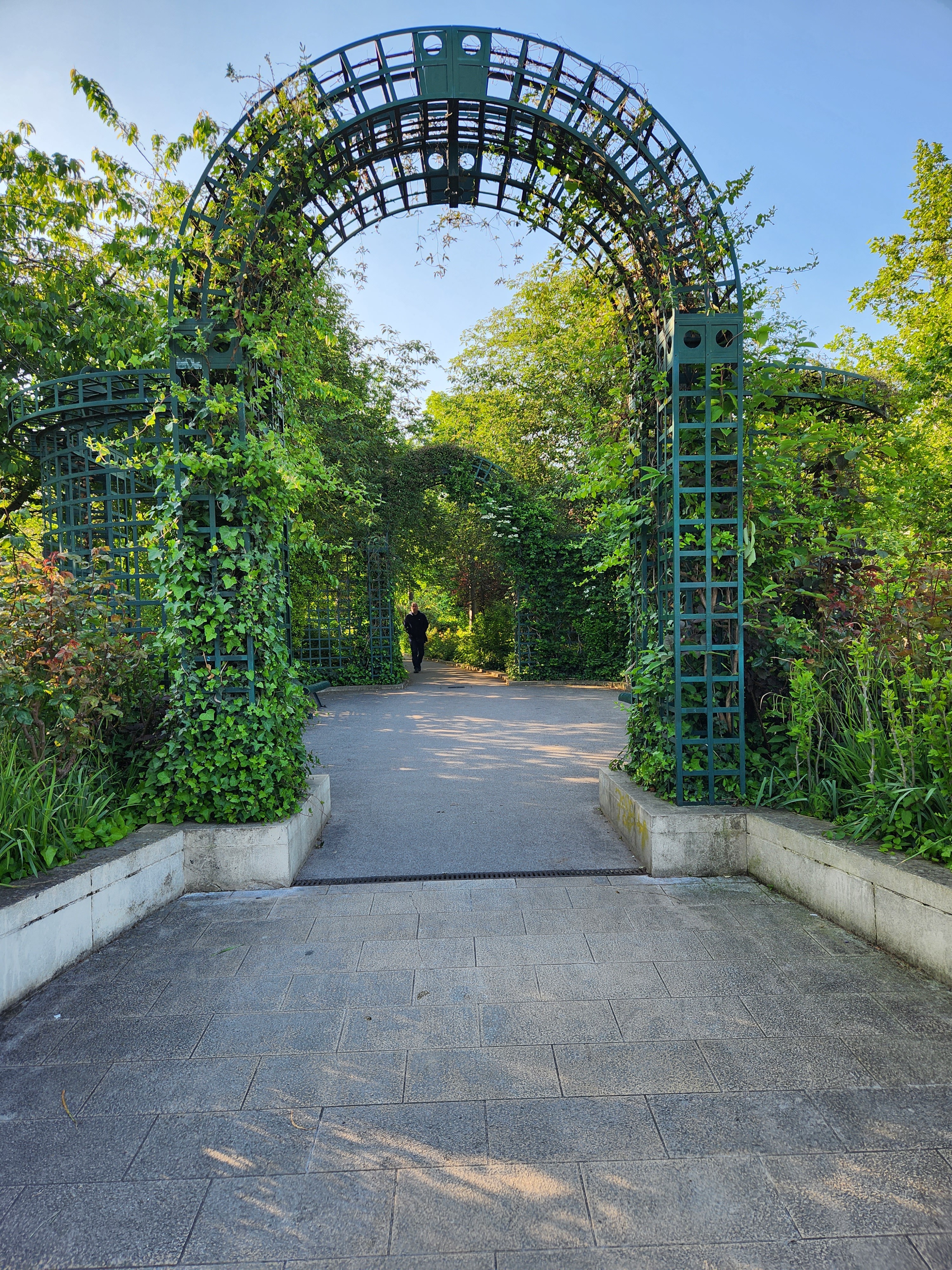
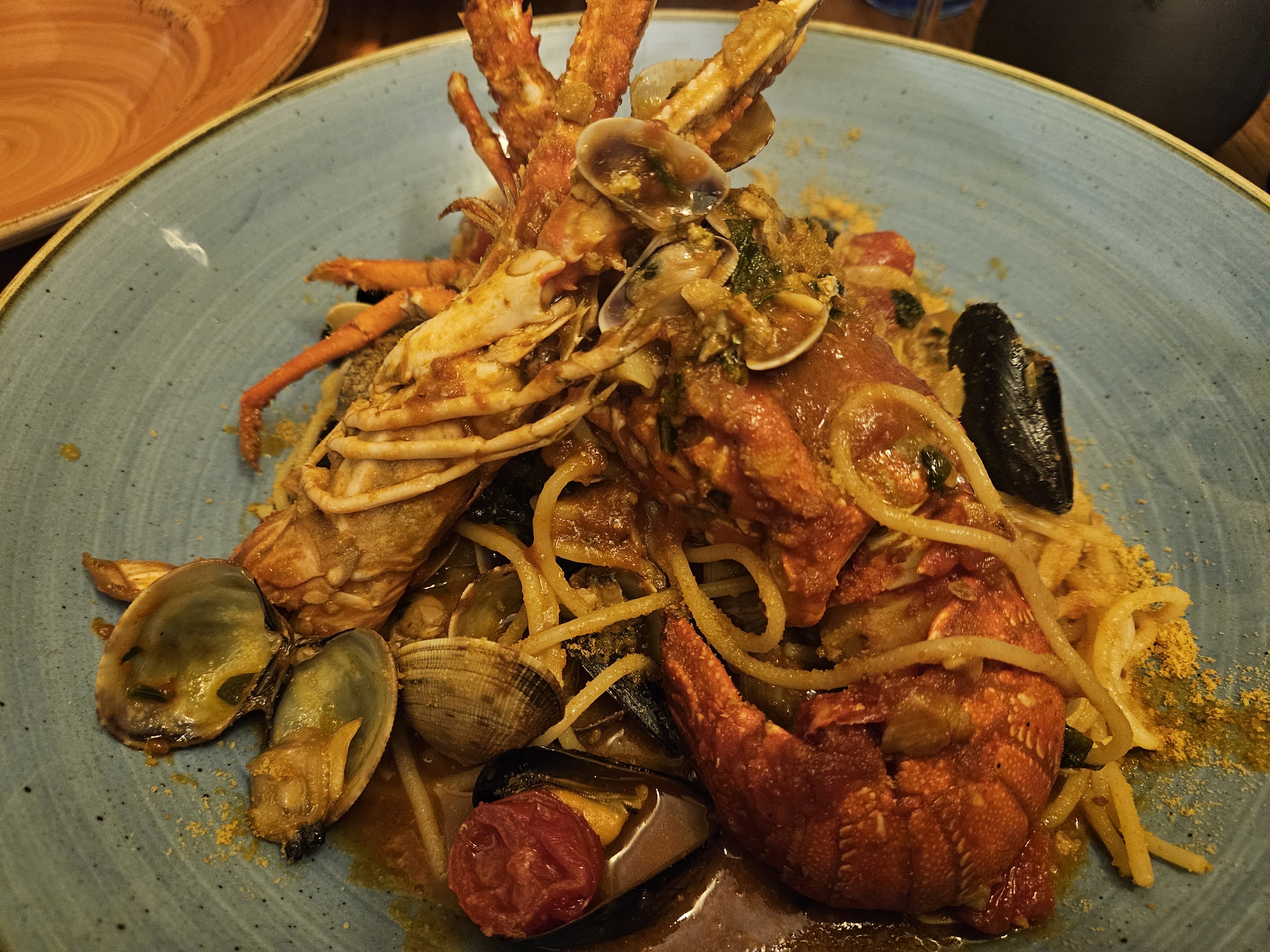
Getting here was a two-day journey. We avoid flying when we can and so we did. Tuesday we rode on two British trains to London, then the EuroStar to Paris, where we spent one night. The next day, a French TGV Lyria took us to Basel and was followed by a series of three Swiss trains to get us to our tiny mountain village. I know some would find this nightmarish (my brother’s idea of Hell, I think) but we travel light and find it far less stressful than flying. Plus a night and a morning in Paris = a fine meal and a lovely morning walk in an elevated garden, La Coulée Verte René-Dumont, which I wrote about four years ago in this Postcard from Paris.

The weather forecast for the Lauterbrunnen area was daunting. Weather.com showed rain for the foreseeable future when we checked it before leaving Wales. But the reality is far better and the weather app MeteoSwiss has been our friend. I have not had to wear a rain hat yet and we even saw peeks of sunlight the past few days with continuing improvement ahead.

No book research, no major plans. Just enjoying seeing one of our favorite places in a different season; we have only visited in the fall and once, briefly, in the winter. It is a totally different experience in the spring: fewer tourists, although the transportation can be crowded, and many places are still closed for rest and renovations between ski season and hiking season. Tulips are still blooming and the deciduous trees just leafing out are a stunning contrast to the deep green conifers.

For those of you who know the area, the little cliff side train from Grütschalp to Mürren is out of service as they will bring the new equipment on-line in June. From what we could see, track-work must be just about complete. The corresponding gondola is also out of service until the middle of June although the path between Grütschalp and Mürren is open if you want to walk roundtrip, I guess. (We did not.)

We are riding trains and gondolas, taking easy hikes, and discovering new corners of this marvelous region. Might have to eat some rösti, too.