Archive | Food RSS feed for this section

Land of giant everything

2 Aug
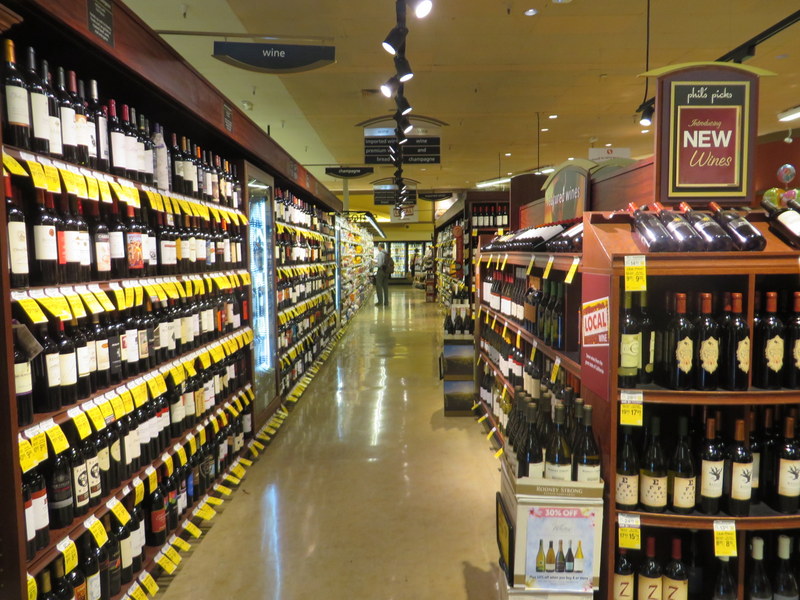
An embarrassment of riches aptly describes the retail scene in the U.S. What an amazing thing it is to walk into a Safeway store after 3 years’ absence and see aisle-after-aisle of options! Acres of wine, miles of frozen foods, yet a rather humble selection of pasta types. The Safeway was at least five-times the size of our “big” neighborhood grocery store, DOC Parioli, but DOC has five-times the pasta.
The wine aisle in a Safeway store.  Una scelta imbarazzante!  (A     selection so grand it's embarrassing!)

The wine aisle in a Safeway store. Una scelta imbarazzante! (A selection so grand it’s embarrassing!)

Going for coffee at an independent coffee house in Portland, we chuckled over the large cappuccino one patron was nursing. Ric took a picture with her hands and laptop in view for perspective. I was excited to get espresso over ice without the barista cocking an eyebrow and looking down her nose at me. It just isn’t done in Italy. You can have a shakerato or a sweetened caffe’ fredo, but over ice? I had more ice in my single drink than I can even fit in my Roman freezer.
Iced, iced iced! In the foreground my iced espresso, which is a sacrilege in Italy. Ric's "small" iced coffee (rear) was not only huge but undrinkable due to a burned taste.

Iced, iced iced! In the foreground my iced espresso, which is a sacrilege in Italy. Ric’s “small” iced coffee (rear) was not only huge but undrinkable due to a burned taste.

Coffee in the U.S.  is even more expensive than I remember, and it takes a long time to make an espresso. In Roma, from ordering to drinking is the blink of an eye. At Starbucks the other day I waited at least five minutes. What takes so long to pull a shot?
Land of the giant everything, a "bowl" of cappuccino at neighboring table.

Land of the giant everything, a “bowl” of cappuccino at neighboring table.

Stati Uniti

28 Jul
28 July 2015. Here we are in our first visit to the United States, more than 3 years after our move in May 2012. It is both familiar and foreign to be here. How wide the sidewalks! How clean the streets (compared to Roma anyway)! Customer service that is almost too friendly. It’s nice to understand most of what is going on around me.
Indulged in omelets since we had not eaten much in about 18 hours. Still too big to eat alone. We each ate only half of our portions.

Indulged in omelets since we had not eaten much in about 18 hours. Still too big to eat alone. We each ate only half of our portions.

I had forgotten how big the portions are in restaurants! We each ordered an omelet as we had not had a proper meal since lunch on Monday, and we could only eat half!  We are going to have to do more sharing like we do in Roma. 
We are starting this journey in San Francisco where the forecast high temperature is not much higher than the forecast low in Roma. Our travel was long, made longer by delays and slow customs in San Francisco that caused us to miss a connection. So we arrived at our apartment in San Francisco 26 hours after leaving our apartment in Roma. 
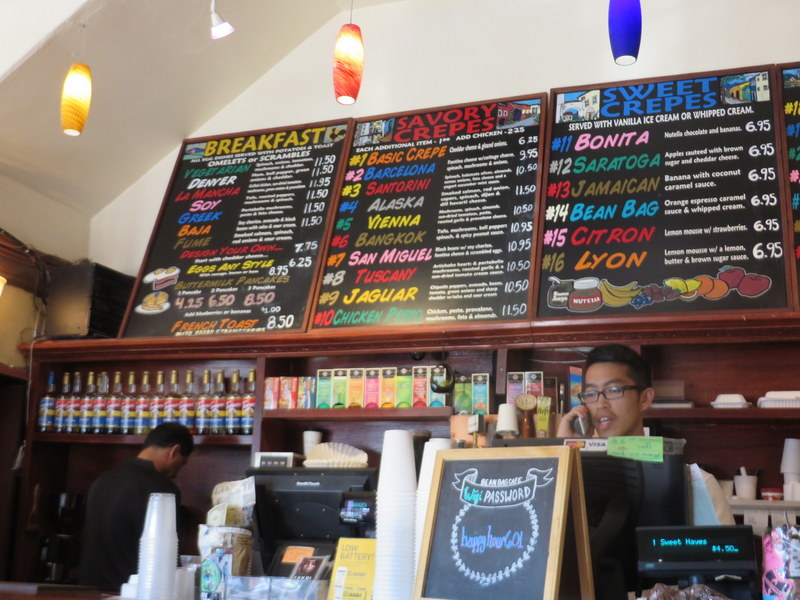
American style at the Bean Bag Cafe, San Francisco.

American style at the Bean Bag Cafe, San Francisco.

Tomorrow we have our visa appointment at the Italian Consulate General. We each carried along about 6 pounds of forms and documents — in triplicate — for our applications.
Will post updates!

An apple a day

19 Jul
19 July 2015. If an apple a day keeps the doctor away, does it count if it’s in your strudel? In the Alto Adige/Südtirol, strudel is as prevalent as Starbucks in Seattle. We have eaten many portions and many types over the course of several trips. This time I documented our not-quite-daily habit. Thank God we were hiking!
It never ceases to amaze me that no matter where we go, we get coffee in a ceramic cup and our food on plates with real flatware, served by nice people who do not expect a tip. Even at the ruins of a castle, in a tiny little village high above the valley, where the cafe was the size of a closet, the lady served our espresso in tiny ceramic cups with stainless spoons that we carried out to a picnic table. And we could have had grappa if we had wanted! Compare that to the typical U.S. coffee-house or what passes for a restaurant in a national park: Styrofoam cups, paper plates, forks that break when you try to use them, self-service, and the expectation of a 20% gratuity.
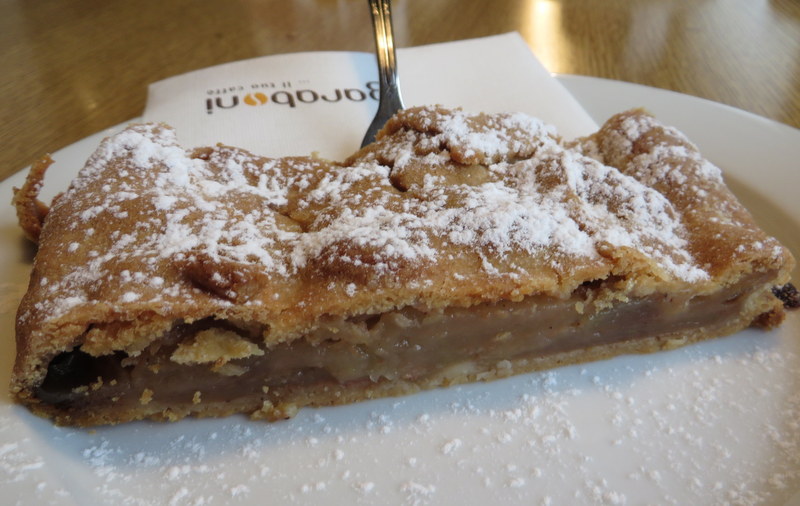
July 8: Rainy day strudel in Selva.  Our first strudel of the trip, while taking shelter in the town. Big apple chunks and a pie-pastry-like crust.
July 8: Rainy day strudel in Selva. Our first strudel of the trip, while taking shelter in the town. Fabulous apple-pie flavor and a light, crust.
July 8: God help us, a two-strudel day! Anna, our landlady, invited us over in the afternoon for strudel hausgemacht. How could we say no?
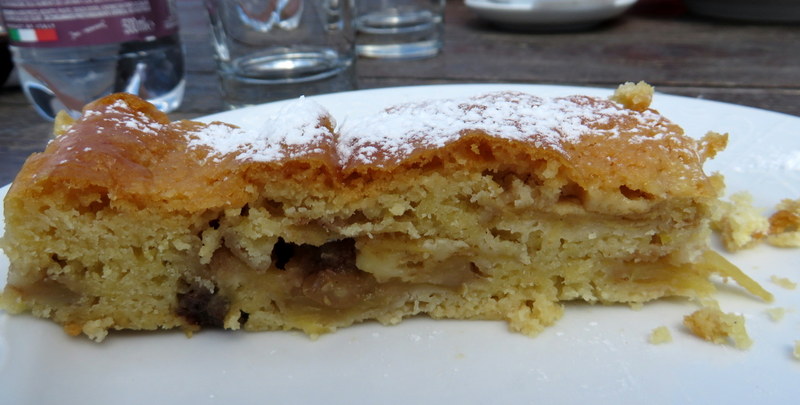
July 9: High-Mountain strudel at Passo Sella. We had a long hike, punctuated by a stop for healthy yogurt, so we indulged in a cinnamon-flavored, raisin-packed variety with a more cake-like crust.
Not a bad view for strudel tasting at Passo Sella.
July 10: Today, yogurt with fresh berries replaces  strudel at 2153 meters above sea level. Berries tasted fresh-picked.
July 10: Today, yogurt with fresh berries replaces strudel at  Rifugio Emilio Comici, 2153 meters above sea level. Berries tasted fresh-picked.
The Rifugio Emilio Comici  is perhaps the most amazing mountain "refuge" we've seen.
The Rifugio Emilio Comici is perhaps the most amazing mountain “refuge” we’ve seen.
July 11: Rifugio Rasciesa is always a favorite stop for a snack or for lunch. Big fruit, light crust. Asked for panna but they forgot. :-(
July 11: Rifugio Rasciesa is always a favorite stop for a snack or for lunch. Big fruit, light crust. Asked for panna but they forgot. 😦
July 14: Rifugio Malga Brogules sits beneath the Seceda Plateau, and still the rifugio is at 2045 meters above sea level. And still they serve home-baked strudel, of a more cake-like variety.
July 14: Rifugio Malga Brogules sits beneath the Seceda Plateau, at 2045 meters above sea level. And still they serve home-baked strudel, of a more cake-like variety.
Little Rifugio Malga Brogules, beneath the Seceda Plateau.
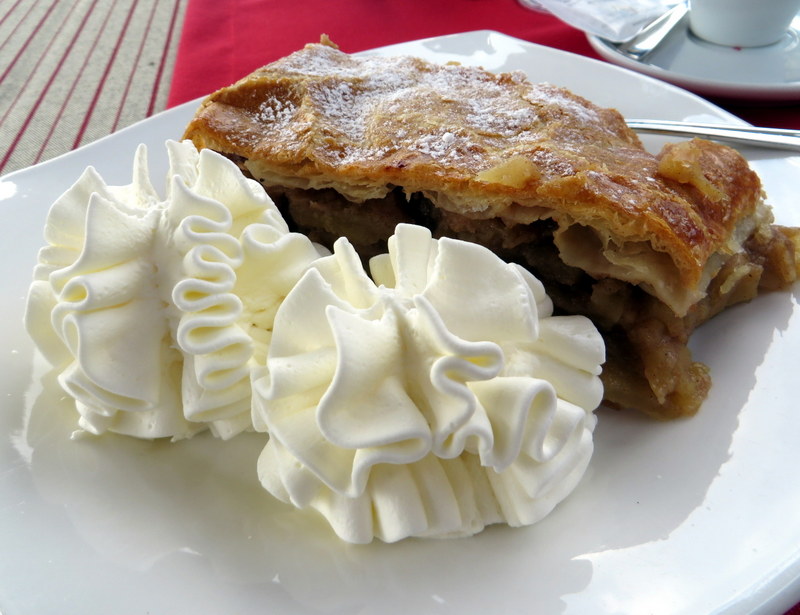
July 16: Best-in-Trip Award goes to the strudel at Hotel Saltria in the Alpe di Siusi. A mountainous piece served with lots of panna, flaky crust, heaps of fruit, raisins and pine nuts. Although we hiked 2 hours to get here, it ruined the possibility of lunch for the day.
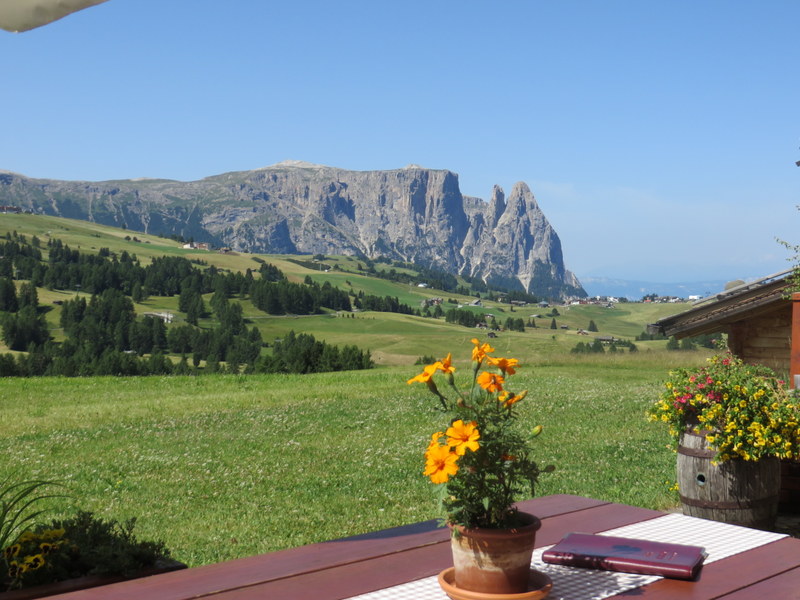
Our view while gorging on strudel at Hotel Saltria.
July 18: Last strudel of the trip, eaten overlooking the same scene we cast our eyes on Christmas Day, Hotel Icaro in the Alpe di Siusi. Surrounded by a cake batter, the fruit was flavorful and the strudel loaded with pine nuts as well. Panna of course1
July 18: Last strudel of the trip, eaten overlooking the same scene we cast our eyes on Christmas Day, Hotel Icaro in the Alpe di Siusi. Surrounded by a cake batter, the fruit was flavorful and the strudel loaded with pine nuts as well. Panna of course!
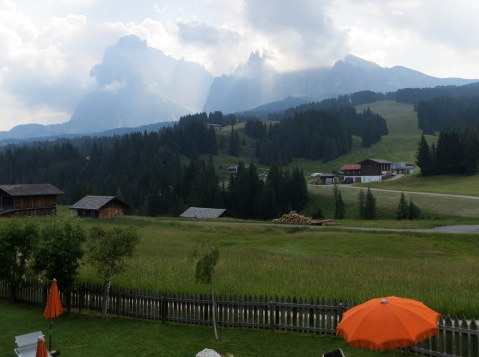
Looking across the Alpe di Siusi from the terrace at Hotel Icaro. A bit of a change from our Christmas Day scene, below.
Taken from Hotel Icaro terrace on Dec 25, 2015. We only had cappuccino this time.


Unexpected Croatia

23 Jun
In the end we liked Croatia and would probably return; however, we expected to like Croatia more than we did in actuality.  Is it heresy to NOT rave about a place that everyone raves about?
Don’t get me wrong: we are glad that we made the trip and we really enjoyed our extended time with Rick and Jane, but the country did not enchant me as I had thought it might. That’s the problem with expectations: sometimes things do not live up to them.
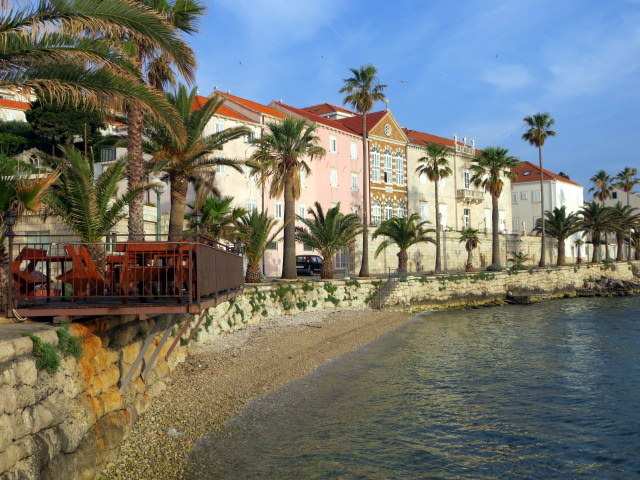
Along the Korčula waterfront in the morning, soft light, pastel colors.

Along the Korčula waterfront in the morning, soft light, pastel colors.

Everyone said we would love it, and we did like many things; the sailors in the group would perhaps like to take a coastal sailing trip and pull in to dine each night since the food and wine are so darn good.

On the plus side

  1. It is beautiful. The waters are clear and the coastline is pristine. The cities are clean and there is no litter.

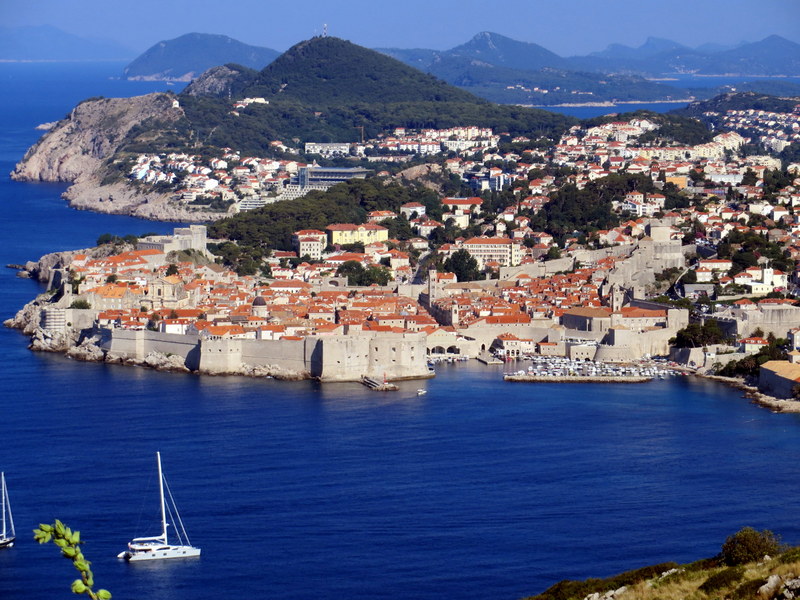
    Above Dubrovnik.

    Above Dubrovnik.

  2. The food is great. Heavily influenced by Italian and other Mediterranean cuisines, it features lots of fresh seafood and is well-prepared and healthy. There was some creativity in the cuisine we enjoyed in Dubrovnik. I expected more of a Balkan meat-and-potatoes diet but was pleasantly surprised.
  3. Dining is not expensive. One night in Dubrovnik (the new port area) we had an excellent two course meal including antipasto, main and contorni (usually sold separately in Italy) plus 2 glasses of wine each for about $68.00 for two. We’ve paid more than that for pizza, wine and fritti in Roma when the exchange rate was poor.
  4. The people are very nice and speak English fluently. While I cannot read much that is written on signs, the spoken English is clear and correct grammatically. They learn it from TV as the dubbing so prevalent in Italy and France does not exist there. Croatians grow up hearing English and reading the Croatian subtitles.
  5. Every single toilet we’ve been in has been, at a minimum, sparkling clean and often very nice. I know this seems odd, but when you have encountered the bathrooms on Trenitalia or in some Roman bars, finding a country full of clean restrooms is a pleasure.
  6. No one is selling Selfie-Sticks, roses, or flying light-up junk in the street. Hallelujah!
Ric and I took a lot of pictures…. Click on any one of these for some highlights from our time on Korčula.

On the other hand…

  1. There is a lack of efficient public transportation within the country so we had lots of windshield time. The train system is non-existent so most long haul travel is bus or ferry (or plane). It can take 4 or 5 hours to go from Dubrovnik to Split by bus, or 4 to 11 (eleven!!!) hours by ferry. Driving is 3.5 hours so that is what we did on our return. If you like to drive, it’s great. But be prepared to spend a lot of time getting from one place to another.
  2. It is dry, at least in Dalmatia. I like a more forested place, a rainforest with big, big trees. This is dry like Hawaii at Kona or parts of California. Obviously a personal preference. Beachgoers would love this climate.
  3. Cruise ships, sometimes 7-a-day in port at Dubrovnik, equal an overload of people clogging the streets. The Old Town in Dubrovnik just cannot handle the strain making…

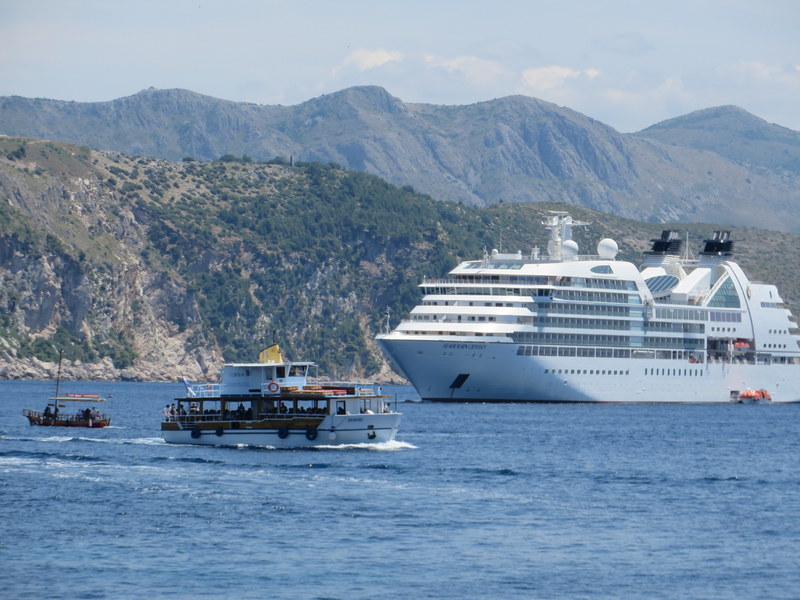
    On a typical day, cruise ships in port - both old and new - plus launches to carry passengers to-and-fro.

    On a typical day, cruise ships in port – both old and new – plus launches to carry passengers to-and-fro.

  4. …Dubrovnik Old Town a caricature of itself. “There is no there, there,” as Gertrude Stein famously said (although about Oakland, CA). Shops and restaurants overwhelm what could be a very pretty, quaint place.
  5. The hawkers in front of restaurants in Dubrovnik  are indefatigable. They thrust menus in your face in an effort to attract your business. Very desperate seeming and annoying, adding to the State Fair atmosphere as one walks down a crowded street.
  6. The lack of racial diversity was odd. Racial minorities were conspicuously absent. I conjecture that because Croatia is not yet in the Schengen Zone, the immigrants arriving in Italy, Greece and Spain are not making their way here. 
I must give the Croatian people credit for their recovery and the building of a tourism industry that provides much-needed capital to its sagging economy. Twenty years after the war, you’d hardly know the war happened except that memories are long and when one engages a Croat in conversation one hears widely varying points of view from “It was better under Tito” to “Thank God the Communists are gone!” But it is difficult to get a feel for Croatian culture when you are so surrounded by TOURISM.
Also kudos to Croatia for good roads, overall. We were impressed by the autostrada, which although of limited presence was well-engineered and the tolls were cheap. Be prepared, though, for sticker shock of a different nature: prices look high but are actually moderate. The Croatian Kuna is about $.15. Yes, fifteen cents to the kuna (hrk). When you see a price on a menu of 110.00 hrk, your mind does a flip thinking “$110.00!!!” but it turns out to be $16.47 for that marvelous grilled tuna! Our four-night apartment rent was a staggering 5416 hrk, but a reasonable enough price in Euros. One throws around 200.00 hrk notes like twenty-dollar bills in the U.S.

 Things we enjoyed

  • Eating. Everything. Croatian prosciutto is delicious and different from Italian. They know what to do with mussels, risotto, and octopus. Pasta is perfection, grilled calamari sublime. Blitva may change my relationship with chard forever. Try sheep’s milk cheese from the island of Pag. It is perfect with their red wine Plavic Mali. See also my blog at Our Weekly Pizza for lovely seaside pizza dining in Korcula.
  • Exploring the island of Lokrum, just offshore of Dubrovnik. Wooded paths, a Napoleonic-era fort, and fantastic views are coupled with an absence of crowds. As in any good Italian location, one could get a good cappuccino on the island, served in a proper cup, not the American standard, Styrofoam.
  • Driving into Montenegro where there are more vestiges of the Communist Era than we saw in our Croatian wanderings. The Bay of Kotor is pretty and we had a nice lunch in Kotor Town, although once again a fortified city has been made a tourist zone and feels unreal.
  • Walking the walls in Dubrovnik, although I wish we had gone at 8:00 AM in the rainstorm when, according to friends who did so, they were the only people up there. The views are great, but it is a conga line that only moves at the speed of the slowest, most out-of-shape person. Thankfully that was not me.
  • Our tour of the Pelješac Peninsula, famous for wines most North Americans have never heard of unless they’ve been in Croatia. Pošip, Dingač, Plavic Mali: all good! People are passionate about their wines and we know why after a day of tasting. Our driver and guide, Petar of Dubrovnik Riviera Tours, was excellent giving us lessons not only in the wines of the region but of the recent history and political turmoil still simmering.
  • The Korčula Island Tour with a driver/guide, including the Ethnographic House in Blato where we were treated to a dose of cultural insight by a kind woman who was preserving the old ways of her family and sharing them passionately with visitors to a museum kept in the family home. It seems the Croatian emigration was akin to the one from Sicily and Calabria in the early 20th century.
  • The War Photo Limited museum in Dubrovnik which gave us some insight into the war specifically in this pretty city we had wandered. It was sobering and moving to think of something so brutal so recently in the Western world.
We like an active vacation and in summer hiking is a favorite thing to do. There is some hiking in Dalmatia, but the dry landscape and the heat limited attractive possibilities for us. We are not beachgoers so that as an activity was out. There are museums, but not the knock-your-socks-off variety so prevalent in Italy that one has to see before dying.  We had a lot of transport time with two day-long professional tours in vans, one day-long self-tour in a car, and one half-day driving back to Split. That’s lot of windshield time in a week for Ric and me. Luckily my brother was driving, or we had a tour guide. 
At the end of the 8 nights/9 days, we wish we had spent more time in Split and less in Dubrovnik. Rick Steves’ Guide to Croatia & Slovenia says:
“While Dubrovnik’s museums are nothing special, the city is one of those places that you never want to leave— the real attraction here is the Old Town and its relaxing, breezy ambiance. While Dubrovnik could easily be “seen” in a day, a second or third day to unwind (or even more time, for side-trips) makes the long trip here more worthwhile.”
Split is charming lighted at night.

Split is charming lighted at night.

So we planned 4 nights/3 full days. In planning the trip with one night in Split and two on Korčula, we thought the centerpiece of our trip should be the 4-night stay in an apartment high above the Adriatic in Dubrovnik. The Stari Grad (Old Town) was so crowded, hot (breezes were rare) and annoying we could barely stand to pass through it. In our experience, restaurants outside of the Stari Grad were far superior in food and atmosphere, and where the locals go. Thank goodness we stayed outside the old center! 
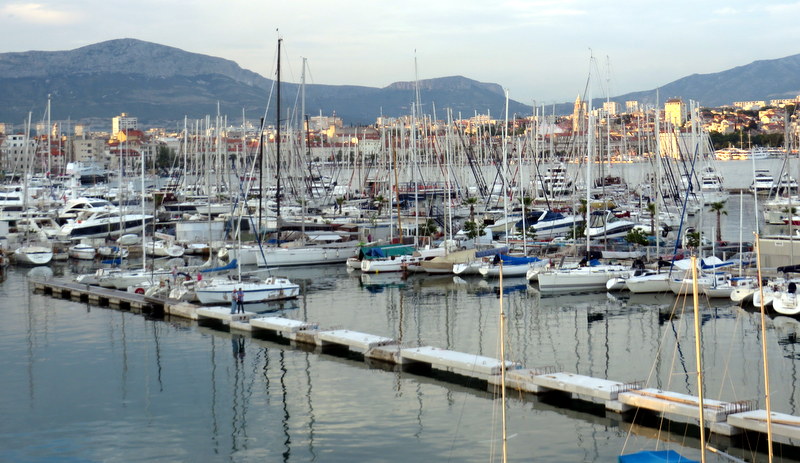
Sailboats crowd the Split marina as the sun colors the town.

Sailboats crowd the Split marina as the sun colors the town.

Split, on the other hand, had a great vibe and we could have spent more than our allotted half-day there had we known. Maybe the Dalmatian Coast of Croatia is more suited to the two-or-three night hops that Ric and I usually avoid.  
If you like beach time and really want to relax, or if you like sailing, the Dalmatian Coast is probably your cup of tea. We are happy to have visited and learned a bit about the history both ancient and recent. We had a great time with my brother and sister-in-law!  We are happy to have dined so well, been treated so kindly, and to have been exposed to the fabulous wines available there. The Italians, the French, and other cultures that have long been overrun by touristic hoards could learn a few lessons in customer service. The Croatians, Montenegrins, and Bosnians have it down. They are very friendly and one is made to feel welcome in a most hospitable way. 

Escape to Emilia-Romagna

8 Jun
The heat built fast in Roma. Ten days prior we were putting on our fleece jackets in the morning because it was cold in the apartment, but by the time my brother and sister-in-law arrived June 1, that was no longer a problem: it was getting warm. Luckily for us – if not for our cat sitters – we were leaving Roma. We also left behind the tourist hoards.
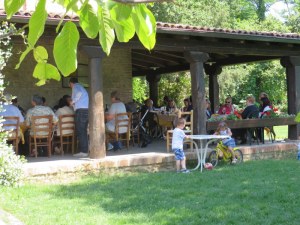
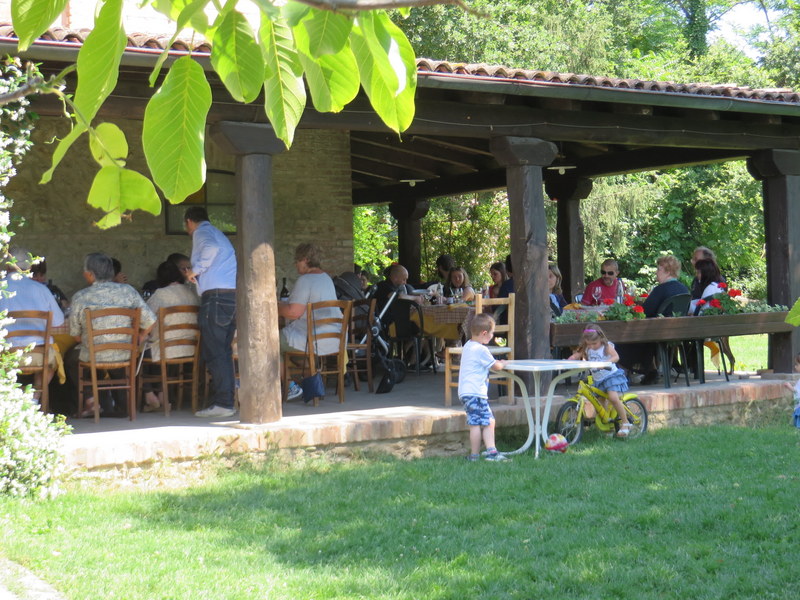
Lunch on the veranda at Corte d'Aibo is a family affair.

Lunch on the veranda at Corte d’Aibo is a family affair.

Heading to Emilia-Romagna on June 2 (the Festival of the Republic which celebrates the election in 1946 when the monarchy was rejected in favor of a republic), we left behind the Roma tourists only to find throngs of Italians. At least they were at lunch when we arrived at Agriturismo Corte d’AiboBut that was the holiday and the last day of the Italian four-day weekend. Continuing on to our mountain destination of Montese, we found ourselves the only tourists at the very pleasant Hotel Belvedere .
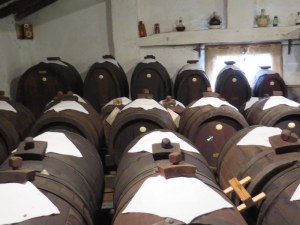
This is not your average balsamico. This is Aceto Balsamico Tradizionale di Modena, another thing entirely.

This is not your average balsamico. This is Aceto Balsamico Tradizionale di Modena, another thing entirely.

I found Hotel Belvedere and Corte d’Aibo thanks to Riccardo of Trekking Emilia-Romagna. Somehow my SIL Jane and I hit on going to E-R and hiking, and I was fortunate to stumble upon Riccardo’s company. He put together a great itinerary for us including a tasting and tour at an acetaio called Ca’ dal Non,  lunch at the agriturismo, and a guided hike through the mountains, which saw significant action in World War II. The arrangements also included our hotel, breakfasts and dinners. All we had to do was show up and sweat a little on the hike.
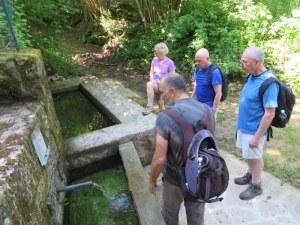
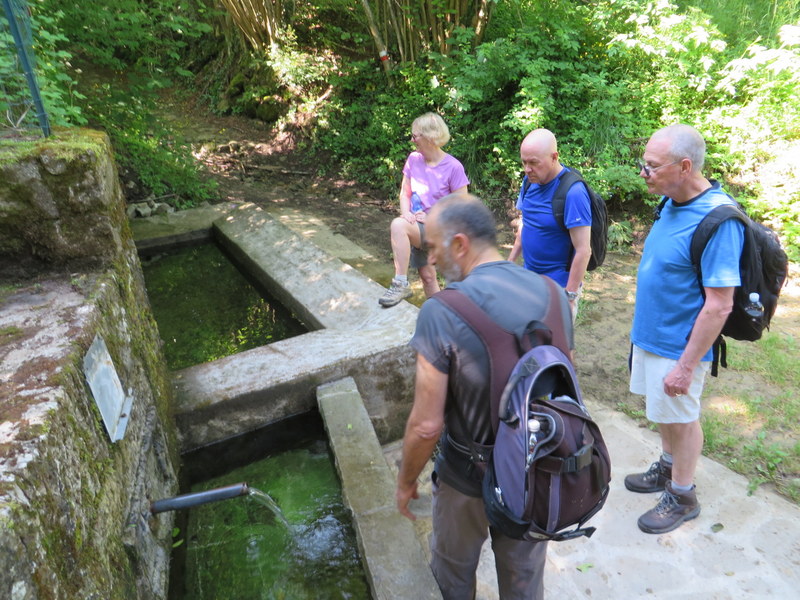
Stefano, foreground, explains a fountain in the mountains to Jane, Rick and Ric. Multiple basins allowed people to use one for drnking water, the next for washing, and a final one for watering livestock.

Stefano, foreground, explains a fountain in the mountains to Jane, Rick and Ric. Multiple basins allowed people to use one for drinking water, the next for washing, and a final one for watering livestock.

During our hike, we learned about the flora, fauna and history of the area. The Gothic Line was here, a place where Germany was making a last stance in the north of Italy as the Allied Armies, having fought their way north through the boot, bombed the heck out of them, and unfortunately, also bombed the Italian villages.
We met an older man – he said he was 80 – who upon learning we were Americans said, “The Germans went away, the Americans left, and now there are no porcini.” He was jesting, but memories are long: although we “liberated” the area, the old growth forest was destroyed by both the German occupiers and the liberating armies, so the treasured porcini no longer grow there. We chatted in Italian for a while and when we commented on his good health and energy (after all he was taking the same long hike that was wearing out us 60-somethings) he said “They gave me an organ donor card and I told them ‘take anything you want; none of it works anyway!’”
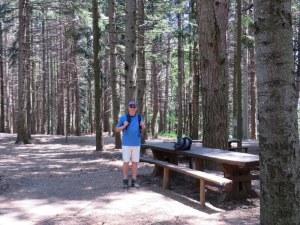
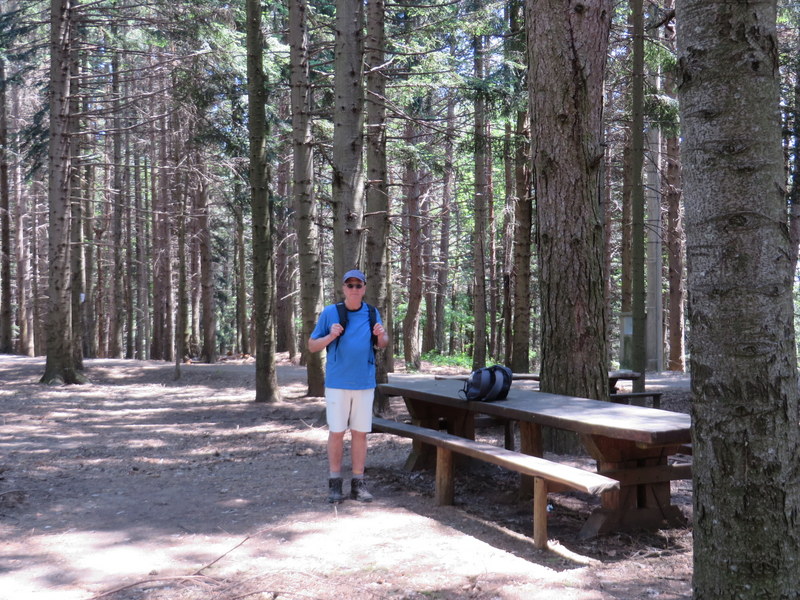
Ric in our woodsy picnic spot, an area frequented by families on Sundays. This one surrounded a church that commemorated the civilians killed in the area.

Ric in our woodsy picnic spot, an area frequented by families on Sundays. This one surrounded a church that commemorated the civilians killed in the area.

Stefano, our guide, was a font of information and knew the area well, having grown up nearby in the famous cherry town of Vignola. He speaks excellent English having lived in the U.S. (He loves Seattle!) We lugged along Parmegiano-Reggiano, salume, bread, and fruit for a picnic, along with local Lambrusco and a homemade crostata, all supplied by the hotel. At the end of the trek, my pedometer wrongly said the hike was about 8 km, Stefano said 11, my brother estimated 12. It felt like 18.
We were then treated to a tour of a caseificio or cheese factory at Dal Contadino.  This was a multi-generational farm operation producing the famous parmigiano-reggiano as well as ricotta, marmalade, and more. It was fun to visit a typical small family operation and see the incredible labor that goes into making this cheese. The artigianale beers they served with the cheese really hit the spot after hiking. If you ever get a chance to drink White Dog Beer, do it.
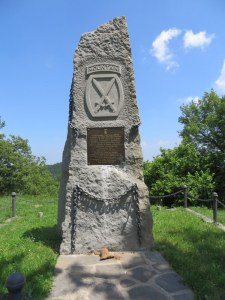
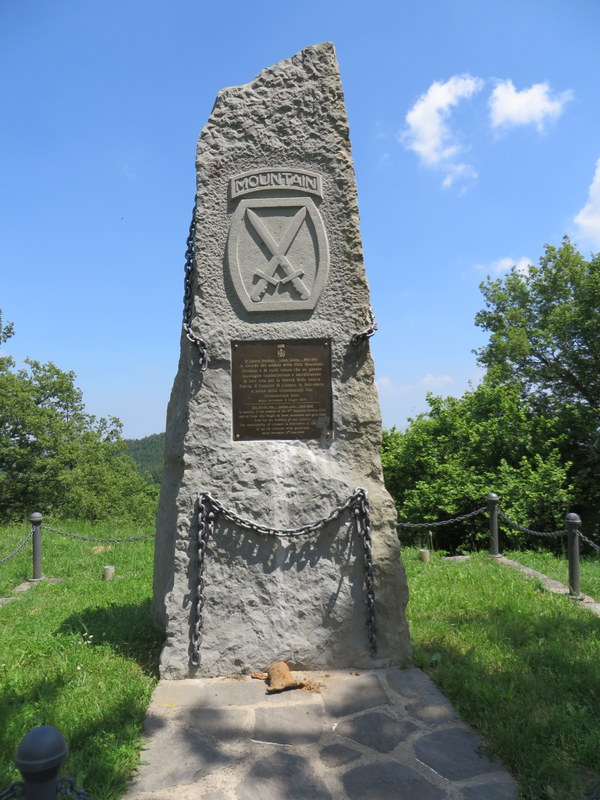
At the top of Mount Belvedere there is a monument honoring the 10th Mountain Division.

At the top of Mount Belvedere there is a monument honoring the 10th Mountain Division.

I have to say that, whatever the length, the trek barely dented the calories we were consuming. The kind owners of Hotel Belvedere looked after us well. Clean, comfortable rooms with good showers, incredible food from classic pastas for primi to roasted rabbit, pork and steak for secondi. They were also experts in recommending local wines to complement their food and served some of the best grappa around. Compare this with an American town of 3400 people where your choice of wine with dinner might be beer.
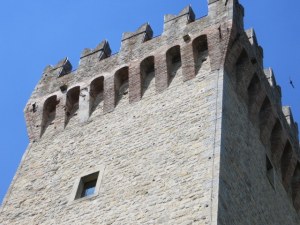
Montese has a castle dating back to the 13th century.

Montese has a castle dating back to the 13th century.

This was not high tourist season. In fact, it seems only August gets pretty busy. Otherwise Montese is off the radar of folks headed to more famous destinations. Nearby one can visit the Ferrari Museum in Maranello, the town of Modena, and even Parma is within reach.
After three nights we somewhat reluctantly said good-bye to Montese and the lovely folks at the hotel, as this was part one of a three-part trip. On to Lago di Garda!
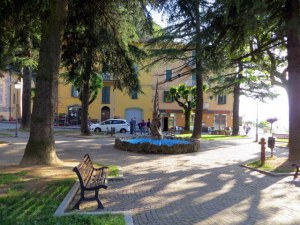
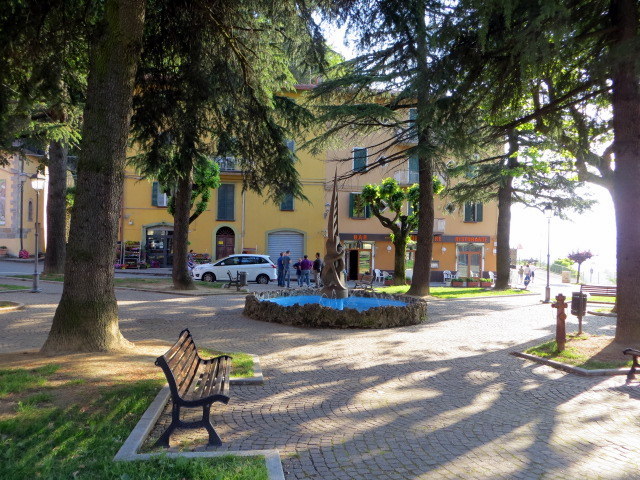
Piazza in Montese, in front of the Hotel Belvedere.
Piazza in Montese, in front of the Hotel Belvedere.

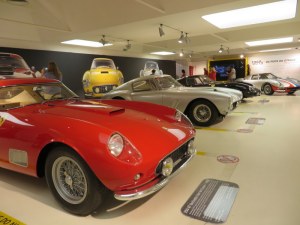
We took one day away from Montese to journey to Maranello and the Ferrari Museum. Quite a collection!

We took one day away from Montese to journey to Maranello and the Ferrari Museum. Quite a collection!