Archive | Italy RSS feed for this section

Hidden Venice (and other miscellany)

3 Nov

3 November 2025.

Venice doesn’t call to me, she screams at me to come and visit. It’s been four years since we last cast eyes on La Serenissima. You’d think after 11 visits we’d have seen all there is to see. Since we were staying an hour down the train line (Ferrara) and the day was fall perfection, we hopped a Frecciarossa and made the count an even dozen.

The challenge was to find something unique away from the crowds at San Marco and Rialto. Thanks to the 2025 Architecture Biennale, I found a walking tour that took us to places we did not know you could access, in particular, the Arsenale, which used to be off-limits except for The Biennale exhibits held in the Arsenale South. Now the northern section is open on a limited basis and the route to get there is astounding.

A brief historic diversion is in order if you do not know what the Arsenale is. It dates to 1104 and was the shipbuilding center of the Venetian Republic and lasted until Napoleon ruined things in 1797. It was the largest industrial complex in Europe before the Industrial Revolution. Wikipedia has a fine synopsis if you want to know the details and see some renderings. https://en.wikipedia.org/wiki/Venetian_Arsenal. Click on any picture for a better view..

The Arsenale: The approach to Tesa 105; Art in Tesa 105; Inside along the tese (old workshops); Waterfront inside. Imagine Venetian ships being built here 1000 years ago. Notice NO CROWDS.

The walking tour is called “Castello, Naval Art and Traditions.” No, it is not a Rick Steves Triple Triangle Must See tour. That is the beauty of it. Instagrammers have not descended en masse. Monday to Friday from 8:00-17:00 you can visit through Tese 105, an exhibit space and bar on the north side.

How you get there is circuitous, and that is the fun of a Venice walk, zig-zagging down various calle, up and down countless bridges, discovering new-to-you sights, second-guessing your location and direction, taking more pictures than you can fathom. We saw very few people anywhere on our route and most of them seemed to be local residents. We especially enjoyed the elevated metal walkway along the Laguna Nord wall of the Arsenale. Perfect waterfront view and luckily not a windy day or it could be a mite unpleasant. Click on any picture for a better view.

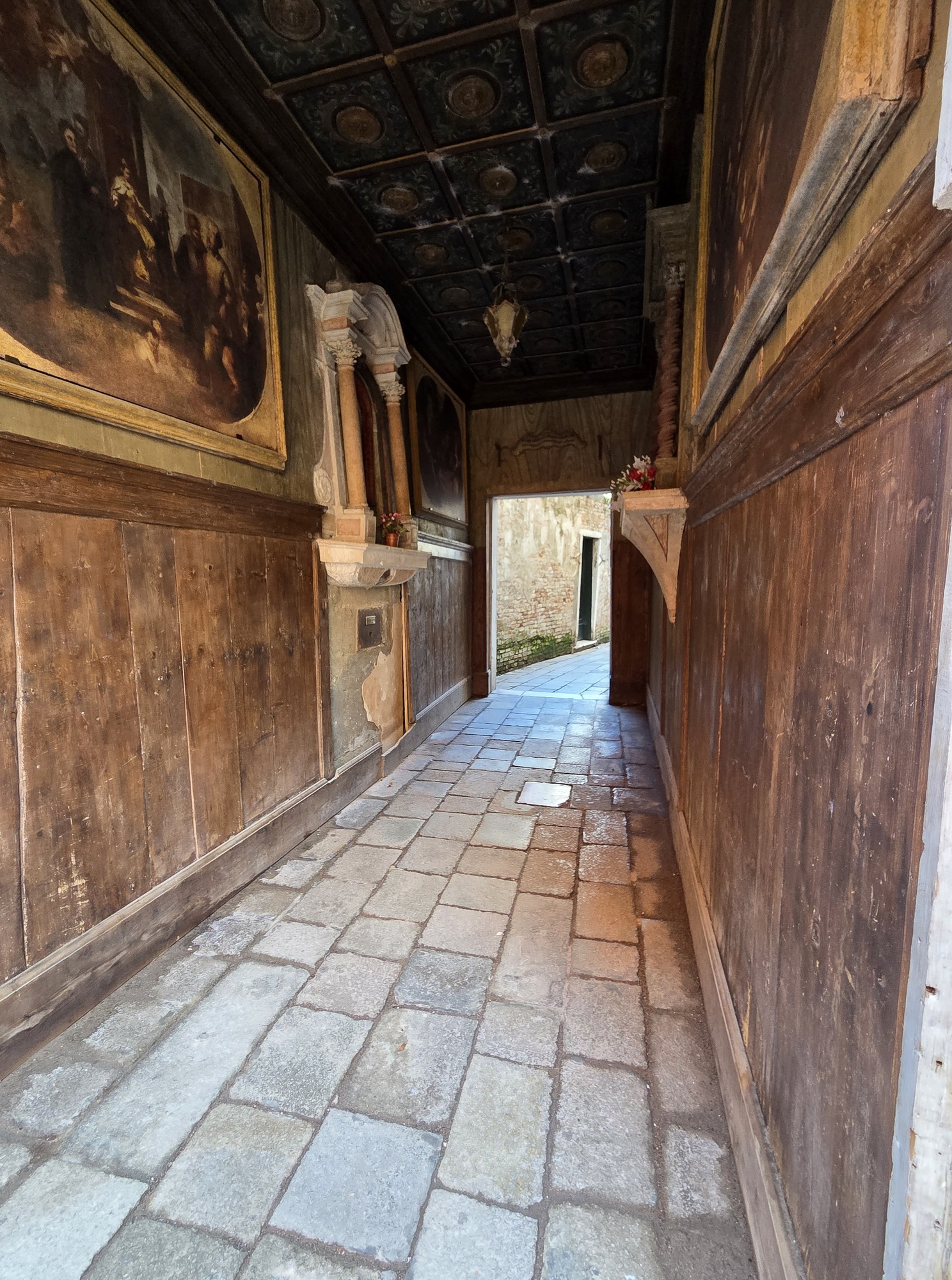
Top Row: Baroque Church in a narrow calle, far from the crowds of San Marco; A sotoportego (underpass) with a shrine dedicated to the Madonna for ending the plague in 1630; The Plague Stone is the only red stone in Venice and is said to bring bad luck if you step on it.

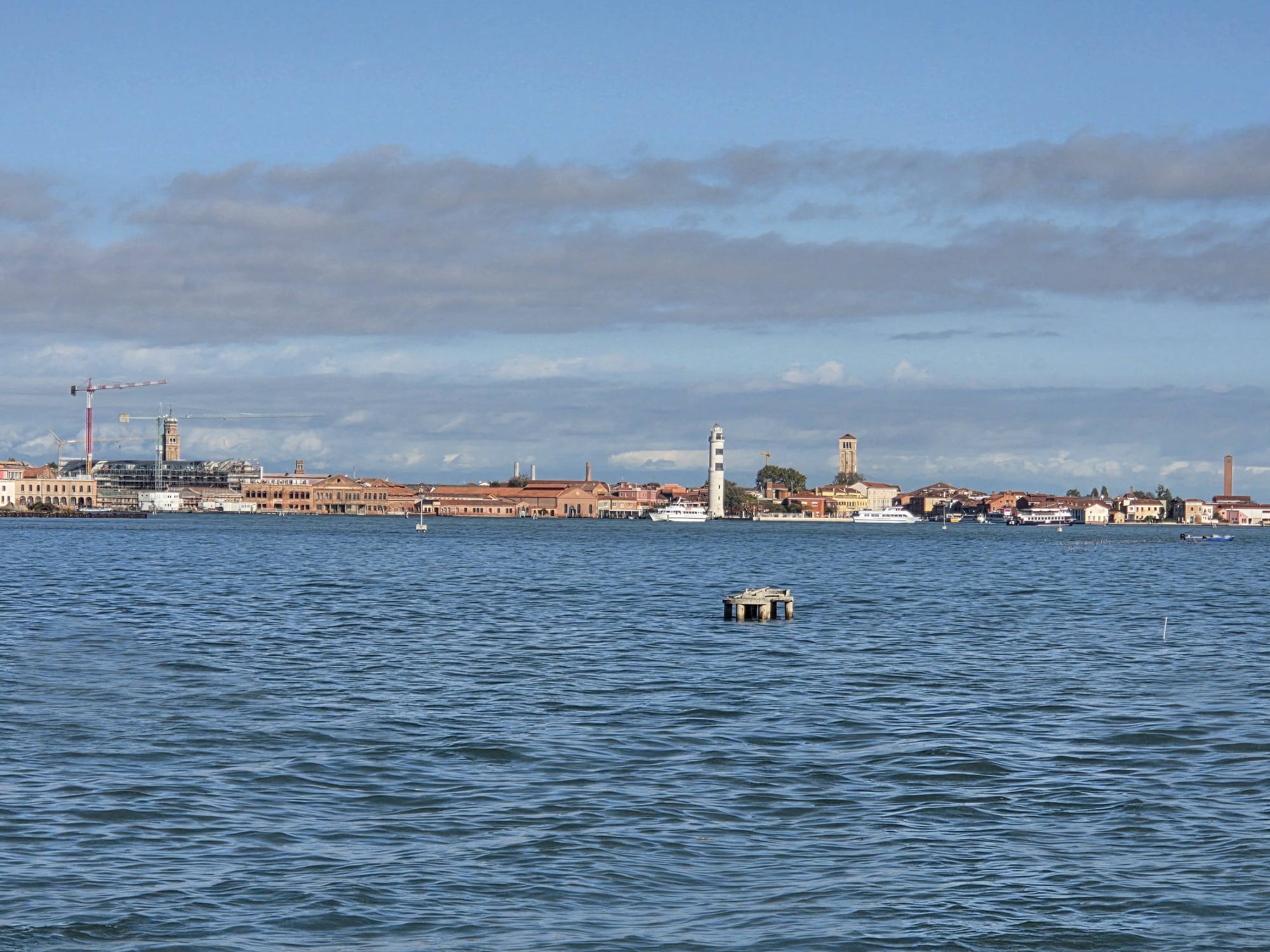
Bottom Row: The metal walkway along the imposing wall of the Arsenale; View of Murano from the walkway.

The tour is described in detail here https://events.veneziaunica.it/en/things-to-do-in-venice/itineraries/castello-naval-art-and-traditions. Full disclosure: we skipped steps 9 and 10 as we’ve toured the tail of the fish several times before. Click on any picture for a better view.
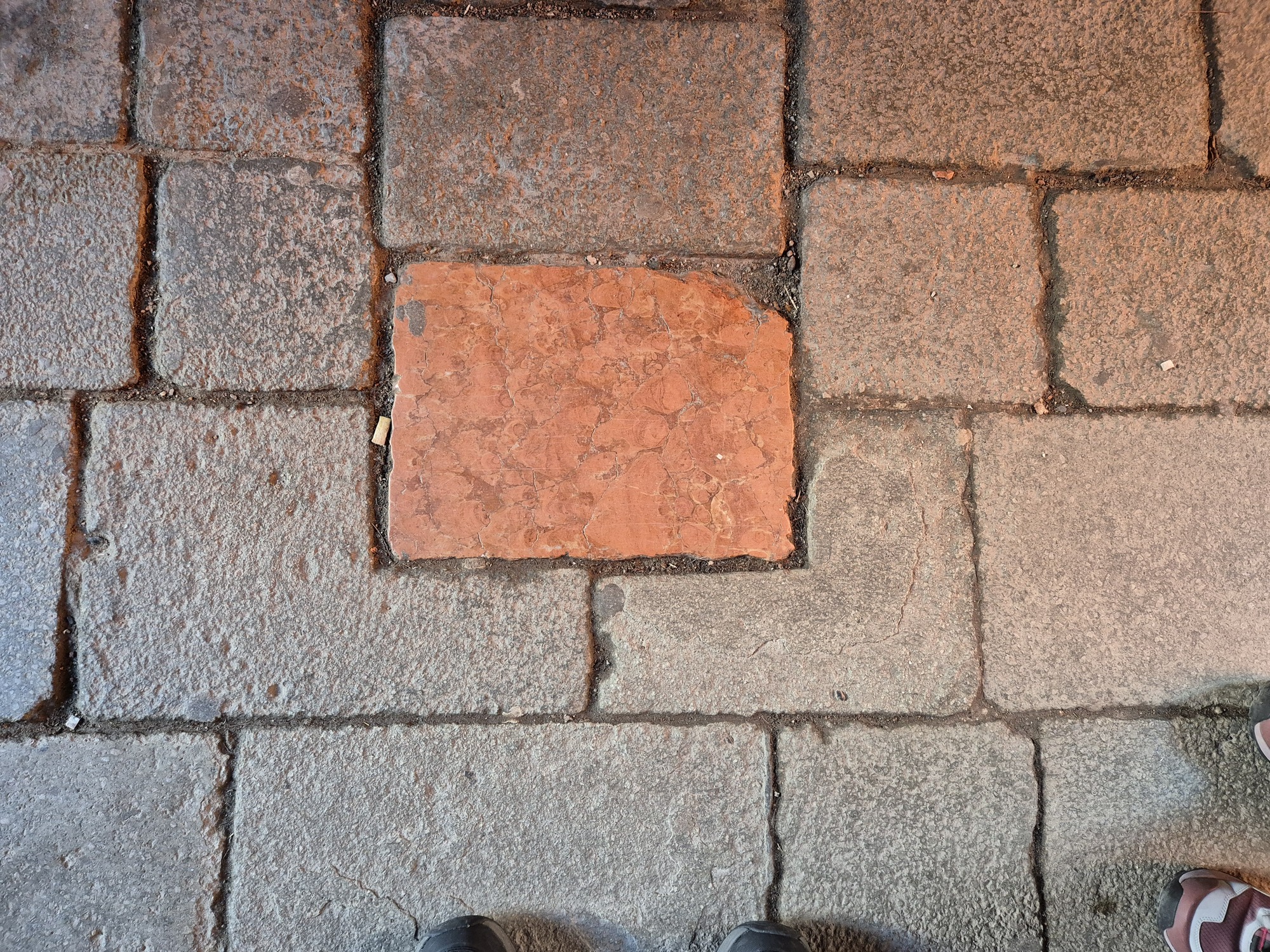
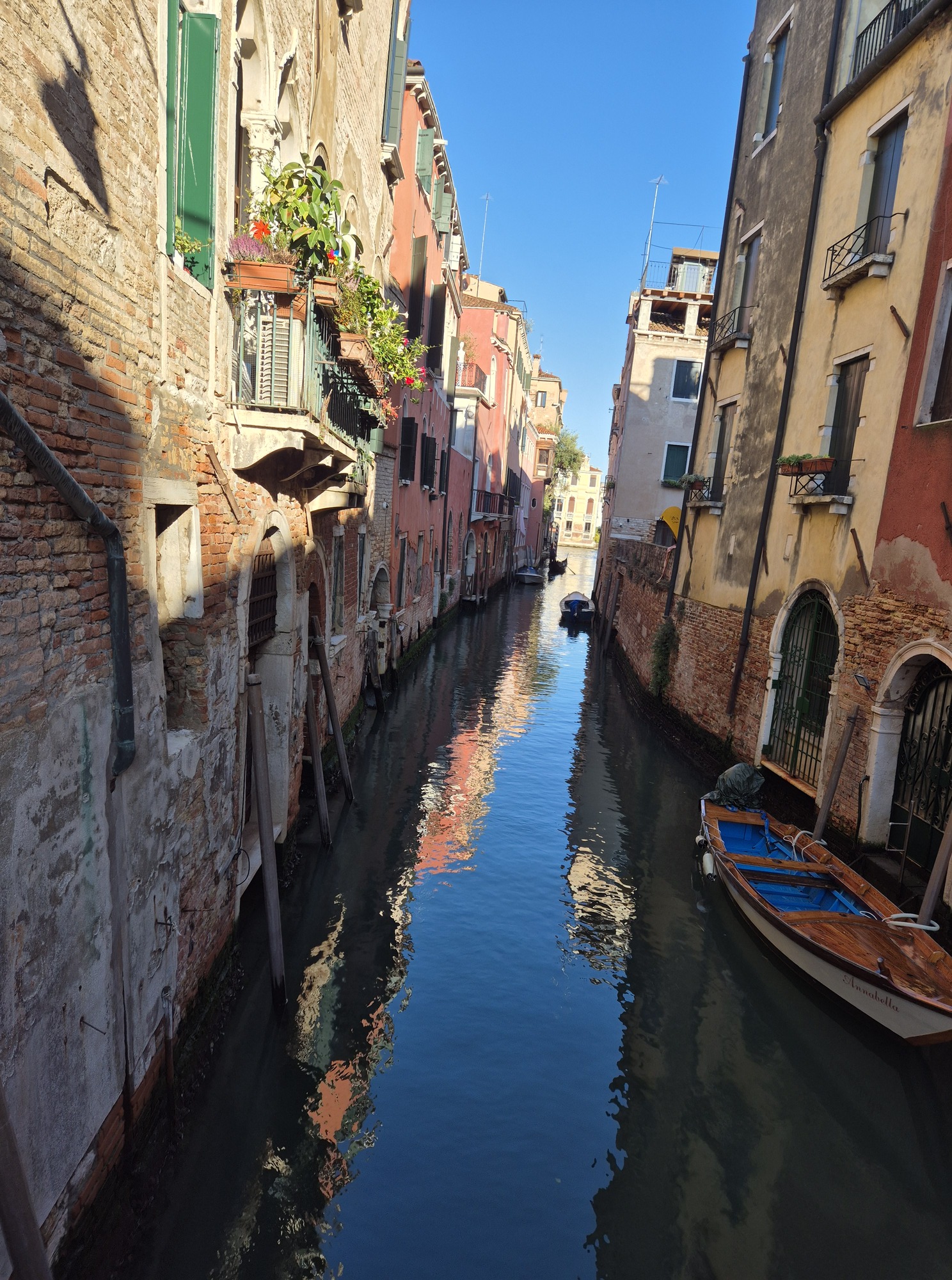
A few more Venice pics on a delightful October day with glorious light.

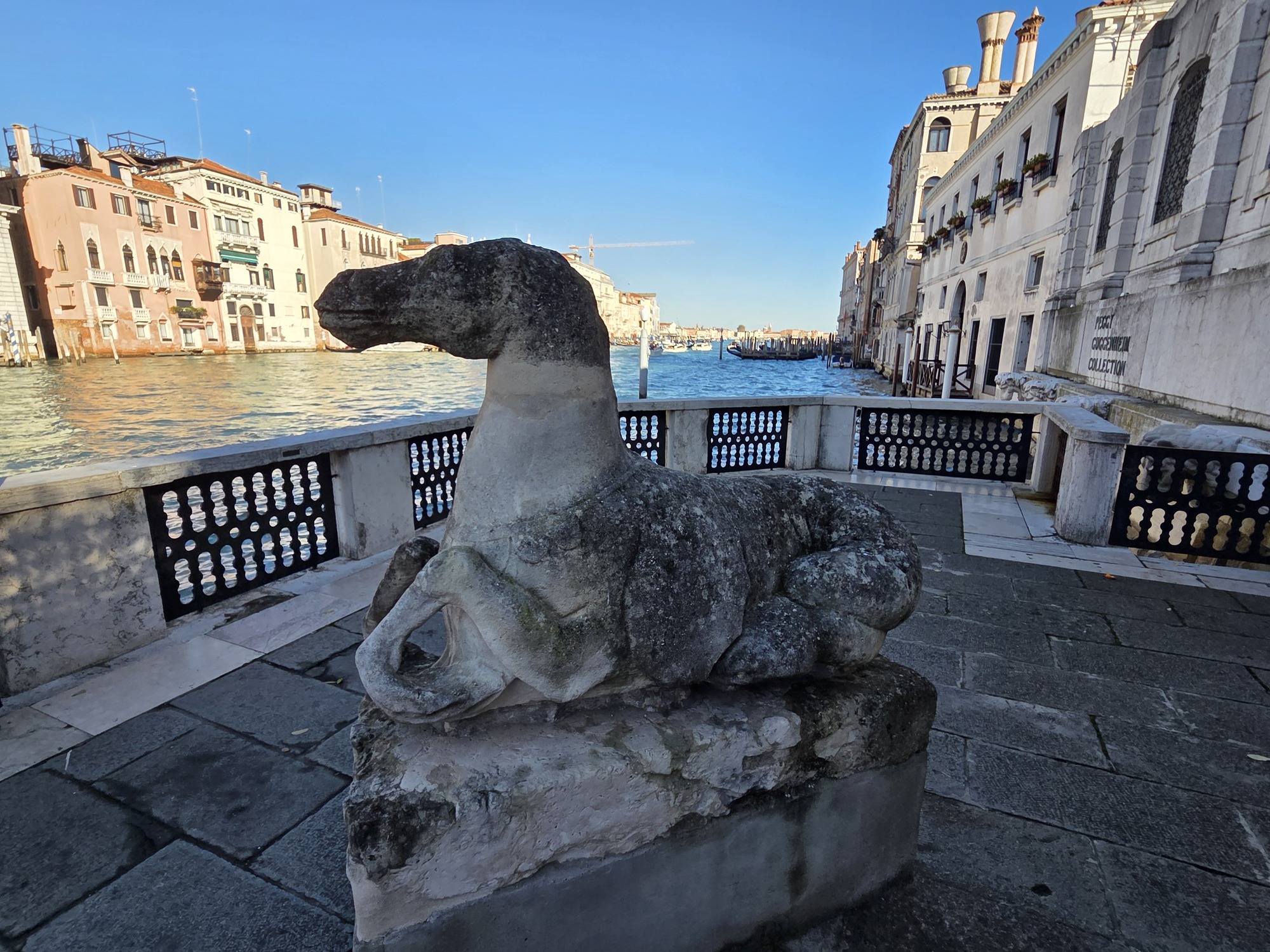
Top Row: Grand Canal view; Quiet canal; On the Guggenheim’s terrace. Middle: Selections from the Guggenheim Collection; Bottom: Peggy’s view of the Grand Canal.

This portion of our trip, two weeks in Ferrara, was day-trip centered. We dislike, in general, a lot of short stays of 2 and 3 nights, preferring a week, or more, as a base. In other words, SLOW TRAVEL This has served us well in hiking locations like Ortisei and Lauterbrunnen as well as in cities like Paris, London, Rome, and even Venice. In those places we’d head out on a hike or out to see a sight, returning as needed to our digs for meals or just to rest. Doing day trips from Ferrara, however, was challenging as we had several very long days door-ro-door with significant transit time. The good news is, that transit was by train. The downside is that a lot of the trains are regionale, meaning “local” trains that transport people to work and school and stop at many many places and ae often full of high school students.

Upside? We had a great apartment and delightful host. I got to speak Italian quite a bit as it is not a prime tourist destination. I don’t think I heard one native English-speaker until our last night in town, and she was married to an Italian raising bi-lingual children.

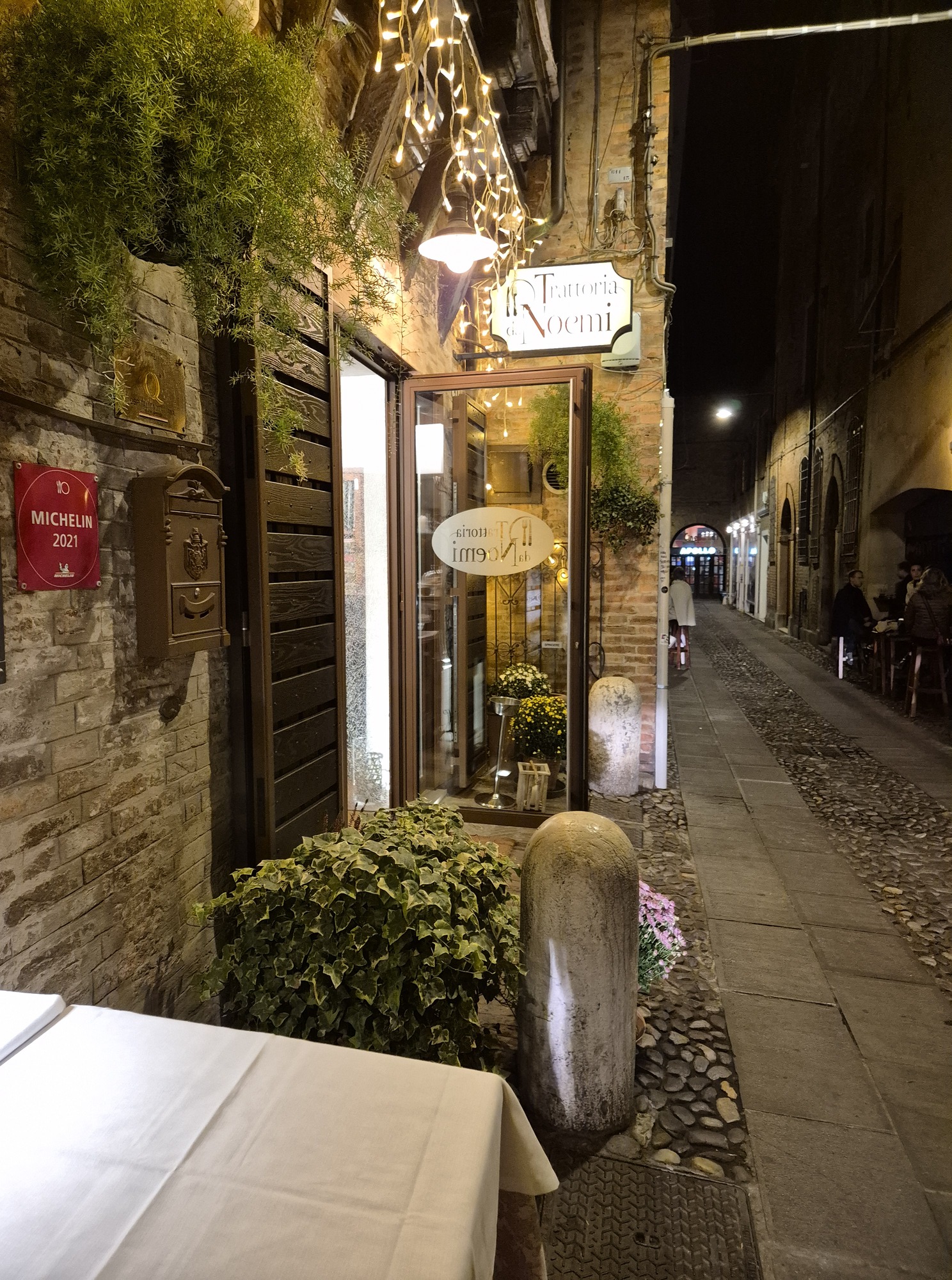
The food in Ferrara was excellent: cappelletti with pumpkin and ragu, pasticcio, and a tremendous pizza at Settantatrepercento, aka 73%, the percent hydration in their perfect crust.

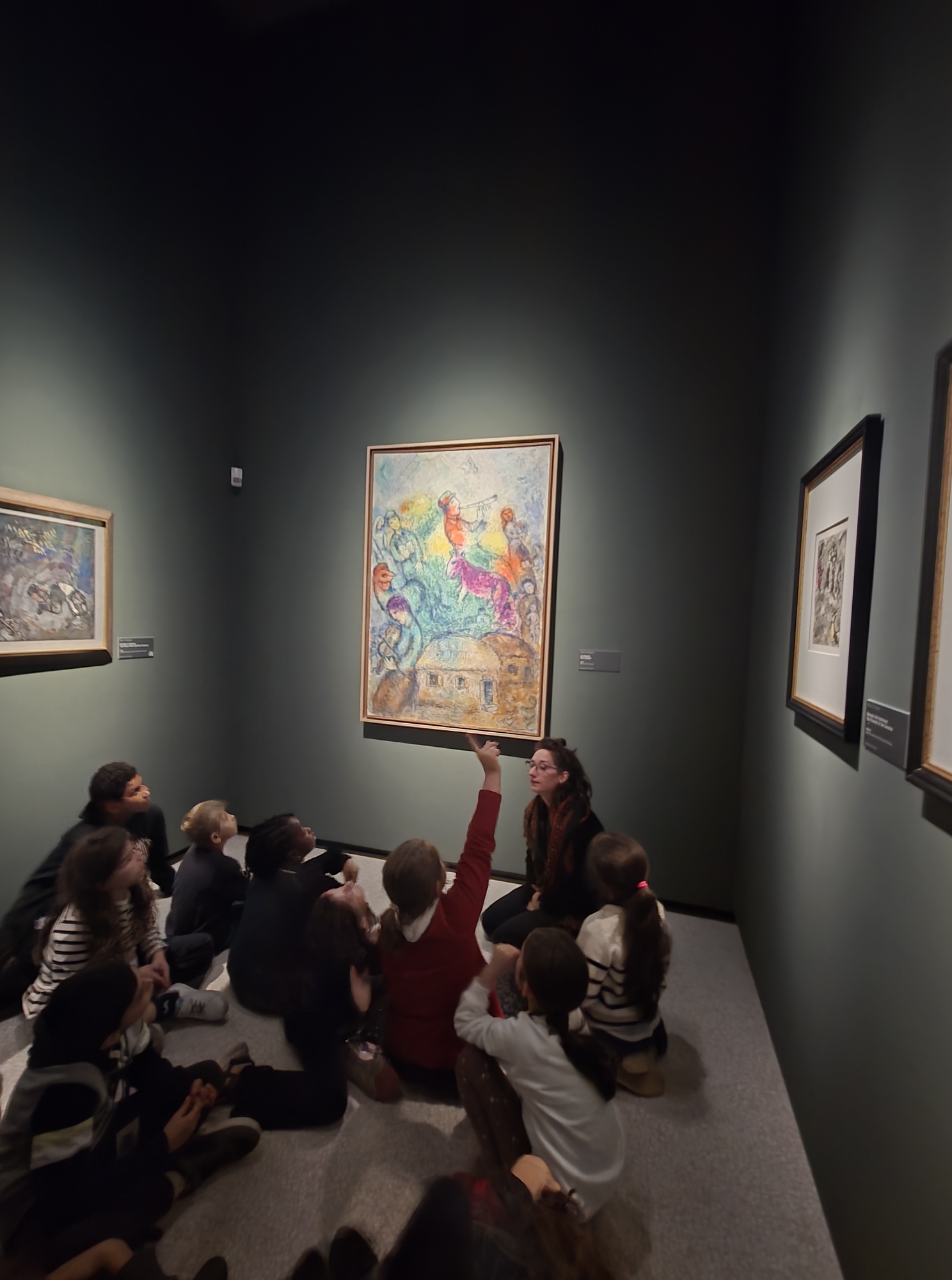
Ferrara is a very old city with an interesting history involving the Dukes of Este and the Papal governance after the duchy failed to produce an heir. We had great food and an insightful private walking tour. We walked the entire ancient perimeter wall (mostly intact) of about 6 miles, and saw an amazing Chagall exhibit that happened to be in town. We filled in with myriad day trips by train: Padova, Ravenna, Florence, Bologna, none of which had we visited in many years. Truly enjoyed seeing them again. Those mosaics in Ravenna! The Scrovegni Chapel in Padova! Florence was not as crazy with people as we feared it would be and we found a delightful trattoria where it seemed mostly locals were lunching. Venice still screams at me to come back and spend a few more nights. Click on any picture for a better view (unimpeded by captions).

Samedan, (see Graubunden Wrap-up) our first two-week leg, was excellent and probably our favorite. Lots of outdoor time, great Swiss trains, mostly good weather, well-equipped apartment and a lovely host. It’s a tiny town that does not draw tourists like its neighbors. They speak Italian as well as German, so that worked nicely.

Basel was interesting in itself, but harder to day-trip from as it turned out (see Basel Wrap-up). Everything in Switzerland was relatively easy to reach and there are cute towns and villages everywhere with ancient castles and charming streets. France was more challenging to reach due to poor transportation connections. We had hoped to spend more time in the Alsace but it was too difficult without a car. The best of the Black Forest in Germany is also a bit far removed from Basel to visit by train. To us, a decent day-trip should be within an hour by public transport. 90 minutes is OK, but two hours each way is a non-starter.

Ferrara tested our plan to try a base with regional day trips. We would not do it again and that is not to detract from Ferrara. Some of the rural places I counted on visiting by bus became impossible due to the schedules. Oh to have Swiss transportation everywhere!

We learned that we still do not want to drive. Thought about it twice, in Basel and in Ferrara, but rejected it as too stressful. In Basel, the cost of the rental was cost-prohibitive (about CHF 140.00 per day!) though the driving would have been more efficient and supported a wider range of options. In Italy, the cost to rent was not awful, but parking in Ferrara is at a premium and in some of the cities we visited by train, very hard to park as well, not to mention the dreaded ZTLs where you get fined if you enter.

We also learned that a first visit to an area should probably be in the 3-to-5 night range. Better to leave wanting more time than less. You can always go back. That does mean moving around more and less of what we see as SLOW TRAVEL. As we plan our trip for next fall, we are already thinking of visits to some of our favorites again, after a year off from Ortisei and Lauterbrunnen. But we’ll add in some new stops as well, as we continue to look for more places to call “favorite.”

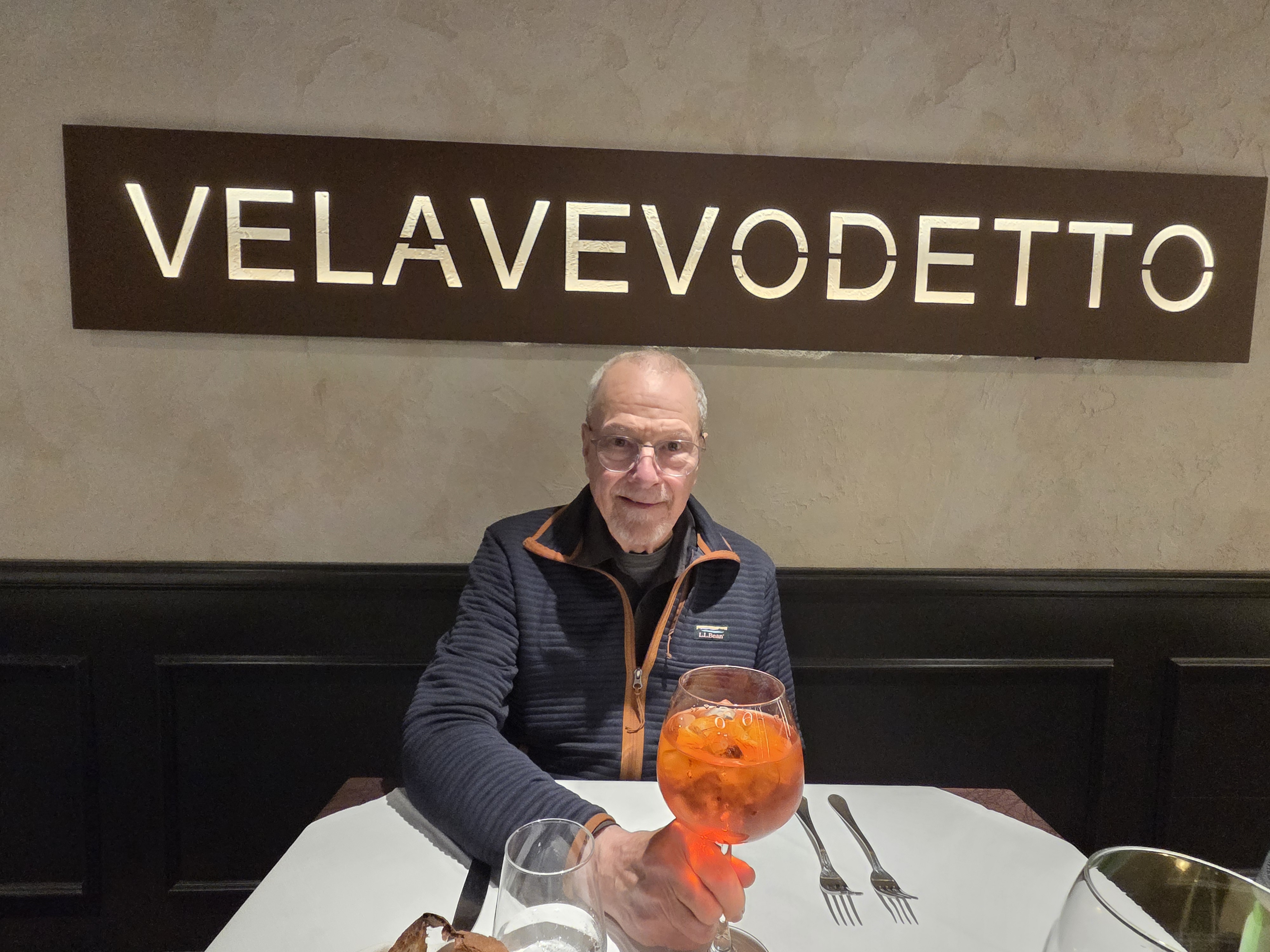
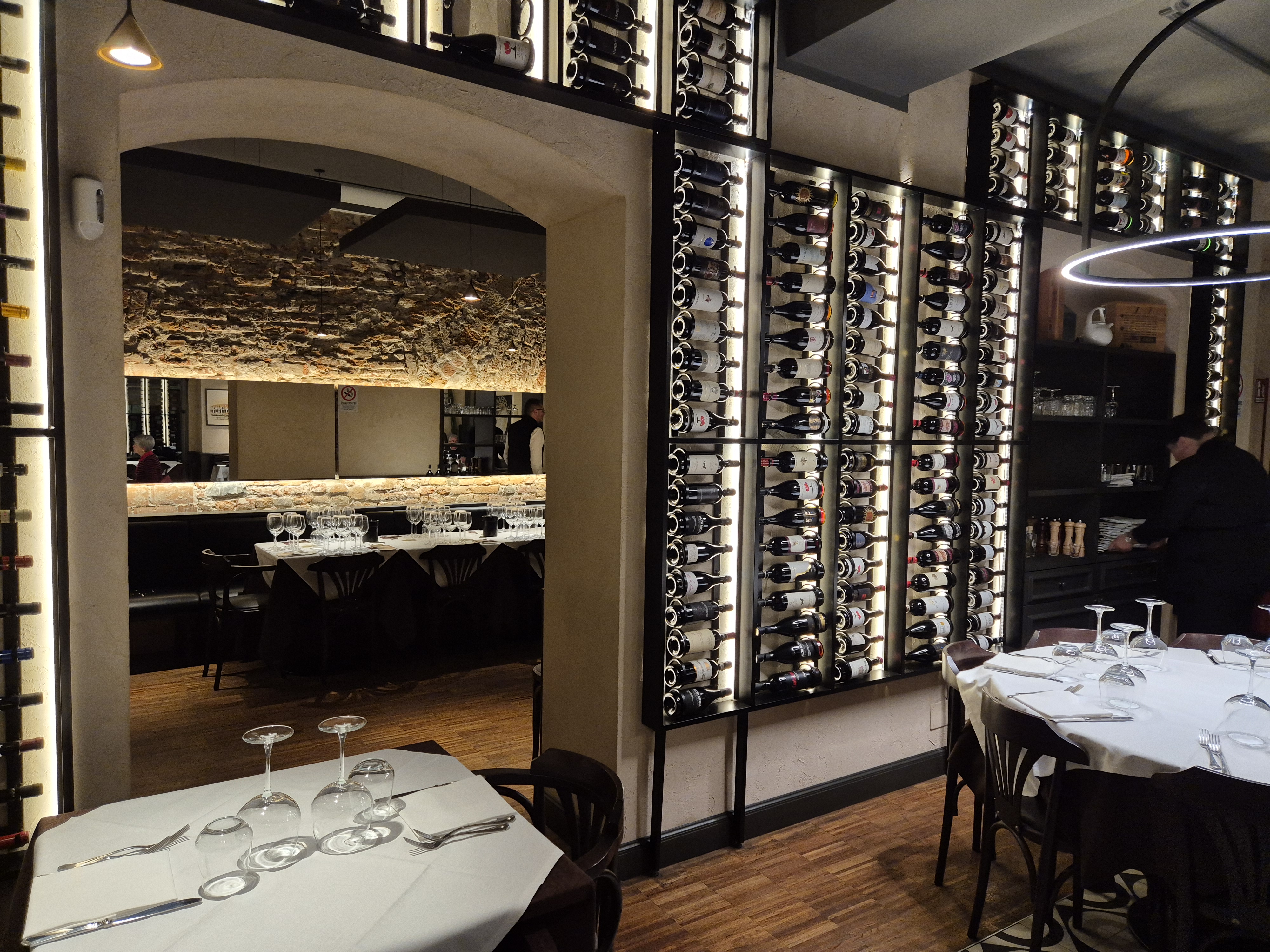
We wrapped up with a pre-flught stay in Milan, which is usually an annual stop for us. We have a favorite hotel and a restaurant we have dined at for over a decade, but this year we discovered a new-to-us restaurant called Velavevodetto. The original, Flavio Velavevodetto (Flavio, I told you so), is in Rome but we never managed to get there during our residence. We love Roman food so a tram trip across Milan on a pleasant October evening was appealing. It was terrific. Have to arrange a stop there again next fall.
What I do after a European trip

20 Jan

20 January 2025.

Getting home from a trip there’s a lot to do in a jet-lagged state: unpacking, laundry, restocking the pantry and refrigerator, doing the delayed fall garden chores, convincing the cats we still love them.

But the real work starts once jet lag passes: organizing photos and updating our books. This takes hours and hours to ensure the accuracy of every recommended URL, the schedules for buses and lifts, the most recent transportation pass offers, and to write up new hikes and changes to prior recommendations. Ah, retirement! But this is a job.

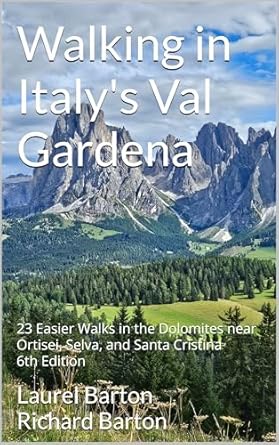
January 1 we published the 4th edition of “Walking in Switzerland’ Berner Oberland” and January 18, “Walking in Italy’s Val Gardena” came out in its 6th iteration.

For those dreaming about these locations, we offer inspiration to plan the trip with logistics seldom found concisely presented online. From transportation to trailheads, each walk or hike is described clearly so you can be certain every hike is within your ability.

Here’s a description of each book and a link to purchase in the US. For other markets, consult your respective Amazon site.

Walking in Italy’s Val Gardena

There are many hiking guides to Italy’s Dolomites featuring long treks of 4-6 hours, as well as multi-day ventures and the famous via ferrata. What makes this one so special? This is a guide to easier options for walking in Italy’s breathtaking Val Gardena! Seniors, people with children, and anyone who wants to experience the mountains but not climb them will benefit from the 23 walks that are carefully described.

We guide the hiker through the breathtaking scenery using itineraries suitable for anyone who likes to walk, likes to be in nature, and who enjoys Italy, but may not have the stamina for longer, more strenuous hikes.

This unique guide includes 23 walks in-and-near the Val Gardena towns of Ortisei, Selva, and Santa Cristina, as well information on when to visit, how to get around without a car, and sample itineraries to help you plan your stay of 3, 5, 7 or more nights. Of special interest will be the easy hikes in the amazing Alpe di Siusi.

Included are maps, directions to the trailheads, walking time and distance, where to eat along the trail, beautiful photographs, and details on how to use the system of mountain lifts and buses to access the high meadows and breathtaking Dolomite views. You will discover delightful rifugi, mountain restaurants offering shelter and great food making each walk a special expedition. In addition, every walk is accessible by public transportation!

The authors travel to Ortisei frequently exploring this mountain paradise discovering and documenting the walks to share with you so you can be certain every hike is within your ability.

Walking in Switzerland’s Berner Oberland

Switzerland’s Berner Oberland is a hiker’s paradise, whether you like easy paths or dream of attempting the Via Ferrata. This book will guide you through breathtaking scenery using itineraries suitable for anyone who likes to walk, likes to be in nature, but may not have the stamina for longer, more strenuous hikes. Seniors, people with children, and anyone who wants to experience the mountains but not climb them will benefit from the 21 walks that are carefully described. Also included are instructions on local transportation, sample itineraries to help you plan your stay of 3, 5, 7 or more nights, and suggestions for other excursions as well as rainy-day ideas.

The authors travel to Switzerland frequently exploring this mountain paradise completely via public transportation, discovering and documenting the walks. Even non-walkers will revel in the scenery as they ride mountain trains and enclosed gondola cars to amazing vistas.

What do I do after a European trip and after the book updates are published? Plan the next trip! Most likely with a cat or two in my lap.

Sven and Molly are happy to have us home.

Holding hands in Roma

5 Nov

5 November 2024.

Every trip has a name or a theme. We have had the “Mountains, Lakes and Sea” trip of 2018 (See the trip plan Mountaintop to Sea Level ), “The Grand Tour” of 2017 (See Tourists Again), and the “We’re Back” trip of 2021 after missing 2020 due to a worldwide plague, to name a few. (See Hey Europe! We’re Back!.)

This year, in my mind, the theme was “Return to Roma” as it has been 8 years since we moved from Rome back to the US.

Scenery walking back after dinner is one of the delights of Roma. A 2-mile walk goes by quickly.

We loved our time this trip in the usual locations of Ortisei and Lauterbrunnen, and enjoyed the Italianness of Locarno even though it is in Switzerland. Wrapping up our eight weeks with a gastronomic tour of Rome, the subtitle might be “A Reacquaintance Tour: Eating our way through Rome.”

We often talked about missing Roman restaurants: Our neighborhood favorite, Taverna Rossini, the best pizza places we found and wrote about for our blog Our Weekly Pizza, the fish place we traveled an hour to-and-from it was so good, the authentic Sicilian food. These neighborhoods, walking routes, coffee bars, restaurants, and pizzerias called to us. It was time to return and eat our way through town while revisiting old haunts.

We had not been in town for 30 minutes when my love/hate feelings welled up. This crazy town continues to perplex and amaze. A fabulous double espresso in 30 seconds for €2.00! A taxi across town for €15! Ancient sites harboring a cat sanctuary and a wealth of art-free-for-the-viewing in vast basilicas and churches. People who weave back and forth on sidewalks and narrow streets. Tour groups coming at you like a tidal wave. The buses still ghost you and are uncomfortable at best, but the taxi drivers were, to a person, polite, efficient, and helpful. What’s up with that, Rome?

My hips and back took a beating on the sampietrini (aka cobblestones). Ric and I remembered we really liked to hold hands when walking in Rome and not only from affection but to keep each other stable and upright.

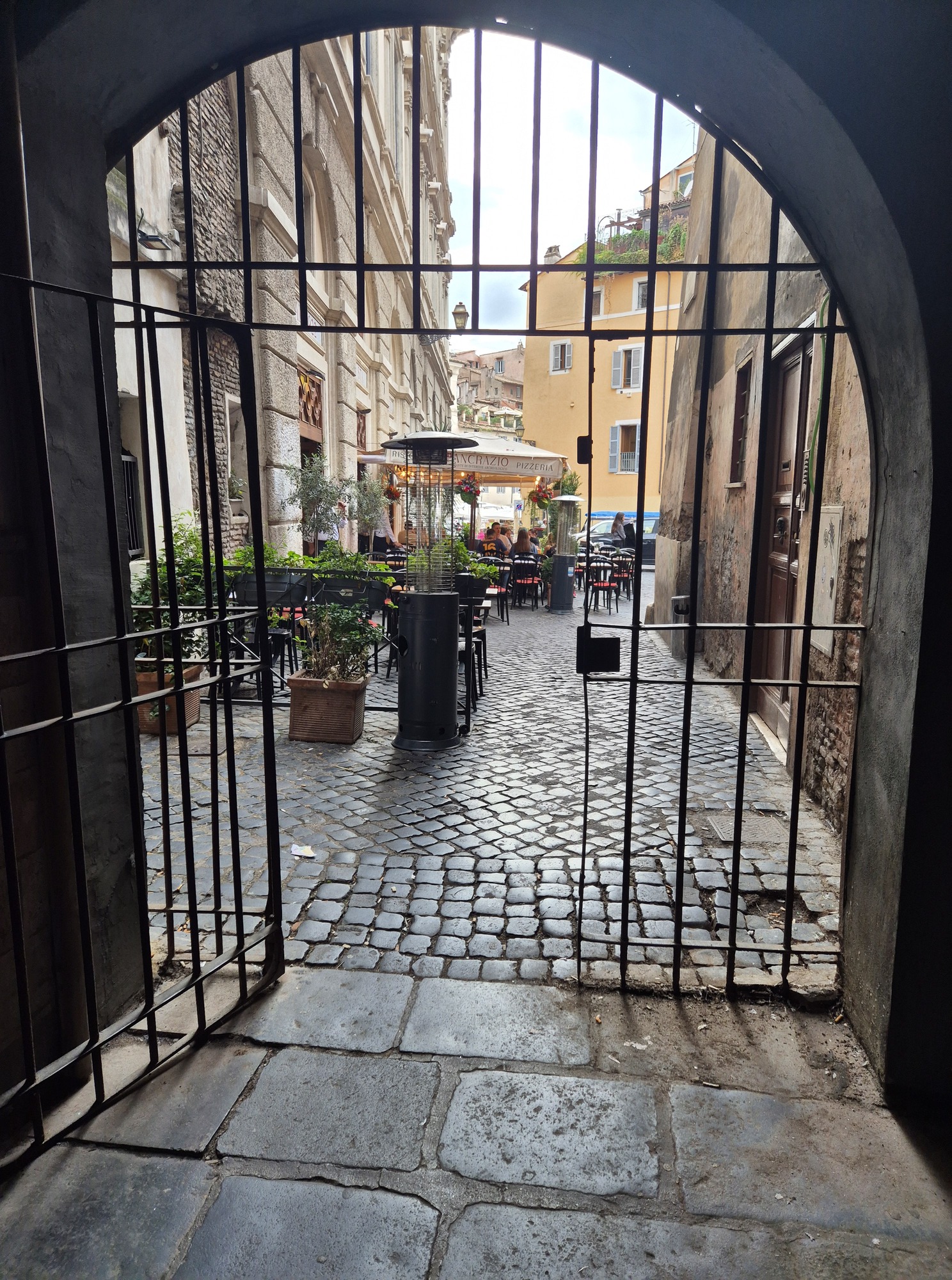
A scorciatoia (shortcut) through the maze in the historic center.

The old routes came back to us easily enough. The way through Villa Borghese we walked to-and-from work; the route we took from home to Piazza del Popolo to Campo de’ Fiori to go shopping every Saturday. Some of the vendors we used to buy from are still in the same stalls.

We dined at a couple of favorite pizzerias, La Pratolina and Da Remo. Still great: in fact they seem untouched by the intervening years. Even some of the servers are the same people we remember.

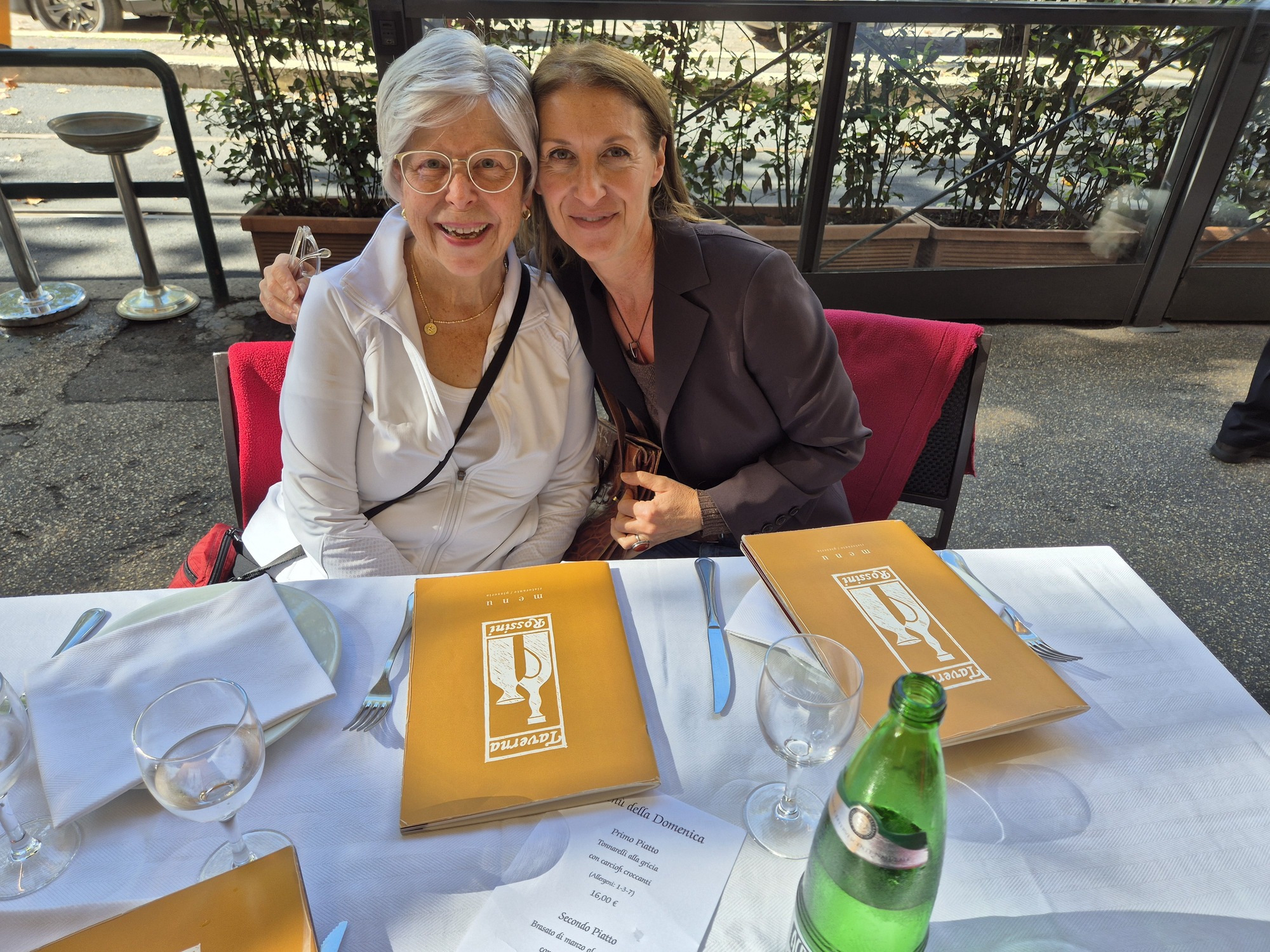
Our old standby, Antica Taverna, was not as good as we remember but it has suffered a change of ownership. It was nostalgic to sit there, on an obscure vicolo, and reminisce about our many dinners there including a Christmas Eve before I was blogging, Thanksgiving of 2012, and New Years of 2014. We ate there about once a month for over four years. Taverna Rossini, the neighborhood joint where we took all of our guests, was still so good we went there twice this trip!

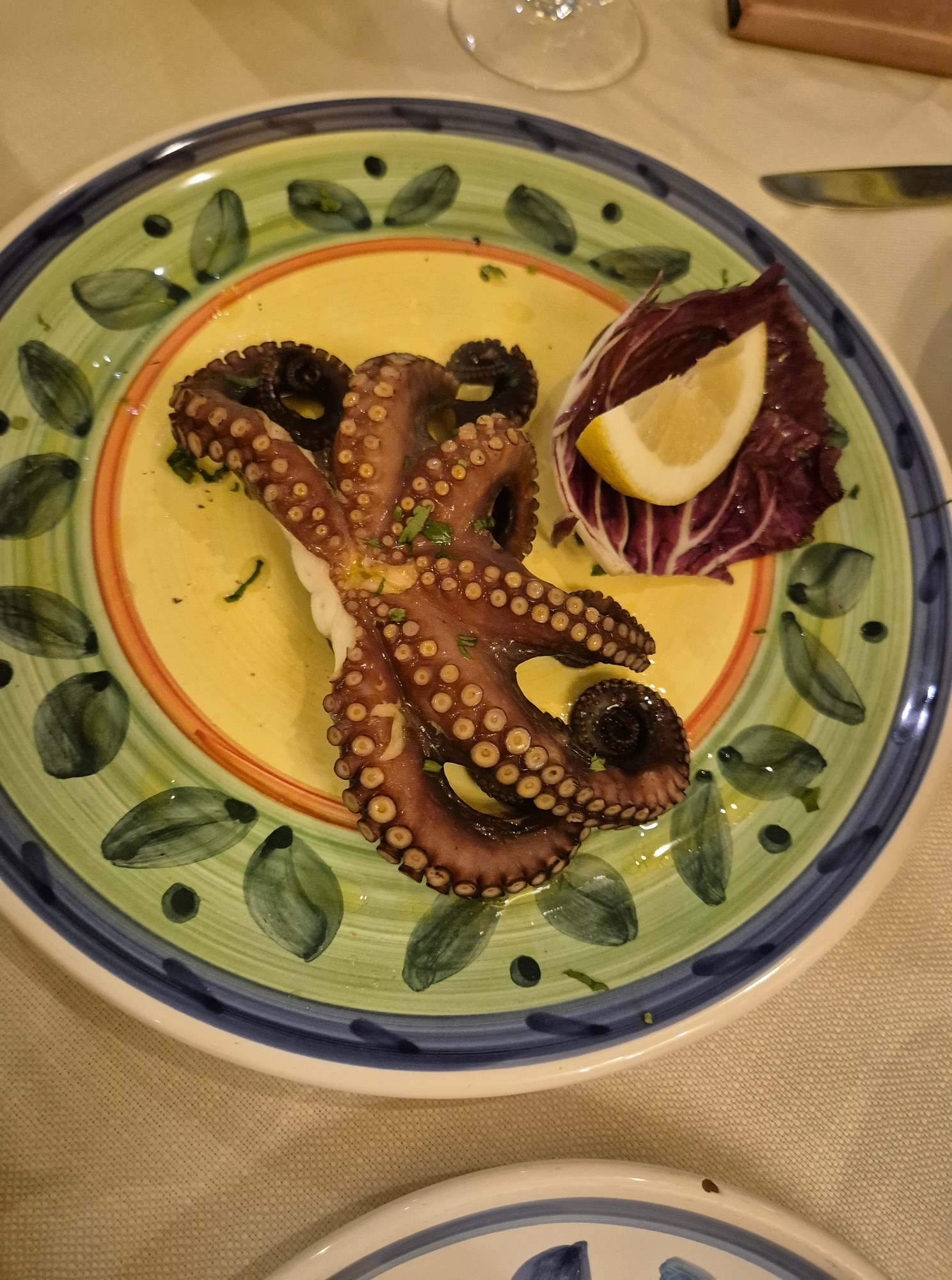
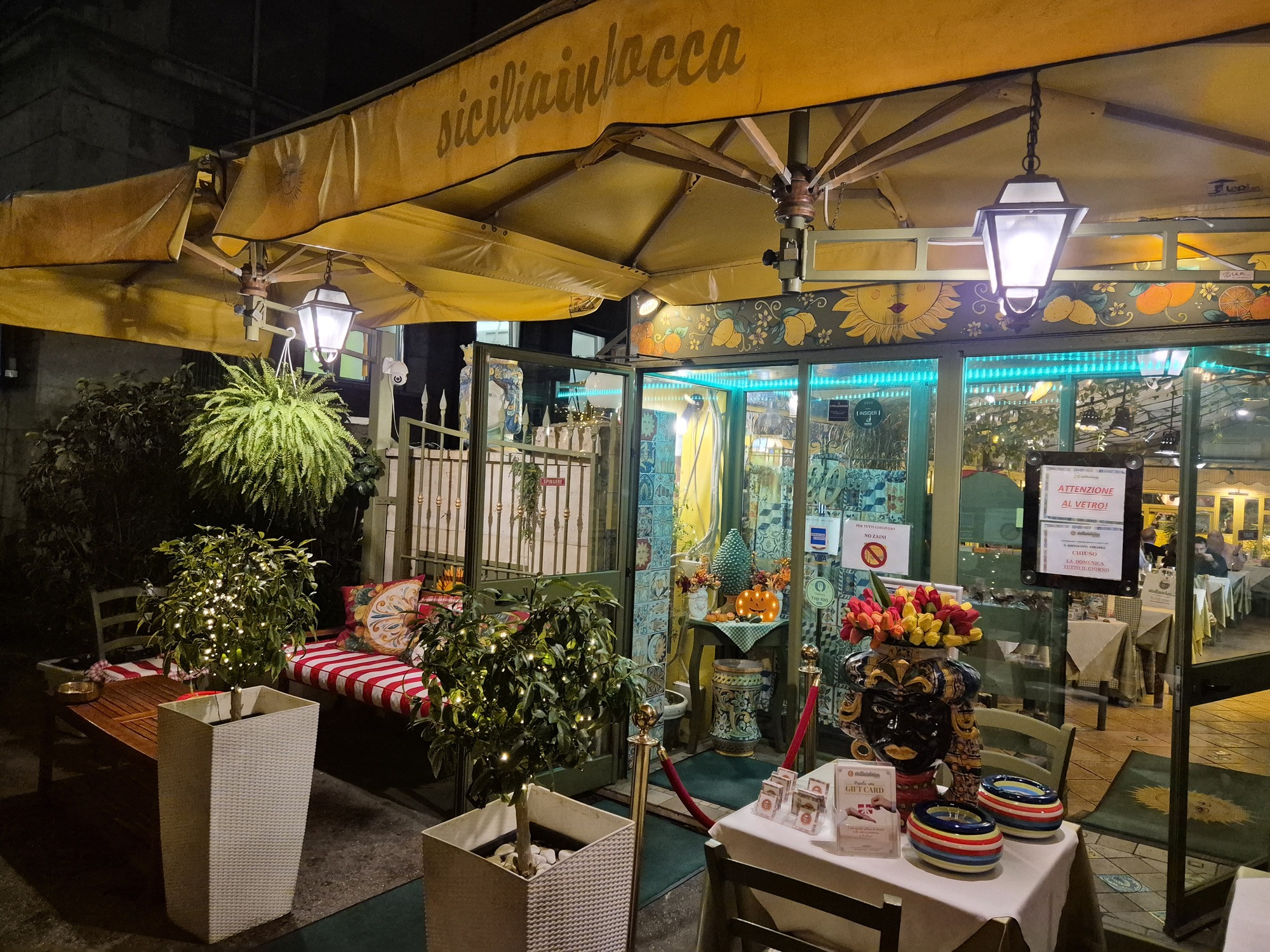
Finding good Sicilian food outside of Sicily is a challenge, but Siciliainbocca did not disappoint. We happened by on a Tuesday, which was couscous night. Couscous ala Pesce is my favorite memory of Sicilian food, and it was memorable. No wonder Elon Musk dines here! (The cabbie told us about Elon’s visit, but we went there anyway.) Donna Fugata wine, an octopus appetizer, grilled calamari for Ric. We left happy and walked back the 2 miles to our hotel as penance for all we consumed.

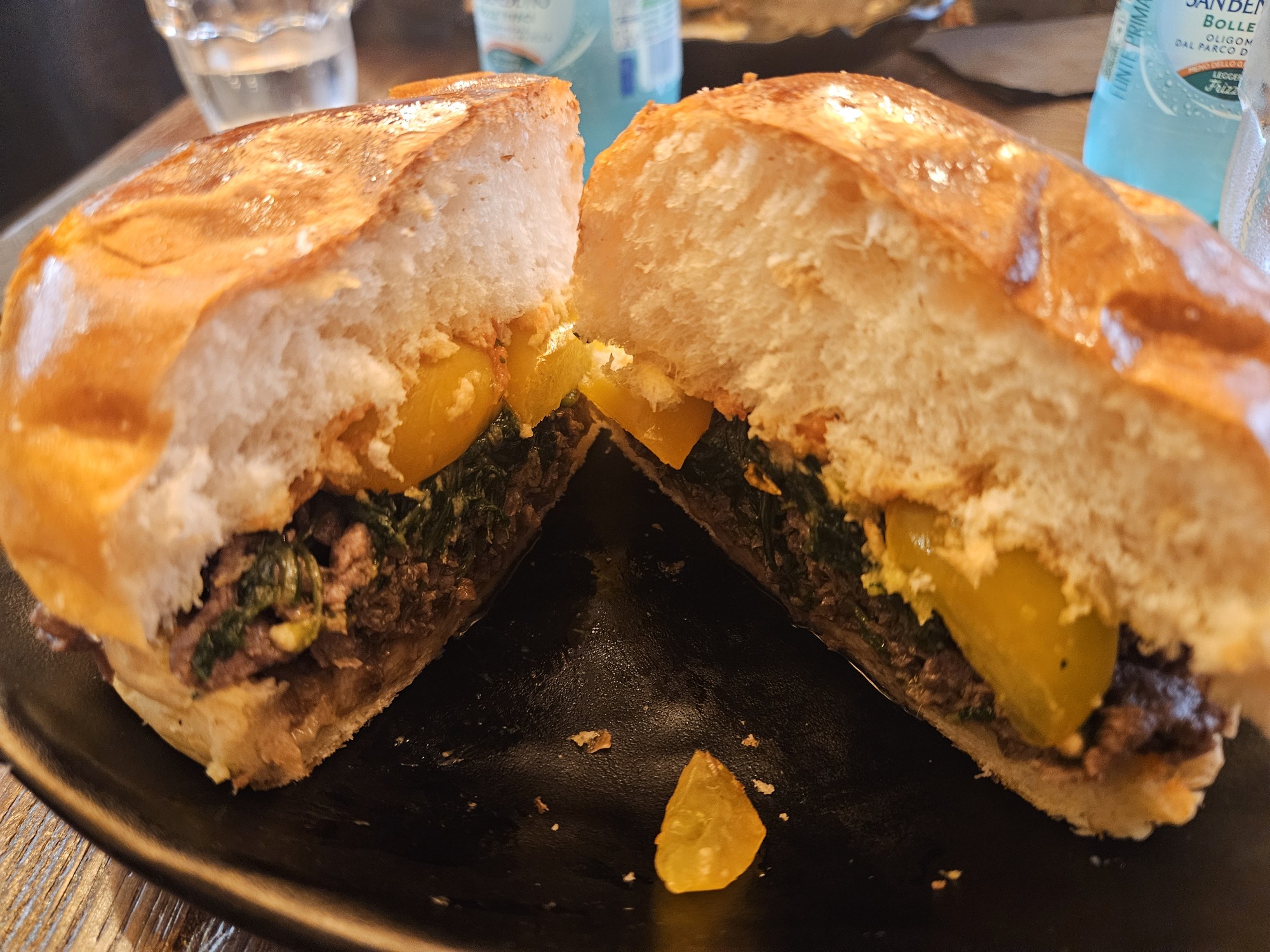
We found some fun, new places to eat as well. Lunch has always been hard for us in Italy because they like to offer big lunches of pasta and traditional main courses or pizza. We like salads and sandwiches. Two new eateries we recommend, Cabullo (3 locations) and Molly’s Garden, are a welcome change. Molly’s, in particular, appeals as they know what they are doing with eggs, and they make a delicious wrap. Osteria La Quercia was so good I forgot to take food photos. They only use fresh ingredients guaranteed by small breeders and farmers, organic companies, and seafood from the Lazio coast. (Click on any photo for a better view.)

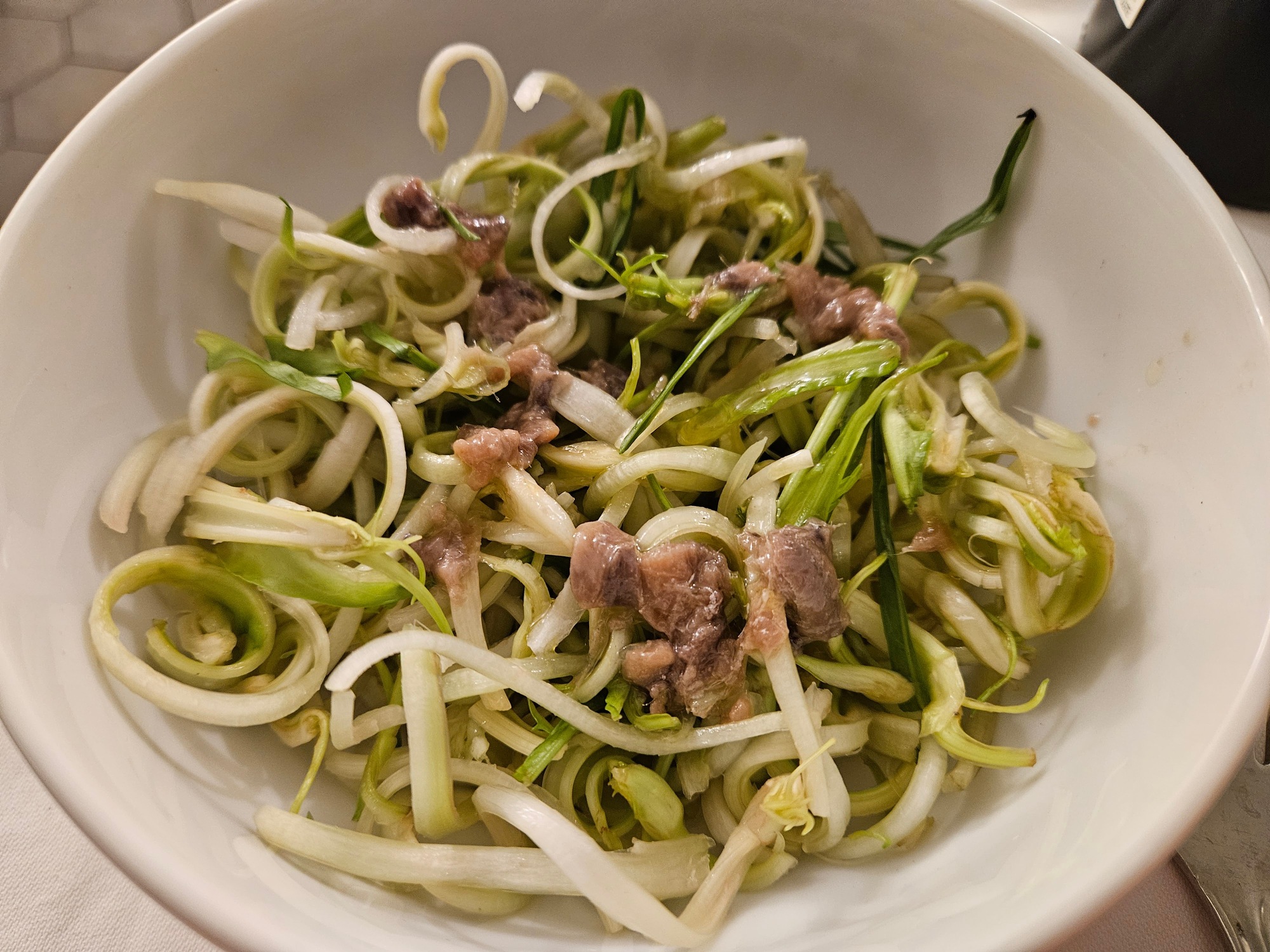
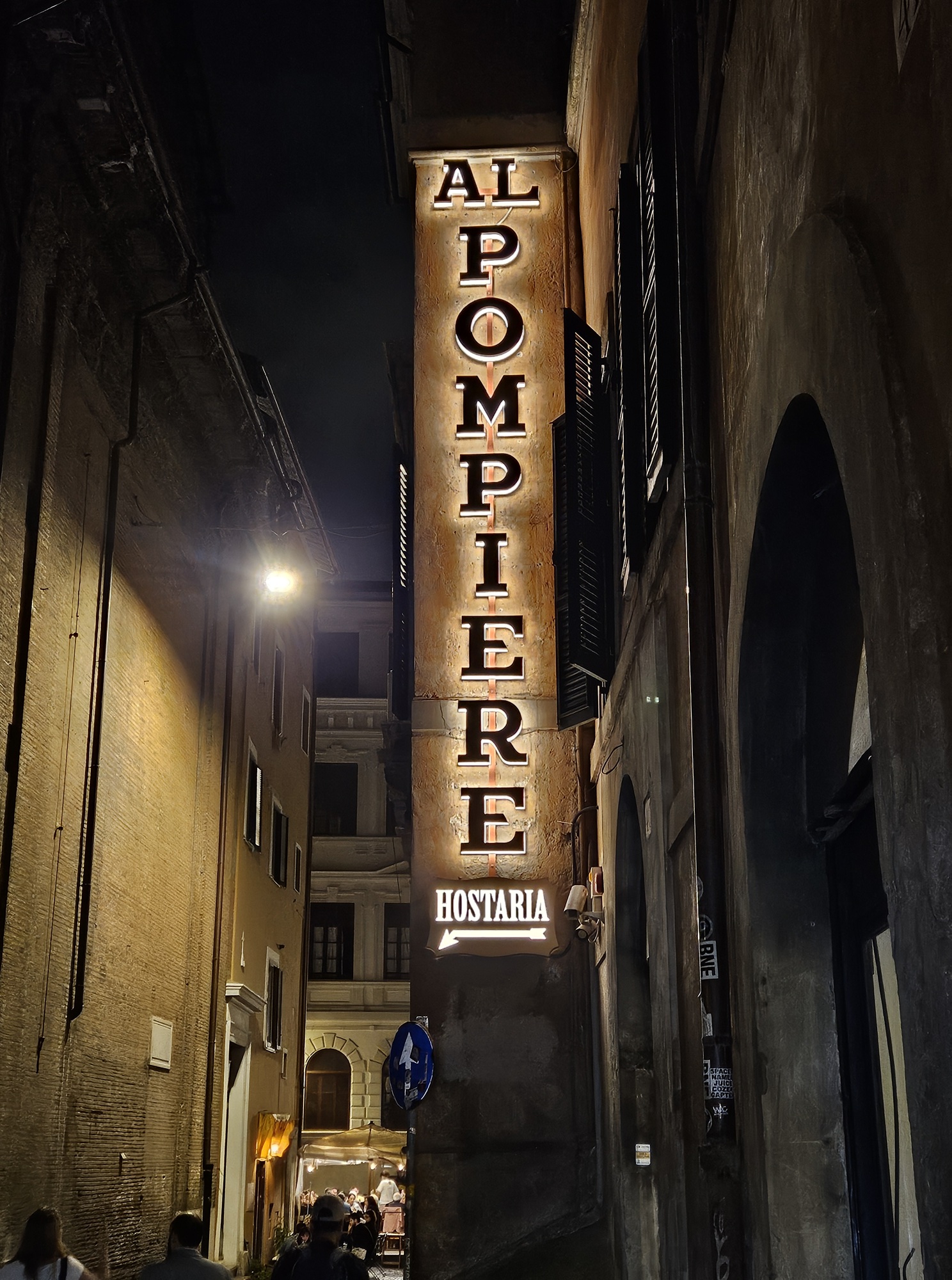
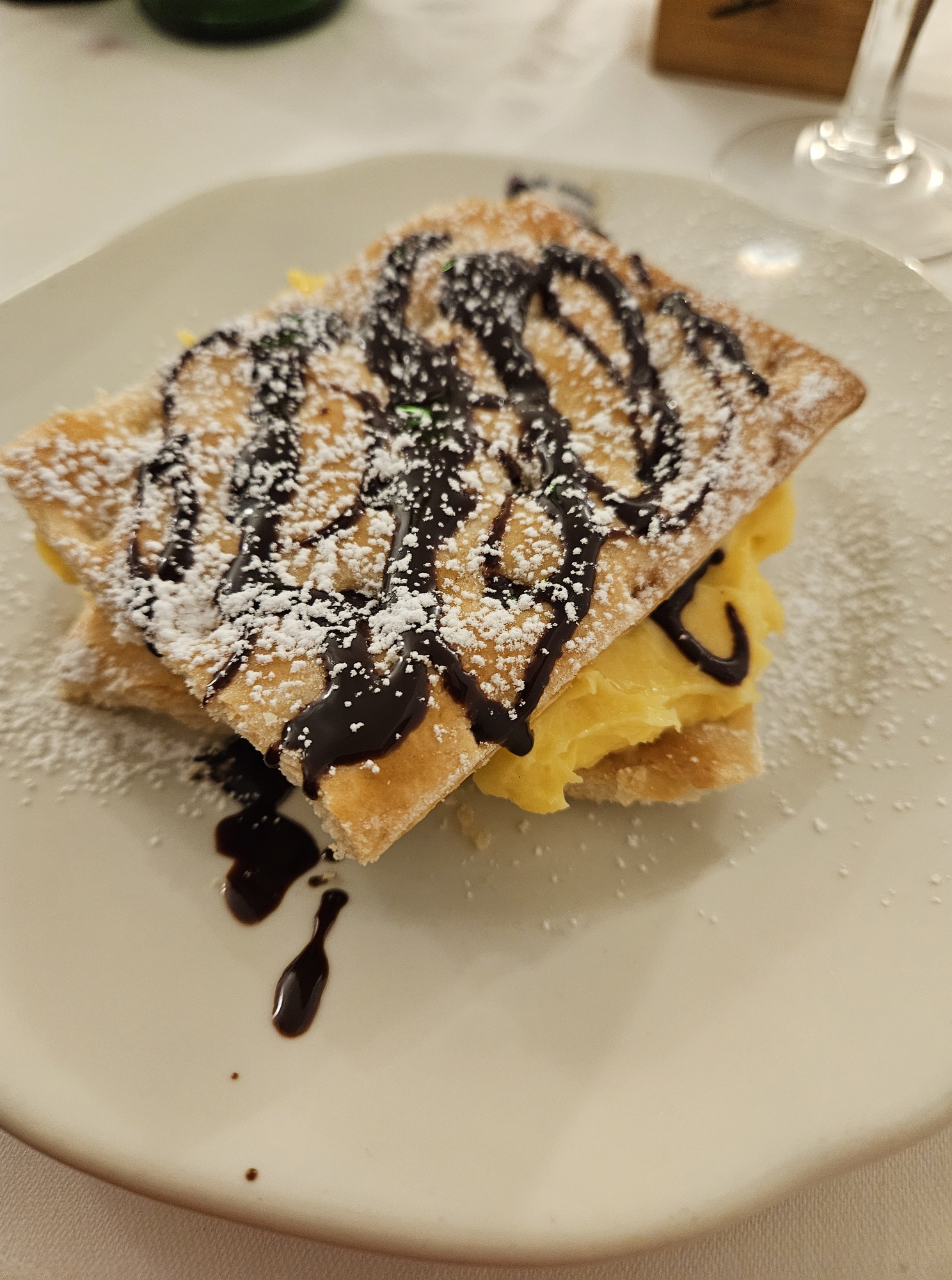
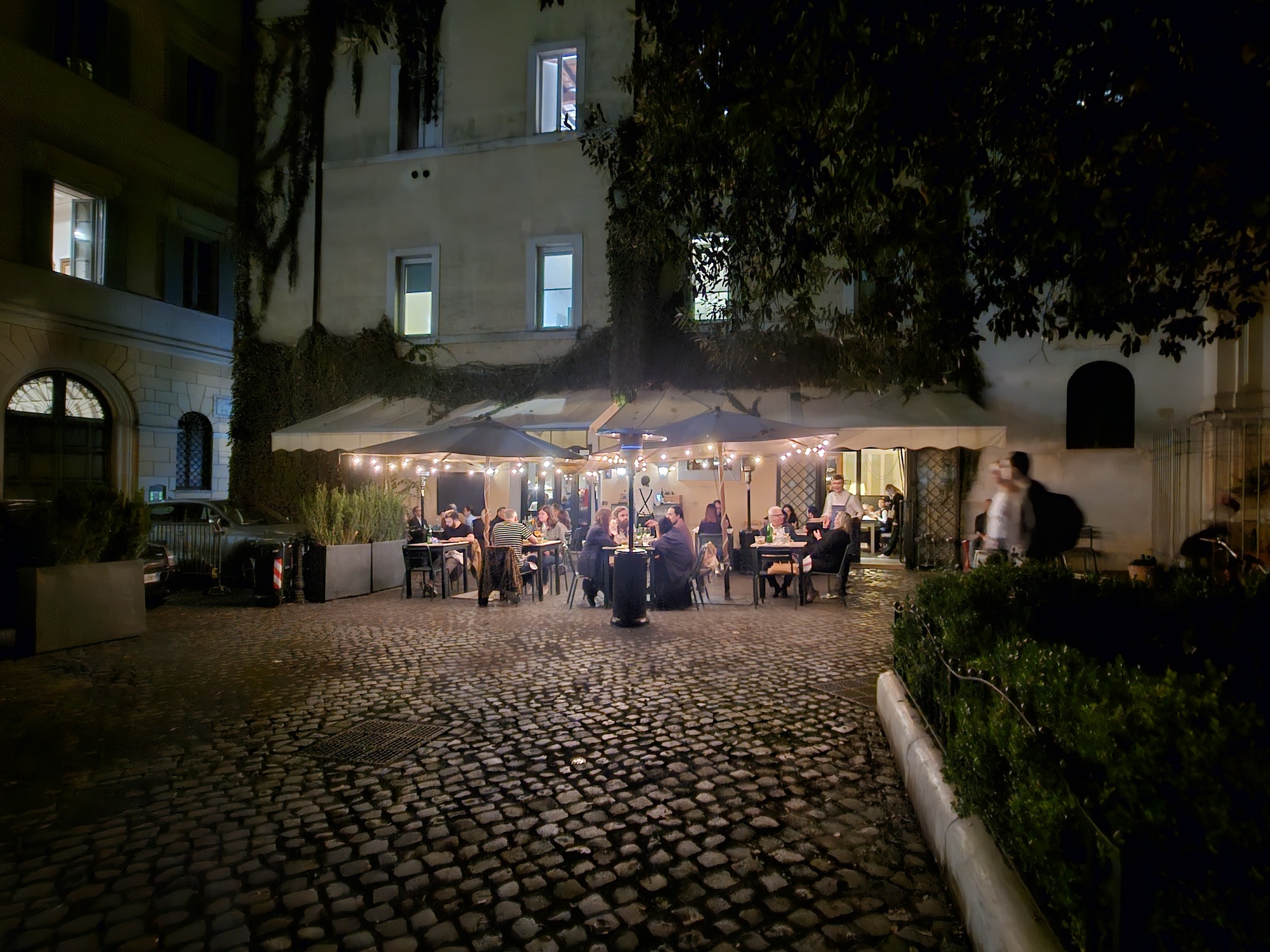
Our final dinner of the trip was at Al Pompiere, well known yet for all the years we lived in Rome we had not visited. It was our loss! Family owned and operated, the padrone waited on us in the tradition of old hosterie (osterias). Classic Roman food: puntarelle (a salad of chicory sprouts with anchovy vinaigrette), carciofi alla giudia (fried artichokes), fiori di zucca (fried zucchini flowers stuffed with cheese and anchovy, battered, and fried) and much much more.

Without fail, everywhere we dined at night we were glad we had reserved. Any place decent and not too touristy was full and tables do not turn like they do in the US.

We found our way to a leather shop we used to patronize in Trastevere. There are leather shops all over the historical center, and some of their products might actually be made in Italy, but Ciufetti is the real deal. We arrived at opening and told the owner we used to come here many years ago. He told me it has been in business since 1955, the year he was born. He and his wife now run it and are open 7 days a week! He loves it! They make all of their leather products in house and sometimes, when tourists discover them, they literally get their stock cleaned out because people recognize the value and the quality at a fraction of the prices in the tourist shops.

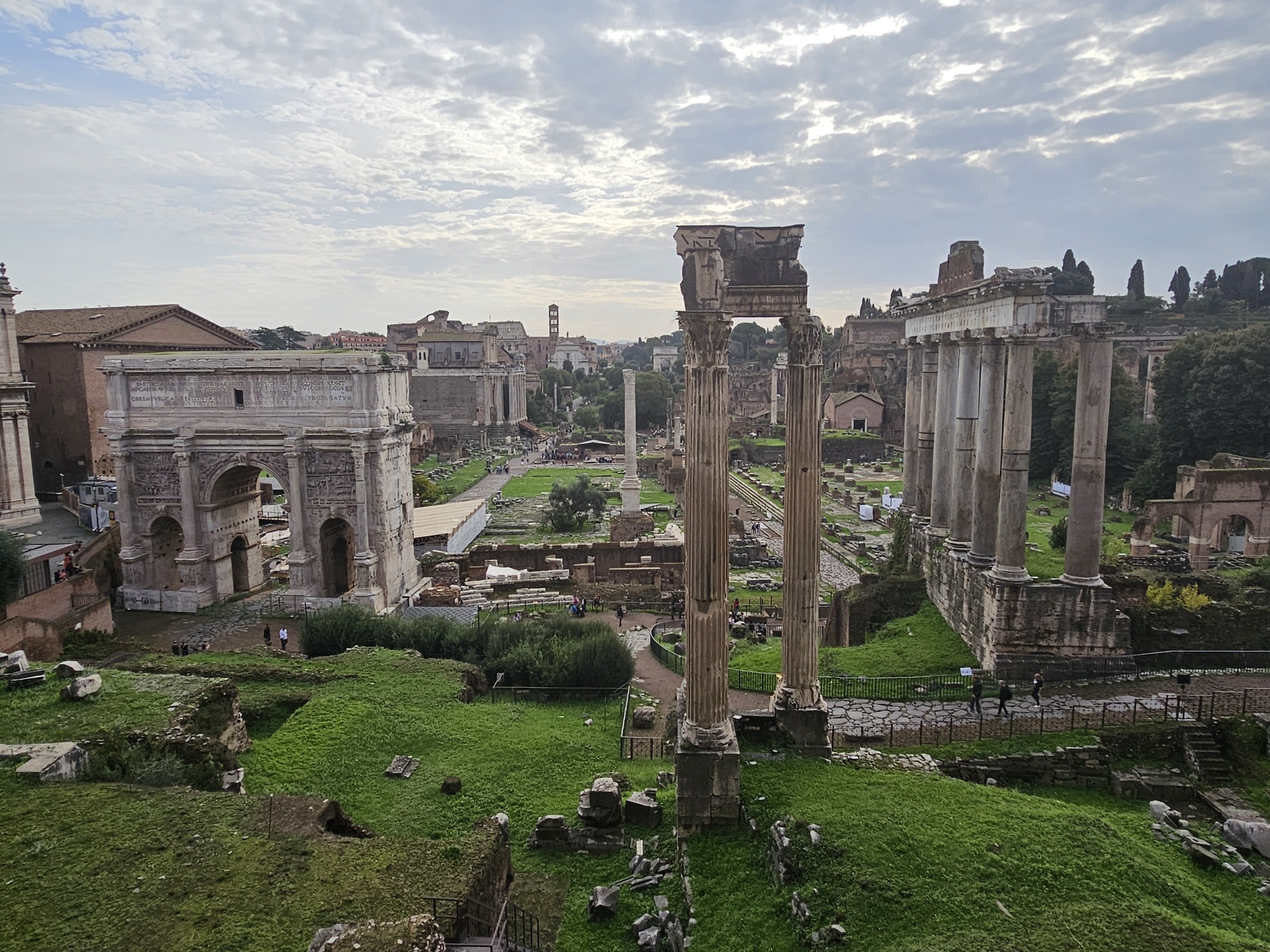
The city is getting ready for a Papal Jubilee year in 2025 and as a result there is construction and restoration everywhere. All the tram lines are down. The Metro Line C is still not complete and screened fencing blocks vast sections of the historic center limiting views. There is scaffolding everywhere and it seemed like every fountain was dry and being repaired. If this was my first visit to Rome I might be annoyed at how much is blocked but we saw it as a reminder that Rome has been changing for millennia and will continue to do so.

Screening hides much of the area around the Forum as they try to get Metro Line C completed.

I planned to get transit passes for the week we are here, but they proved remarkably hard to find. Luckily, we did not invest because the buses have been impossible and after two buses did not materialize (ghosted) twice in our first afternoon, we had to find a taxi to take us back. At that point we decided to go a piedi (on foot) or take taxis. Period.

Speaking of feet, in Rome we far exceeded the mileage we had in Richmond early in the trip (see 61000 Steps). In 8 days in Rome, we walked over 56 miles and I had almost 162,000 steps on my pedometer, an average of >20,000 per day. it helps when you can’t get a bus. (Trip total on the pedometer was a respectable 950,000.)

I should author a book called “Rome the Umpteenth Time” highlighting the places we visited that were new-to-us. Rome may seem static, but she is always undergoing change.

  • We had, remarkably, never been to the Capitoline Museums. Underappreciated, vast, uncrowded, with amazing statuary and Renaissance art plus a drop-dead perfect view over the Roman Forum. We passed a quiet hour with few other patrons around and no massive tour groups.
  • Palazzo Braschi, Museo di Roma, offers insight into how Rome has changed over the millennia, and startlingly over the past 100 years. We had visited once in 2012, but seeing these exhibits again made me realize my annoyance at the current state of pre-Jubilee clean up is a mere hiccup in this city’s progress. It would be nice if they were not renovating all the fountains at the same time.
  • Largo Argentina, long known as a cat sanctuary, opened the sacred area in the past few years enabling one to descend to the area where the Roman senators murdered Julius Caesar. (You cannot walk in that site but still impressive!) And the cats are there too. Bonus.
  • Forma Urbis, a new museum housing the surviving fragments of a stunning marble map of Rome carved early in the 3rd Century. An 18th Century grand map overlays the fragments showing the relationship to more modern locations. Hard to understand until you see it and the lights go on. A remarkable display.
  • Galleria Colonna was another repeat. We were there in 2013, as I wrote about in the blog Rain in Rome. This time, we had dry, lovely fall weather and were able to tour the fabulous gardens which are not open when it’s wet. The gardens alone were worth the price of admission. The Princess Isabella Apartments are an extra-cost add on that we popped for and were also worthwhile. Isabella was from a wealthy Lebanese family and married a Colonna prince. She used these fabulous apartment to entertain her guests. Interesting articles here (in Italian, so use Google Translate to enable your favorite language). Il Filo Rosso Tra Beirut e Roma della principessa Isabelle Helene Sursock and Isabelle Colonna l’ultima regina.

We had a lovely extended stay of 8 nights, with mild weather, great sites old and new, excellent meals at old favorites and two new-to-us restaurants that we were sorry we could not visit multiple times. The mileage on foot helped (we hope!) defray impact of the consumption of fine Roman cuisine.

Holding hands is nice even after 40 years of doing so.

Another Path to Lunch

16 Sep

16 September 2024.

Sundays are days for long walks and special lunches, at least while we are traveling. A few years ago, I wrote about a particular favorite, which we have now done three times (See https://girovaga.com/2021/10/03/a-path-to-lunch/) with plans to repeat as often as possible.

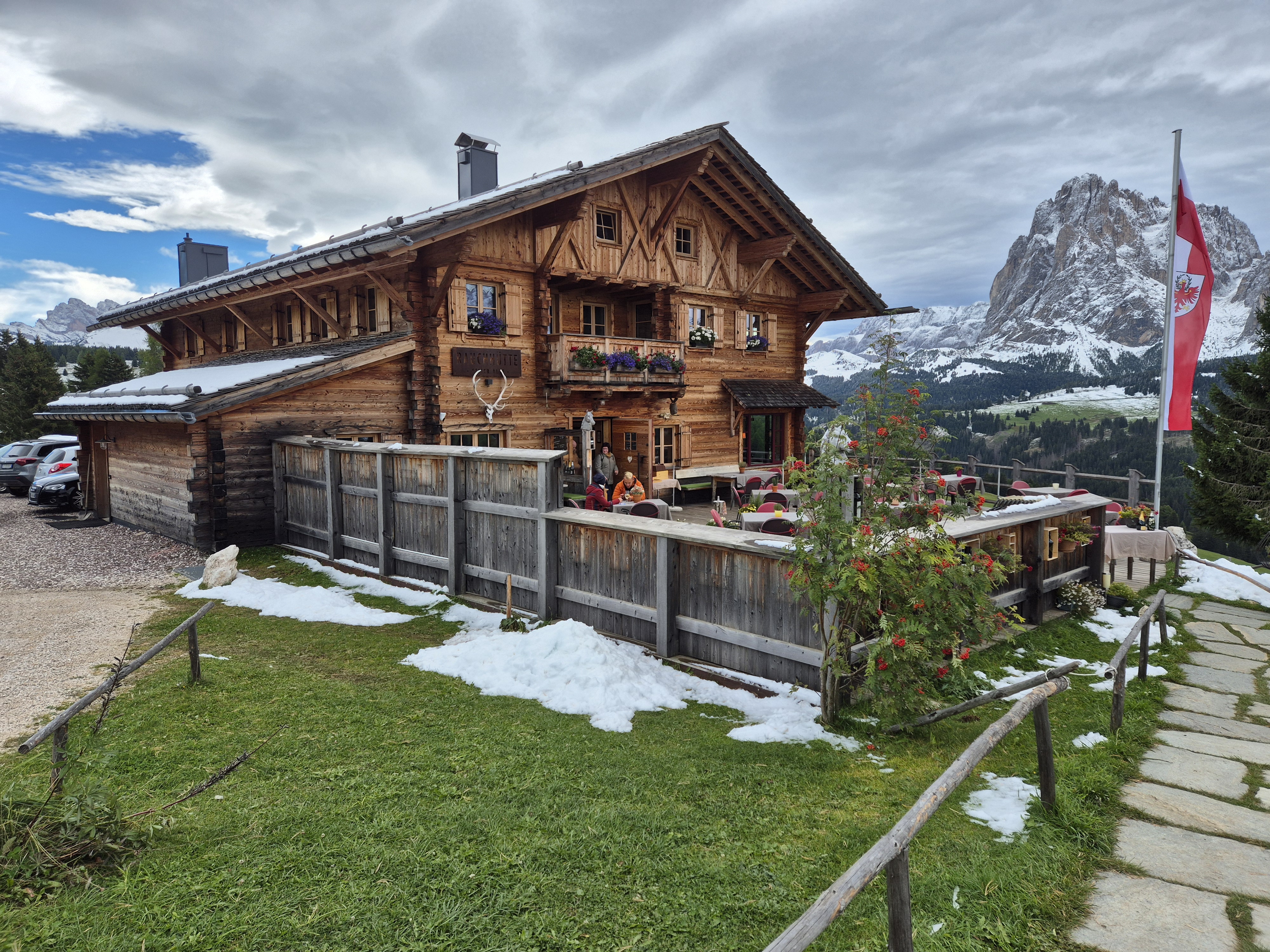
Yesterday we discovered another walk that led us to perhaps the finest mountain “hut” around, Rauchhütte on the Alpe di Siusi. I have read various raves about it: “Best hut! You have to go! Nowhere like it!” My cynical self said that all mountain huts are the same atmosphere, beverages, and mountain cuisine, in this case Südtirol specialties, beer, limited wine, grappa, and good coffee.  Rauchhütte is un altro mondo: a world apart.

Perhaps I should explain the concept of today’s mountain “huts.” In Italian we call one a rifugio or baita or malga, in German it is hütte. You would probably call one heavenly. We are talking real plates, glassware, and cutlery; Espresso machines and full kitchens; Clean bathrooms. They serve simple mountain food: hearty pastas, local specialities like canederli (a kind of dumpling), cheese and meat platters, polenta, game dishes featuring boar or venison, spareribs, lots of potatoes, beer, limited wines, some hard liquor. Always strudel, homemade cakes, coffee, and so on. Hearty fare. Occasionally a salad slips into the menu.

Approaching the baita Rauchhütte.

Imagine this terrace on a sunny, temperate day!

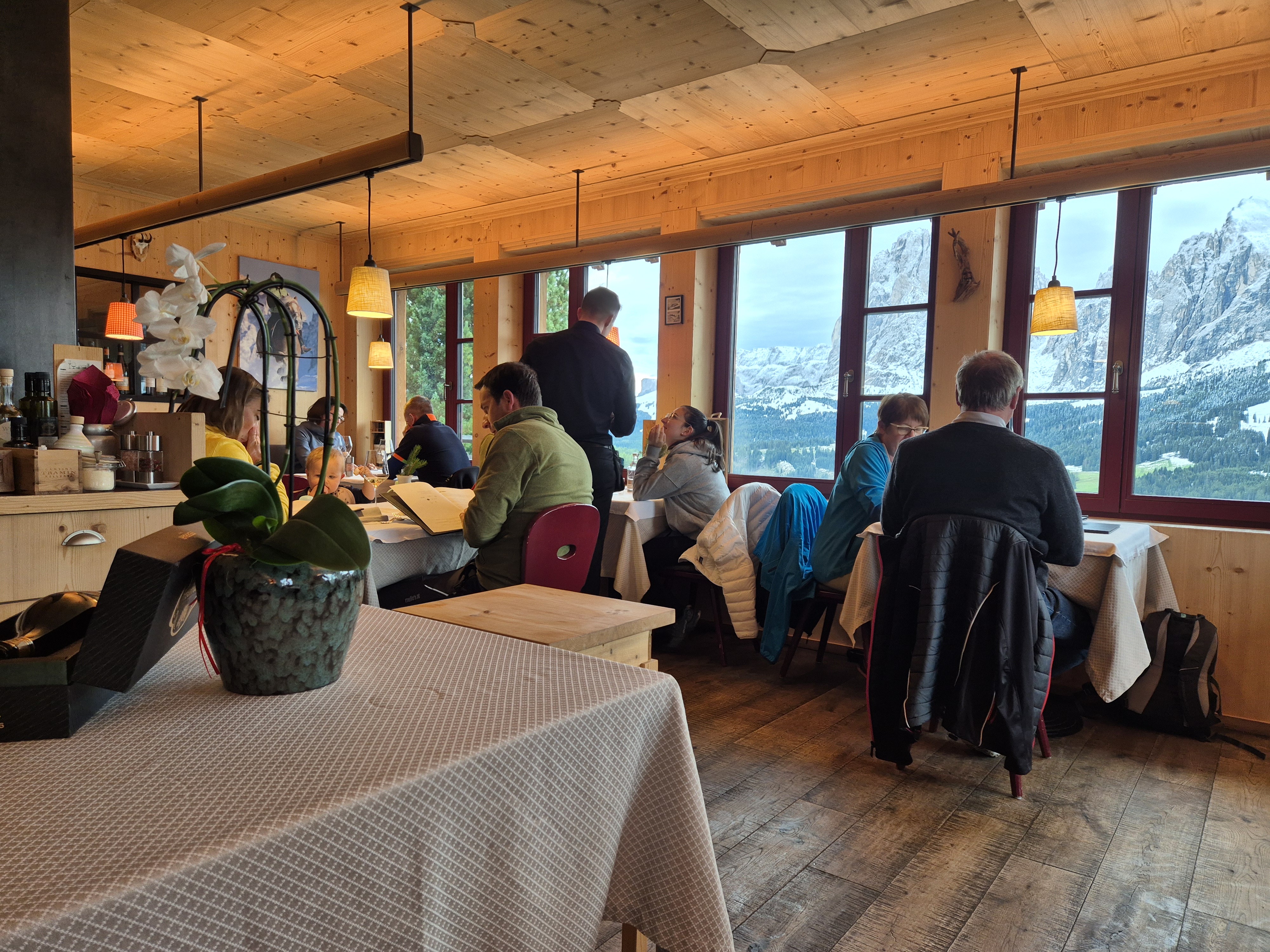
Rauchhütte defies the traditional baita. It is a gourmet experience, a wine-driven restaurant perched in one of the most beautiful mountain settings you will find. A fabulous deck, a warm and cozy dining room, stellar service, an impressive wine list, and elevated cuisine.

It was almost full when we arrived at noon. We were lucky to get the last unreserved table. Sunday lunch is a big deal and people target Rauchhütte for this special time.

Interior with views to the Sassolungo and Sasspiatto.

You cannot drive to Rauchhütte. You can cycle, hike, walk, or take a bus. We walked an hour to get there from AlpenHotel Panorama as well as an hour after lunch to — get this — ride a chair lift back to our home base! Who needs a bus?

Adding to the pleasure of the day, we are having a wintery September on the Alpe di Siusi. About 6 inches of snow fell Thursday into Friday, and Saturday was cursed with a bitterly cold wind. Sunday, the winds were still, and silence descended as it does with snow on the ground. Even most of the (few) people out were not talking much. Just enjoying the unusual scene. So did we. SIGH.

Lunch was divine. Fine wines by bottle or glass, a limited but excellent menu with many specials for the day featuring seasonal favorites like porcini or deer. Yes, the local specialities were present as well, but in an elevated manner, with the service you would expect in a fine-dining restaurant; except all the patrons were dressed for outdoor sports and had backpacks at their feet.

Ric’s lunch of canederli and goulash.

My choice: Housemade pappardelle with oxtail ragu.

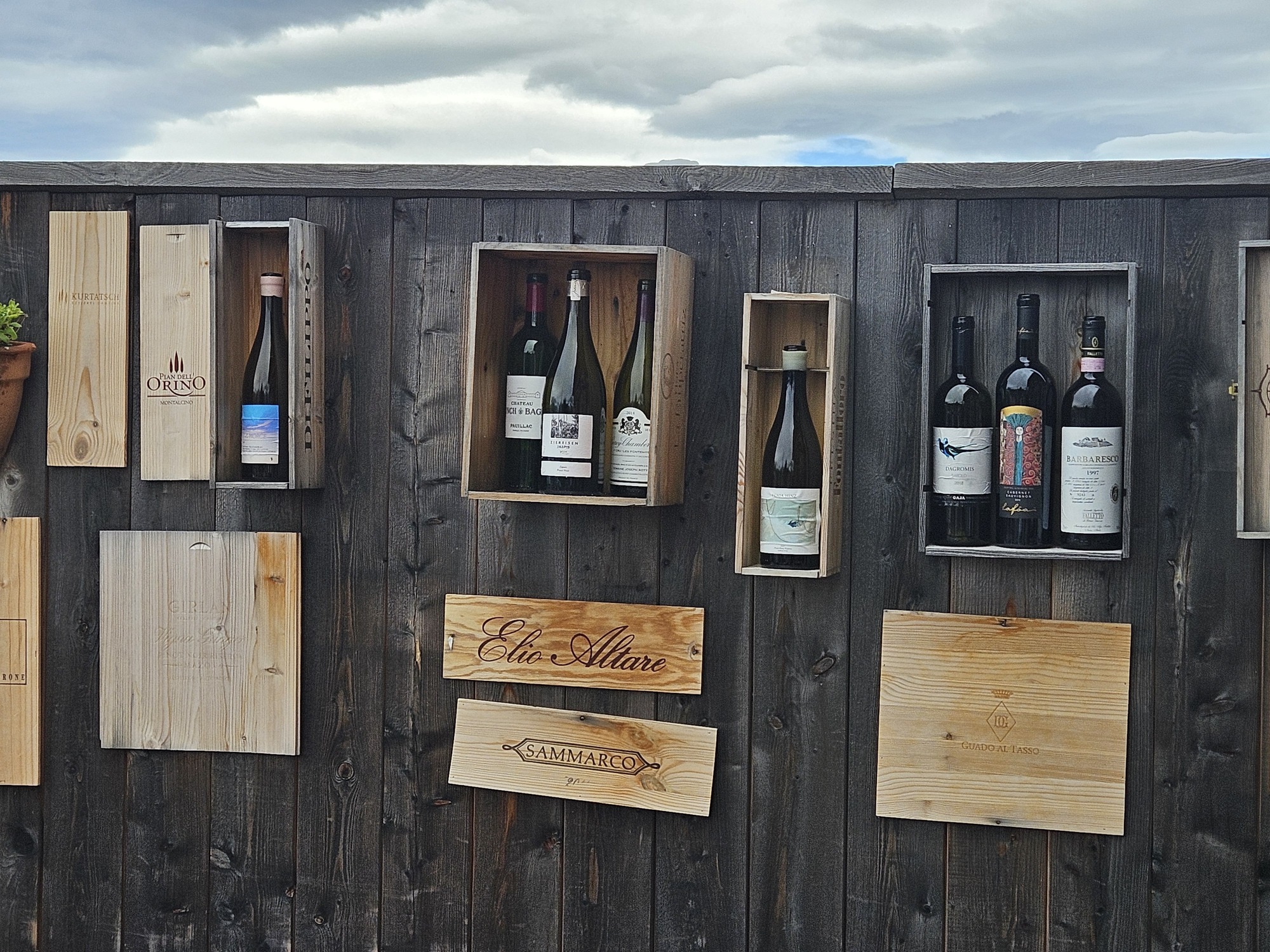
Terrace wall decorated with (empty) wine bottles. They claim to have 300 labels in the wine cellar, mostly local.

A total of five miles and two hours of walking might have put a dent in the house made pappardelle with oxtail rags that I snarfed down. We will be back next year. I might even include one this in the next edition of Walking in Italy’s Val Gardena.

For those who are curious about the route and know the area or are visiting, we walked Trail #6 from Panorama downhill toward Ritsch, turning right on Trail #30 until it joins the main road at the Wiedner Egg bus stop. From there, follow the road to the “hut.” The easy-hiker way back is to walk the road back to the bus stop, then follow Trail #30, the Hans and Paula Steger Trail (also in our book) all the way to Compatsch, returning up to AlpenHotel Panorama via the chairlift.

Or take the bus if you had too much wine. That might happen next year because the wine list is simply awesome.

One of the views on our path to lunch, the magnificent Sassolungo and Sassopiatto.

Kindness of strangers

3 Sep

3 September 2022.

The other day we went for late morning coffee in the cute village center. We had decided to not go up high on a hike but to chill a bit ad do some shopping since the day prior was quite active. After a couple of grocery store stops, Ric realized he did not have his wallet. A frenzied search of the apartment led us to return to the last place we knew he used his credit card: a grocery store here in town late the afternoon of the day prior.  No, they had not recovered it. Worried about compromise, Ric checked the two credit card accounts and two bank accounts for which cards had been lost. His driver’s license was also in the wallet which was actually a small folio for a few cards and cash.  Good news: no unrecognized activity. Bad news: Ric had to cancel all of the cards which meant I was the only one with access to funds of any sort. 

For a leisurely day, it was intense. We went three times to Ortisei center. We are staying up a hill a 10 minute walk from town center which doesn’t sound bad until the third uphill return. 

After all of the efforts to cancel cards were complete, our landlady, Justine, rang our bell at 4:30 PM to tell us il portofoglio had been found at the café where we’d had coffee about 10:30! 

Two young waiters had spent the day trying to track down Ric. They tried Facebook, Instagram, and God-knows-what other networks with no luck because Ric isn’t connected online. Finally, they called the Tourist Information Office who sent out a blast email to all lodging facilities in Ortisei. Did anyone have a guest “Ric di Oregon?” Luckily, Justine was at her computer and saw it. 

The view from our table at Cafe Demetz, Ortisei. The wallet was found on the floor under our table.

We headed into the village center for the FOURTH TIME to retrieve the wallet and reward the guys. Everything was intact: all 4 cards, driver’s license, health insurance card, and about €50. Remarkable! This is such a small town that all the locals know each other despite hosting more lodging beds than there are residents. Such good news, the kindness and honesty of strangers. 

The timing was just right for un’aperitivo served by the very guys who found the wallet. That eased us into the evening and we ended the day on a true high with great pizza and our favorite local wine, LaGrein, at the pizzeria next door.

Another view, in the evening with Aperol Spritz and a small bite.

Charles Schwab Bank is expressing a replacement debit card to Ric, but the credit card companies wouldn’t do that so I will be paying for most everything since cash is used less and less here as at home.

On another note, hiking has been excellent as the weather has been near perfect. We eased into mountain hiking with a few nights in the Alpe di Siusi where there are many paths and roads for walking that are fairly gentle and undulating. No need to take strenuous ascents and descents unless you want to. We didn’t even unpack our trekking sticks there.

We embarked a couple of days ago on an old favorite in the Val Gardena. We had not taken it since 2019 and 3 years made it seem a wee bit harder on the creaky old knees and hips. 

I am contemplating a book update for 2023 after all. More hikes to add and tweaks to make aimed at other creaky-kneed hikers. We’ll see. Editing is such a job.