Archive | Trains RSS feed for this section

Castel Gandolfo: Vatican by train

13 Sep
One of the goals we have in staying in Italy for some time to come is to continue exploring our own backyard, i.e., Roma and environs. We’ve enjoyed some less-visited sights over the past three years, and continue to look for new ones. Afterall, una vita non basta!
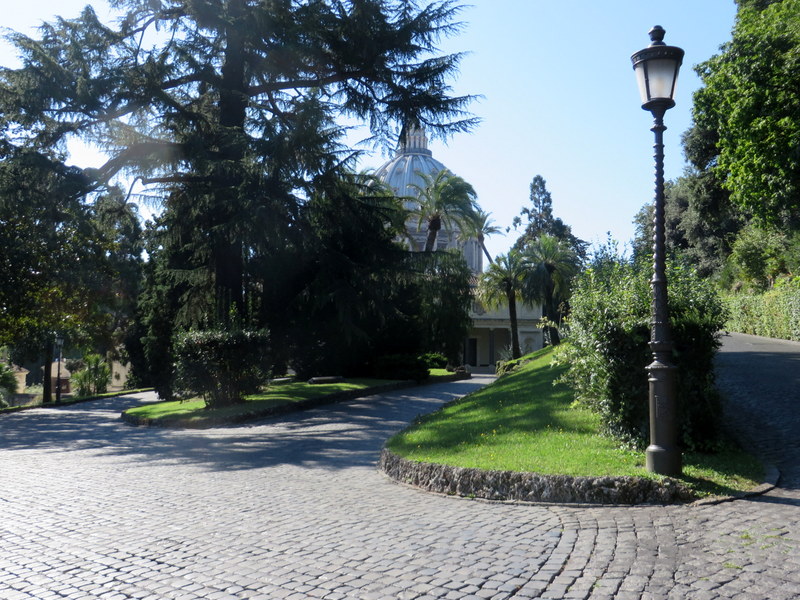
St. Peteràa from the inside. A view from the garden, where the Pope takes his daily walk.

St. Peter’s from the inside. A view from the garden, where the Pope takes his daily walk.

Early last week a new tour was announced in the Italian press: Vatican by Train. That got Ric’s interest pretty fast. According to the press, the tour, called “Vatican by Train Full Day” would run only on Saturdays and the first run was September 12. We could be on-board for the maiden voyage!
Here’s what the Vatican website had to say
With the exceptional opening of the Barberini Gardens and of the Museum of the Apostolic Palace, the Pontifical Residence of Castel Gandolfo welcome the public at large.
Visitors who book the Vatican by Train will have access to the Vatican Museums, the Sistine Chapel, the Vatican Gardens and to the botanical and architectural wonders of the Pontifical Residence, known by as the “second Vatican”.
Further exploration revealed an ambitious schedule and the likelihood of a 13 hour day away from home, but we have time…. The schedule for the day broke down like this (wording from the Vatican website)
8.00 am: Avoid the queue at the entrance. Tour of the Vatican Museums and Sistine Chapel with an audio guide;
10.00 am: Walking tour of the Vatican Gardens with an audio guide;
11.00 am: Departure from Train Station of the Vatican City State to Albano Laziale and transfer to the Pontifical Villas by shuttle;
12.30 pm: Tour of the Pontifical Villas (Villa Barberini) by tourist train with an audio guide;
1.30 pm: End of the tour and exit from the Pontifical Villas.
Free time
4.45 pm: Transfer from the Pontifical Villas to the train station of Albano Laziale by shuttle;
5.18pm: Departure from the Train Station of Albano Laziale to the Roma San Pietro Station
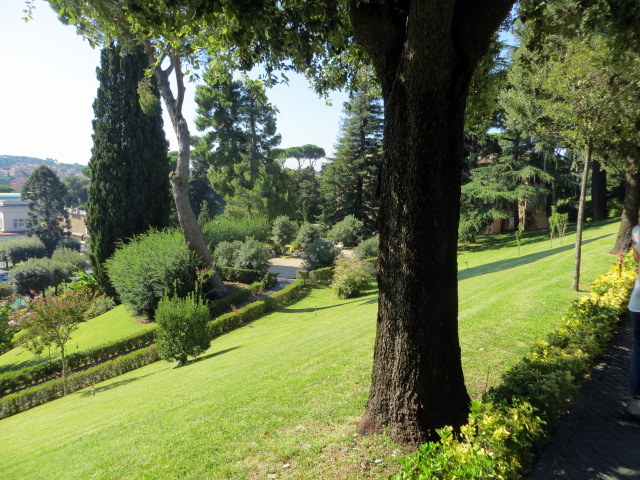
Beautiful lawns fall away toward teh train station. Hard to imagine all of this is inside Vatican City.

Beautiful lawns fall away toward the train station. Hard to imagine all of this is inside Vatican City.

Leaving home about 06:30, we arrived at the museum entrance a few minutes before 8:00, fortified by cappucino e cornetto at a nearby bar. It was clear lunch would be a long way off and we had miles to go before we ate. We were admitted quickly, as promised with our voucher. Exchanging it for tickets and an audio guide took a few minutes, but by 8:25 we were outside the Pinacoteca, which we had decided would be our focus.
There is no way one can “do” the Vatican Museums in less-then-two hours. A few people we spoke to later in the tour tried a mad dash to the highlights such as the Sistine Chapel and Hall of Maps, but everyone eventually realized this was not a best-of-the-Vatican tour.
Fountain in the Vatican Gardens, reminiscent of Villa d'Este.

Fountain in the Vatican Gardens, reminiscent of Villa d’Este.

Our decision to focus on the Pinocateca was fortuitous: We were completely alone for at least 20 minutes. Just Ric and me, fabulous works of art, and a dozen guards hunched over their smartphones. (Whatever did museum guards do before they had smartphones?) Some tour groups arrived, stopped at major works then moved quickly on. We took our time, saw the entire gallery, then had a brief rest before the garden tour. If you ever want to be alone in the Vatican Museums, head for the Pinocateca at opening.
Under clear blue skies and warm-not-hot sun we were escorted through the Vatican Gardens by a group of uniformed guides and a number of “suits” and journalists. The museum officials were shepherding the inauguration carefully, ensuring it went smoothly. And it mostly did.
Bougainvilla still in bloom, the Vatican Gardens.

Bougainvilla still in bloom, the Vatican Gardens.

Our garden tour was also audio-guided, and we had a wee map with audio points described, but it was difficult to know where our group of about 100 people was and when we should punch up each number. Still it was beautiful, not at all what I expected, and while not encompassing the entire tour (which according to the website is 2 hours long) it was a good overview.
We ended at the Vatican train station, a seldom-used and closed-to-the-public relic of a prior era. Thanks to Papa Francesco, more of the Vatican properties are being opened to mere mortals and the chance to take the train out of this station was a strong motivator for us.
Not the steam train the media portrayed....

Not the steam train the media portrayed….

We expected a steam train. All the news media featured a vintage train, but on arrival we found a modern Trenitalia train of the type used on the FR lines. It was fine, comfortable and air-conditioned, but not the historic experience expected. I have to wonder if there was another train that day, but all of the articles I’ve found were written before the 12th and so I think the pictures are “file photos” and certainly not from the event we attended.
We had a nice ride to the station at Albano Laziale, where buses met us and ferried us through narrow streets and up the hill to the entrance to the gardens. There, we boarded a trenino to tour the estate, again with audio guide. Absolutely stunning is all I can say. I had no idea Domitian had a summer palace here, but then why wouldn’t he? The history is, as with almost any grand villa in Italy, long and complex. What remains is a place of beauty comparable to Versailles. Some is wooded, some planted in formal gardens, and there is a farm. Did you know the Pope has a farm? Chickens, white goats, cows, bees: everything one needs in a self-sustaining estate.
Click on any photo to enlarge it or for a slideshow.
Wrapping up about 14:40, we had three hours of free time. We set off to find a restaurant along the lake, where we had lunched a couple of years ago. But wait, where the hell was the lake? Pulling up Googlemaps we found we were in Albano Laziale, not Castel Gandolfo. Duh! Not close to the lake, we started wandering the town, which was mostly closed for la pausa. Not a lot of restaurant options we could see, but peeking down a little alley Ric spotted a trattoria. From where we stood it looked closed, although someone was inside sweeping up. “Siete aperti?” I asked. “Sí! Accommodatevi!” We took a cute table on the patio just as a group of Americans we knew trooped in. They, too, had been surprised by ending in Albano Laziale. They had a reservation for lunch 3 km away in Castle Gandolfo! Feeling slightly less stupid for misunderstanding, we relaxed and prepared to enjoy lunch. We were fortunate to have a little family from the U.K. join us at a neighboring table and engaging in conversation we discovered they had expected to end the tour at the Apostolic Palace in Castel Gandolfo. Surprise!  Perhaps all of the English-speakers misunderstood? Maybe the Vatican website was less-than-clear? Nonetheless, I can highly recommend Trattoria Rosmarino should you make the trip to Albano.
Cin cin! At Trattoria Rosmarino. Highly recommend!

Cin cin! At Trattoria Rosmarino. Highly recommend!

A long lunch ate up the free time (pun intended). There are a number of ruins and sites in Albano for the more industrious tourist, but we had been on-the-go since dawn with not much energy left, so a luxurious lunch was perfect. Back on the shuttle bus before 16:30, we arrived at San Pietro Station just in time to get a train to the tram to go back home, another adventure in public transportation for us.
Isaac, our dining partner at Rosmarino.

Isaac, our dining partner at Rosmarino.

We were very confused about the relationship between the estate we toured in Albano and the Apostolic Palace at Castel Gandolfo. A little map-based research showed they are on the same property, but the gardens are accessed by the public through Albano, and the Apostolic Palace is at the other end, the north end, closer to the lake. One can visit the Apostolic Palace, any day but Sunday, and only in the morning, and apparently only through the month of October, presumably to be revived in the spring.
I suspect another day trip to the area is in our near future.
For more information on all of the tours, go to the Vatican’s Online Ticket Office. 

Rocky Mountain high

23 Aug
We are in the Wild West now my friends. We find ourselves in beautiful Durango, Colorado for the final stage of our U.S. Megatrip. We wrapped up our Seattle visit to the tune of a rare thunderstorm, returned to Portland for some final errands and socializing, and moved on to the great state of Colorado. (Hover over or click on each picture for the caption.)
I feel terrible that in my last post I neglected to mention Susan & Larry and Gayle & Dennis with whom we also enjoyed terrific meals during the first Portland segment. We ate our way through the city.
Upon our return to Portland for the second visit, we picked up awesome new eyeglasses – my first non-red glasses in about 30 years – and enjoyed a few more dinners with good friends. We’ve had a Lebanese mezza, Northwest salmon barbecue, sushi, more brew pub lunches, and breakfast at a very hip Portland spot, Tasty and Alder. Thanks to John & Janet, Diana and the fabulous Femmes, Jim & Wanda, and J.C. & Maarja! Notice we have not had Italian food at all (except the pizzas previously reviewed at Our Weekly Pizza).
Durango is high-altitude living. My brother’s house in the valley sits at 7500 feet/2286 meters above sea level. That takes some getting used to. That is higher than most of the hiking we do on the ridges and high meadows in the Dolomites.
We needed to spend a couple of days getting used to the elevation in this high valley with little energetic exercise, so we took a ride on the Durango & Silverton Narrow Gauge Railroad Thirty-one years ago Ric and I had our first vacation together and it was to Durango to ride the D&SNGRR. I am delighted to say the railroad has endured as fantastically as our relationship. The ride is a trip through time with authentic coaches, a coal-fired steam engine from the 1880s, and a narrator in character that relates stories of the era. It is an exceptionally beautiful ride through the mountains.  I am pleased to say the Animas River is more-or-less of normal color after the toxic spill a few weeks ago, and is expected to recover.
Once acclimated to the altitude, my brother and sister-in-law took us on a high-elevation hike to Engineer Mountain. For the record, we hiked to “Bus Stop” which is known in our family as “The Lunch Log.” Friends, this hike started at 10,660ft/3249m, and we climbed to 11,617ft/3541m. The round trip was about 5 miles, so not a bad climb, except for the fact that these flatlanders were hiking to an elevation higher than the peak of Mount Hood in Oregon (11,250ft/3429m). We feel pretty pleased with ourselves that we did it without fainting or hyperventilating.
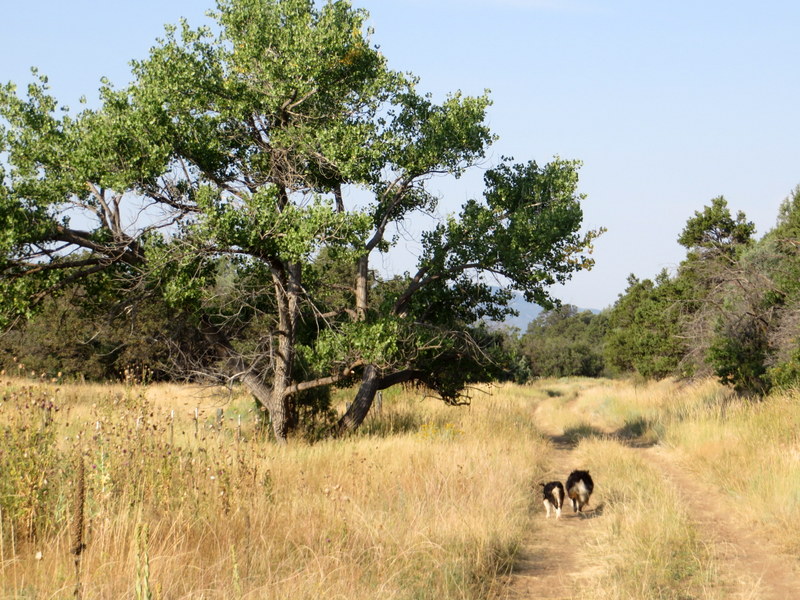
Today we took a Path to Breakfast, enjoying a 4-mile jaunt through the valley and down into the city of Durango where we indulged in an American-style breakfast. We were fortunate to have the company of Australian Shepherds, Quip and Millie, as well as humans Jane and Susan. We have not hiked with dogs in years and it added a lot of fun to the hike. Jane spotted bear tracks on the trail – a sizable bear with a paw as big as a small human foot – a reminder that this land is still wild. Even more fortunate, we were given a ride home from Durango.
Milly and Quip on the path to breakfast, Durango.

Milly and Quip on the path to breakfast, Durango.

We have a few more days stateside. You’ll hear from me again, no doubt, as I get my head around the inevitable compare-and-contrast Italy and the U.S.
Sharon and Catherine photo bomb me.

Sharon and Catherine photo bomb me.

Toto, we’re not in Kansas anymore

23 Jan
Iconic symbols of the city, dating back to the 12th or 13th century, there were once as many as 180 towers.

Iconic symbols of the city, dating back to the 12th or 13th century, there were once as many as 180 towers.

We’re not in Kansas Roma anymore. We stepped off the train in Bologna (pronounced “bow-LONE-ya”) and I thought perhaps we had left Italy entirely. In fact it looked like we had arrived in a newly constructed airport facility, but we were in the new “High Speed Bologna Centrale.”  There was a noticeable freshness to the facility, good signage, wide walkways, no cigarette butts, and plenty of escalators: until we reached the end of the new facility and had to lug our cases up a steep flight of depression-era station steps.
Bologna's high-speed train terminal. Clean, bright, chairs available! We're not in r\Roma any more.

Bologna’s high-speed train terminal. Clean, bright, chairs available! We’re not in Roma any more.

The differences between Bologna and Roma continued to astound us. Beautiful porticoes dating back centuries separate pedestrian traffic from automotive. Clean streets, no overflowing waste bins. People walk in more-or-less straight lines and keep to the right except to pass. Oncoming pedestrians do not block the sidewalks: they make way for you! This is truly not like Roma, where walking down the sidewalk is like a game of chicken and when you swerve to avoid an oncoming body, you may very well step in dog poop. 
Bologna is a lovely city if not one full of E-ticket sites. Sitting in the bread-basket of Italy, it is known for its cuisine and we worked hard at sampling as much of that as possible.
Another notable difference in Bologna: little or no double-parking and no one parks in the pedestrian crosswalks. In Roma there is hardly a pedestrian crosswalk that has not been turned into parking.
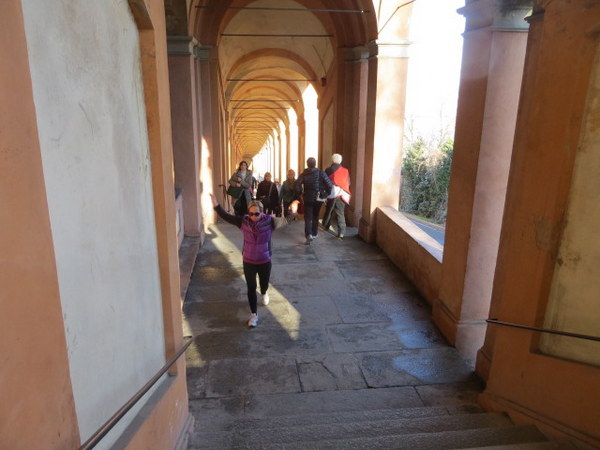
We had lovely weather, so rather than spend time indoors, we took a phenomenal urban trek, the Percorso della Madonna di San Luca. This is a walk of about 4 km (2.4 miles), 2.3 km of which is steadily uphill. The walk is entirely covered by the famous porticos of Bologna, and is the longest continuous section of portico-covered walkway in the world. There are 666 arches. In that final 2.3 km, the altitude gain is a respectable 722 feet (220m), a workout indeed! We were impressed by the number of people doing the percorso on a cold but sunny Sunday. Afterwards we of course rewarded ourselves with a fine tagliere and wine, accompanied by a salad for the health of it.
Many run up the 2 km. to the sanctuary. Show-offs.

Many run up the 2 km. to the sanctuary. Show-offs.

Interesting view showing inside and outside of the extraordinary covered walkway.

Interesting view showing inside and outside of the world’s longest covered walkway.

Not only does the path go up over 700 feet in altitude over 2.3 km, there are in excess of 300 stairs. Ugh!

Not only does the path go up over 700 feet in altitude over 2.3 km, there are in excess of 300 stairs. Ugh!

A view from the sanctuary looking toward the mountains of Emilia-Romagna.

A view from the sanctuary looking toward the mountains of Emilia-Romagna.

If I had seen this view before making the trek, I might not have done it. :-)

If I had seen this view before making the trek, I might not have done it. 🙂

The food was great, although we like Ligurian and Sicilian food better overall. But the Bolognese are justifiably proud of the quality of food. We had four meals there and each was a winner. We did not research restaurants ahead of time, but merely wandered into what looked good. One cannot do that everywhere. Of course we – actually Ric – ate mortadella, which is the Bologna delicacy that has been transformed into the unfortunate American “bologna.” And so the Oscar Meyer song is now stuck in my head. (Personally I am not a fan of either the Bolognese delicacy nor the American lunch meat.)
A typical Bolognese "tagliere" or cutting board of assorted salumi.  Mortadella on the left.

A typical Bolognese “tagliere” or cutting board of assorted salumi. Mortadella on the left.

Street performers are everywhere in Italy. Bologna is the first place we have seen bubble blowers. Kids had a great time running after them.

Street performers are everywhere in Italy. Bologna is the first place we have seen bubble blowers. Kids had a great time running after them.

Aperitivi are a huge thing in Bologna, like in Milano. The cafes are crowded even in winter.

Aperitivi are a huge thing in Bologna, like in Milano. The cafes are crowded even in winter.

The only fault we found with Bologna is that it’s a little lacking in charm. The porticoes that are elegant also make for a sameness. (Actually there was a second flaw: people still do not scoop the poop.) We will be back in June on a trek through the area, heading to the hills outside of Bologna for some hiking. We’ll see what she’s like in summer when the trees and flowers are blooming!
N.B. – I have decided to use Italian city names from now on, therefore Roma and Firenze not Rome and Florence. I think it is rather bizarre of any language to change a perfectly pronounceable city name from the original language, an idiosyncrasy driven home to me when my hometown of St. Paul Minnesota was referred to as “Sao Paolo” by an Italian bureaucrat.

Compare & contrast

14 Sep
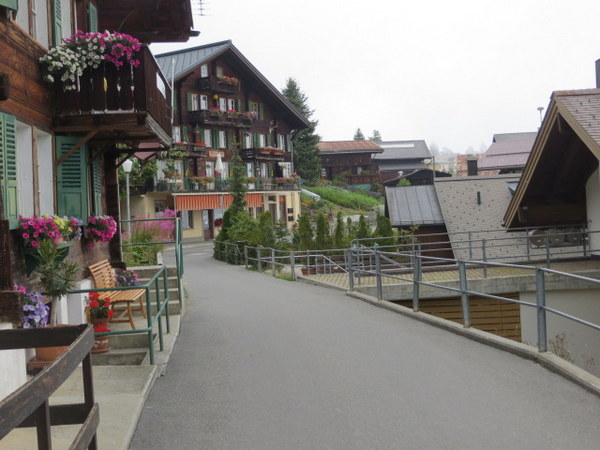
We were enchanted by The Lauterbrunnen Valley in the Berner-Oberland of Switzerland when we visited last winter (see New Year New Country), so upon our return to Rome in January we decided we needed to see the area without snow. Our return trip happened over American Labor Day weekend. What a beautiful area, with wildflowers blooming, snowy peaks, and perfectly clean little towns! What was really fun was to experience the differences between the area in the two seasons.
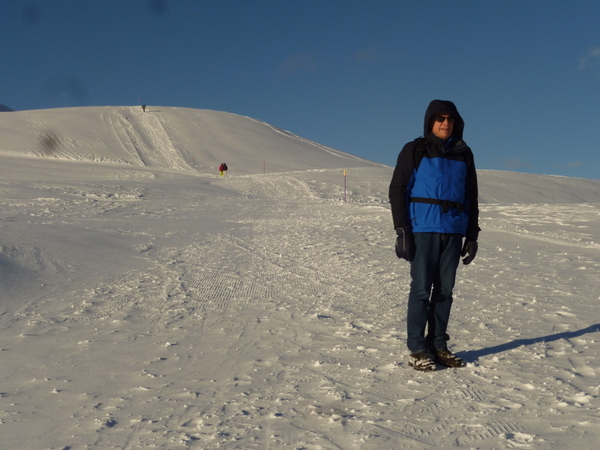
Ric at Mannlichen, bitingly cold wind

Ric at Mannlichen, bitingly cold wind

Similar view, same hill in the background, a little milder, with cow doo doo, in summer

Similar view, same hill in the background, a little milder, with cow doo doo, in summer

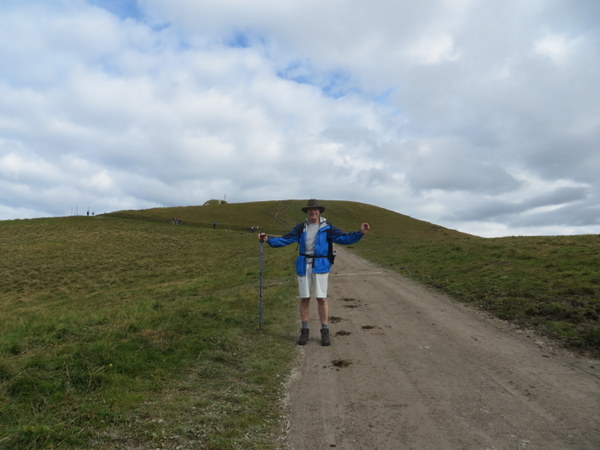
Obviously snow versus no snow was a huge difference, although our last morning we awoke to a temperature of 36 degrees Fahrenheit, and new snow in the mountains: a bit nippy for September 1.  We also found the crowds to be significantly less. Gondolas were never full. Trains were never full.  Trails were no more crowded than in winter, and restaurants were sparsely attended.  We thought summer would be high season, crawling with people but were delighted to find little Mürren uncrowded.
Mannlichen is above the Lauterbrunnen Valley, reached vis gondola and is a great ski area in winter.

Mannlichen is above the Lauterbrunnen Valley, reached via gondola and is a great ski area in winter.

Mannlichen summit in summer, similar perspective. Gondolas ferry hikers.

Mannlichen summit in summer, similar perspective. Gondolas ferry hikers.


Kleine Scheidigg is the jump off point for skiing in winter, and the train to the Jungfraujoch year-round.

Kleine Scheidigg is the jump off point for skiing in winter, and the train to the Jungfraujoch year-round.

Sames trains, but fewer people in summer, at least when we were there.

Sames trains, but fewer people in summer, at least when we were there.


An interesting contrast was the make-up of the traveling population we encountered. Last winter there were hundreds of Japanese tourists. They did not seem to be among the skiers, but were happily riding gondolas and cog railways to experience the view and the snow. In summer we found more Swiss from other parts of the country enjoying the area, some folks who were dressed much like the Amish in America (they might have been German), and an amazing number of people we presumed to be from Islamic countries based on the dress of the women, which ranged from a simple hajab to abaya and niqab. We do not see this much in Rome, so I was surprised to see so many observant Muslims dressed so in Switzerland.  We also saw or met many Chinese, a few Japanese, some French, some Americans, Canadians, an Israeli, but no Italians at all.
Murren in winter.

Murren in winter.

Roughly same view in summer

Roughly same view in summer

 
I must say Switzerland is more expensive than Italy, so no doubt the Italians prefer the Dolomites. In Mürren we found a ½ bottle of wine was upwards of €25 (about $32) in a restaurant. A simple dinner of pizza, wine and salad was easily €62, about $80. In Rome, we can eat the same dinner for as little as €35 ($45). At least visiting Switzerland made us feel better about prices in Rome, as bad as they can be.
A rare photo together. A nice Swiss family we met snapped this for us. If it wasn't foggy you;d see amazing mountains behind us.

A rare photo together. A nice Swiss family we met snapped this for us. If it wasn’t foggy you’d see amazing mountains behind us.

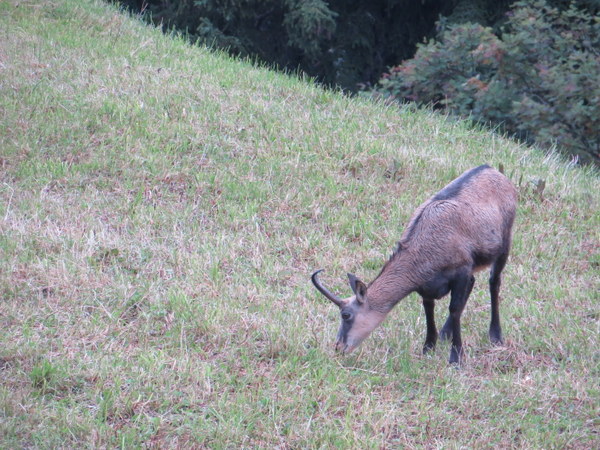
Chamois grazing near Murren. They hang out along the narrow gauge rail line then bound off when the train comes.

Chamois grazing near Murren. They hang out along the narrow gauge rail line then bound off when the train comes.

We would like to hike in Switzerland again, but will probably choose a self-catering apartment and cook some meals. That’s a real contrast to our usual mode of travel!


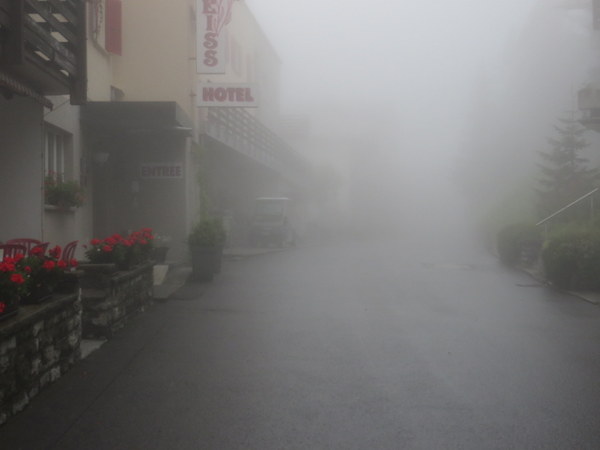
One morning we woke up to dense fog, but the other side of the valley was fine.

One morning we woke up to dense fog, but the other side of the valley was fine.

Murren is a very pretty, serene town, but not easy to reach: 5 trains and a gondola lift from Rome to Murren.

Murren is a very pretty, serene town, but not easy to reach: 5 trains and a gondola lift from Rome to Murren.

The Jungfrau Railway "Top of Europe" attracts THOUSANDS of visitors a year who pay upward of $200 to take the ride.

The Jungfrau Railway “Top of Europe” attracts THOUSANDS of visitors each year who pay upward of $200 to take the ride.

This little train chugs to the highest railway station in Europe. Many people come here solely to do this. Maybe next time for us.

This is the little train that chugs to the highest railway station in Europe. Many people come here solely to do this and neither hike nor ski. Maybe next time for us.

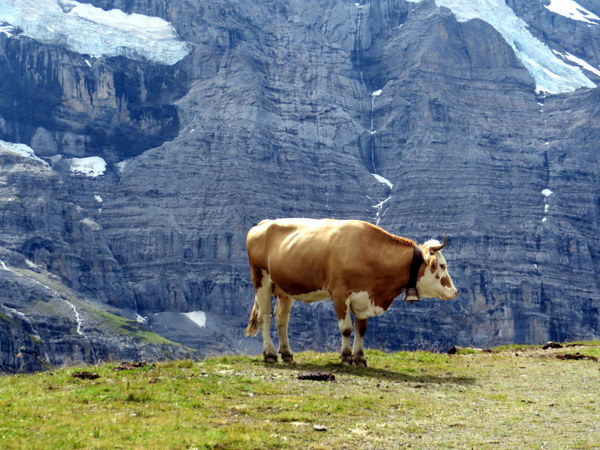
We frequently hiked through grazing herds of cows

We frequently hiked through grazing herds of cows.

Motown, Italy

7 Apr
We made a mistake when we visited Torino: we didn’t stay long enough. The trip was a celebration for Ric’s birthday and the goal was to take the longest train trip possible from Rome on a high-speed Frecciarosso.  Torino was a match for that plan, 4 ½ hours each direction, so we set out on the morning of Ric’s birthday expecting to find a pleasant enough city, have a good dinner, then another long train ride back to Rome on Sunday.
No driver! Passengers are free to observe the "view" of a clean tunnel as the train whizzes along.

No driver! Passengers are free to observe the “view” of a clean tunnel as the train whizzes along.

The train is such a joy! Faced with a 4 ½ hour flight I want to slit my wrists, but 4 ½ hours on the train facing my sweetie across the convenient table, gazing out the window, with time to read, nap, and surf the internet, is so fine! The stewards come by with coffee and little snacks, and of course there’s a bar car for light meals and wine. Certainly beats flying.
Torino is indeed a pleasant city. Much of it is new-ish due to heavy damage in WWII, but the predominant architectural style is Baroque. It was the first capital of reunified Italy in 1861 and home of Italy’s royal family, the House of Savoy. Today it is “Motown, Italy:” the headquarters of Fiat, Lancia, Iveco, and Alfa Romeo are here.
With only an afternoon and evening to explore, we had to make a
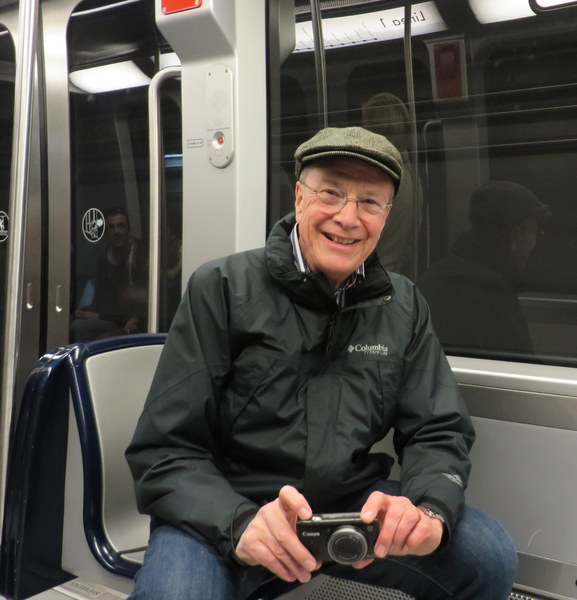
Happy passenger in the Torino Metro.

Happy passenger in the Torino Metro.

smart choice. After a quick lunch, Ric chose the  Museo Nazionale dell’Automobile (The National Automobile Museum) as our first stop. I was prepared to be bored, but hey, it was his birthday so the agenda belonged to him. After all he succumbed to my whims for my 5-day birthday celebration last month.
The first pleasant surprise was the Metrotorino: sleek, modern, Habittrail-like, no graffiti, no crowding, no noise…and no driver! Metrotorino whisked us to within a short walk of the museum. Boredom was not the emotion I felt upon entering. This is an amazingly well-curated exhibit of over 200 vehicles in 200,000 square feet! The collection includes an 1896 Bernardi and an 1899 Fiat, as well as cars by Rolls Royce, Peugeot, Ferrari, Alfa Romeo, Benz, Oldsmobile, and more. There are Formula One cars, family cars, a mock assembly line, films, WWII vehicles, models, perspective on the changing world of automotive transport, man-machine interaction, etc.
I decided the tube the Metro runs in resembles the hamster set up Derek used to have, a Habittrail.

I decided the tube the Metro runs in resembles the hamster set up Derek used to have, a Habittrail.

I thought the Museo Nazionale dell’Automobile would be a bust and was amazingly surprised. I had looked forward to the Museo Nazionale del Cinema  in the Mole Antonelliana. While it certainly documents the development of film, it was a bit heavy on old equipment and artifacts from the earliest days of the cinema. The building itself is fabulous. As we were there at night, and a rainy one at that, we skipped the panoramic elevator noting we need to return on a clear day.
Click any picture below for a slide show featuring some of the exhibits in the Museo Nazionale dell’Automobile. 
And on that note, we really do need to return to Torino. We missed the Egyptian Museum, the Baroque and Rococo palazzi , not to mention the gardens and shopping. The food was excellent and for our single dinner in the city we were fortunate to select Sotto la Mole. It is very small and intimate with a limited menu, beautifully prepared and served.
Ghost Bike detail

Ghost Bike detail

Ghost Bike sculpture in Torino

Ghost Bike sculpture in Torino

Torino is at the foot of the Alps, close to the French border, and the Piemonte Region is well-known for its food and wine. The Alps here beckon for summer exploration, so we will be back and spend more time in Torino on the way.