Tag Archives: Hiking

Sicilia – Part I

11 Mar
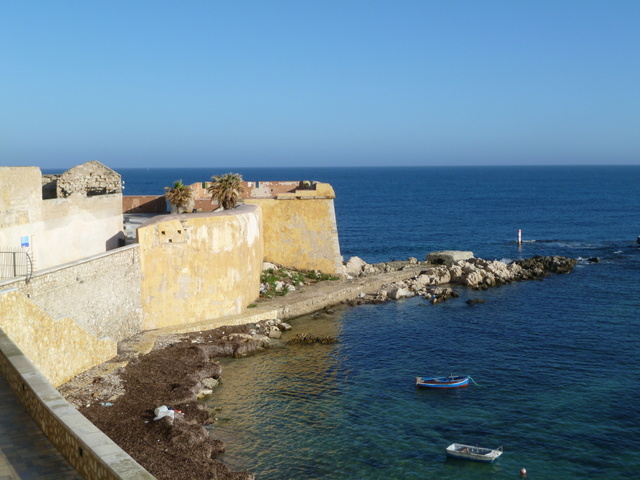
View from apartment, Trapani

City wall of Trapani, as viewed from the terrace of our apartment.

When I said we were going to Sicilia, Italian friends sighed, American colleagues raved, and my dear friend Nicholas whined that he could not be there too.  Thanks to all, I received some great advice on things to do and places to see. Sicilia is beautiful, to say the least, the people are friendly to a fault, and the food is divine.

We took our first flight since arriving in Italy last May. It seemed strange to fly out of Rome instead of taking a train and we were pleased to discover we had not forgotten how to drive, as neither of us had done so for 10 months.

We are staying in the small city of Tràpani in Northwest Sicily. Rather than try to “do” the whole island in one trip, we selected a corner of the region to explore. If we like it – and we do so far – we have plenty of opportunity to return and explore more of this vast and interesting island. With an ocean-front apartment reached via 60 steps (no elevator) we are living local. Luckily we didn’t have to haul our suitcases, although each only weighs 20 pounds or so, because the building has a rope and pulley system to assist in baggage handling. [NB: two-and-half years ago
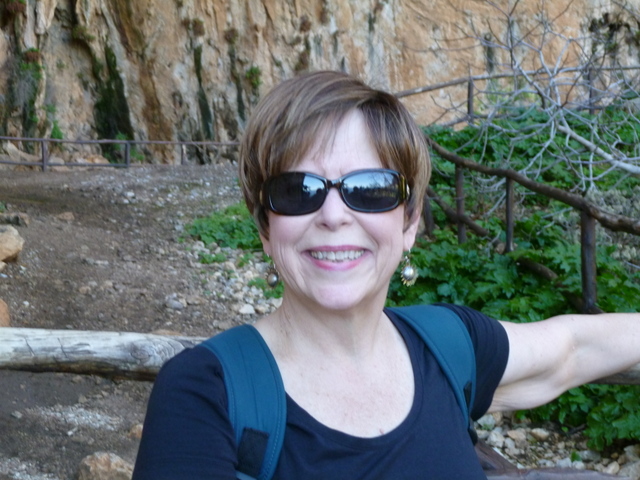
Laurel in Lo Zingaro

Stopping by the grotto in Lo ZIngaro. People lived here as long as 10,000 yeasr ago.

we stayed in Vernazza in an apartment that had a climb of 57 steps. We struggled with that climb to the point that we really thought about it before we went up or down to minimize the number of trips per day. Now we are both in far better shape with weight loss (both of us), “new legs” and a gym program for me, 6-7km per day walking, and daily jaunts up the 64 steps to our apartment in Roma. The 60 steps in Tràpani are a piece of cake!]


I wanted to stay in Erice, a medieval town about 2400 feet abve Trapani, but Francesco, Rick and Jane were right to advise against it as a base. It has been encased in clouds for 3 days now. It’s much better here at sea level.
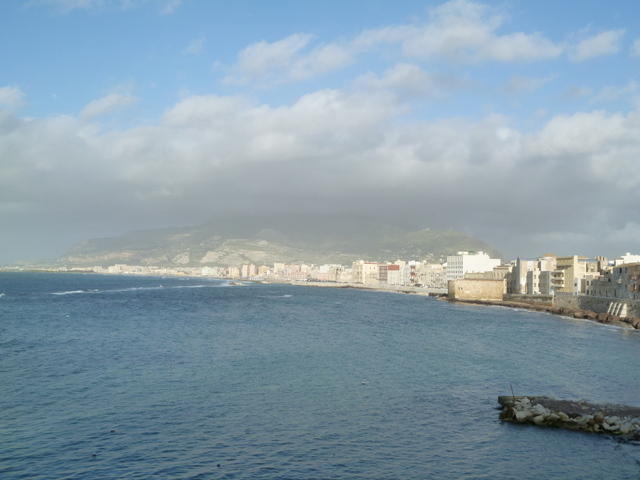
Erice in Clouds

Erice is atop the hill hidden in a mass of clouds.

Our arrival day devolved into a miserable rain and chill, warded off by an amazing dinner involving the best caponata we’d ever eaten, fresh fish, and a couscous preparation like none I’ve ever had, served with a whole roasted fish and a tureen of fish broth. With a crisp local white wine, we were satiated and slept a full 8 hours for a change! 
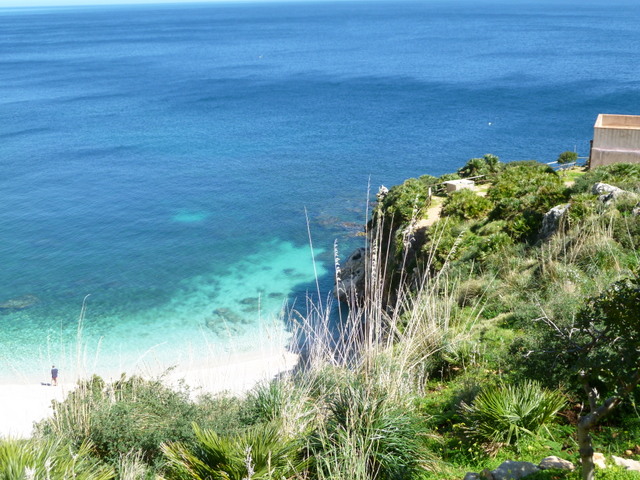
Lo Zingaro

Crystal clear waters far below the trail in Lo Zingaro.

Fortunately Sunday dawned bright and clear, so we headed to La Riserva Naturale dello Zingaro for a hike. What a beautiful and unusual place! It’s a little bit like parts of Hawaii with stark and interesting beauty, unusual plants, and ever-so-quiet. The water is clear with many shades of blue and turquoise contrasting with the lush green of a spring-rain freshened landscape.  I have not been anywhere quite this quiet (only the sounds of birds and the wind) for many many years. We felt far removed from our bustling Roma, which was the point of this vacation. Lizards darted across our path, and the wild flowers opened almost before our eyes

Lizard in sun

Little lizards dart along the trail enjoying the sun. So did we.

as the sun warmed the day. A half-hour or so into the hike, we encountered a small museum dedicated to the contadini (farmers) where an amicable man told us about the activities and dwellings of a typical farm family. We were his first visitors this day so he was ready to chat. My Italian understanding is really coming along, thank God, and we had a decent conversation. There is a grotto along the trail where they have determined people have lived for some 10,000 years. Amazing to consider how ancient this land is. Also, I got some sun as ordered by my doctor who thinks I need more vitamin D.

The hike was a good workout so we indulged in a fine Sunday lunch of fresh fish, fresh pasta, and an arugula salad, enjoying the antics of little children dining with Nonna e Nonno at an adjacent table.

Segesta

Greek temple at Segesta, viewed from afar.

Clouds come and go, with passing showers. The temperature is not warm enough for beach time, but excellent for exploring, so Monday we headed to Segesta, where we saw our first-ever Greek ruins. This is a marvelous time of year to visit without crowds or the dizzying heat of summer. We found ourselves alone beside the magnificent temple, in the ancient arena, and along quiet paths. The temple is huge and well-preserved. One can walk completely around it for an excellent perspective on the architecture. Built in the 5th century, B.C., it has survived at least three earthquakes, and has withstood the ravages of man for so many centuries, but the courthouse in Salem, OR, barely lasted a decade due to poor construction.

After an up-close encounter with the temple, we ascended the hill opposite (305 meters above sea level) where the city used to be, to the location of an ancient arena. There we found gorgeous views back to the temple across fields of wild-flowers in bloom.

Luckily, as this is Italy, one can get a fine espresso freshly pulled by the barista, and

Ric at Segesta

My favorite travel companion in the ancient arena at Segesta.

a freshly made pastry even at an archeological site. Try that at Silver Creek Falls or the Mount St. Helens.Stay-tuned. More to come….

On the sanctuary trail in the Cinque Terre

14 Oct

GIOVEDI

We arrived home Friday, and I am finally getting around to the last part of our trip report.

Our last full day, Thursday, we went back to the high trails, this time from Riomaggiore to the Santuario della Madonna di Montenero, one of five religious sanctuaries linked to the five villages. It is possible to hike between all five, although it is a very long hike.  We chose a hike to a magnificent vista that stretched from Monterosso al Mare to the north to Portovenere in the south. Breathtaking!

Also breathtaking was the  1,110 foot climb. Some people apparently had no idea what they were in for. On what planet is it OK for a woman of 60+ to open her shirt to cool off while hiking? Thank God she was wearing a bra. (That was a rhetorical question. The answer to “on what planet” is Germany.)

While the day was partly cloudy and rain threatened, it did not start to rain until we were done hiking for the day. Torrential rains in the afternoon must have made the locals fear a repeat of last October’s flood. Luckily, by nightfall it was  dry and we enjoyed another fabulous Ligurian meal overlooking the harbor at Manarola. We might have to come back next year….

The way up is far steeper than this looks. Many many stairs created and maintained by volunteers.

All along the trail, the “Via Grande,” were shrines to the Madonna, donated by various families. The “Via Grande” is described as “an ancient road.” These footpaths were essential transportation routes for centuries.

At the top, a church more than 119 years old. And few people.

View from the top looking south, all the way to Portovenere. Worth the climb!

The path is “paved” in many places, especially where it might wash out. But it is very rough and footing is tricky on the downhill portion. Sturdy hiking boots are in order.

As you can tell, we had a wonderful time in the Cinque Terre.  Walking and eating: What’s not to love?

There are so many daytrippers who do not have time to explore the  National Park. They merely get off the train, spend 37 minutes looking at the souvenir ships in a town, then move on and do the same thing in the next village. I actually overheard a woman telling her husband “We have 37 minutes here. That should be plenty of time.” Seriously?

More postcards from the Cinque Terre

11 Oct

MERCOLEDI

Monday was a city walk (Lerici/San Terenzo) and Tuesday was a trail hike high above Manarola and Corniglia (see previous post), but our walks are always followed by lunch: sometimes substantial, sometimes a quick panino, and if possible there is wine. (Surprise! That’s how we know we are on vacation.)

Wednesday we took a journey to the north of the Cinque Terre – off the map according to Ric – to Portofino. But instead of arriving via yacht, as the glitterati would, we walked.   Well we took a train to Santa Margherita Ligure, then walked, about 1 ½ hours from the SML station, to lunch on the piazza in Portofino. Portofino is not far from Genoa, but it is a world away from the ruggedness of the Cinque Terre. It’s also crazily expensive.  Here are a few shots from our path and of our lunch.

Santa Margherita Ligure, as seen from across the bay, on our walk to Portofino. (Photo by Laurel Barton)

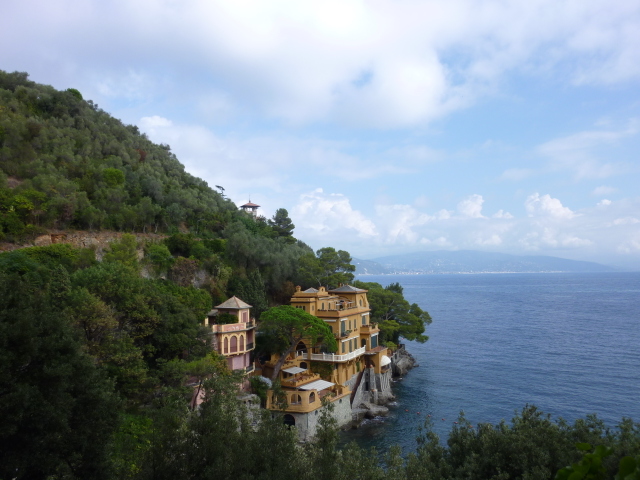
There are several small inlets along the path to Portofino, with beautiful houses, hotels, and beaches. (Photo by Laurel Barton)

The distinctive colors of Liguria are found here, too, along our path to lunch. Love the light! (Photo by Laurel Barton)

Wildlife in the bay enjoying the October sun. Oregon Zoo friends, please keep me honest: Are these cormorants? (Photo by Laurel Barton)

Almost there! Ric on the final leg of our walk, a paved path through the woods into Portofino. Very upscale! (Photo by Laurel Barton)

At last, 90 minutes later, we reached our objective and treated ourselves to a fine lunch in a fabulous location.

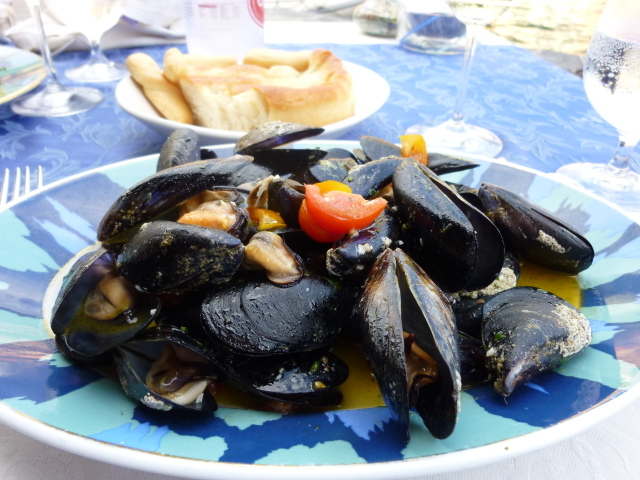
Mussels

Ah, lunch! Beautiful mussels and cold Vermentino wine. On the harbor in Portofino. Una bella vista! (Photo by Laurel Barton)

Ric’s choice: a seafood salad, served warm. (Photo by Ric Barton)

Portofino harbor and piazza, on a sunny, warm, and quiet midweek day in October. I shudder to think of the crowds in summer. (Photo by Laurel Barton)

We took the easy way back: a ferry across the bay from Portifino to SML and a train back to Manarola.

Postcards from the Cinque Terre

9 Oct

Time for another vacation! As we like to say, you can only have a vacation if you have a job, and we have escaped to the Cinque Terre for hiking and seaside relaxation.  Here are a few favorite shots from the past three days. We will be here until Friday, so more to come!

DOMENICA

We arrived in Manarola (town #2 as some call it) in the Cinque Terre on Sunday afternoon by train from Rome. Headed out on a familiarization walk above the town, through the vineyards and down to the sea. Here a view back toward the town and its gelato-colored buildings.

As night fell, we walked to the upper part of town and settled in at the charming Trattoria dal Billy. Too bad we ate our beautiful seafood before I thought to take a picture. The view was intoxicating! The walk up is quite a climb, but the food and service made it worth the effort.

LUNEDI

Apologies for the crap smudges on my lens. Ugh!

Monday we traveled down the Ligurian coast to Lerici on the Gulf of Poets. Byron, Shelley, and D.H. Lawrence found this little corner of Italy to their liking as well. It’s a beach resort town in summer. On an autumn day it was still warm, but quiet in a post-season way. Pictured is Lerici Castle.

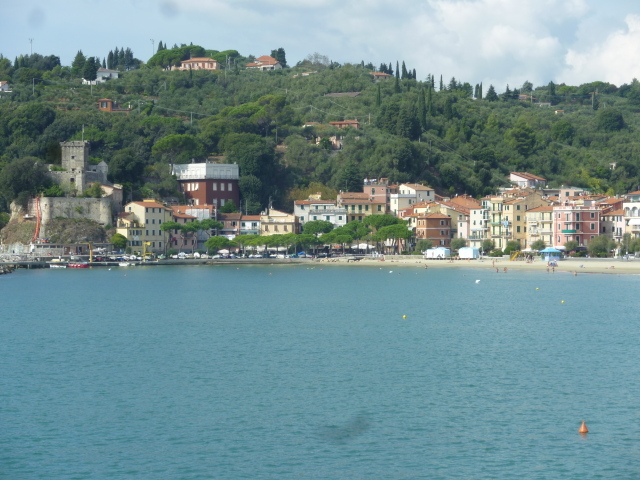
We walked from one end of the gulf to the other and back: Lerici to San Terenzo (pictured). I think we were the only non-Italians in the whole area. So peaceful! There were still some late season sun worshipers on the almost-deserted beaches.

Thanks to the blog http://www.apathtolunch.com/ for the guidance!

Many of you know Ric and I usually took an autumn trip to Cannon Beach, OR. This is our replacement for that habitual break. A little different, though….

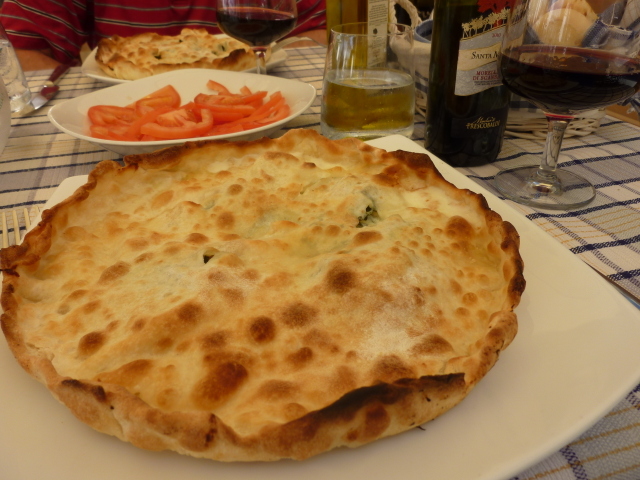
Foccacia is a Ligurian specialty. Here it is in a very thin form, with a filling of spinach and a little sausage, freshly baked for our lunch, served with tomatoes and red wine. Could not finish it!

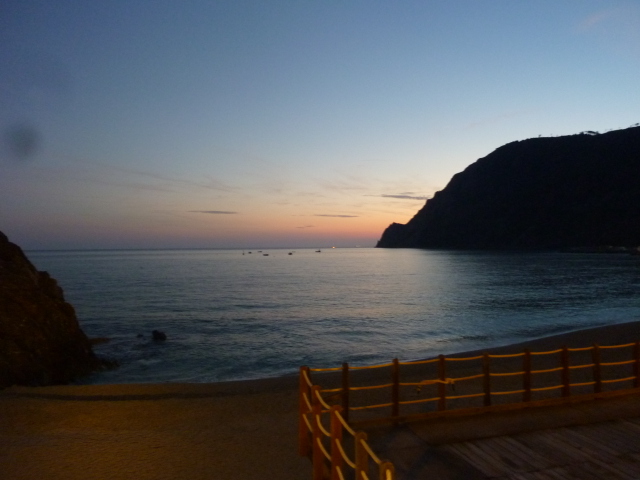
In the evening we went to the northernmost end of the Cinque Terre, Monterosso al Mare, for dinner and enjoyed this sunset.

At dinner, we were delighted to meet Christine, an American woman living in Monterosso, working at Cantina di Miky, and authoress of the blog, http://lifeinliguria.blogspot.com/  which I have been reading for months. GREAT MEAL! Again, photo not taken because we were so busy consuming beautifully prepared seafood.

MARTEDI

We awoke to rain, by the time we had eaten breakfast, it had stopped and the sun was peeking out from broken clouds. Hopped a bio-diesel shuttle for transport to Il Sentiero Rosso, the red trail, high above the sea.

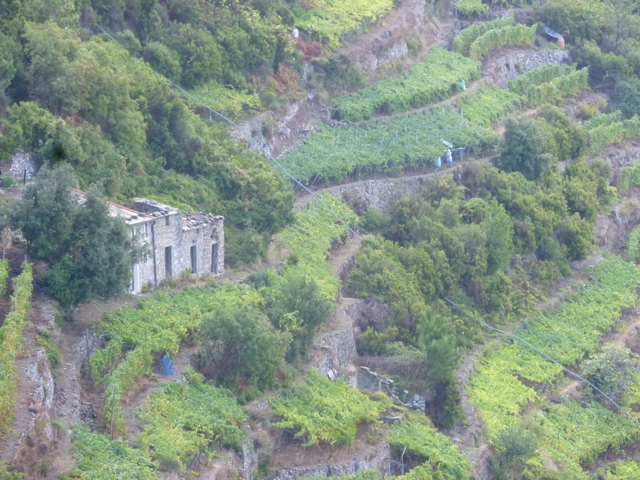
The land has been terraced for centuries. The path passes through vineyards, olive groves, and gardens at a dizzying height.

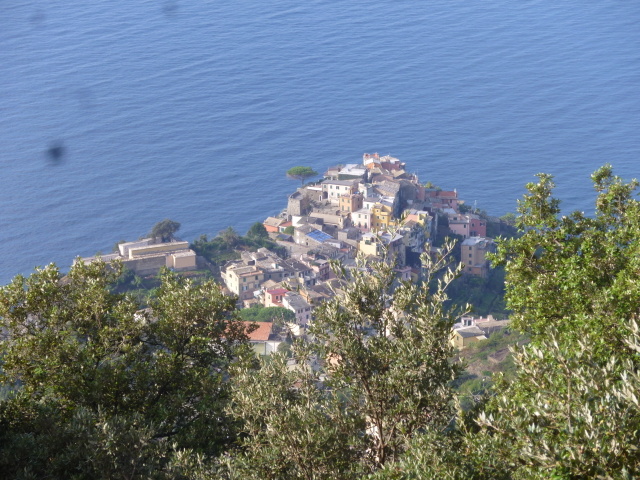
The town of Corniglia (pronounced cor-KNEE-lee-a), from high-above. Once we descended to Corniglia on a very challenging footpath, we still had 400 brick steps to descend to the train station.

A view over the Ligurian Sea, from high above Corniglia looking toward Monterosso.

Alas, it is almost dinner time and we are eating with “The Pirates” in Vernazza! Dobbiamo andare via!

Laurel & Ric on vacation: Part II – Ortisei

28 Jul

It’s been hot everywhere it seems. Ric and I took it hard here in Rome when the heat hit in mid-June, earlier than “usual” we are told. Hottest June in 231 years said one source. Who knew weather records were kept for more than 200 years?  We’ve also been warned that “Rome closes down in August. All of the Italians leave town.” Everyone, it seems, goes to the beach or the mountains to escape the hot city.

Now we get it. Three refreshing days in Ortisei (OR-tee-zay) in the Alto Adige region was an amazing, revitalizing getaway.

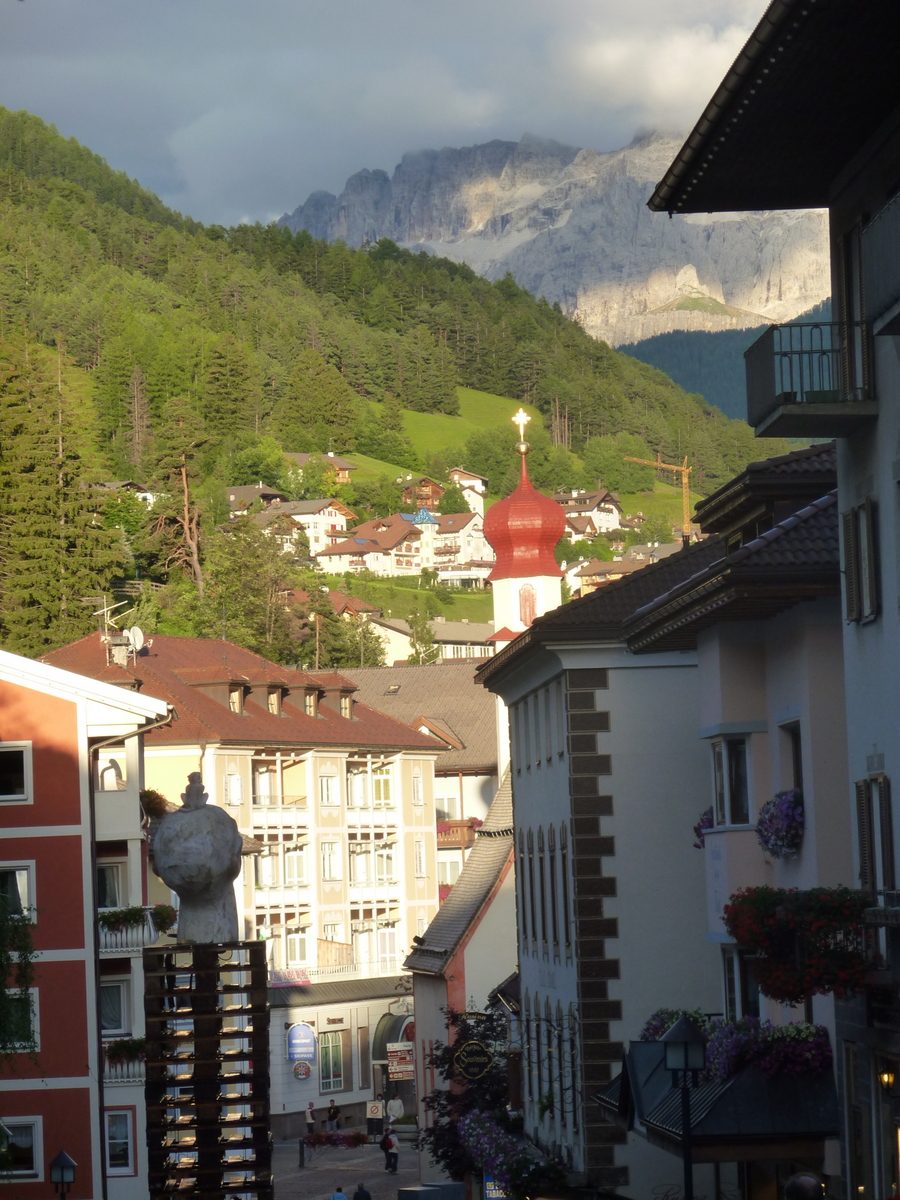
VIew down the main pedestrian-only street in Ortisei.

The town is absolutely charming. While heavy on tourist lodgings with more rooms available for tourists than there are residents of the town, Ortisei retains its character and doesn’t come off as phony or overly commercial.  Ortisei feels more like Austria or Germany than Italy.  One of our Italian colleagues said “It’s not Italy!”  The food, the bread, the signs, the architecture all led to a we’re-not-in-Italy-any-more feeling.  Given that the region was Austrian until 1919, this is not so terribly surprising. Residents generally speak three languages: German, Italian and Ladin, a regional dialect. While many also speak at least some English, the first words out of their mouths are likely to be German. But respond in Italian or English and you will likely end up in a polyglot conversation!

From our balcony we had a view up the valley toward S. Cristina and the Sella Group.

We stayed in the very lovely Hotel Garni Walter. It was a short hike up from the central piazza, and oh-so-pretty and serene. La famiglia Demetz has owned and managed the B&B for 43 years and recently renovated the entire place. Each room is outfitted in pine furniture, Tyrolean fabrics, and federbetten (German-style feather comforters) that kept us warm during the cold nights. No A/C required! To give you an idea of how refreshing the summers are, Sylvia told us on arrival that it was “warm for here: 24C (75F) degrees.” Ortisei is the first of a string of three villages in the Val Gardena. Only a few minutes apart by car or bus, you can also easily visit S. Cristina and Selva Gardena.  All three towns have two names: one Italian and one German. Ortisei is St. Ulrich to the German-speaking population. Each street has two names as well. (Luckily they are clearly marked unlike many in Rome.) The architecture is Tyrolean, with onion-domed churches throughout the area.

Gondolas or “cabinovia” ferry people up — or down — from the Alpe di Siusi.

We love trains, as most of you know, and the area is easy to access by train and bus. Local transportation options include great, comfortable busses plus the cabinovia and funivia: cable ways, lifts, funiculars. Serving skiers in the winter and hikers in the summer, these lifts crisscross the hills, mountains, and high meadows.  (Ric was in heaven with all of these transportation options. During our 6 day trip we took 4 trains, several busses, and 4 cable lifts.)

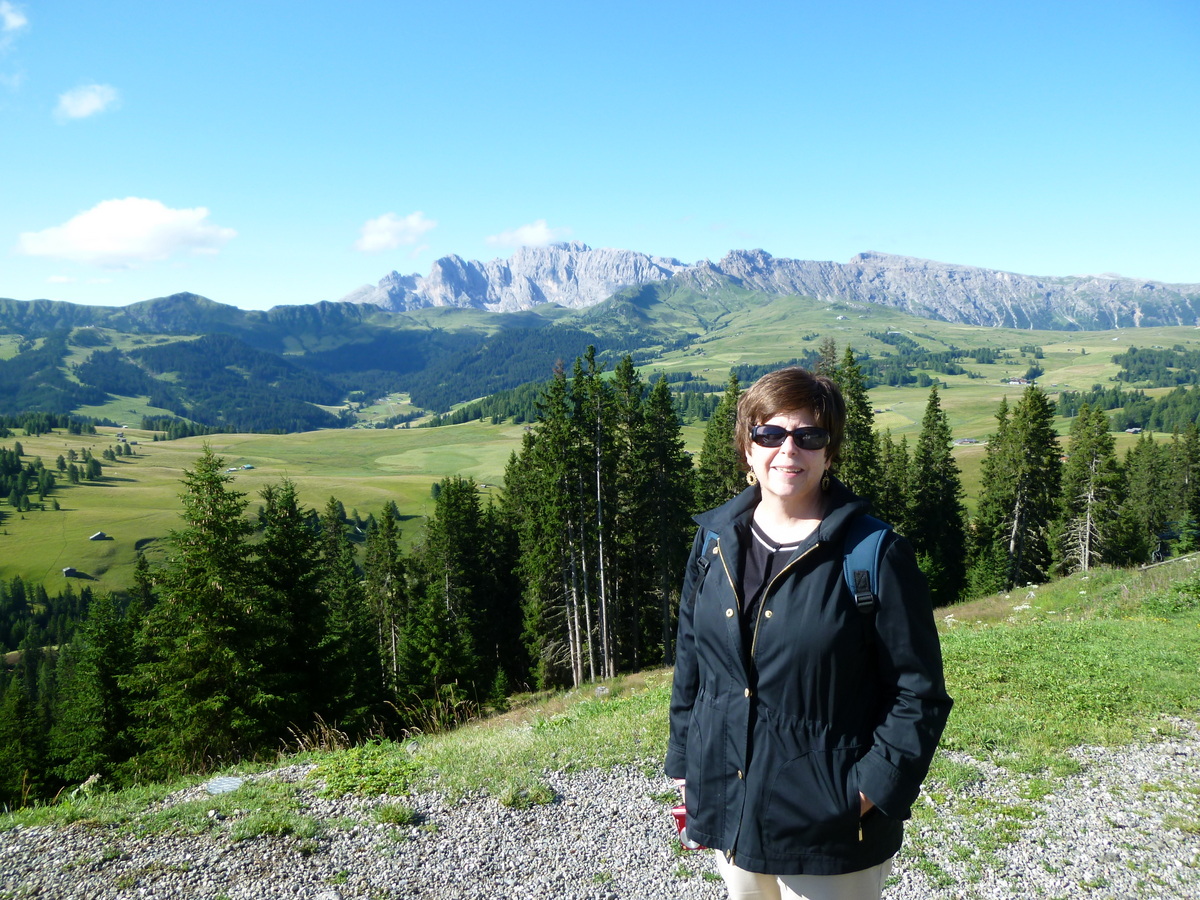
In the Alpe di Siusi, starting our hike at 44 degrees F, bright sunshine, and a terrain so beautiful it could bring tears to your eyes.

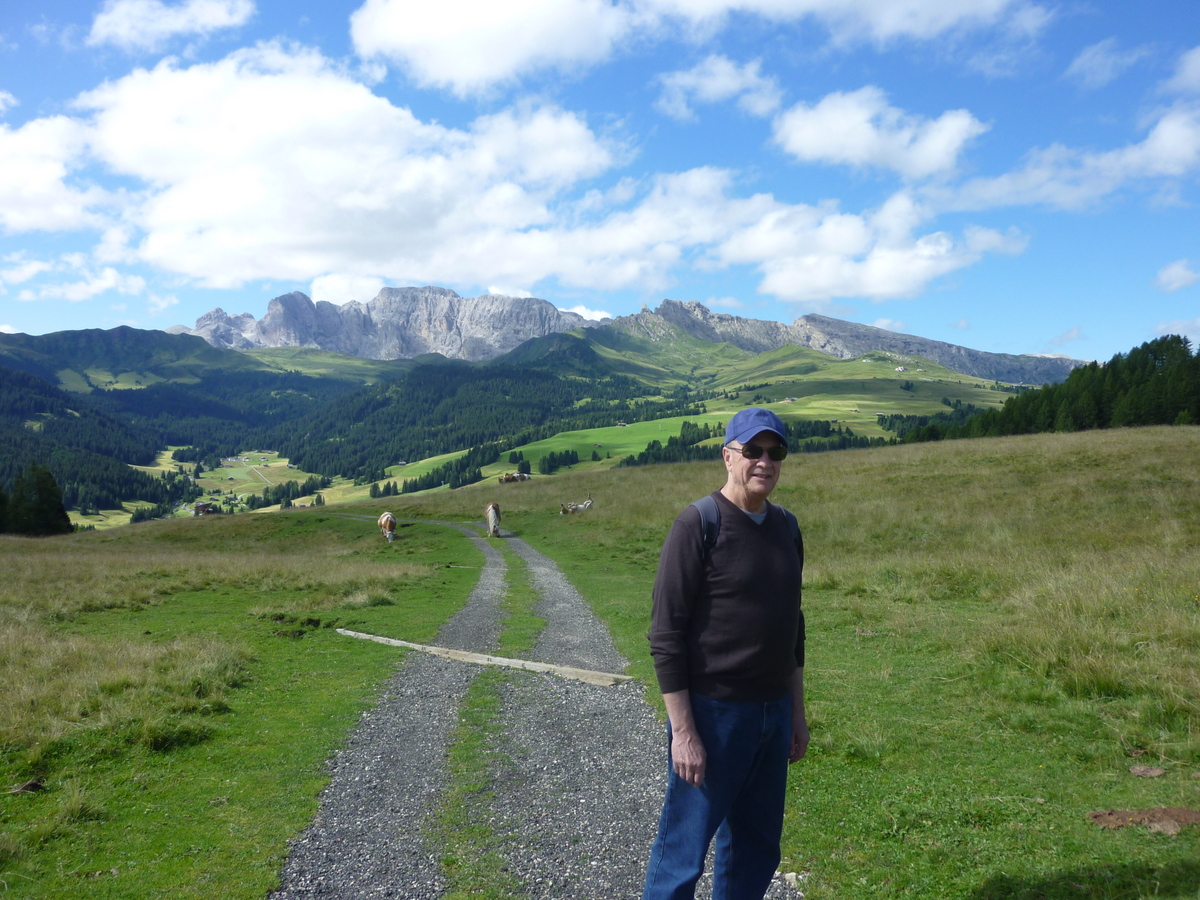
The Val Gardena is a hiker’s paradise. One can hike in the mountains on either side of the Val Gardena, or from town-to-town in the valley. You can hike up to the high meadows or ride cable ways up and hike – or bike – down. We had a lovely hike in the Alpe di Siusi. Starting out one morning at 09:00 the temperature up on top was a brisk 44F/7C but sunny and clear. The green meadows, wild flowers and soaring peaks of i Dolomiti are achingly beautiful.  The peace was disturbed only by the distant ringing of cowbells carried on the light breeze. We set off for Saltria, a “town” at the other end of the meadow from the terminus of our cable way. As is often the case in Italy, the trails are not groomed in the way they are in the Pacific Northwest. Sturdy hiking shoes are a necessity. The trails in the Alpe di Siusi are well-signed however, so getting lost is unlikely. Our terrain included a road large enough for a horse-drawn cart, a footpath through a grazing herd, and a forest path much like in Oregon.

Ric on the hike to Saltria, through a meadow with grazing animals. Yes, this was the marked path, through the herd.

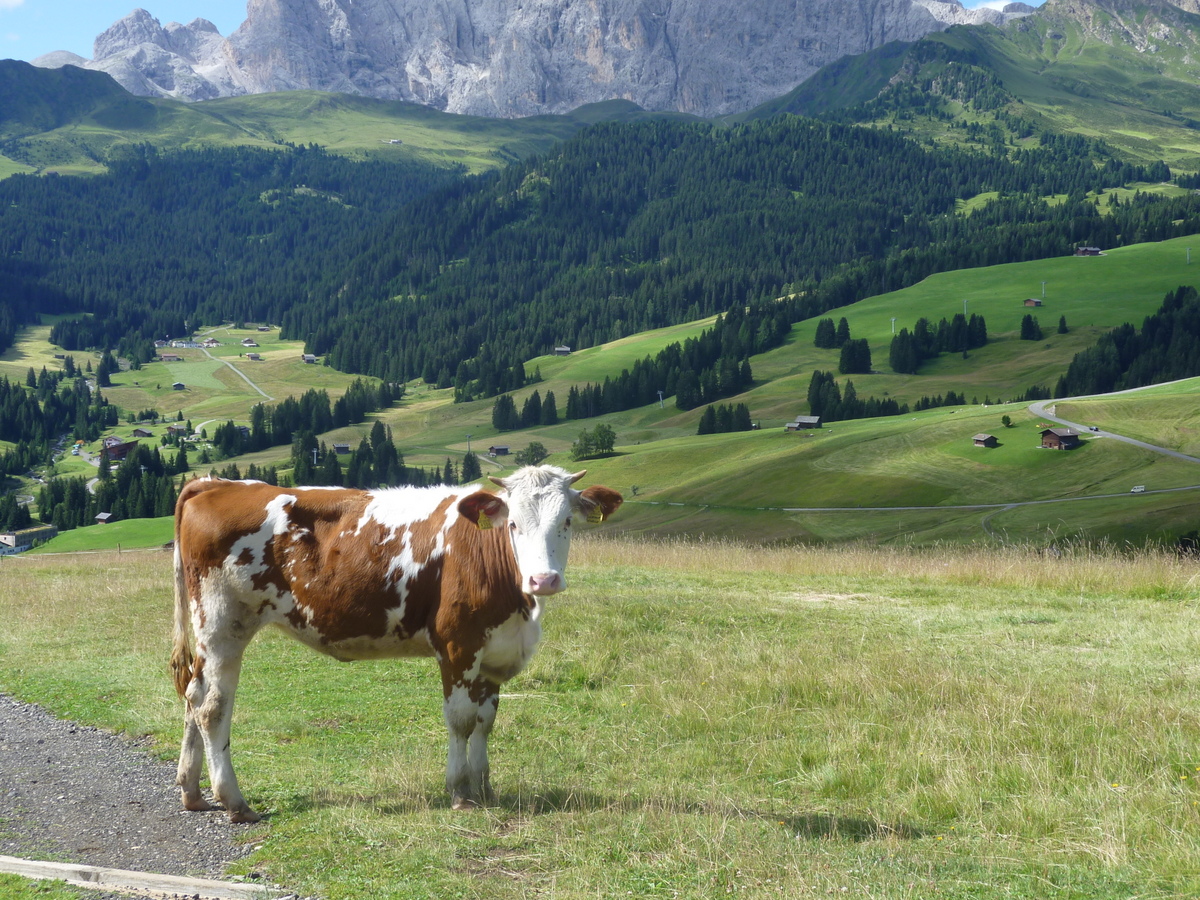
Not common in Oregon are cows straddling the road

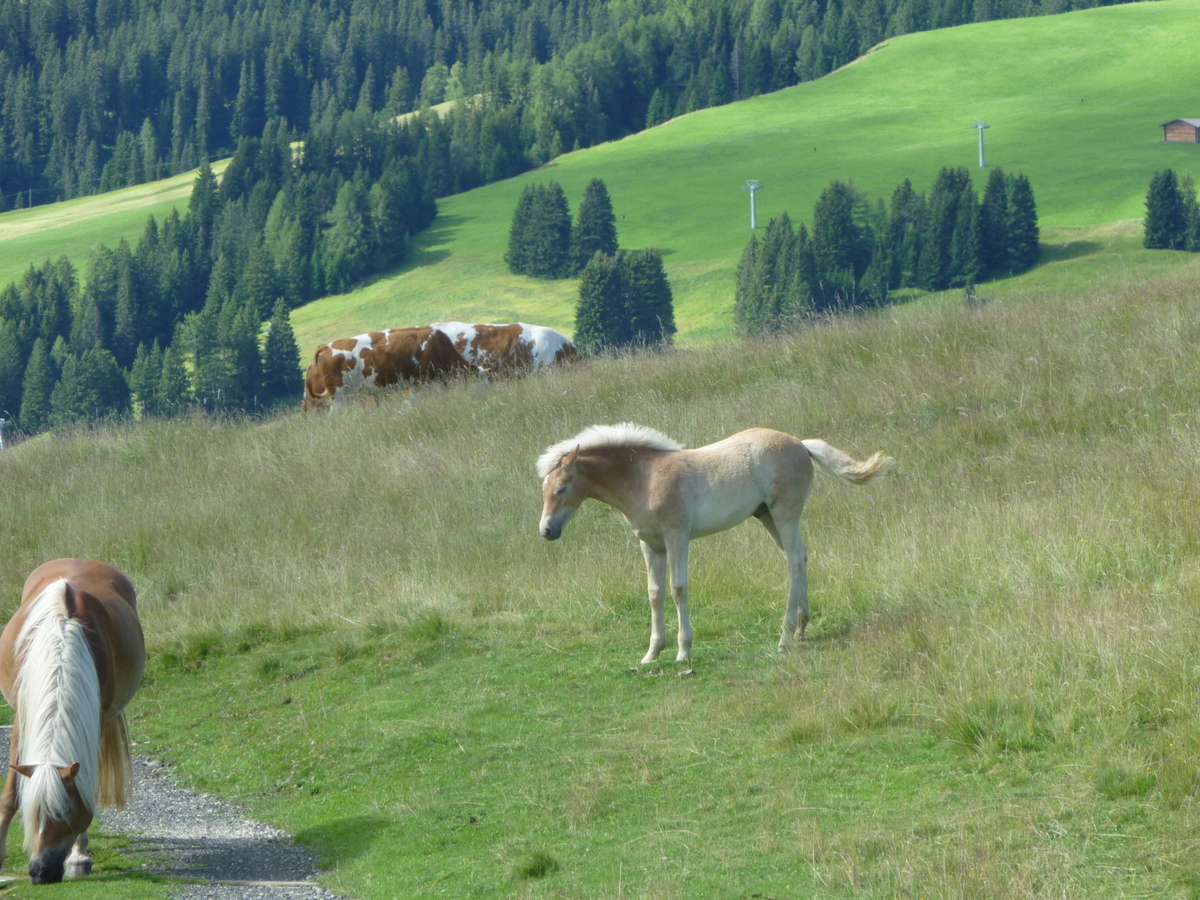
Wildlife in the Alpe di Siusi.

nor ponies looking for a handout. (Shannon T., this photo is included for you.)

Moments earlier, this little guy had been rolling in the grass, thoroughly enjoying the alpine morning.

The “town” of Saltria consists primarily of two resort-hotel/spas and a large bus stop. You can take a comfortable bus from Saltria to Compatsch, where there are more resorts, lifts, and hikes. We were quite taken by the opportunity to actually stay in the Alpe di Siusi, and plan on doing so next year.

I could go on and on. The food is great, as we have come to expect in Italy. You can have a fine pizza from a forno a legno  (wood burning oven), and certainly there is pasta, but also many regional specialties like canaderli (dumplings), Wiener schnitzel, and speck (a type of bacon) is everywhere. We saw – and ate – more potatoes in a weekend than we’ve had in two months in Rome. One of the more unique pasta dishes was spaghetti con cervo, a sauce made with venison.  And a vegetarian option of grilled vegetables is served with a round of warm camembert cheese. That’s one dish I plan to try at home.

We will likely make this an annual trip. Rates go up significantly in August when Rome empties out, so I think we’ll take our annual cool-down break in July when the area isn’t over-flowing with everyone else escaping the hot cities.

We’ll be back next year for certain.