
6 September 2026.
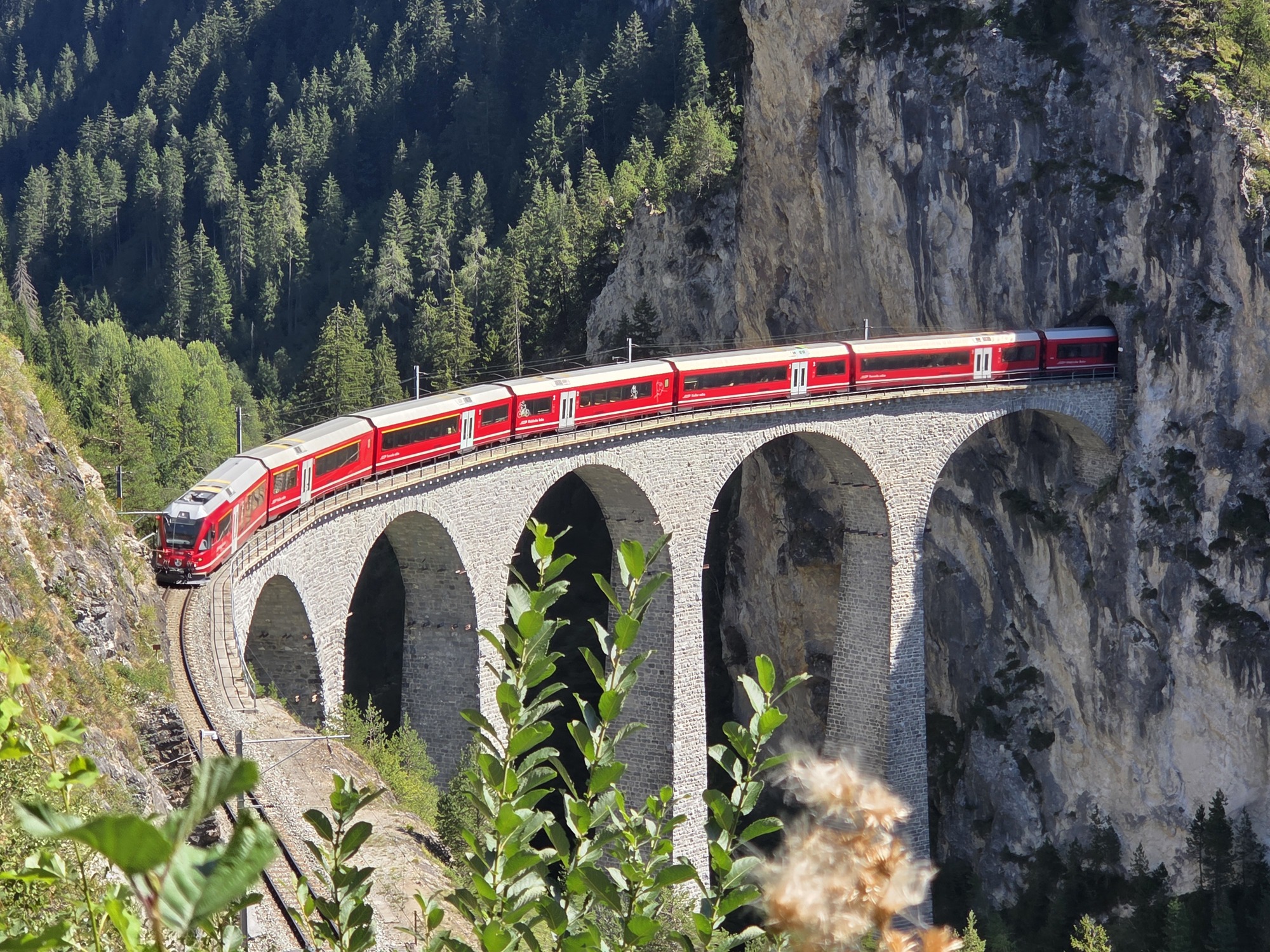
The Landwasser Viaduct from the Hennings Platform
We have traversed the Landwasser Viaduct on the famous Albula Railway at least a dozen times over the years, but I wanted to see the architectural wonder with the train on it: not from the train. Figuring out exactly how to get there and see it was not a small task but for inclusion in our upcoming book, Walking in Switzerland’s Engadine it was worth doing the research. My train aficionado husband’s love of trains has rubbed off on me in our 42 years together.
The day started out cold – low 40s Fahrenheit – but by the time we got to our first stop in Filisur, Switzerland, we had our jackets off and stuffed into our day packs.
But back up. This adventure starts with one of the prettiest short train rides in Switzerland along the Albula railway line which boasts UNESCO World Heritage status. From the MySwitzerland tourism site:
“The Rhaetian Railway…is a marvel of railway engineering that winds its way through the Graubünden mountains thanks to man-made structures, viaducts and helical tunnels. Railway enthusiasts assert that the Albula route between Chur and St. Moritz is the most picturesque mountain route in the world and rave about the boldly curved Landwasser viaduct.”
I’ll spare you too much boring engineering talk but some keys stats:
- Built between 1898 and 1904
- 55 bridges
- 39 tunnels
- 38 miles
- Linking Thusis at 2,287 Feet with St. Moritz at 5,820 feet
The Bernina Express and Glacier Express both travel this line as part of their scenic journeys. We enjoyed our little slice from Samedan to Filisur even though we have traveled it many times before in winter, summer, and fall. This amazing line uses a series of spiral loop (helical) tunnels to gain elevation over a short distance with viaducts and bridges for longer segments. Instead of moving straight up the valley, the train enters the mountain side and follows a continuous, rising loop inside the rock. As a result, you travel through the valley crossing over from side-to-side and an ever-changing view.
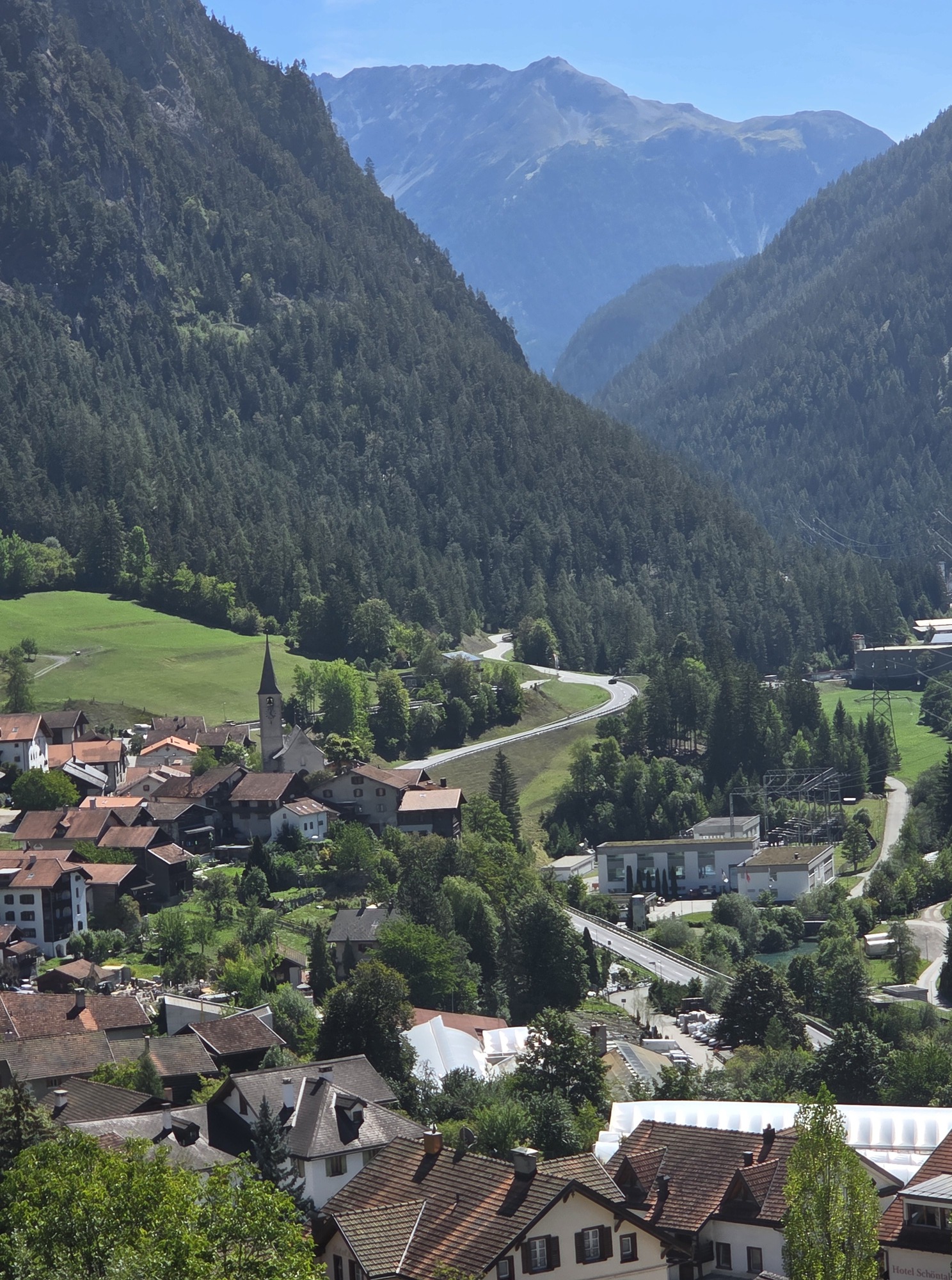
Filisur and the Valley from the train station.
At Filisur, it was a little confusing finding the exact start of the walk; the very reason we do the research ourselves instead of just reading the online so-called directions. (We do not let AI write our books.) There was actually too much signage and the maps displayed had so many lines illustrating hikes and train routes that it was hard to sort. The guy at the Info Mobil booth was very helpful in making sure we were pointed the right way so we can carefully guide our readers.
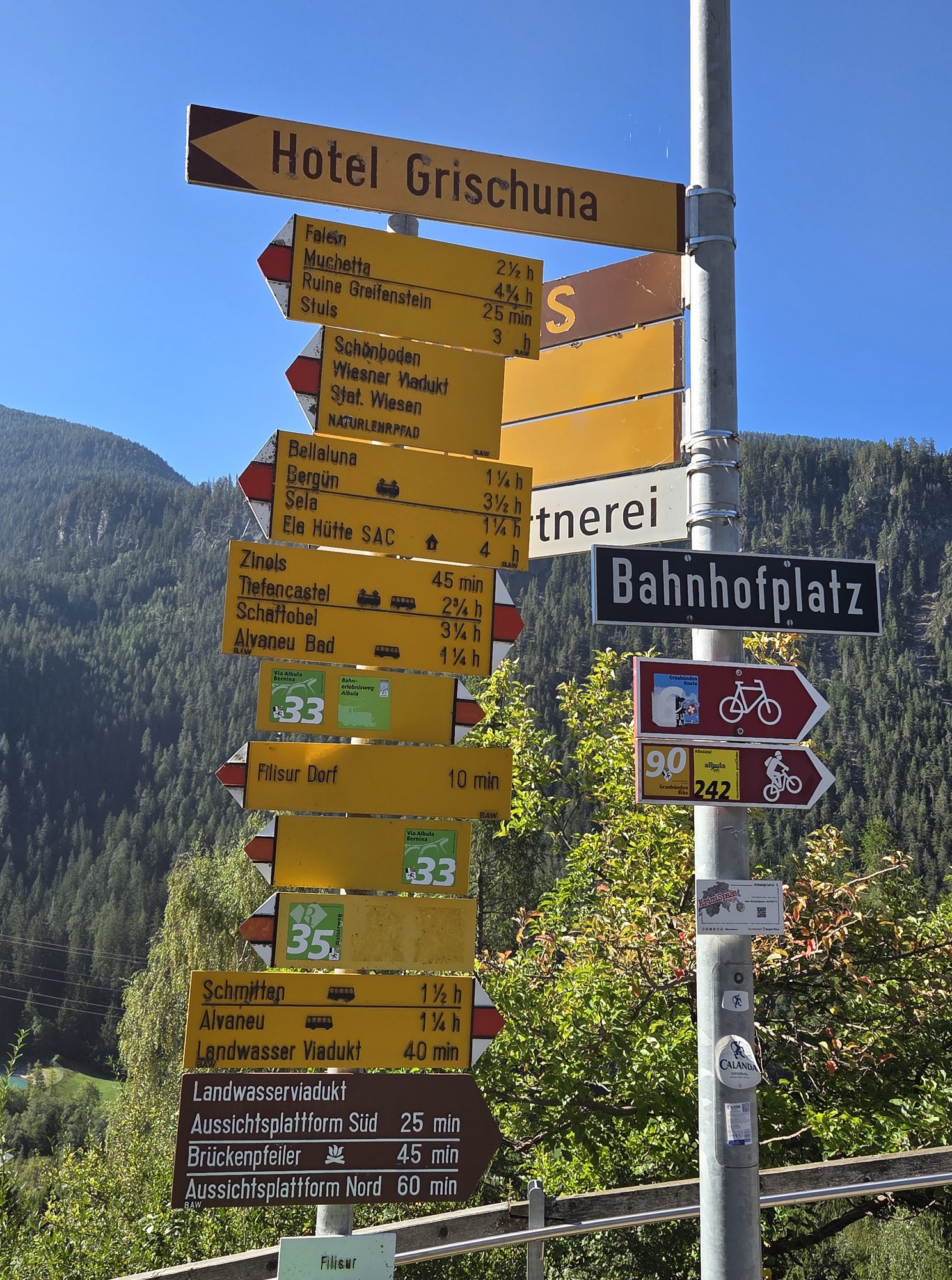
Too many signs!
This was a nice walk. Although not pram-worthy, it is a solid “2” in our book: easy-enough, not strenuous, some rocks and tree roots to navigate. We should have had our trekking sticks for the return due to loose gravel on the downhill bits, but we held hands to prevent falling. We’ll recommend sticks in the book. It is only a 50-minute walk, roundtrip.
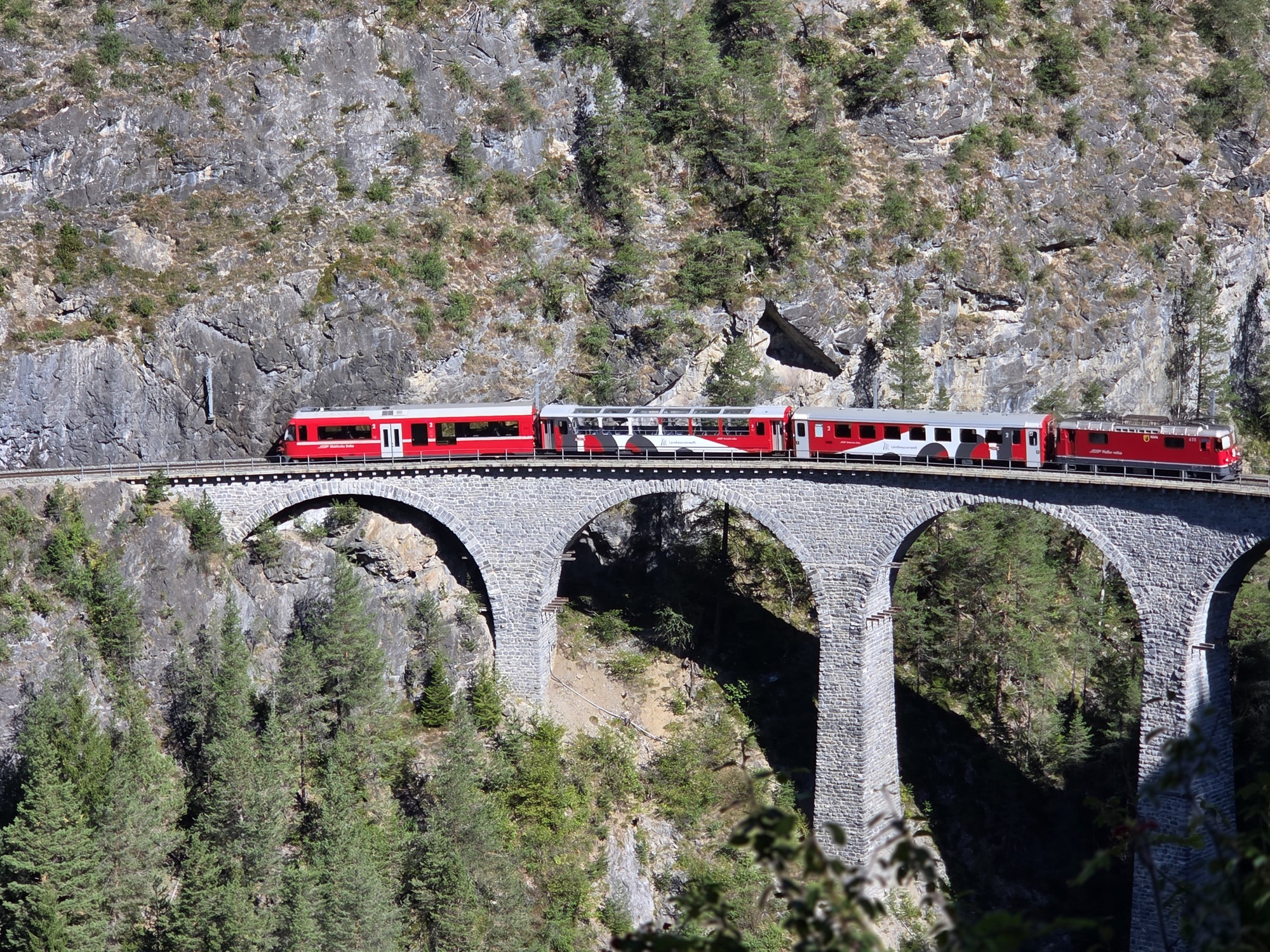
The Viaduct Shuttle on the Landwasser Viaduct as viewed from the Acatos Platform.
The Acatos platform offers an amazing view over the Landwasser Viaduct. We were delighted by four trains passing in about 20 minutes: One to Zermatt, others to Alvaneu, to Chur, to Filisur. Long, Panoramic Express Trains as well as short shuttles like we would take later. And only four other people visited while we were there on a glorious sunny morning in early September. By the way, there is a QR code on the platform that leads to a list of trains passing in the following hour-or-so https://kisqr.rhb.ch/stationDisplay/CulturalSights/RCS-Landwasserviadukt.
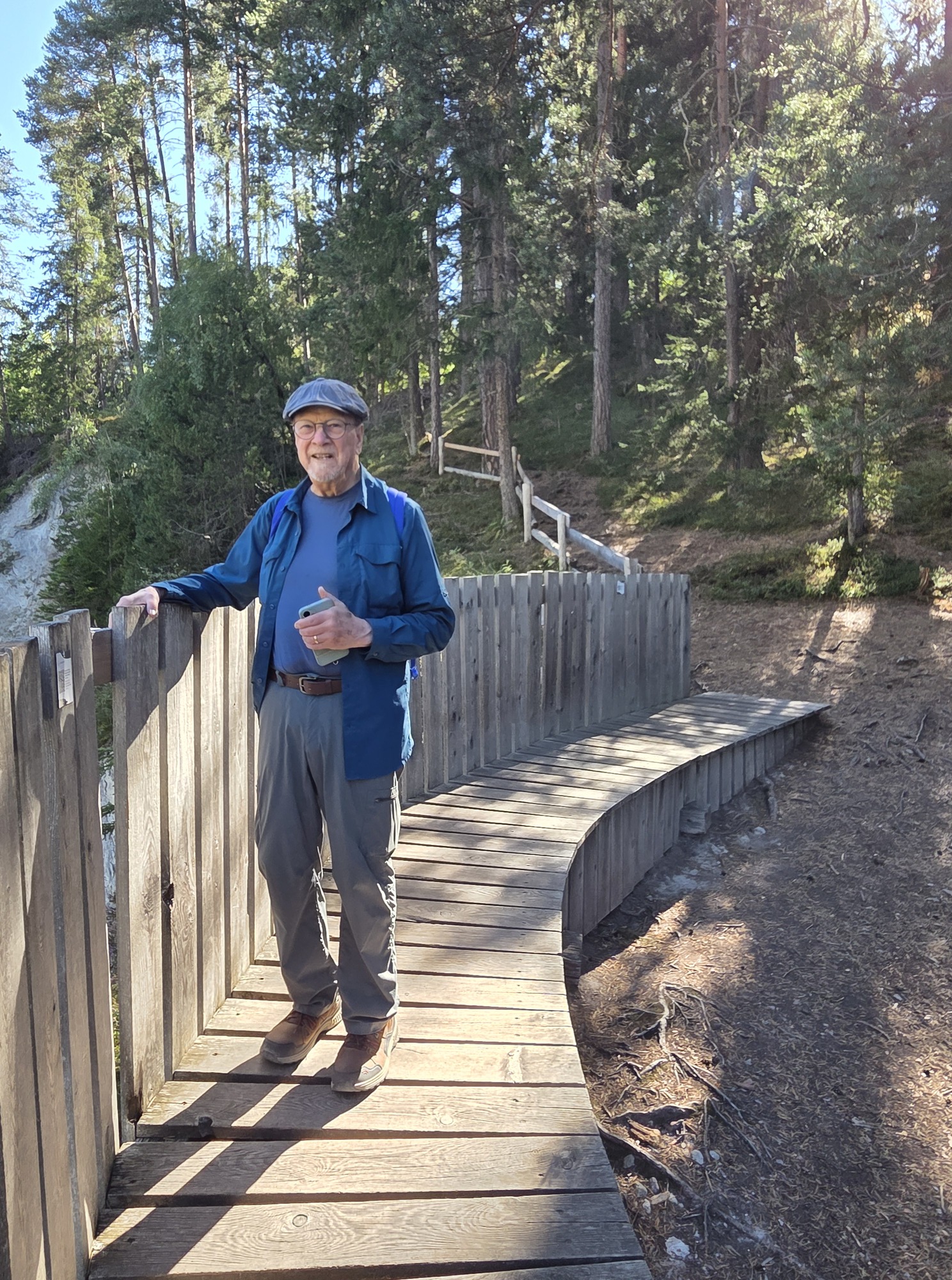
Ric at the Acatos Platform
Back at the station, we decided to grab a simple sandwich and iced coffee. The two men running the café were from Mexico and thought I was Italian when I spoke to them. Always makes my day!
The day had warmed considerably, now over 70 degrees Fahrenheit at 3500 feet above sea level. We waited for the 12:46 shuttle to the Hennings Platform happy to find shade at the station. It’s only a 3-minute trip to the Schmitten station, then a short but steep walk with loose rock and unguarded steps up to the two-levels of the viewing platform. Walking up, we were leery about walking down on the loose gravel and with no handholds on the stairs. Problems of aging knees and hips.
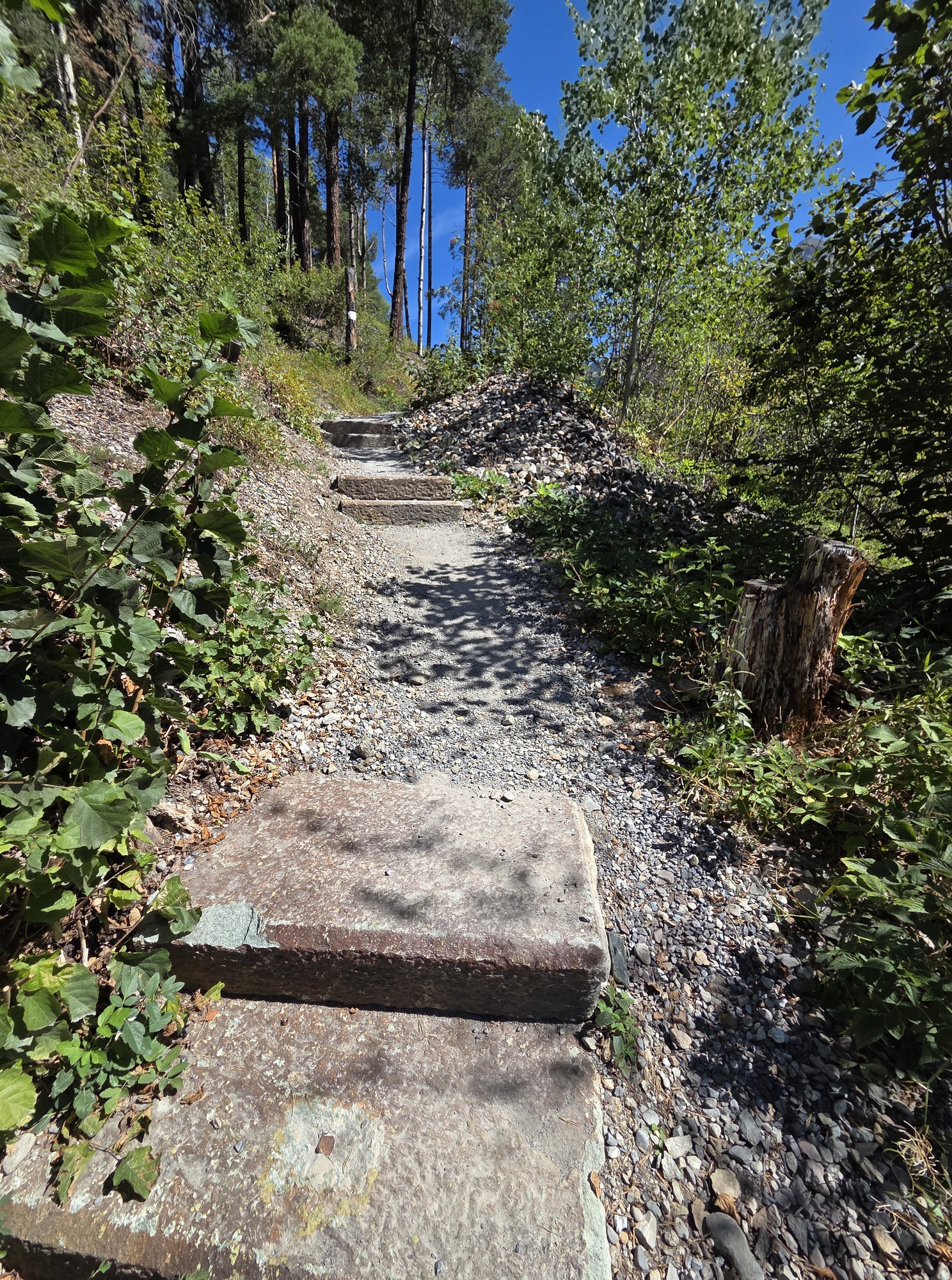
The rough path and steps without handrails: Watch your step!
The lower of the two platforms proved to be excellent for taking pictures of the trains. We weren’t certain they were any better than the morning shots we took from Acatos but viewing the pictures from Henning’s on a larger screen proved us wrong: The Henning’s Platform is superior for photography. We hauled ourselves up to the upper platform which was very nice nice for hanging out between trains and also had a great angle for photos. Light shade and a bit of a breeze made the wait tolerable since we had a long one.
Time of day matters: we had to wait a long time for a return shuttle due to a midday pause, and we only caught one major train during that time, so we were there in a period of light traffic. We weren’t sure how long it would take to pick our way down. Ric had his hiking sticks along so armed with one hiking stick each, we headed down early, catching sight of one more long train headed north. Luckily the sticks helped a LOT with stability and we were on the train platform with plenty of time, waiting for the shuttle in the heat.
That gave us an excuse back at the station to indulge in ice cream while waiting for the 15:00 train back to Pontresina.
This outing will definitely be in the book: trains and light hiking with a suggestion for time of day for the most efficient visit. There is also a terrific museum at Bergün, which we visited last year, that is a must for train enthusiasts. A very full day out for train nerds could include our tour today as well as a stop in Bergün for the Albula Railway Museum.
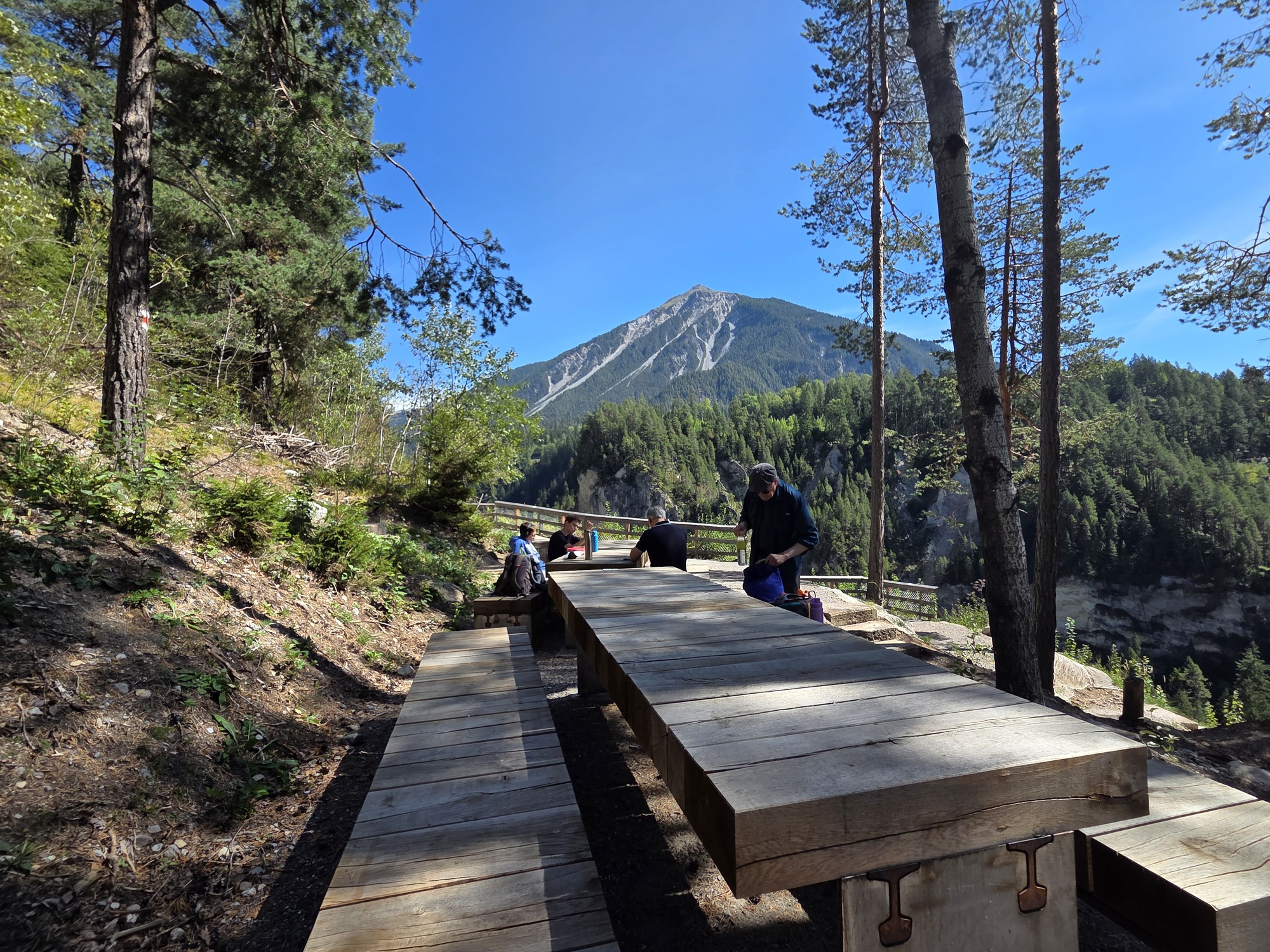
Hennings upper platform where train lovers can hang out, picnic and wait for trains to pass.
Our visit also opened our eyes to how much else is on offer in Landwasserwelt. Countless hiking paths beckoned, the village of Filisur yet to be explored, and a chairlift to a mountain restaurant we did not have time for, all contained in the gigantic Parc Ela, a regional nature park within Graubünden.
Beyond having a nerdy train day, we are exploring other parts of the region, revisiting some places from past trips to finalize details for the book, and exploring some that are new-to-us.
The weather is beautiful! The Swiss could use the rain, but these travelers are enjoying clear skies and few people. Apparently, there is a shoulder season here, still.
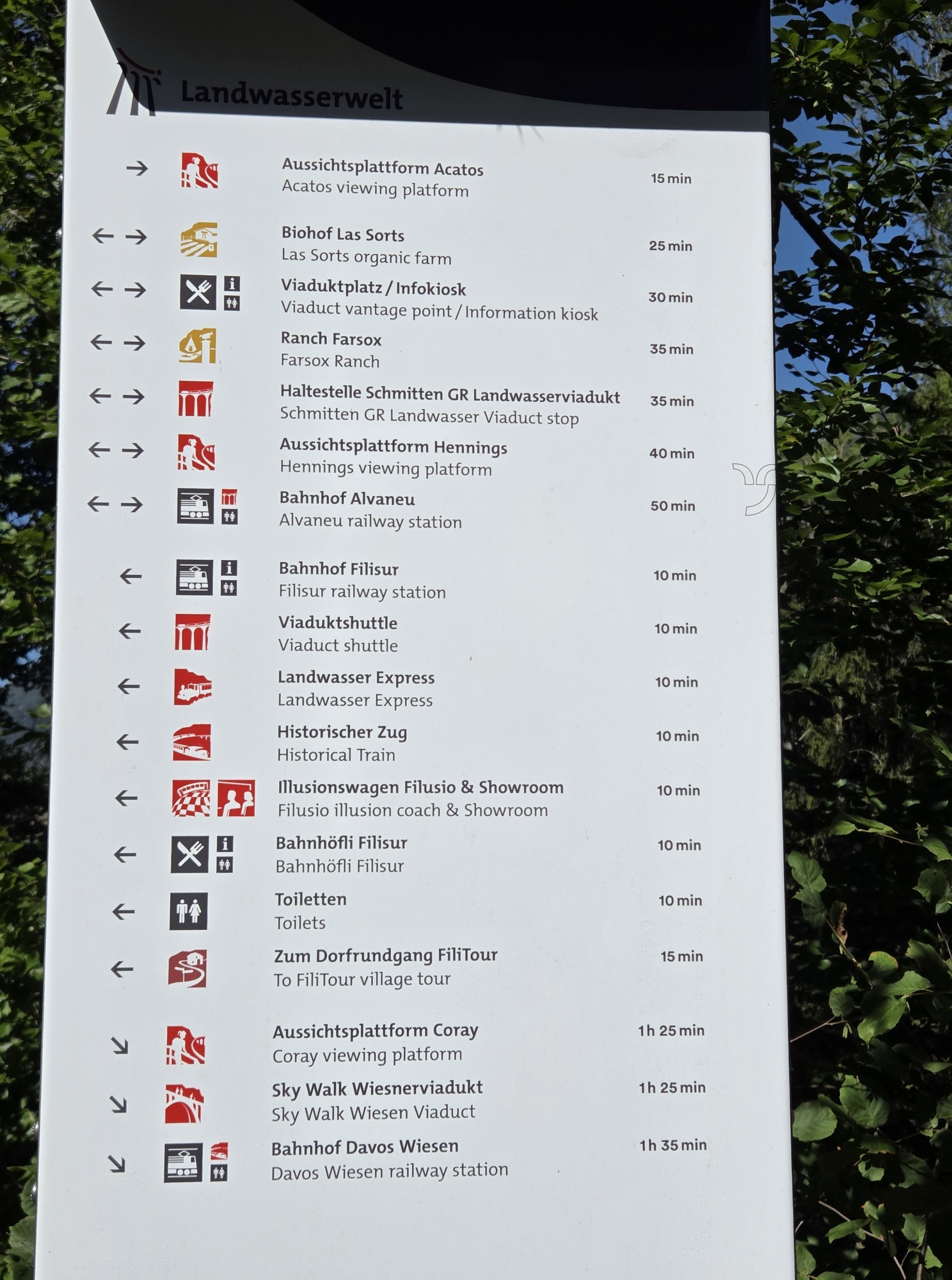
So many things to do in Landwasserwelt!

